German gear

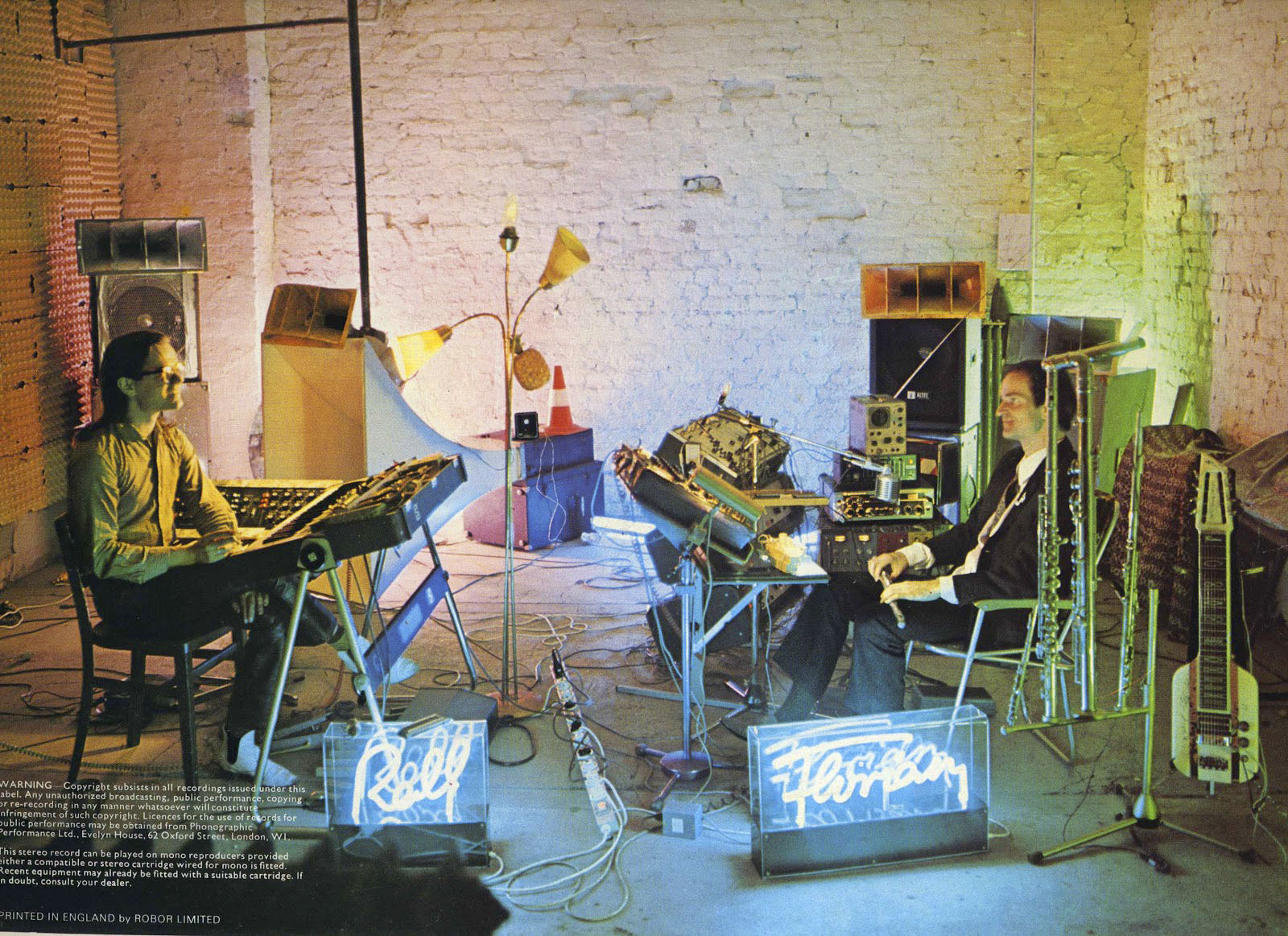
Ralf and Florian, 1973. Back cover photo by Barbara Niemöller.

At that time, Kling Klang Studio was far from the technological hub it would become. “The studio was a big room in an old factory building with brick walls,” recalls [Wolfgang] Flür. “There were big home-made speakers, amplifiers and so on. Florian had his side, with his flutes and one of the very first ARP Odyssey synthesizers, while Ralf’s side had Hammond and Farfisa organs and a Minimoog synthesizer.”

Andy Gill, Mojo magazine, April 1997

Last week’s Autobahn post prompted a week of revisiting Kraftwerk’s three pre-Autobahn albums, all of which remain unreissued. The photo that fills out the back cover of the third album, Ralf & Florian (1973), has appeared here twice before so if you want an example of an obsession look no further. I only have a bootleg CD of this one, a package that doesn’t do much for the photograph so I went searching for a larger copy.
ralf.jpg

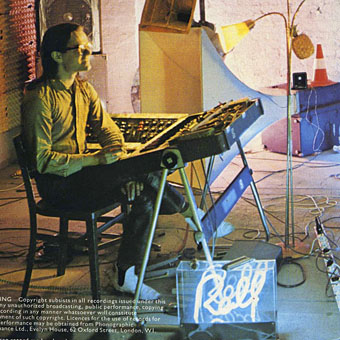
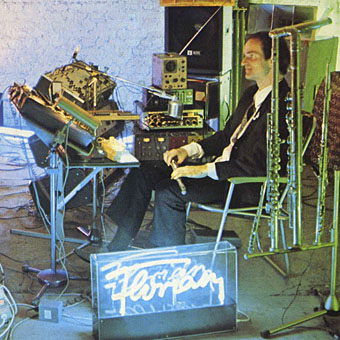
The attractions, if you have to list them, are multiple: Ralf & Florian is Kraftwerk’s most human album, and the cover photos reflect this. Trans-Europe Express originally had pictures of the group on its sleeve (now replaced by the TEE train) but they were airbrushed, idealised portraits; the showroom-dummy personas they adopt there would turn into robots on the album that followed. There’s an overt sense of camp about the Ralf & Florian cover shots that runs counter to the tenor of rock music in 1973. The charts in Britain might have been filled with glam acts but for all their flirtatious androgyny they were selling the same assertive macho sexuality as the big rock bands of the time. One of the things I enjoy about this cover photo is its refusal to follow that crowd: the neon name signs, the standard lamp from a 1950s’ living room, Florian’s semiquaver brooch; all are effete enough to give Deep Purple the vapours. (The first UK release of Ralf and Florian replaced the cover photo of the pair with a printed circuit.) The closest comparison in the same year would be the sleeve for Brian Eno’s Here Come The Warm Jets with its shelves of dead flowers and junk-shop discoveries. But this wasn’t so surprising for an ex-member of Roxy Music, and Eno’s album is still very much a rock production.
florian.jpg

Then there’s the details: the egg-box soundproofing (Can used old mattresses to soundproof their studio); the enormous white speaker; the traffic cone that nods back to the sleeves of the first two albums and forward to the automotive theme of the next; Ralf’s white shoes (and is he wearing leather trousers?); Florian’s oscilloscope, his mysterious tone generators and that peculiar stringed instrument. This diverse range of gear somehow produced the music you’re listening to.
Continue reading “German gear”

Autobahnen

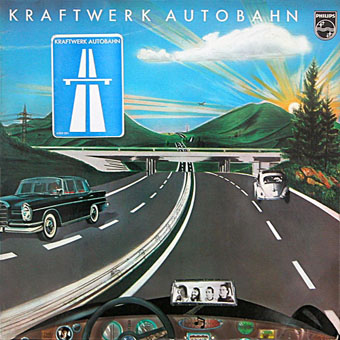
1: Autobahn (1974), an album by Kraftwerk.

autobahn01.jpg

Cover art by Emil Schult.


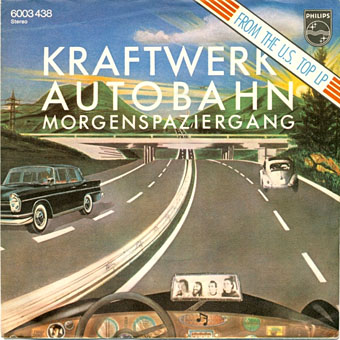
2: Autobahn (1974), a single by Kraftwerk.

autobahn09.jpg

autobahn10.jpg


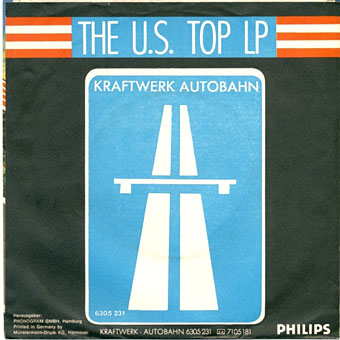
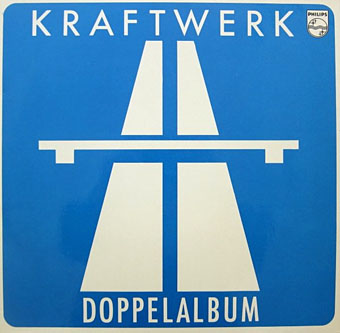
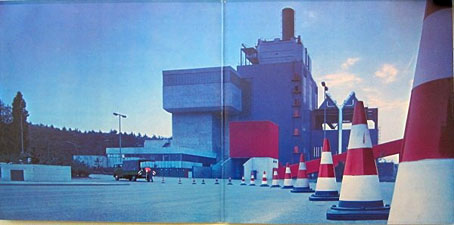
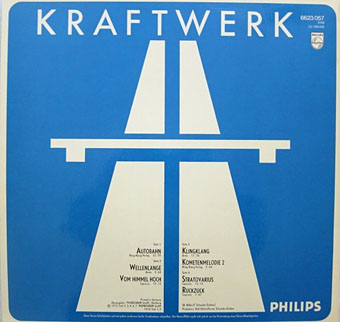
3: Doppelalbum (1974), a double-disc compilation album by Kraftwerk.

autobahn11.jpg

autobahn12.jpg

autobahn13.jpg


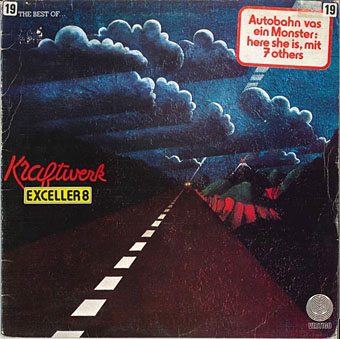
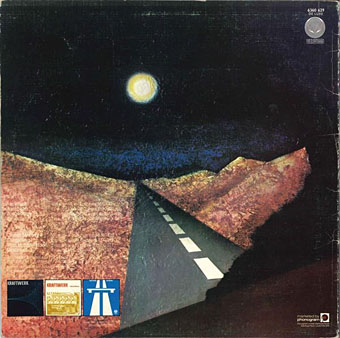
4: Exceller 8 (1975), a compilation album by Kraftwerk.

autobahn14.jpg

Cover by Grafad.

autobahn15.jpg


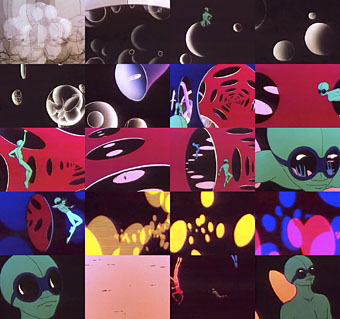
5: Autobahn (1979), an animated film by Roger Mainwood.

autobahn17.jpg


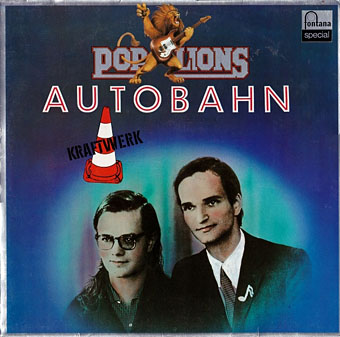
6: Autobahn (1980), a compilation album by Kraftwerk.

autobahn08.jpg


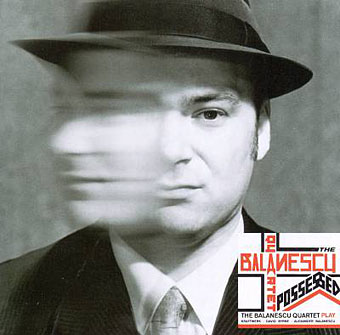
7: Possessed (1992), an album by the Balanescu Quartet. Track 3: Autobahn.

autobahn07.jpg


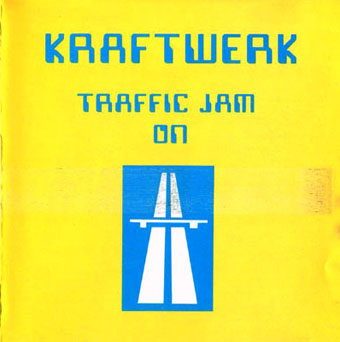
8: Traffic Jam On Autobahn (1993), a Kraftwerk bootleg from a live soundboard recording at Hummingbird, Birmingham, UK, on July 15th 1991.

autobahn02.jpg


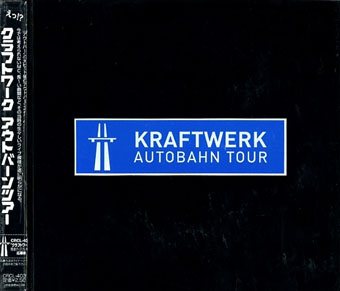
9: Autobahn Tour (1998), a Kraftwerk bootleg. The Japanese release of Concert Classics, a live soundboard recording from a concert in Denver, USA on 20th May, 1975.

autobahn05.jpg


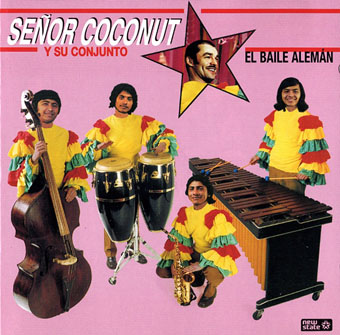
10: El Baile Alemán (2000), an album by Señor Coconut Y Su Conjunto. Track 6: Autobahn (Cumbia Merengue).

autobahn04.jpg


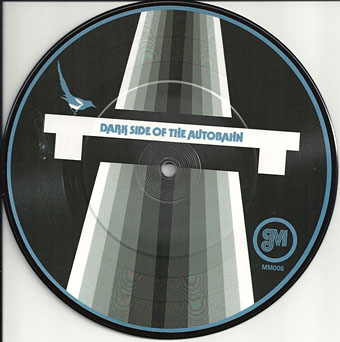
11: Dark Side Of The Autobahn (2003), a single by Mordant Music. The Pink Floyd/Kraftwerk/Joy Division collision that the world was waiting for.

autobahn06.jpg


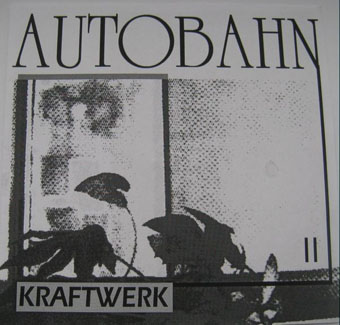
12: Autobahn II (no date) by Kraftwerk. A Russian flexi-disc.

autobahn03.jpg


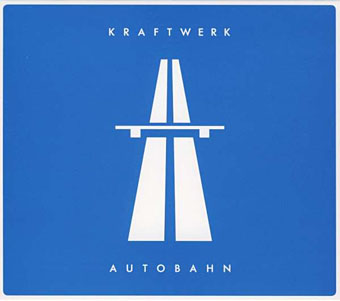
13: Autobahn (2009), an album by Kraftwerk. The remastered release.

autobahn16.jpg

Elsewhere on { feuilleton }
The album covers archive

Previously on { feuilleton }
Ralf and Florian
Reworking Kraftwerk
Autobahn animated
Sleeve craft
Who designed Vertigo #6360 620?
Old music and old technology
Aerodynamik by Kraftwerk

Weekend links 235

shadows.jpg

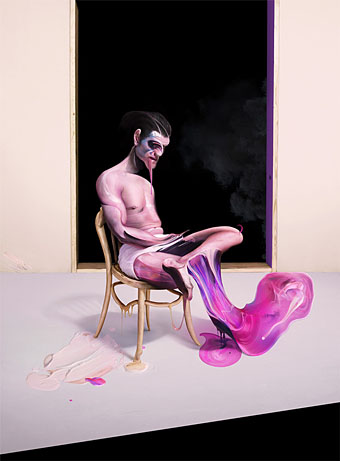
Shadows (1974) by Pawel Nolbert & Lukasz Murgrabia, one of three images recreating Francis Bacon’s Triptych–August 1972.

Breaking the Code (1996), a BBC film by Herbert Wise based on Hugh Whitemore’s stage play about Alan Turing. Wise’s film has been linked here before but it’s relevant again thanks to the release of The Imitation Game. Derek Jacobi played Turing on stage and screen, and Whitemore’s script managed to deal with Turing’s life and work without insulting the man or the intelligence of its audience.

• “…if you listen to A Beacon From Mars by Kaleidoscope or if you listen to some Turkish taxim then something starts happening.” Robert Plant talking to Julian Marszalek about the music that excites him.

• “CGI has become wearingly dull and clichéd. Can its deep weirdness be recovered and filmgoers’ minds stretched again?” asks Jonathan Romney.

The cult of the Thirty-Seven Nats is unique to Burma. […] The junta’s attempts to subdue nat worship had an unintended effect: the role of the nat wife was embraced by an already marginalized group. Homosexuality is illegal in Burma and has been since its British colonizers instituted a late-nineteenth-century ban on “intercourse against the order of nature”. Government restrictions opened a professional vacuum, says scholar Tamara C. Ho. Becoming a nat kadaw offered the achauk—a Burmese term for gay and transgender men—both “a vocation and queer visibility”.

After the Green Death by Will Boast

• “Cat memes and other frivolities aren’t the work of an Internet culture. They’re the work of an American one, ” says Caitlin Dewey.

• Hear the cavernous reverb of Berlin’s Kraftwerk captured by Emptyset’s James Ginzburg and Yair Elazar Glotman.

• Take part in the first #psychedelicpride photoshoot in central London on Saturday, December 13th.

• Mix of the week: FACT Mix 470 by Jonny Trunk who also appears in the list of vinyl hoarders below.

• Queer Noise: Abigail Ward on the history of LGB music and club culture in Manchester.

More photos of the steampunk exhibition at 751 D-Park, Beijing, China.

A chronological list of synth scores & soundtracks.

• Animated photography by Julien Douvier.

• A Third Ear Band archive at SoundCloud.

The secret lives of vinyl hoarders.

Taxim (1968) by Kaleidoscope | Water (1970) by Third Ear Band | Love Is The Devil (1998) by Ryuichi Sakamoto

El Lissitzky record covers

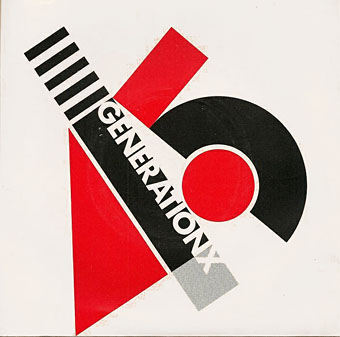
genx.jpg

Your Generation (1977) by Generation X. Design by Barney Bubbles.

Continuing an occasional series about the work of particular artists or designers being used on record sleeves. El Lissitzky (1890–1941) is an interesting candidate in this area since his pioneering abstractions have greatly influenced subsequent generations of graphic designers. As a result of this you’re just as likely to find his Suprematist style being pastiched on an album cover as find one of his paintings decorating the sleeve. Pastiches are difficult to locate unless you already know they exist—or unless the album credits acknowledge the style they’re imitating—so this list will no doubt be incomplete.

Barney Bubbles’ design for the debut single by Generation X is the earliest example I’m aware of that makes use of the El Lissitzky style. It was also one of Bubbles’ first sleeves for a punk band, and a significant break with his often florid hippy designs.

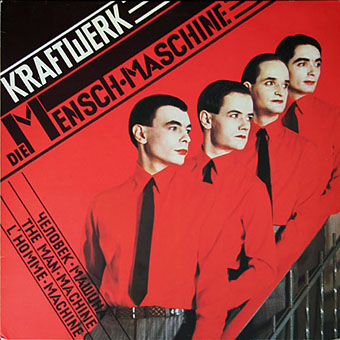
kraftwerk1.jpg

Die Mensch Maschine (1978) by Kraftwerk. Design by Karl Klefisch, “inspired by El Lissitzky”.

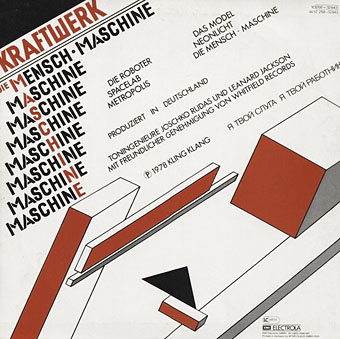
Kraftwerk’s seventh album uses Lissitzkian typography and graphics on its front and back covers. A very popular album with the post-punk crowd that would have been the first introduction for many people to El Lissitzky’s name. Kraftwerk still use that vibrant arrangement of black, red and white in their stage shows.

kraftwerk2.jpg

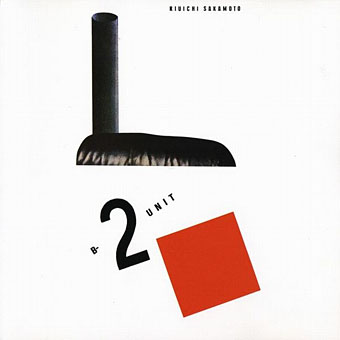
sakamoto1.jpg

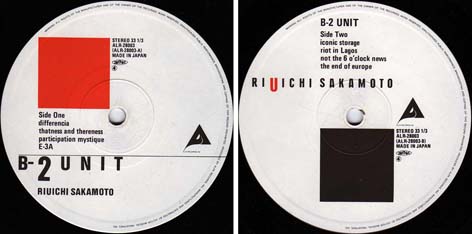
B-2 Unit (1980) by Riuichi Sakamoto. Design by Tsuguya Inoue.

More pastiche, this time borrowing from El Lissitzky’s Suprematist book for children: About Two Squares: In 6 Constructions: A Suprematist Tale (1922). The book’s two characters of a red square and a black square appear on the vinyl labels. This is a great album, incidentally, still my favourite by Sakamoto.

sakamoto2.jpg

Continue reading “El Lissitzky record covers”

Weekend links 206

komoda.jpg

Nova Express (2014) by Paul Komoda.

• Last week it was Kraftwerk, this week it’s Can in another astonishing 70-minute TV performance from 1970. For those who know where to look in the torrent world there are copies of these recordings circulating there.

JG Ballard: five years on. Extracts from introductions by John Gray, Hari Kunzru, Robert Macfarlane, Deborah Levy, James Lever, China Miéville and Michel Faber for a new series of Ballard editions.

• Mix of the week: Needle Exchange 147 by Inventions. Also at Self-Titled Mag: Suzanne Ciani on her Buchla beginnings, talking dishwashers, and why no one got electronic music in the ’70s.

• At Dangerous Minds: It’s So Far Out It’s Straight Down, a Granada TV documentary from 1967 featuring Paul McCartney, Allen Ginsberg, International Times, Pink Floyd et al.

The Wonderful World of Witches: Portraits of English Pagans. A photo-special from the 1960s at LIFE. Related: From 1974, the US TV ad for Man, Myth and Magic.

• Suspicious Minds: Adam Curtis on Stephen Knight, Jack the Ripper, squatters, heists, From Hell, and why people no longer trust those in authority.

• Here be men with beards and syntezators: Andy Votel‘s Top 10 Early Patch-Bay Polymaths From Eastern Europe.

The New York Public Library has made 20,000 maps available as free, high-res downloads.

• An oscilloscope video by Vincent Oliver & Steve Bliss for Riff Through The Fog by Clark.

Anne Billson interviewed Alejandro Jodorowsky in 1990.

• At BLDGBLOG: When Hills Hide Arches.

Do gay people still need gay bars?

Pixelord Dreams

I’m So Green (1972) by Can | Nova Feedback (1978) by Chrome | Gay Bar (2003) by Electric Six