Weekend links 353

tuke.jpg

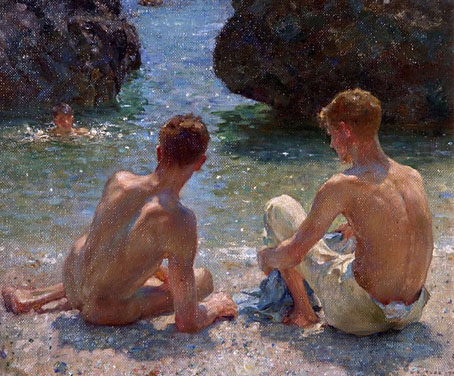
The Critics (1927) by Henry Scott Tuke.

• Geeta Dayal talks to ambient musician Midori Takada about Through The Looking-Glass (1983), an album being reissued this month by Palto Flats/We Release Whatever The Fuck We Want Records.

Jacob Brogan reviews The Abominable Mr. Seabrook by Joe Ollmann, a graphic biography of writer, occultist, explorer and determined cannibal, William Seabrook.

• More from the usual suspects (on these pages at least): Jonathan Meades on his new cookbook and a recent bout of heart surgery; and Iain Sinclair on The Last London.

The law only applied to men, but that didn’t mean same-sex relationships between women were immune to opprobrium. Dorothy Todd was hired as the editor of British Vogue in 1922. Under her visionary stewardship, the magazine became a bastion of high modernist style, swapping petticoats and corsets for Picasso, Cocteau, Man Ray and Woolf. Todd lived with her lover, the fashion editor Madge Garland. Sacked in 1926 because of declining circulation, she planned to sue the magazine, but was silenced when the publisher Condé Nast threatened to publicly expose her “morals”.

In such an inimical climate, it’s not surprising that art became a zone of enchantment as well as resistance. The plenitude of camp aesthetics, the lush excess, the cross-pollination of high and low forms might be conceived as a direct response to the paucity and hostility of the culture at large. From the mannered decadence of Aubrey Beardsley’s naughty woodcuts, to Cecil Beaton’s portraits of Stephen Tennant as a radiant boy prince, to the cabaret high jinks of Danny La Rue, to the wickedly doctored library book covers made by the playwright Joe Orton (a crime for which he received a jail sentence), camp offered a way of remaking the world, cutting it down to size and reassembling it in richly strange and strangely rich new forms.

Olivia Lang on the British artists working in defiance of iniquitous laws prior to the (partial) decriminalisation of homosexual acts in 1967.

• Due for publication later this year, You Should Come With Me Now, a new collection of short fiction by M. John Harrison.

Daniel Marner reviews Scarred For Life Volume One: The 70s, a book about the dark side of British pop culture.

Jay Babcock talks to Erik Davis about the end of Arthur magazine and his new life in the Californian desert.

• The nature photography of Nobuyuki Kobayashi and the ruin photography of Gina Soden.

Jon Forss of design team Non-Format on his time designing The Wire magazine.

Mac McClelland on how doctors treat mental illness with psychedelic drugs.

• Mix of the week: Secret Thirteen Mix 216 by WSR.

Hisham Matar on Jorge Luis Borges.

London Boys (1976) by T. Rex | Last Train To London (1979) by Electric Light Orchestra | London (2004) by Patrick Wolf
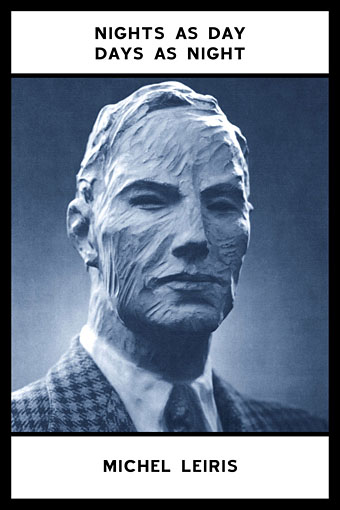
Nights as Day, Days as Night by Michel Leiris

leiris.jpg

“Le rêve est une seconde vie,” says Gérard de Nerval in the epigraph to the dream journal of Michel Leiris, a collection of oneiric texts published as Nuits sans nuit et quelques jours sans jour in 1961, and which appears this week in a new translation—Nights as Day, Days as Night—from Spurl Editions.

If dreams for Nerval were a second life, for the Surrealists they were a life as important as the waking one, their significance distilled in the declared desire of Max Ernst to keep one eye open on the wake world while the other remained closed and fixed upon the interior. Michel Leiris was a friend of André Masson, and was involved with the Surrealists in the early days until a falling out with André Breton saw him expelled from the “official” ranks. The fatuously doctrinaire Breton seemed to fall out with everyone at some point, and Leiris wasn’t alone in being undeterred by any tinpot Stalinism. Nights as Day, Days as Night is a major Surrealist text, a journal covering the years 1923 to 1960 which may be read as a straightforward transcription of one person’s dream life, or as a series of fragmented narratives, anecdotes and fantasies many of which, in their brevity, operate like condensed fictions. Dreams as raw material for fiction have a long history but are seldom presented en masse in an undiluted form. One problem is that a naked description of a dream is unlikely to be interesting to anyone other than the dreamer unless the description is artfully presented. In his lecture on nightmares, Jorge Luis Borges describes his most terrifying dream—an old Norwegian king appearing at the foot of his bed—which he says was terrifying not because of the appearance of a spectral presence but because of the atmosphere in the room, an atmosphere he found impossible to convey to others.

This quality of incommunicability (or a general lack of interest, since “strange dreams” are universal) may be sidestepped if the dreamer is already noteworthy, as with the case of William Burroughs whose My Education: A Book of Dreams is the most obvious equivalent to Leiris’s collection. Burroughs had been mining his dreams for years, however, so the contents of My Education were already very familiar to his readers when the book appeared in 1995. Leiris has the advantage of novelty, and even more than Burroughs he works consciously to make his dreams interesting to a reader. (There’s also some intersection in the Parisian locations; Burroughs included Paris as one of the omnipresent zones in his personal dream landscape.) As with Burroughs, there seem to be occasions when the transcription turns into outright fictioneering. I’ve tried keeping a dream journal myself a few times, and found it difficult to recall anything more than the merest fragments of most dreams. Leiris is selective—many of the entries are separated by several months—but many of his selections run over several pages, and contain detailed descriptions of sequential events. Unless you’re blessed with exceptional recall, some elaboration would seem inevitable given the elusive nature of dreams and their tendency to quickly evaporate in the bleary-eyed morning. From a Surrealist perspective (a non-doctrinaire one, naturally), any subsequent embellishment might be regarded as a literary parallel to the Ernst intention of keeping one eye open while the other remains closed; the dreams become Surrealist texts collaged from Leiris’s dream life and whatever enhancement he applies to the raw transcription. Many of the shorter transcriptions remain faithful to the abrupt disjunctions of the dream state, replete with sudden changes of location, personality and even reversals from subject to object. Literature has the ability to convey these disjunctions much more accurately than other media. Painting, drawing and collage only ever create a single, static image; film has the advantage of movement but, like other visual media, can’t help but make everything seem all too tangible. In film, animation comes the closest to dreams but still lacks the ability to put you inside the consciousness of the dreamer the way that Leiris’s texts do, fictional or otherwise.

Spurl’s Nights as Day, Days as Night is translated by Richard Sieburth, and features a foreword by Maurice Blanchot. Order it here.

Weekend links 352

taggart.jpg

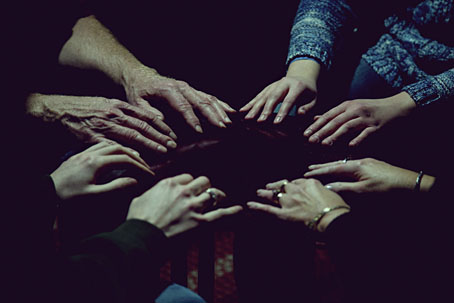
Table-Tipping Workshop at Rev. Jane’s House, Erie, Pennsylvania, 2014 by Shannon Taggart.

• Canadian electronic musician Sarah Davachi talks to Erik Davis about analogue synthesizers, reverberating cathedrals, attention spans, and her ambient drone album All My Circles Run.

• Orson Welles’ The Other Side of the Wind may now be released by Netflix. (I’m restraining my excitement for the moment since this one has been a long time arriving.)

• Mixes of the week: VF Mix 86: Jah Shaka by Roly Porter, Secret Thirteen Mix 215 by Twins, and What Good Is God? (1:11:11.111 Melon Collie Mix) by Gregg Hermetech.

• Making sense of The Weird and the Eerie: Roger Luckhurst reviews the final book from the late Mark Fisher.

• Pye Corner Audio has been very productive this year (I’m not complaining); the latest release is The Spiral.

• “I don’t like acceptance,” says Cosi Fanni Tutti, “it makes me think I’ve done something wrong.”

• Jon Brooks on the Continental inspiration for his next album, Autres Directions.

Séance: Spiritualist Ritual and the Search for Ectoplasm by Shannon Taggart.

• Corny and clichéd: Matthew Bown on bad painting in the twentieth century.

• At Wormwoodiana: Douglas A. Anderson on Borges and a forgotten book.

• At the BFI: Samuel Wigley chooses 10 great films set in the jungle.

Jungle Flower (1951) by Les Baxter | Jungle Fever (1973) by The Upsetters | The Jungle Dream (1973–1980) by Patrick Cowley

Weekend links 315

knights.jpg

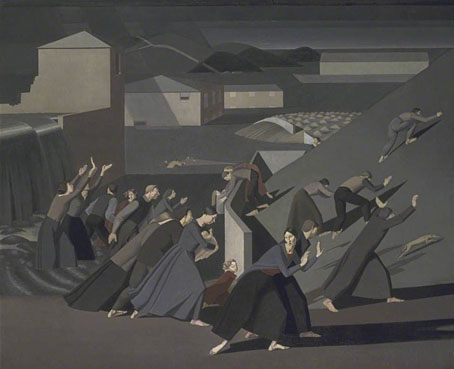
The Deluge (1920) by Winifred Knights.

Dennis Cooper‘s favourite fiction, poetry, nonfiction, film, music, art & internet of 2016 so far. (Thanks again for the nod to this blog!)

• At Literary Hub: Jonathan Russell Clark on Jorge Luis Borges, and Jon Sealy on why indie presses [in the US] are opening bookstores.

• “It’s not just about the music.” A conversation on the occult practices in the arts between poet Janaka Stucky and Peter Bebergal.

• Daisy Woodward talks to Andreas Horvath about Helmut Berger, Actor, a documentary about Visconti’s muse and lover.

• More Fritz Leiber: Brian J. Showers on his decision to republish Leiber’s horror novel, The Pale Brown Thing.

• Mixes of the week: Sextape 4 by Drixxxe, and Radio Oscillations #96 (Richard Pinhas/Heldon) by Iron Blu.

• The 5th Young One: Pay No Attention to the Girl Behind the Sofa; John Reppion on a television mystery.

• More reading suggestions: Cheerless beach reads for gloomsters and saddies by S. Elizabeth.

• Never the same film twice: Seances by Guy Maddin, Evan Johnson, Galen Johnson.

• How painter Winifred Knights became Britain’s “unknown genius”.

• The Journey & The Destination: An interview with Hawthonn.

Robert Latona goes in search of the grave of Constance Wilde.

• Invisible by Day: photos by Mikko Lagerstedt.

• A Queer Lit Q&A with Evan J. Peterson.

• RIP Michael Herr and Bernie Worrell.

Bridget Riley: The Curve Paintings.

• The typography of Blade Runner.

Japanese matchbox labels

SOS by Portishead

A Rainbow In Curved Air (1969) by Terry Riley | The Great Curve (1980) by Talking Heads | Dangerous Curves (2003) by King Crimson

Weekend links 293

meyohas.jpg

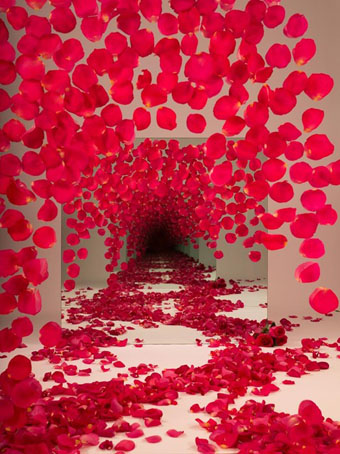
Red Petals by Sarah Meyohas.

• “For MMoB, I want it to be like a [Werner] Herzog movie, so at our concerts the people on stage aren’t necessarily people who are named. We’re trying to create an entity that is beyond music and relates visually and sonically with everything in a way that’s different.” Randall Dunn talks to Simona Mantarlian and Daniel Jones about the Master Musicians of Bukkake and his production work for other artists.

• “Is reel-to-reel tape the new vinyl?” asks FACT mag. It’s certainly better than cassette tape (if less convenient) but it was always a niche format for albums, even in the 1970s. Rene Chun made a similar argument for an emerging trend last October. Those expensive machines do look tempting… Early adopters should start collecting here before prices rise.

Airwaves: Songs From The Sirens is a new release of spectral audio transmissions by A Year In The Country: “…a gathering of scattered signals plucked from the ether, cryptograms that wander amongst the airwaves…” Physical versions come with the usual plethora of monochrome artefacts.

A vivid memory to his friends, Litvinoff was one of those people whose performance was their life. His most lasting achievement was the profound influence he had on Performance – the hallucinatory film directed by Nic Roeg and Donald Cammell, and starring Mick Jagger, which captured the London of the late 1960s, merging pop stardom, violent criminality, illegal drugs, gender-blurring, the occult and Jorge Luis Borges.

Jon Savage on David Litvinoff

• Virgin Prunes “are THE #1 most underrated group of the post-punk era” says Richard Metzger. I’d say that honour goes to The Passage but the Virgin Prunes were unique even if they’re too often dismissed as a freak footnote in the U2 story.

Magic, Witches & Devils in the Early Modern World is a free exhibition at the John Rylands Library, Manchester, that will run until August 2016. Related: “John Dee painting originally had circle of human skulls, x-ray imaging reveals.”

• “What I’m seeing now is an awful lot of people just following things. We tried to find our own thing and ask, ‘What else is there?'” Charles Hayward on the past and present of post-punk band This Heat.

• “I’ve never been tempted to write anything that was not essentially nightmarish.” Thomas Ligotti in a comprehensive profile (originally run in 2010) at Dennis Cooper’s blog.

• Mixes of the week: An introduction to Stereolab by Jon Dale, and Silent Radio Transmission Jan 2016 by SilentServant.

• Kicked Toward Saintliness: Max Nelson on the dark erotics of Jean Genet’s Our Lady of the Flowers.

• Reverse Engineering: Danny Hyde on Coil, Backwards and NIN.

Fuck Yeah! Anna von Hausswolff

Harry Flowers (1970) by Jack Nitzsche | Flowers In The Air (1970) by Sally Eaton | Darkness: Flowers Must Die (1972) by Ash Ra Tempel