Weekend links 522

moesman.jpg

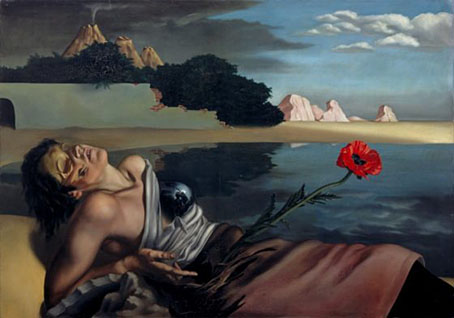
Self-Portrait (1935) by Johannes Hendrikus Moesman.

• At Bibliothèque Gay, René Bolliger (1911—1971), an artist whose homoerotica is being celebrated in an exhibition, Les Beaux Mâles, at Galerie Au Bonheur du Jour, Paris, next month. There are more beaux mâles in a new book of photographs, Hi, Hello!, by Roman Duquesne.

• The summer solstice is here which means it’s time for Dennis Cooper‘s favourite fiction, poetry, non-fiction, film, art and internet of the year so far. As before, I’m flattered to be listed in the internet selection. Thanks! Also at DC’s, Michael Snow Day.

• “I hope Roger Corman is doing okay,” I was thinking last week while rewatching one of Corman’s Poe films. He’s been overseeing the production of three new features during the lockdown so, yes, he’s doing okay. I loved the Cries and Whispers anecdote.

• “Unsettling and insinuating, fabulously alert to the spaces between things, Harrison is without peer as a chronicler of the fraught, unsteady state we’re in.” Olivia Laing reviewing The Sunken Land Begins to Rise Again by M. John Harrison.

The original Brain label release of Aqua (1974), the first solo album by Tangerine Dream’s Edgar Froese, had a different track list and different mixes from the Virgin releases. The album has never been reissued in this form.

• New music at Bandcamp: Without Thought, music for an installation by Paul Schütze; and Hatching Under The Stars, songs by Clara Engel.

Deborah Nicholls-Lee on Johannes Hendrikus Moesman (1909–1988), “the erotic Dutch surrealist you should have heard of”.

Kate Solomon on where to start with the Pet Shop Boys. I’d also recommend Introspective.

• Dalí in Holographic Space: Selwyn Lissack on Salvador Dalí’s contributions to art holograms.

• At Spoon & Tamago: An obsession with retro Japanese round-cornered windows.

John Boardley on the “writing mistresses” of the calligraphic golden age.

Mark Duguid recommends Michael Reeves’ Witchfinder General (1968).

• The favourite music of Crammed Discs boss, Marc Hollander.

• Occult/erotic prints by Eleni Avraam.

Aqua: Every Raindrop Longs For The Sea (Jeder Tropfen Träumt Vom Meer) H2O (1973) by Achim Reichel | Aqua (1979) by Dvwb | Aqua (1981) by Phew
Weekend links 521

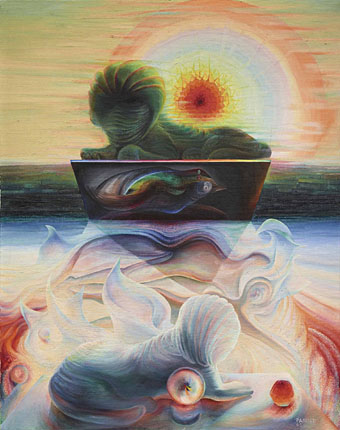
parent.jpg

Au Lion d’or (1965) by Mimi Parent.

• After the recent announcement of Jon Hassell’s health issues it’s good to see he has a new album on the way at the end of July. Seeing Through Sound (Pentimento Volume Two) follows the form of the first volume, Seeing Through Pictures (2018), in reworking elements of earlier recordings into new forms. Not remixes, more reimaginings, and a process that Hassell has been applying to his own work for many years, most notably on his collaboration with Peter Freeman, The Vertical Collection (1997). The latter is an album which is impossible to find today and really ought to be reissued, together with more scarcities from the Hassell catalogue.

• Death of a typeface: John Boardley on Robert Granjon’s Civilité, a type design intended to be the national typeface of France but which fell out of favour. It wasn’t completely forgotten however; I was re-reading Huysmans’ À Rebours a couple of weeks ago, and Civilité is mentioned there as being a type that Des Esseintes chooses for some of his privately-printed books.

• At Plutonium Shores: Kurosawa versus Leone in A Fistful of Yojimbo. Christopher Frayling makes a similar analysis in his landmark study, Spaghetti Westerns (1981), but I didn’t realise that Leone had based so many of his shots on Kurosawa’s film.

• More lockdown art: Seen from Here: Writing in the Lockdown is a collection of new writing edited by Tim Etchells and Vlatka Horvat. A PDF book whose sales will go to support the Trussell Trust, a UK food bank charity.

• The week’s culture guides: Ben Cardew on where to start with the back catalogue of Miles Davis, and Hayley Scanlon on where to begin with the films of Yasujiro Ozu.

• “We can no longer ignore the potential of psychedelic drugs to treat depression,” says Robin Carhart-Harris.

• At Dangerous Minds: Laraaji returns with a new album, Sun Piano, and a preview of the same, This Too Shall Pass.

• Mixes of the week: The Ivy-Strangled Path Vol. XXI by David Colohan, and XLR8R Podcast 647 by The Orb.

Penelope Rosemont on the humorous Surrealism of Mimi Parent.

• At Dennis Cooper’s: Jeff Jackson presents Free Jazz Day.

The Golden Lion (1967) by Lomax Alliance | Dread Lion (1976) by The Upsetters | Gehenna Lion (1982) by Chrome

Weekend links 520

teleplasmiste.jpg

Cover art by Ethel le Rossignol for To Kiss Earth Goodbye by Teleplasmiste.

• I’ve been listening to London Zoo by The Bug this week so two new releases by The Bug’s beatmaster, Kevin Martin, seem well-timed. Martin’s music isn’t all pummelling rhythms and abrasive noise, he also favours doomy ambience, as demonstrated on his landmark compilation album, Isolationism (1994). The new releases, Frequencies For Leaving Earth, Vols 1 & 2, are isolationist in multiple senses of the word, being further products of lockdown life, with the second volume described as reflecting Martin’s “ongoing obsession with scarce sci-fi scores”.

• “It was designed to run counter to formalist & Hollywood Structuralist definitions & expectations.” M. John Harrison in a discussion about his cycle of Viriconium novels and stories. Harrison’s new novel, The Sunken Land Begins To Rise Again, will be published at the end of this month.

• Mix of the week: 31st May 2020 (Lovecraft 2) by French Rock Sampler, a recording of Warren Hatter’s radio show devoted to French underground, synth and progressive music of the 1970s. The current season may be heard each Sunday at 3pm (London time) on Resonance FM.

This is a very important book. It may even be a historic book, one with which gay history can arm itself with more sufficient factual veracity as to start vanquishing at last the devil known as queer studies. Queer studies is that stuff that is taught in place of gay history and which elevates theory over facts because its practitioners, having been unsuccessful in uncovering enough of the hard stuff, are haughtily trying to make do. […] It is not only breathtaking to read this all in a work the likes of which so many Americans long to have written about our own gay history, but when one finishes reading it, one utters an audible huge sigh of relief. Of course this is how it was! Why did we all not know and accept this instinctively without having to create and/or buy into the Foucaultian and Butlerian (to name but two) nightmares with the obtuse vocabularies they invented and demanded be utilized to pierce their dark inchoate spectacles of a world of their own imaginings. Homosexuality did not exist because there was no word for it, say they. What bushwa.

The late Larry Kramer in 2009 reviewing Before Wilde: Sex between Men in Britain’s Age of Reform by Charles Upchurch

• I mentioned in April that I’d designed the CD and vinyl packaging for Roly Porter’s latest album, Kistvaen. It’s another monumental release, and it’s out now. Hear it for yourself at The Quietus.

To Kiss Earth Goodbye, the new album from Teleplasmiste, features cover artwork by Ethel le Rossignol, and a previously unheard trance recording of occultist Alex Sanders.

• “It’s impossible to completely quantify the effect of I Feel Love on dance music.” John Doran on Donna Summer and Giorgio Moroder’s finest moment.

• More film lists: 10 great Japanese film noirs selected by Matthew Thrift, and the 15 best Czech horror films selected by Jason Pirodsky.

Mark Blacklock selects a top ten of four-dimensional novels (one of which isn’t a novel at all but a short story by Ian McEwan).

• At Dennis Cooper’s: BDSM.

Angry (2008) by The Bug feat. Tippa Irie | Insane (2008) by The Bug feat. Warrior Queen | Fuckaz (2008) by The Bug feat. Spaceape

Weekend links 519

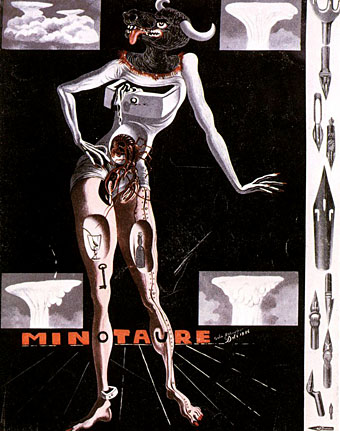
minotaure.jpg

Cover of Minotaure no. 8 (1936) by Salvador Dalí.

• At Dangerous Minds: Irmin Schmidt talks to Oliver Hall about his new album of prepared piano, Nocturne, and also reveals more about the planned release of live recordings by Can.

• “Even the most zealous fan of the genre can learn something new from this book,” says Geeta Dayal in a review of Bring That Beat Back: How Sampling Built Hip-Hop, by Nate Patrin.

• The subject of a previous post but the video was later removed: Italo Calvino in a rare documentary feature for an English audience, on the BBC’s Bookmark in 1985.

• On 9th May, carillonneur Malgosia Fiebig played The Model by Kraftwerk on the bells of the Dom Tower in Utrecht as a tribute to the late Florian Schneider.

• Film footage of Alice Coltrane in her prime is a rare thing so even 17 minutes of TV from 1970 is something special.

Dan Reynolds on the fantastic alphabets designed by Jean Midolle. See also Luc Devroye’s page.

• Mix of the week: Jon Hassell tribute, part 1: Jon and his collaborators, by Dave Maier.

Nicolas Winding Refn on some of the films he’s been watching during lockdown.

• At Haute Macabre: Surrealist décor and tiny secret drawers.

HP Lovecraft dreams of a Providence trolley car in 1927.

The Museum of Ridiculously Interesting Things

Xerrox Voyage, a new recording by Alva Noto.

• At Dennis Cooper’s: Jean-Pierre Léaud Day.

The Model (1979) by Snakefinger | Model (1992) by The Balanescu Quartet | Das Modell (1997) by Rammstein

Weekend links 517

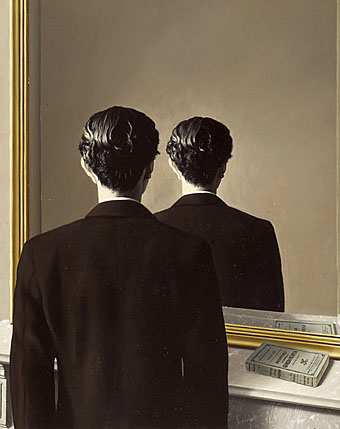
magritte.jpg

Edward James by René Magritte; La Reproduction Interdite (1937).

• “James was filmed in the late 1970s, striding round Las Pozas in a sweater and a tattered dressing-gown, surmounted by parrots (The Secret Life of Edward James can be seen on YouTube). When asked what motivated him, he replied: ‘Pure megalomania!’ He was having his second childhood, he said, though he wasn’t sure the first had ever ended.” Mike Jay on lifelong Surrealist, Edward James (1907–1984), and the concrete fantasia he built in the Mexican jungle.

• “I found the roots of electronic music in a cupboard!” Musician Paul Purgas (one half of Emptyset) on the discovery of early electronic music from India’s National Institute Of Design. Related: Purgas talks about his discovery with Patrick Clarke.

• RIP Phil May. Here’s The Pretty Things in their guise as psych band “Electric Banana” for an appearance in What’s Good for the Goose (1969). A decent moment in an otherwise terrible film.

• Music is a memory machine: David Toop explores how the transmission of music between disparate cultures can be a tool against populism and prejudice.

• Kraftwerk’s remarkable journey, and where it took us: Bob Boilen and Geeta Dayal discuss the tanzmusik of Düsseldorf.

• At Dangerous Minds: Acid Drag & Sexual Anarchy: Fifty years ago The Cockettes turned drag upside down.

Hua Hsu on the secret lives of fungi: “They shape the world—and offer lessons for how to live in it”.

• The great writer who never wrote: Emma Garman on the flamboyant Stephen Tennant.

• Cult 1998 PlayStation game LSD: Dream Emulator is finally playable in English.

Jim Jupp of Ghost Box records talks about the Intermission compilation album.

Jonathan Moodie on psychoactive cinema and sacred animation.

Alex Barrett on where to begin with Akira Kurosawa.

• At Dennis Cooper’s: Skeletons.

Skeleton Makes Good (1982) by Captain Beefheart & The Magic Band | Red Skeletons (1996) by Coil | Kids Will Be Skeletons (2003) by Mogwai