William Burroughs interviews

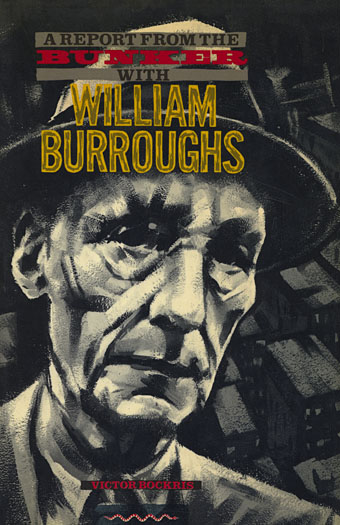
bunker.jpg

With William Burroughs: A Report from the Bunker (1982) by Victor Bockris. Design by Neville Brody.

If it’s interviews you want, some of the most entertaining are in Victor Bockris’s collection of conversations between El Hombre Invisible and the various New York notables ferried round to sit at Burroughs’ table in his Bowery Bunker. The British edition published by Vermilion was always preferrable for its Neville Brody cover design beside which the US original looks very dull indeed. The encyclopedic Burroughs site Reality Studio has copious lists of earlier Burroughs interviews. They also note the occasions when he put on his journalist hat and went out to interview someone equally famous, usually at the behest of a music magazine. A couple of those pieces are online thanks to the diligence of various fans.

diamond_dogs.jpg

Diamond Dogs (1974), a blend of Lou Reed, George Orwell and William Burroughs.

One such is the 1974 interview with David Bowie for Rolling Stone in which Bowie discusses Burroughs as an influence while Burroughs informs the singer that the heroes of his latest novel, The Wild Boys, favour the Bowie knife as a weapon:

Bowie: Nova Express really reminded me of Ziggy Stardust, which I am going to be putting into a theatrical performance. Forty scenes are in it and it would be nice if the characters and actors learned the scenes and we all shuffled them around in a hat the afternoon of the performance and just performed it as the scenes come out. I got this all from you Bill… so it would change every night.

burroughspage.jpg

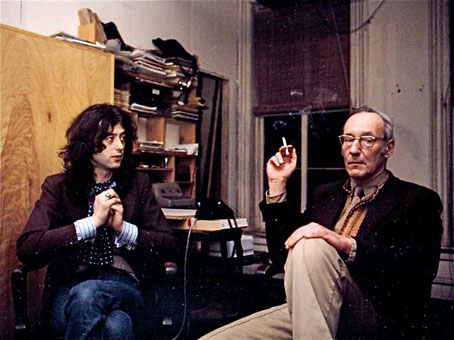
A year later Burroughs got together with Jimmy Page for Crawdaddy magazine where the discussion circles around some of the same subjects, notably the writer’s obsession with sound as a weapon. There’s also this comment from Burroughs which is the kind of thing that always gets my neurons firing:

Antony Balch and I collaborated on a film called Cut-Ups, in which the film was cut into segments and rearranged at random. Nicolas Roeg and Donald Cammell saw a screening of the film not long before they made Performance.

Roeg later directed Bowie, of course, and is one of the dinner guests in With William Burroughs, while Jimmy Page and Donald Cammell both appear in Kenneth Anger’s Lucifer Rising. The connections go round and round… Read the whole piece in a post I made a few years ago at the late, lamented Arthur magazine site.

Elsewhere on { feuilleton }
The William Burroughs archive

Derek Jarman’s Neutron

tilda.jpg

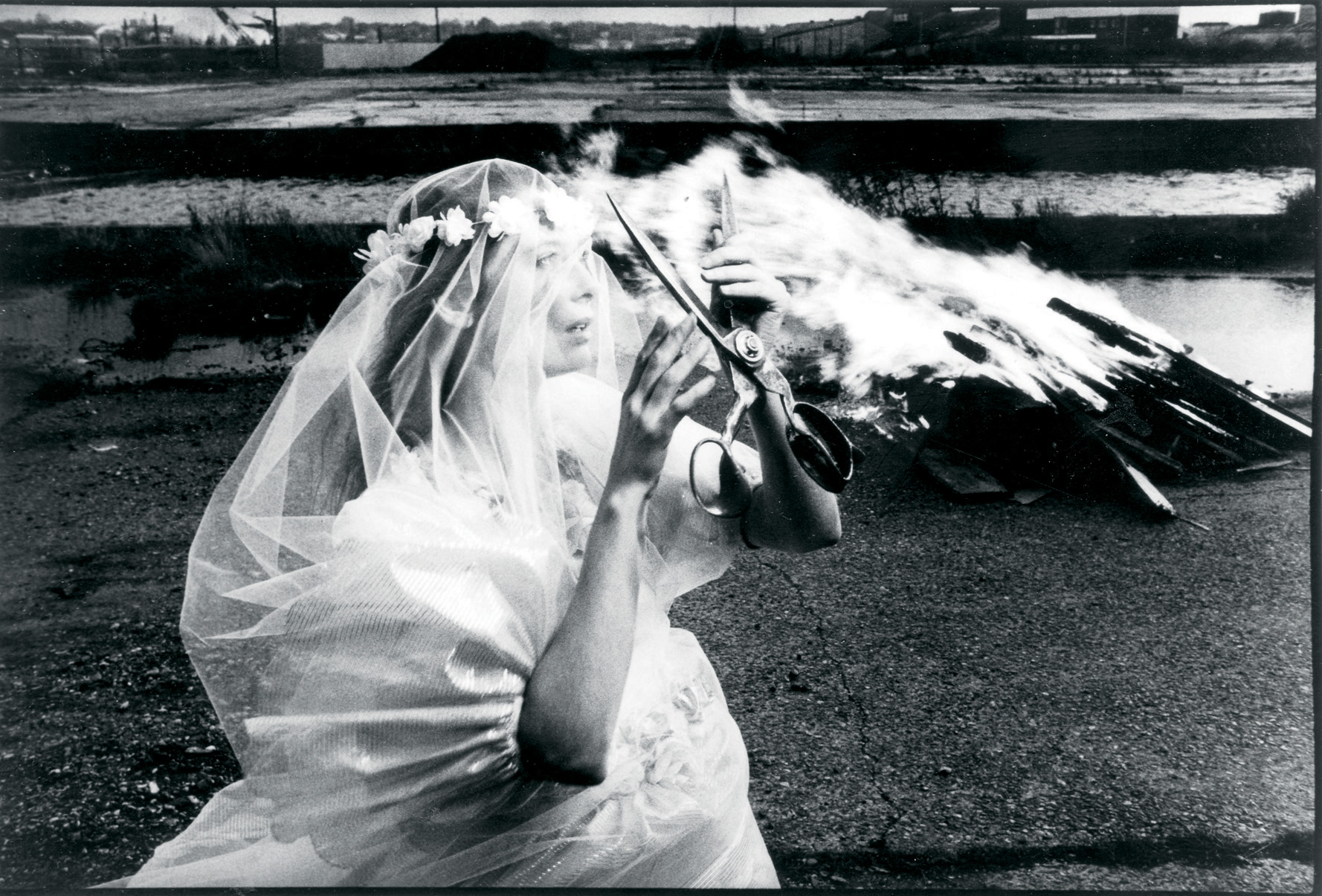
Tilda Swinton in The Last of England (1988).

John Dee turned up in Derek Jarman’s Jubilee after scenes from an earlier script about the Elizabethan magus were grafted onto the punk dystopia. Jarman’s career was to be littered with these unrealised projects, the strangest of which was Neutron, an apocalyptic science fiction film he was planning following the comparative success of The Tempest in 1979. The description he gives in his “Queerlife”, Dancing Ledge, is as follows:

There are six published manuscripts of Neutron, which zig-zag their anti-heroes Aeon and Topaz across the horizon of a bleak and twilit post-nuclear landscape. ‘Artist’ and ‘activist’ in their respective former lives, they are caught up in the apocalypse, where the PA systems of Oblivion crackle with the revelations of John the Divine. Their duel is fought among the rusting technology and darkened catacombs of the Fallen civilization, until they reach the pink marble bunker of Him. The reel of time is looped—angels descend with flame-throwers and crazed religious sects prowl through the undergrowth. The Book of Revelations is worked as science fiction.

Lee [Drysdale] and I pored over every nuance of this film. We cast it with David Bowie and Steven Berkoff, set it in the huge junked-out power station at Nine Elms and in the wasteland around the Berlin Wall. Christopher Hobbs produced xeroxes of the pink marble halls of the bunker with their Speer lighting—that echo to ‘the muzak of the spheres’ which played even in the cannibal abattoirs, where the vampire orderlies sipped dark blood from crystal goblets.

If that doesn’t whet your appetite I don’t know what would. Later drafts of the script were written with Jon Savage. If the film had been made it might well have been terrible, of course, but Christopher Hobbs, who worked with Jarman on later films, as well as on Velvet Goldmine and the BBC’s Gormenghast, would at least have made it look great. David Bowie is very good in The Man Who Fell to Earth but his acting is seldom as successful elsewhere. Steven Berkoff would have been a better bet but a Bowie film would have received far more attention. Bowie discusses his involvement in a 1999 interview here (and also slags off Velvet Goldmine…booo!).

All this was happening circa 1980 when Reagan and Thatcher had just begun their insidious reigns and the Cold War was moving into a new era which generated a great deal of apocalyptic anxiety. Jarman’s response to all of this materialised in 1988 with The Last of England, his bleakest film, and a work in which we can perhaps see some of the nightmare scenes which Neutron would have conjured. I’ve never liked The Last of England very much but it contains a few sequences worth savouring, especially shots of the luminous Tilda Swinton dancing through the wasteland devastation. There’s a fragment of that here with her ripping her dress to pieces accompanied by the voice of Diamanda Galás. Meanwhile, does David Bowie still have the production designs for Neutron? If so, when do we get to see them?

Previously on { feuilleton }
Mister Jarman, Mister Moore and Doctor Dee
The Tempest illustrated
In the Shadow of the Sun by Derek Jarman
Derek Jarman at the Serpentine
The Angelic Conversation
The life and work of Derek Jarman

Mister Jarman, Mister Moore and Doctor Dee

tempest.jpg

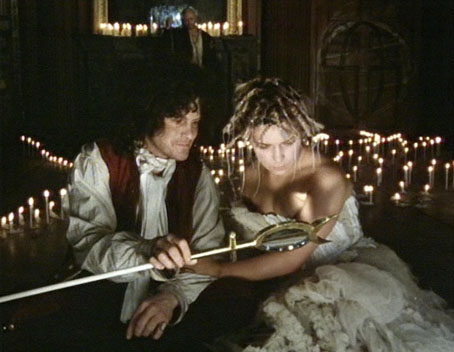
Prospero (Heathcote Williams) and Miranda (Toyah Willcox), The Tempest (1979).

The Shakespeare who spun The Tempest must have known John Dee; and perhaps through Philip Sidney he met Giordano Bruno in the year when he was writing the Cena di Ceneri—the Ash Wednesday supper in the French Ambassador’s house in the Strand. Prospero’s character and predicament certainly reflect these figures, each of whom in his own way fell victim to reaction. John Dee, with the greatest library in England, skrying for the angels Madimi and Uriel (so nearly Ariel)—all of which is recorded in the Angelic Conversations—ended up, in his old age, penniless in Manchester. Bruno was burnt for heresy.

Ten years of reading in these forgotten writers, together with a study of Jung and his disciples proved vital in my approach to both Jubilee and The Tempest. As for the black magic which David Bowie thought I dabbled in like Kenneth Anger, I’ve never been interested in it. I find Crowley’s work dull and rather tedious. Alchemy, the approach of Marcel Duchamp, interests me much more.

Derek Jarman, Dancing Ledge (1991).

Damon Albarn’s opera Doctor Dee has been all over the news this week following its premier as part of the Manchester International Festival. Last weekend one of the press ads was announcing this as an “untold story”, as though no one had given much thought to the Elizabethan magus prior to Mr Albarn’s arrival. Neither the ads nor anyone associated with the production will be in a hurry to tell you that the idea for the opera came from Alan Moore who’s had a fascination with John Dee’s life and work for many years. Albarn and fellow Gorillaz cohort Jamie Hewlett approached Alan about a collaboration a couple of years ago; Alan agreed to write something on the condition that Gorillaz provide a contribution to Alan’s magazine, Dodgem Logic. They agreed, Alan set to work, having suggested John Dee as a good subject then the whole thing fell apart: Gorillaz said they were too busy to accommodate themselves to the magazine’s generous deadlines so Alan told the pair that he was now too busy to have anything further to do with their opera. This is all old news (and being a Dodgem Logic contributor I have a partisan interest in the story) but it’s worth noting since the opera will be playing elsewhere once it’s finished its Manchester run so we’ll continue to hear about it. The point is that the subject matter was Alan Moore’s choice, not Damon Albarn’s; if Alan had decided to write something about Madame Blavatsky (say) we’d now be reading reviews of Blavatsky: The Opera. Albarn can at least be commended for staying with the subject. Despite John Dee’s exile in Manchester being part of the city’s history (among other things he helped organise the first survey of the streets) you can bet the apes from Oasis have never heard of him.
jubilee.jpg

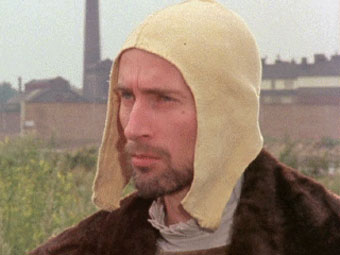
Richard O’Brien as John Dee in Jubilee (1978).

All of which had me thinking how John Dee, a maverick intelligence of the Elizabethan era, has a tendency to attract equally maverick intelligences in later eras. Derek Jarman’s work returns to John Dee often enough to make the magus a recurrent theme in his films, from the scenes in Jubilee (1978) (part of an earlier script) where he’s portrayed by Richard O’Brien showing Elizabeth I the future of her kingdom, to The Tempest (1979) where Prospero’s wand is modelled on Dee’s Monas Hieroglyphica, to The Angelic Conversation (1987) which borrows its title from Dee’s scrying experiments and finds via the sonnets another connection between John Dee and Shakespeare (Ariel being the contrary spirit whose magic allows a vision of the future in Jubilee). By one of those coincidences which make you think there must have been something in the air during the mid-70s, Michael Moorcock’s novel Gloriana, or The Unfulfill’d Queen was published the year Jubilee premiered, a fantasy in which the Elizabethan court is blended with its fictional counterpart from Spenser’s The Faerie Queen, and which features a Doctor John Dee as the queen’s Councillor of Philosophy. (If you want to stretch the connections further, Jenny Runacre who plays Elizabeth in Jubilee had earlier portrayed Miss Brunner in the film of Moorcock’s The Final Programme.)
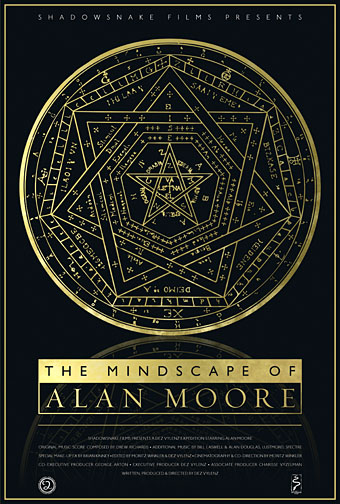
mindscape_dee.jpg

My 2009 poster design for The Mindscape of Alan Moore, a documentary by Dez Vylenz. John Dee’s Sigillum Dei Aemeth appears in the film so I used this as the principal motif for the packaging design and DVD interface.

Reading the reviews it’s impossible to tell how Alan’s libretto might have fared on stage compared to the work which is now showing, the content of which draws on Benjamin Woolley’s excellent biography, The Queen’s Conjuror. Alan and Benjamin Woolley can both be found among the interviewees in a Channel 4 documentary about John Dee broadcast in the Masters of Darkness (sic) series in 2001. For those keen to delve beyond the stage show, Derek Jarman’s films are all on DVD, of course, while fragments of Alan’s libretto can be found in the fourth edition of Strange Attractor along with his notes for the rest of the opera. Charlotte Fell Smith’s life of Dee from 1909, for many years the standard study of the man, can be found online here.

Previously on { feuilleton }
The Tempest illustrated
Robert Anning Bell’s Tempest
In the Shadow of the Sun by Derek Jarman
Designs on Doctor Dee
Derek Jarman at the Serpentine
The Angelic Conversation
The life and work of Derek Jarman

Weekend links 56

kallela.jpg

Ad Astra (1907) by Akseli Gallen-Kallela.

• Andres Serrano’s works are photo prints so you can’t damage an exhibition item the way you can with a painting. That didn’t stop Catholic protestors in France attacking a copy of Piss Christ on Monday. By coincidence, Dave Maier had posted an essay about Serrano’s work a few hours earlier, and with a reminder that the notorious photograph was part of a series, a detail which is often forgotten or conveniently ignored.

• The Avant Garde Project which made available deleted experimental audio works (see this earlier post) ceased activity a while ago so it’s good to see that its archives will now be hosted at Ubuweb.

…African Head Charge again was a studio name I had to start with, and it evolved into a band about eight years later. That started out again I read an interview in a newspaper where Brian Eno talked about he’d made an album called My Life in the Bush of Ghosts with another musician—that Talking Heads fellow [David Byrne]—and he said “I had a vision of a psychedelic Africa”. And I thought, “Oh, that’s pretentious”. But then I thought about it, and thought “No, what a good idea! Make really trippy African dub”.

Adrian Sherwood on thirty years of On-U Sound.

• Related: Brian Eno has a new album out in July, Drums Between The Bells, a collaboration with Rick Holland.

“Do you think Lord Leighton could by any chance have been a homosexual?” enquired Richard. “It says here,” I replied, consulting a laminated information card, “that there is no evidence one way or the other.”

“Rent boys leave no evidence,” said Richard.

A private view of Lord Leighton’s home in Holland Park, London, which opened to the public again last year.

Passengers, an exhibition of urban transit photos by Chris Marker at Peter Blum, NYC. For a different kind of rail transport there’s this exploration of London’s disused underground Post Office Railway.

• Reappraising the recent past: Jon Savage on Taxi zum Klo, Christiane F, David Bowie and the seedy attraction of Berlin in the 70s and 80s; Iain Sinclair on the Festival of Britain sixty years on.

Stella Steyn’s illustrations for Finnegans Wake as seen in transition magazine, 1929. And speaking of literary magazines, the return of New Worlds has been announced.

Clive Hicks-Jenkins is an art monograph published next month by Lund Humphries. Clive enthused about the book’s arrival.

• 50 Watts announces the Polish Book Cover Contest.

• 4th June, 2011 is Radiophonic Creation Day.

• Americans: has your state banned sodomy?

Stardust (1931) by Louis Armstrong | Stardust (1940) by Artie Shaw | Stardust (1957) by Nat King Cole.

Weekend links 48

niteflights.jpg

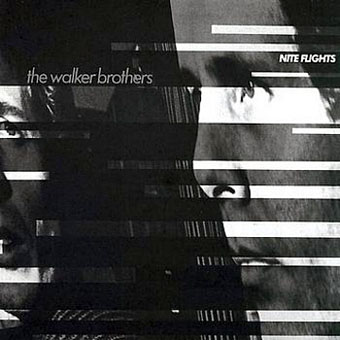
Nite Flights (1978) by The Walker Brothers. Cover design by Hipgnosis.

something attacked the earth last nite
with a kick that man habit-eye
cut the sleep tight boys who dreamed and dreamed
of a city like the sky

Scott Walker quotes Brion Gysin (and who knows what else) in Shutout (see below), one of the four remarkable songs he wrote for the final Walker Brothers album, Nite Flights. That album cast a shadow over David Bowie’s Lodger a year later, and led Bowie to try his hand at a cover of the title track in 1993.

• Frédéric Chaubin’s photographs of what he calls Cosmic Communist Constructions. Also a new book from Taschen, and an exhibition at the Karlsruhe Museum of Contemporary Art. PingMag interviewed Chaubin back in 2006.

chirnoaga.jpg

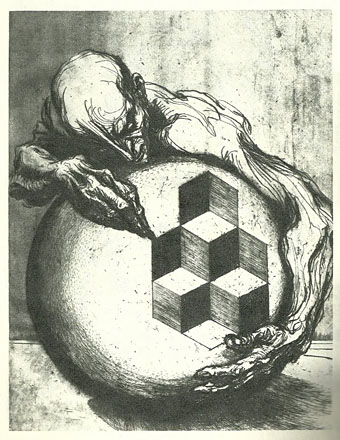
From Disparate works by Romanian artist Marcel Chirnoaga (1930–2008). See also the Virtual Museum of Marcel Chirnoaga.

The immense size of modern databases gives us a feeling of meaninglessness. Information in such quantities reminds us of Borges’s library extending infinitely in all directions. It is our task as humans to bring meaning back into this wasteland.

Freeman Dyson on The Information: A History, a Theory, a Flood by James Gleick.

• In the Tumblr labyrinth this week: Mr Rossignol, the Elephant House for Edward Gorey, and Brion Gysin.

• Related to the last, Mutate or Die is “a bioart project being conceived of and executed by Tony Allard and Adam Zaretsky”.

• Barry Miles’s top 10 counterculture books. Related: Rick Poynor on Richard Neville’s Playpower.

“The sooner literary fiction recognises & accepts its generic identity, the sooner it can get help.”

• Is YouTube user “Kosinski” the ever-elusive Chris Marker? “All signs point to yes.”

• The Internet Archive is making its books available to US libraries.

• The Castle of Shadows at BLDGBLOG.

• The Light Painting Pool at Flickr.

• Scott Walker (with the Walker Brothers): Shutout |Nite Flights | The Electrician.