Lovecraft’s favourite artists revisited

hpl.jpg

HP Lovecraft (1937) by Virgil Finlay.

I was asked recently to join the bloggers at Tor.com writing about art as it relates to fantasy and science fiction, so for today’s post your attention is directed to this piece, an expanded version of a rather half-hearted list I put together a few years back concerning HP Lovecraft’s favourite artists. Half-hearted or not, people kept linking to that list so it seemed a good idea to make more of it. I’ll be writing these posts a couple of times a month, provided I have the time to do something worthwhile. Watch this space.

Previously on { feuilleton }
The monstrous tome

Phallic casts

josephtailor.jpg

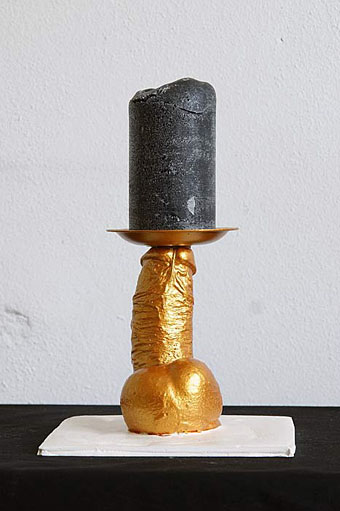
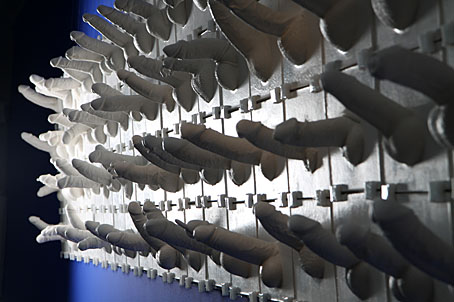
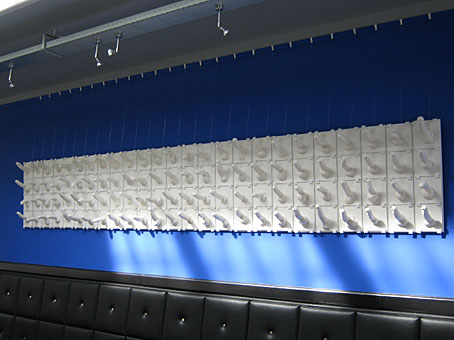
After the phallic parades of a couple of weeks ago, here’s something a bit more contemporary. Artist Jos Karis works under the name Josephtailor creating a variety of sculptural pieces in different media. Among the examples on his website there’s what appears to be a papier-mâché torso covered with a collage of gay porn pictures, and also a series of penises cast from plaster. The phallic works immediately bring to mind the penis memorials of Cynthia Plaster Caster, famous (notorious, even) for preserving in plaster form the erect members of notable musicians. Josephtailor’s casts seem to be anonymous (his site is short on detail) but he makes more of the end result. Cynthia has also made casts of women but not enough to create a Great Wall of Vagina like British caster Jamie McCartney. One of the contributors to McCartney’s wall was Ms Hayley Campbell who discussed the experience here. (Thanks to Paul for the Josephtailor tip!)

josephtailor2.jpg

Update: Josephtailor sent some pictures of 100, his phallic wall piece.

josephtailor3.jpg

Elsewhere on { feuilleton }
The gay artists archive

Previously on { feuilleton }
Return of the Triumphant Phallus
The Choise of Valentines, Or the Merie Ballad of Nash His Dildo
The fascinating phallus
The Triumph of the Phallus
Le Phallus phénoménal
Phallic bibelots
The New Love Poetry
Phallic worship
The art of ejaculation

Weekend links: Apocalypse not now

apocalypse.jpg

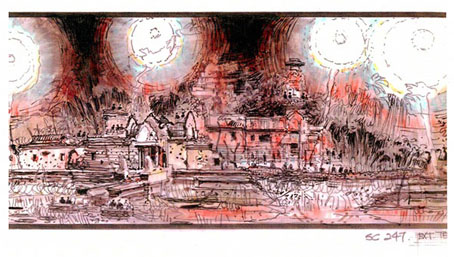
The Kurtz compound prior to destruction. An Apocalypse Now storyboard, one of a number which will be included among the extras on the Blu-Ray release of Francis Coppola’s film when it appears in the UK next month. The film is given a new cinema release on May 27th.

Radio broadcaster Harold Camping, a man denounced by fellow Christians as a false prophet, achieved one thing at least this week by making himself and his followers a global laughing-stock after the Rapture failed to materialise. I would have put money on him blaming those terrible gays somewhere along the way, such complaints being so common among a certain brand of American fundamentalist that you could write their sermons for them. Sure enough, here’s the old fool blathering about “lespianism” and describing the beautiful city of San Francisco as a cesspool. Shall we chalk this up as another victory for the gays, Harold? Related: No dogs go to heaven.

The internet has always been a home for ridicule but occasions like this bring out the wags in droves. The Oatmeal showed us how God is managing the Rapture using a Windows Install Wizard, and also pointed to a selection of sarcastic tweets. Meanwhile, this page has a comprehensive catalogue of previous apocalypse dates; the biggy is next year, of course.

Burroughs himself was no stranger to prosecution. In 1962 he was indicted on grounds of obscenity. Naked Lunch was not available in the US until 1962 and in the UK until 1964. The writer Norman Mailer and the poet Allen Ginsberg had to defend the book in court before the ruling could be reversed. In Turkey, it is now our turn to stand up for the novel.

Turkish writer Elif Shafak criticising the paternalism of the Turkish state in trying to protect its people from troubling novels. Related: William Burroughs publisher faces obscenity charges in Turkey.

An A–Z of the Fantastic City by Hal Duncan. “This guidebook leads readers and explorers through twenty-six cities of yore (Yore, while included, is one of the shorter entries).” Illustrated by Eric Schaller.

• The creepiest Alice in Wonderland of all, Jan Švankmajer’s semi-animated Alice (1988), receives a very welcome re-issue on DVD this month. With Brothers Quay extras and other good things.
smith.jpg

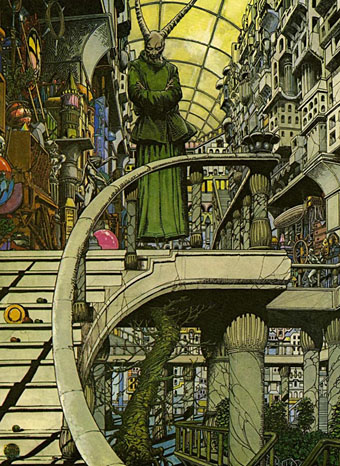
Robert E Howard’s sinister magus from the Conan stories, Thoth-Amon, as depicted by Barry Windsor-Smith. From a portfolio of five Robert E Howard characters, 1975.

What is computer music (or does it matter)? Related: A History of Electronic/Electroacoustic Music (1937–2001), 511 (!) downloadable pieces.

Unearthly Powers: Surrealism and SF: Rick Poynor explores the Tanguy-like strangeness of Richard Powers.

Magic Trip: Ken Kesey’s search for a kool place.

The Library of Congress National Jukebox.

Vladimir Nabokov’s butterflies.

Amy Ross’s Wunderkammer.

Rapture (1981) by Blondie | Apocalypse (1990) by William Burroughs | Rapture (2000) by Antony and the Johnsons.
Deutsche Kunst und Dekoration #24

dkd24-01.jpg

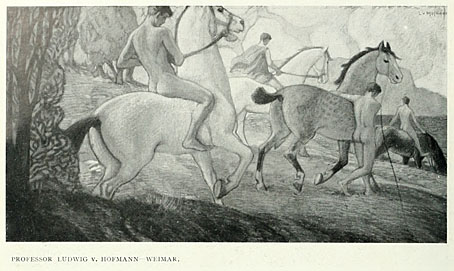
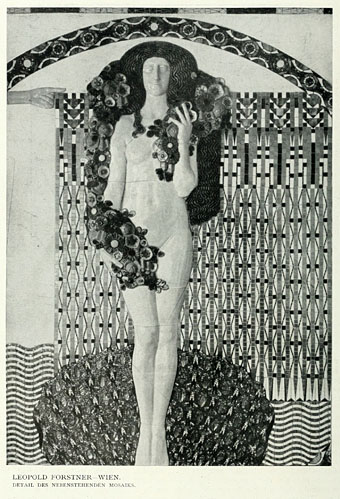
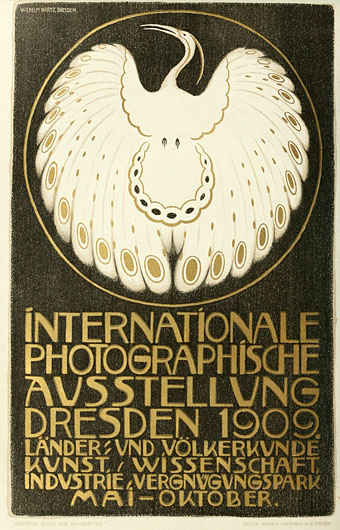
Continuing the delve into back numbers of Deutsche Kunst und Dekoration, the German periodical of art and decoration. Volume 24 covers the period from April 1909 to September 1909, and this is the penultimate edition that I’ll be posting samples from. The checkerboard designs of the Wiener Werkstätte are still being featured in this number but the focus here is on pictorial works rather than interior design. As before, anyone wishing to see these samples in greater detail is advised to download the entire number at the Internet Archive. There’ll be a final volume of DK&D next week.

dkd24-02.jpg

dkd24-03.jpg

Continue reading “Deutsche Kunst und Dekoration #24”

Jeffrey Catherine Jones, 1944–2011

jones1.jpg

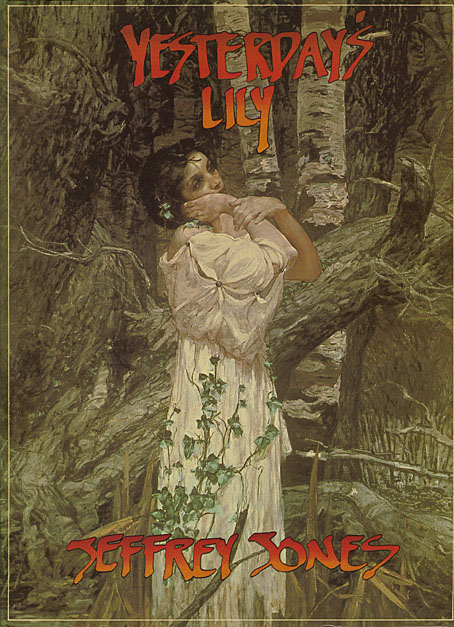
Yesterday’s Lily (1980), a collection of painting and illustration work published by Dragon’s Dream.

Artist Jeffrey Jones, whose death was announced this week, transitioned to Jeffrey Catherine Jones in the late 1990s so we’ll honour that here and won’t insist on referring to her as “he” as I’ve been seeing on some other websites. Jones’ work was significant for me mainly as a result of her participation in The Studio collective from 1975 to 1979, an affiliation of four artists—Jones, Barry Windsor-Smith, Mike Kaluta and Berni Wrightson—who shared a loft studio in New York City. The fruits of that relationship were recorded in one of my favourite art books, The Studio, in 1979. Of the four it was Barry Smith’s Pre-Raphaelite-inspired work which made the greatest impression at the time (especially Pandora), followed by Berni Wrightson’s Frankenstein illustrations. But Jones was the best painter in the group, with a style that blended influences from (among others) JM Whistler, Gustav Klimt and Frank Frazetta. There are galleries of paintings and drawings at the official website. Still to come is Better Things: Life & Choices of Jeffrey Jones, a documentary film by Maria Cabardo. Clips and trailers can be seen here.

A selection of paintings at Golden Age Comic Book Stories
The Studio Pt.1: Jeff Jones

Elsewhere on { feuilleton }
The illustrators archive

Previously on { feuilleton }
Roger Dean: artist and designer
Berni Wrightson’s Frankenstein