
Weekend links 60

fini1.jpg

Jean Genet (1950) by Leonor Fini.

• Bibliothèque Gay looks at a series of erotic engravings made by Leonor Fini for La Galère (1947) by Jean Genet. The author reciprocated with Mademoiselle: A Letter to Leonor Fini. At the hetero end of the erotic spectrum, Tate Liverpool will be showing a series of drawings by René Magritte produced for a proposed edition of Madame Eduarda by Georges Bataille. René Magritte: The Pleasure Principle opens next month.

George Clinton will be appearing with Nona Hendryx at the British Library on 18th June, to talk about “all things galactic”. In addition there’s a screening of John Akomfrah’s The Last Angel of History, a documentary about Afrofuturism and black science fiction. See an introduction to that here. Related: the Smithsonian’s National Museum of African American History and Culture has acquired the Parliament-Funkadelic Mothership for its collection.

• RIP Gil Scott-Heron. “Why does this colossus remain relatively unknown? Is he too political? Too uncompromising? Too angry? Too satirical? Too painful? Too playful? Too alive? Too black? Too human?” Jamie Byng in Gil Scott-Heron: poet, campaigner and America’s rough healer.
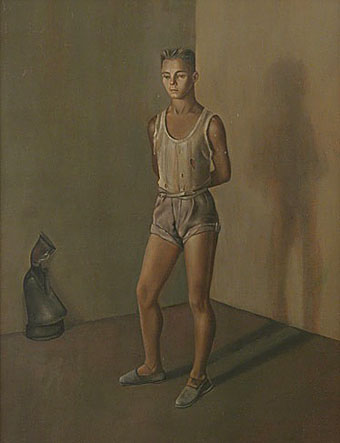
fini2.jpg

Le Fils du Maçon (1950) by Leonor Fini.

China Miéville examines alternative histories in Brian Aldiss’s The Malacia Tapestry, David Britton’s Lord Horror and Richard Curtis’s chilling dystopia, Notting Hill.

• What happened to Rolf-Ulrich Kaiser and Gille Lettmann when the Kosmische Musik dream collapsed? Find out here.

• Mlle Ghoul interviews Will Errickson of Too Much Horror Fiction about horror paperbacks, good and bad.

• Another Surrealist woman: Claude Cahun at Strange Flowers.

The Key of Hell: an eighteenth-century sorcery manual.

Partitura 001: realtime sound visualisation.

Scientific Illustration: a Tumblr.

Cosmic Slop (1973) by Funkadelic | Cosmic Slop (1991) by Material.
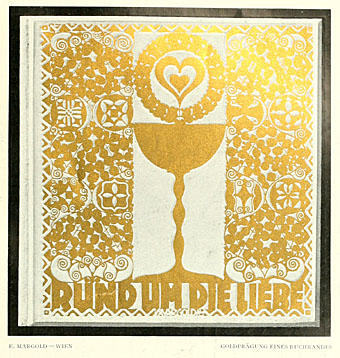
Deutsche Kunst und Dekoration #25

dkd25-01.jpg

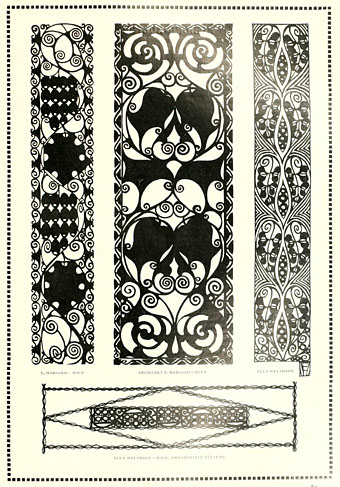
A design by Emanuel Margold.

This post concludes the delve into back numbers of Deutsche Kunst und Dekoration, the German periodical of art and decoration. Volume 25 covers the period from October 1909 to March 1909, and while the Internet Archive has further editions available they make a big jump after this number to 1923. The later editions are still interesting, of course, but in presentation and content they’re very different to what went before. Despite the text of these magazines being entirely German it’s been an education going through them not only for the detailed attention given to artists often passed over in books, but also for the articles reporting notable events in European art history as they happened. We have the Robarts Library of the University of Toronto to thank for having made these publications available.

dkd25-02.jpg

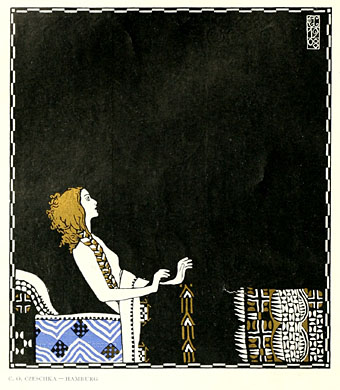
An illustration from a series by Carl Otto Czeschka for Die Nibelungen by Franz Keim.

dkd25-03.jpg

Continue reading “Deutsche Kunst und Dekoration #25”

Leonora Carrington, 1917–2011

carrington.jpg

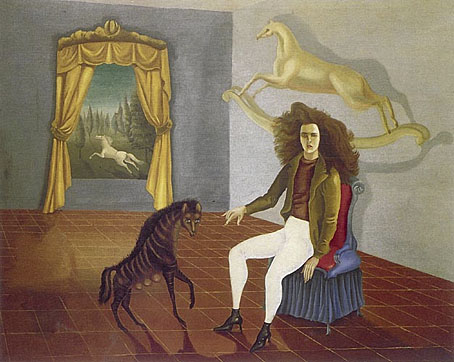
Self-portrait (1937–38) by Leonora Carrington.

Imagination and fantasy were two of the tools women artists used in the early decades of the 20th century to force their way into a male-dominated art world. The proliferation of illustrated books provided a creative platform in the Edwardian era for women shut out of art movements whose aesthetics might be avant garde but whose attitudes to sexual politics were either ignorant or reactionary. It was only with the advent of Surrealism that a notable body of women artists emerged in the field of painting and sculpture, not only Leonora Carrington but her almost namesake Leonor Fini, Dorothea Tanning, Remedios Varo, Meret Oppenheim, Kay Sage, Valentine Hugo and others. Part of this was the tenor of the time, of course, but Surrealism had no choice but to be open to anyone who came calling; if you’re going to let dreams and irrationality dictate the debate then everything that was previously fixed is up for grabs including gender dominance and sexuality. Leonora Carrington had a longer career than her contemporaries, and also distinguished herself as a writer of fantastic novels and short stories. Dalí aside, it could be argued that among the original Surrealists it was the women who stayed true to the project in subsequent decades. Max Ernst was a lover of Leonora and later married Dorothea Tanning but he left Surrealism after the Second World War for other styles of painting.

In Carrington’s work, mystical forces and surging instincts overpower the reign of reason. This is rebellion and liberation in the true surrealist sense. It is not the angry, testosterone-driven smack in the face typical of the high-profile showmen of surrealism. Rather, it is a low-key mystic subversion powered by the intrigues of seductive sibyls, sorceresses, and priestesses. (More.)

Among the obituary notices surfacing there’s a piece by Leonora’s cousin, Joanna Moorhead, who wrote a couple of years ago about her search for her celebrated relative, and a notice in the Telegraph. Ten Dreams has a small gallery of her paintings.

For Leonora Carrington by Peter Lamborn Wilson
• Coilhouse: Leonora Carrington – 6 April 1917 – 25 May 2011

Previously on { feuilleton }
Marsi Paribatra: the Royal Surrealist
Angels of Anarchy: Women Artists and Surrealism
Return to Las Pozas
The art of Leonor Fini, 1907–1996
Surrealist women
Las Pozas and Edward James

Bookplates from The Studio

studio01.jpg

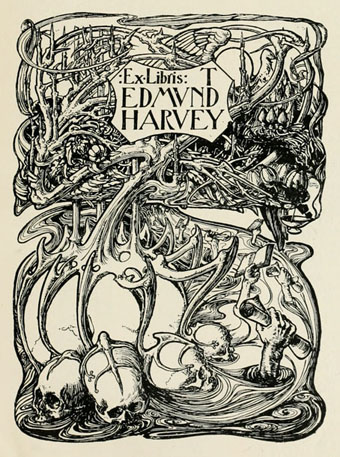
Cyril Goldie.

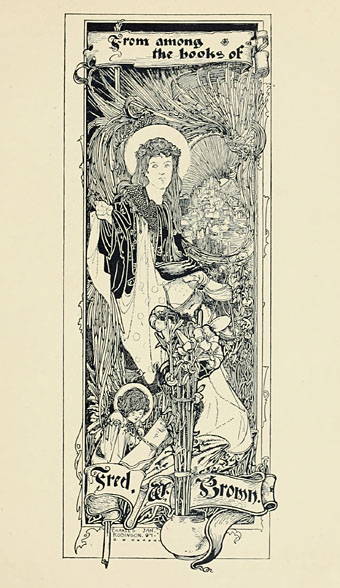
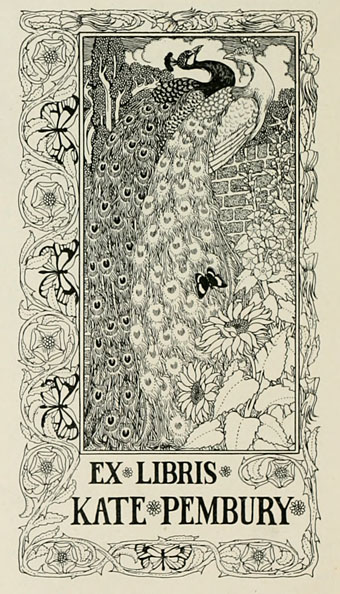
Selections from Modern Book-plates and their Designers, an overview of British, American and European designs published by The Studio magazine in 1898. These small Studio books are always good to see, not least for the period ads in the opening and closing pages. A couple of the designs are familiar from later reprints, notably Cyril Goldie’s remarkable accumulation of thorns and skulls. Many others are in the swirling and tendrilled style of Art Nouveau which The Studio did much to promote in Britain. Also of interest are a few entries from well-known fine artists who are seldom associated with this kind of design. Among these is Belgian Symbolist Fernand Khnopff who contributes a design of his own and an article about Flemish bookplate design.

studio02.jpg

Charles Robinson.

studio03.jpg

PJ Billinghurst.

Continue reading “Bookplates from The Studio”

Passage 15

passage15.jpg

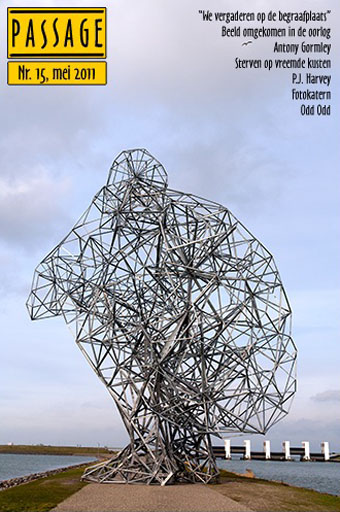
Directing your attention elsewhere again today, to the latest edition of Passage the Dutch webzine run by my good friend Ed Jansen. Number 15 is described thus:

Passage 15 is, with a few exceptions, entirely devoted to art. Images govern our lives, literally and figuratively. Gaudier-Brzeska nearly a hundred years ago and Antony Gormley today affect our way of looking. Odd Nerdrum does so with his painting on a very different way. The music of Polly Jean Harvey made us curious about her sources of inspiration. The piece about Gallipoli is actually a kind of enormous footnote to her latest cd “Let England Shake”. The photo section provides an overview of exhibitions and performances in the past few months in and around The Hague, Netherlands.

Seeing Gaudier-Brzeska’s sculptures reminds me that I haven’t seen Ken Russell’s film of the artist’s life, Savage Messiah, for many years. The large Antony Gormley work on the cover (Exposure) makes a welcome change from the artist’s cast-iron clones. I’m still waiting for Gormley to create the Ejaculating Man, a seawater-spurting statue he proposed for Seattle. It was rejected, of course, and it’s difficult to imagine any American city exhibiting something of that nature given the current climate. Maybe he should try Amsterdam.

futuro.jpg

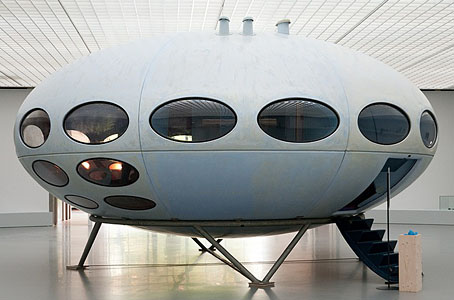
Back at Ed’s work, his varied Flickr stream includes some recent views of Futuro, a mobile holiday home designed by Matti Suuronen in 1968. What was once futuristic now has a Jetsons-like retro glamour.

Previously on { feuilleton }
Passage 14
Passage 13
Passage 12
Passage 11
Passage 10