Weekend links 312

nelson.jpg

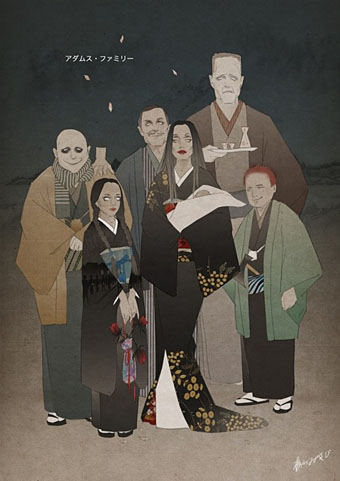
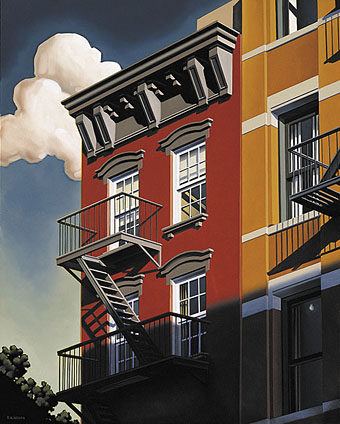
The Shadow by Kenton Nelson.

• The week in Coil: An interview by Derek de Koff, plus an extract from the new edition of England’s Hidden Reverse by David Keenan. Opening later this month at Ludwig, Berlin, is Chaostrophy, a Coil-related exhibition/celebration.

Strange Flowers remembers the incomparable Marchesa Casati, a woman who happens to feature in the book I’ve been designing and illustrating for the past few weeks. (More about that later.)

• “It wasn’t about how we could meet the demands of the book, but rather how the book meets us.” Ben Wheatley (again) talking to Jamie Sherry about bringing High-Rise to the screen.

• The latest release from Hawthonn is Sea-Spiral Spirit. The album has two accompanying videos: Pan Laws and Last Chimes From A Dormant Moon.

Alan Moore celebrates Chris Petit’s The Psalm Killer—a nerve-shredding Irish noir.

• Not a mix but a reading guide: The Brit Horror Mixtape collated by Mark West.

• More Penda’s Fen: Graham Fuller on the Romantic tradition in British film.

• Previews of Tooth by Raime, “a steadfast concoction of brooding dystopia”.

• “How big an issue is the nausea problem for Virtual Reality products?”

• FACT chooses 16 of the best songs powered by Sly and Robbie.

Geeta Dayal on the pioneering computer music of Bell Labs.

• Mix of the week: Finders Keepers’ Space Rock Special.

Paul Schütze: The True Art of Fine Fragrance

The Surrealist Legacy of Claude Lalanne

Les illustrateurs de Baudelaire

• RIP publisher Peter Owen

• Perfumed Garden Of Gulliver Smith (1967) by John’s Children | Perfumed Metal (1981) by Chrome | Fragrance (Ode To Perfume) (1981) by Holger Czukay

Weekend links 300

goudal.jpg

Observatoire IX from the Observatoires series by Noemie Goudal.

• “Before Lady Raglan’s intervention, this figure had been anonymous. She gave him a name: the Green Man.” Josephine Livingstone on the persistence of a supposed figure from pagan folklore.

Ben Wheatley: “Financing a film as crazy as [High-Rise] takes good casting”. Related (in a Ballardian sense): the abandoned hotels of the Sinai Desert.

• “We were in danger of becoming full-time, paid up musicians…” Drew Daniel and Martin “MC” Schmidt of Matmos look back over their career.

Fahey didn’t make many new friends with his scything dismissal of the folk revival. He distrusted the way that folkies regarded music as a carrier for the correct political messages of the moment. As Lowenthal puts it: “To him, the student idealists had naïve worldviews and dreamed of unrealistic political utopias,” whereas Fahey “attempted to channel darkness and dread through his music.” For Woody Guthrie and Pete Seeger devotees, the ideological message came first, with musical tone or trickery a distant second. As Fahey saw it, the dizzyingly strange source music they borrowed from and then built their careers on emerged as little more than a scrubbed-up ventriloquist’s doll, all the coarse grain and troubling metaphysic of its original voices jettisoned. He also detected high condescension and low reverse racism in how the folk-revival people preferred their old blues guys barefoot and wearing dungarees—even if they now usually dressed in sharp suits and often preferred to play amplified, electric urban blues.

Ian Penman on John Fahey

• “It’s amazing how quickly a sound can lose its moorings and float off into this kind of unchartered territory,” says Robin The Fog.

• Mixes of the week: FACT Mix 540 by Via App, and Secret Thirteen Mix 178 by BlackBlackGold.

Oliver Wainwright on Edward Johnston, designer of the typeface for the London Underground.

• At Dennis Cooper’s: DC’s: Spotlight on…The Free-Lance Pallbearers (1967) by Ishmael Reed.

Each drop of Hennessy X.O is an Odyssey: Nicolas Winding Refn makes an alcohol ad.

Wayne Shorter & Herbie Hancock pen an open letter to the next generation of artists.

Japan’s scariest manga artist (Junji Ito) loves Japan’s creepiest cosplayer (Ikura).

• “He was a sexual outlaw.” Jack Fritscher‘s love affair with Robert Mapplethorpe.

Peter De Rome: the RAF pilot who became “the grandfather of gay porn”.

The Strange Case of Mr William T. Horton

• RIP Big George Martin and Ken Adam.

Shortwave Radio World

Viriconium FAQ

Nine Feet Underground (1971) by Caravan | Green Bubble Raincoated Man (1972) by Amon Düül II | Betyárnóta (Outlaw Song, 1989) by Muzsikás

Weekend links 293

meyohas.jpg

Red Petals by Sarah Meyohas.

• “For MMoB, I want it to be like a [Werner] Herzog movie, so at our concerts the people on stage aren’t necessarily people who are named. We’re trying to create an entity that is beyond music and relates visually and sonically with everything in a way that’s different.” Randall Dunn talks to Simona Mantarlian and Daniel Jones about the Master Musicians of Bukkake and his production work for other artists.

• “Is reel-to-reel tape the new vinyl?” asks FACT mag. It’s certainly better than cassette tape (if less convenient) but it was always a niche format for albums, even in the 1970s. Rene Chun made a similar argument for an emerging trend last October. Those expensive machines do look tempting… Early adopters should start collecting here before prices rise.

Airwaves: Songs From The Sirens is a new release of spectral audio transmissions by A Year In The Country: “…a gathering of scattered signals plucked from the ether, cryptograms that wander amongst the airwaves…” Physical versions come with the usual plethora of monochrome artefacts.

A vivid memory to his friends, Litvinoff was one of those people whose performance was their life. His most lasting achievement was the profound influence he had on Performance – the hallucinatory film directed by Nic Roeg and Donald Cammell, and starring Mick Jagger, which captured the London of the late 1960s, merging pop stardom, violent criminality, illegal drugs, gender-blurring, the occult and Jorge Luis Borges.

Jon Savage on David Litvinoff

• Virgin Prunes “are THE #1 most underrated group of the post-punk era” says Richard Metzger. I’d say that honour goes to The Passage but the Virgin Prunes were unique even if they’re too often dismissed as a freak footnote in the U2 story.

Magic, Witches & Devils in the Early Modern World is a free exhibition at the John Rylands Library, Manchester, that will run until August 2016. Related: “John Dee painting originally had circle of human skulls, x-ray imaging reveals.”

• “What I’m seeing now is an awful lot of people just following things. We tried to find our own thing and ask, ‘What else is there?'” Charles Hayward on the past and present of post-punk band This Heat.

• “I’ve never been tempted to write anything that was not essentially nightmarish.” Thomas Ligotti in a comprehensive profile (originally run in 2010) at Dennis Cooper’s blog.

• Mixes of the week: An introduction to Stereolab by Jon Dale, and Silent Radio Transmission Jan 2016 by SilentServant.

• Kicked Toward Saintliness: Max Nelson on the dark erotics of Jean Genet’s Our Lady of the Flowers.

• Reverse Engineering: Danny Hyde on Coil, Backwards and NIN.

Fuck Yeah! Anna von Hausswolff

Harry Flowers (1970) by Jack Nitzsche | Flowers In The Air (1970) by Sally Eaton | Darkness: Flowers Must Die (1972) by Ash Ra Tempel

Weekend links 271

flyhead.jpg

Environment Transformer/Flyhead Helmet by Haus-Rucker-Co (1968). From Hippie Modernism at the Walker Art Center, Minneapolis.

• From 2006: Weird Tales: The Strange Life of HP Lovecraft. Geoff Ward examines Lovecraft’s life and work for BBC Radio 3 with contributions from Neil Gaiman, ST Joshi, Kelly Link, China Miéville and Peter Straub. Meanwhile, Ned Beauman wonders whether Ford Madox Ford is “as scary as Lovecraft”.

• Alexei German’s years-in-the-making feature film, Hard to be a God (previously), receives a UK release this week. Paul Duane reports on an overwhelming viewing experience, while Nigel Andrews says it “may be the greatest film since the millennium began”.

• Mixes of the week: Adventures In Sound And Music, 30 July 2015, hosted by Joseph Stannard, and RCMIX9 by worriedaboutsatan.

As Nabokov insisted, “Literature is invention. Fiction is fiction. To call a story a true story is an insult to both art and truth.” The genre thrives because its deceptions are liberating. For Wood, the thrill of reading fiction is intimately connected with the awareness that fiction constitutes “an utterly free space, where anything might be thought, anything uttered.” The excitement comes when, as readers, we’re allowed to participate in this freedom and experience the fiction imaginatively, without being required to believe that it is true.

Joanna Scott on The Virtues of Difficult Fiction

• “Writing used to be a solitary profession. How did it become so interminably social?” asks Meghan Tifft.

• The original, real-life dystopian cityscape of Kowloon Walled City, and the artwork it inspired.

• The Long, Lonely Walk: Nick Ripatrazone on hallways in horror films.

New cover designs for the Essentials range from Penguin Books.

Lemi Ghariokwu: “How I designed Fela Kuti’s album covers”.

• “Do CDs sound better than vinyl?” asks Chris Kornelis.

• Magic Fly (1977) by Space | Human Fly (1978) by The Cramps | I Am The Fly (1978) by Wire

Weekend links 262

rozich.jpg

You’ll Never Be Alone, Even In Death (2014) by Stacey Rozich.

• “But the CD-R format, which eventually replaced the mix tape, turned out to be a technological letdown. ‘CD-Rs are just such an unstable format,’ Margolis says. ‘When you made 10 cassettes, the 10 cassettes generally played. If you made 10 CD-Rs, 8 of them played and 2 of ’em skipped. So that partially explains why people are going back to cassettes—it’s a cheap format that actually works.'” A huge article by Lisa Hix on the history and resilience of cassette tapes.

• “The word speculative comes from speculum, or mirror, and with speculative music the goal is to mirror the hidden processes of nature in sound.” David Metcalfe on Hawthonn, Coil and imaginal landscapes.

• Mixes of the week: FACT Mix 498 by The Cyclist, and Adventures In Sound And Music 28 May 2015 compiled by Joseph Stannard.

Nabokov was an intimate writer. His reticences, his formal estrangements, his denial of interest in any reality beyond the text all need to be measured against that. Maximum closeness: not the closeness of ostentatious empathy but the closeness of one mind addressing another in the most thrilling terms. He speaks into the ear, sometimes dripping a little poison. He contrives to have a reader identify intimately with a protagonist or narrator, but even that is not enough; the reader receives secret handshakes from the author himself, behind a narrator’s back.

Michael Dirda quoting from Nabokov in America by Robert Roper

• Books old and new: The Encyclopedia of the Dead by Danilo Kis, and Stranger Days by Rachel Kendall.

• At Dangerous Minds: Il caso Valdemar (1936), a short Italian adaptation of the Edgar Allan Poe story.

Lustpiel is “a new online magazine for gay, lustful literature”. And a fair amount of art and porn.

• “Q: Is there any subject that is never acceptable to joke about?” No, says Curtis Brown.

Machines Are Obsolete, a new piece by Pye Corner Audio for the Ghost Box label.

• Ishbelle Bee (see yesterday’s post) is interviewed at SFFWorld and Book Swoon.

Laura June on the life of Djuna Barnes, stunt reporter and shocking modernist.

• Stream the debut LP from Ghost Harmonic, a new John Foxx project.

• Portraits of the BDSM community by Natasha Gornik.

Rainer Werner Fassbinder: 10 essential films

Loplop

Mirrorball (2009) by John Foxx & Robin Guthrie | Mirror (2012) by Emptyset | Mirrored (2013) by Silje Nes