Weekend links 598

lucier.jpg

The Wire, July 2004. Illustration and design by Non-Format. Christopher Cox’s interview with Lucier is available to read here.

• “I went into experimental overdrive. Lyrical motifs became literal imagery. A hammer shattering a plate of glass. A lyrical maze of geometric tunnels and formations.” Chris Mosdell talking to Aquarium Drunkard about writing lyrics for Yellow Magic Orchestra and others (you can hear his voice on YMO’s Citizens Of Science), plus the recording of his own debut album, Equasian.

• At Public Domain Review: “…this short, odd book confronts a question that has vexed naturalists for thousands of years: how do we account for the precipitation of animals?” Odd Showers; or, An Explanation of the Rain of Insects, Fishes, and Lizards (1870) by George Duncan Gibb.

• “…few writers on our list could have functioned in the culture that, today, sees literature as a profession for which you prepare like any other: going to the right school, meeting the right people.” Francine Prose on her encounters with the literary strange.

• “Where was glass first fashioned? How was it worked and coloured, and passed around the ancient world?” Carolyn Wilke presents a brief scientific history of glass.

• RIP Antony Sher and Alvin Lucier. In 1969 Lucier was sitting in a room different to the one you are in now. Elsewhere: Alvin Lucier at Ubuweb.

• New/old music: Zeitgeist: Ambient Music from 2012 to 2020 by Marco Simioni & Mattia Saviolo.

James Balmont on five unmissable films from the Japanese New Wave movement.

• At Spoon & Tamago: Illuminated paintings of Tokyo after dark by Keita Morimoto.

• Mixes of the week: XLR8R Podcast 724 by Laura BCR, and Isolatedmix 115 by HVL.

• At Strange Flowers: part two of James Conway’s Secret Satan end-of-year list.

• “Jony Ive’s first major design since leaving Apple isn’t what you’d expect.

• At Dennis Cooper’s: Yasuzo Masumura Day.

Glass (1968) by Sagittarius | Glass (1979) by Joy Division | Glass (2009) by Bat For Lashes

Weekend links 597

okazaki.jpg

Untitled art by Toshio Okazaki from JCA Annual 5, 1984.

• “Yeah, when I first started writing it, nobody knew what to call it at all. I mean, the publishers didn’t know what to call it. They thought that Tolkien was (writing about) a post-apocalyptic nuclear world. That’s the only way they could perceive an alternate world, in other words. And it was the same with Mervyn Peake… they’re all interpreted that way. The idea of putting ‘fantasy’ on a book meant usually meant that it was a children’s book. And if you put fantasy as the genre, they usually put ‘SF’ larger than ‘fantasy’ to show that it was what it was.” Michael Moorcock (again) talking to Derek Garcia about fiction, games, and (of course) Elric.

• “Non-payment, low payment, late payment and promises of jam tomorrow, or at some unspecified future date, bedevil the freelance life as they did five centuries ago.” Indeed. Boyd Tonkin on Albrecht Dürer, patron saint of stroppy freelancers.

• “All at once, Non-Stop Erotic Cabaret is tender, outrageous and daft.” Patrick Clarke compiles an oral history of Soft Cell’s debut album.

Yeah, it was kind of a media hype. In January [1967], the media said, [breathless] ‘Oh my god, San Francisco is the place to be. Come to San Francisco, wear flowers in your hair.’ So we had a meeting of the people in the Haight-Ashbury about how we were going to deal with so many people coming. The Diggers decided to kind of make it a university of the streets, an alternative anarchist culture.

We knew that all these people were coming to San Francisco, and we knew they weren’t going to stay. And we thought, well, the best thing we could do would be to kind of educate them about the kinds of things that are possible in society, and then let them go back to where they’re from, and they would carry these ideas. And that is what happened. We were quite successful in that.

Judy Goldhaft of the San Francisco Diggers talking to Jay Babcock for another installment of Jay’s verbal history of the hippie anarchists

• “What ‘impossible’ meant to Richard Feynman; what I learned when I challenged the legendary physicist,” by Paul J. Steinhardt.

• At Strange Flowers: part one of James Conway’s essential end-of-year shopping list, Secret Satan.

• Mixes of the week: Part II and Part III of the three-part At The Outer Marker series by David Colohan.

• At Dennis Cooper’s: Olivia Duval presents…Suave: A History of Les Disques du Crépuscule.

Mystery and Truth of the Cthulhu Myth, a Japanese guide to the Cthulhu Mythos.

• Intimacy, Loss and Hope: Inside Florian Hetz’s beautiful 2020 photo diary.

• New music: The Tower (The City) by Vanessa Rossetto/Lionel Marchetti.

Nite Jewel’s favourite albums.

• RIP Stephen Sondheim.

Nothing Is Impossible (1974) by The Interns | Mission Impossible Theme (1981) by Ippu-Do | Impossible Guitar (1982) by Phil Manzanera

Weekend links 595

dunwich.jpg

Dig the eldritch letterforms, man. Dean Stockwell as Wilbur Whateley making the High Sign on the cover of Les Baxter’s soundtrack album, 1970. That gesture, incidentally, goes back a long way.

• If you have an abundance of interstellar credits burning a hole in your stillsuit then you may be interested in bidding for the original of the book commonly known as The Dune Bible, the complete set of storyboards by Jean “Moebius” Giraud, together with designs by other artists for Alejandro Jodorowsky’s abandoned feature film. I keep hoping someone might turn this into an animated feature, something like René Laloux’s Time Masters but on a grander scale and with better animation (hello, Japan). 46 pages of scans from a limited printing of the book may be seen here.

• RIP Dean Stockwell. His 1995 interview in Psychotronic Video magazine is much better value than any potted biography.

• Bed-hopping, martinis and self-loathing: Emma Brockes on Patricia Highsmith’s unpublished diaries.

• At Spoon & Tamago: Tracing the footsteps of travelling Ukiyoe artist Kawase Hasui.

• Culture.pl examines the theoretical revolution of Nicolaus Copernicus.

Killian Fox on the cover designs for Penguin’s Modern Classics.

Nick Mamatas on his favourite genre-breaking mysteries.

• New music: HYbr:ID oval p-dance by Alva Noto.

• Mix of the week: Isolatedmix 114 by R.A.D.E.

Justin Robertson’s favourite music.

• At Dennis Cooper’s: Clock.

Jay Babcock at Substack.

The Clock (1968) by Ruth White | Clock Factory (1993) by The Sabres Of Paradise | Internal Clock (2009) by Monolake

Peculiar Shocks

bodyshocks02.jpg

My cover design for Body Shocks, the body-horror story collection edited by Ellen Datlow, appeared here back in March. Now that the book is out from Tachyon I can show some of the interior design. In the earlier post I mentioned cover drafts that featured anatomical illustrations, none of which worked as well as the eyeball collage that became the final cover. The rejected pieces were better suited to the interior which combines engraved illustrations with the kind of sans-serif typography you might find on modern medical labels.

bodyshocks03.jpg

The diagram of veins that fills out the contents spread looks like an illustration from a 19th-century edition of Gray’s Anatomy but it’s actually an illustration from a book about massage whose title I don’t seem to have made a note of. Gray’s is a thorough volume, being a complete guide to the human body, but the illustrations aren’t as large or as detailed as those you can find elsewhere. The header bands used to indicate the beginning of each story are from Gray’s, however, while many of the stories end with full-page plates from The Anatomy of Humane Bodies by William Cowper. These are mostly engravings of autopsies which I processed by inverting the images then overlaying them with parallel lines. You can still tell the pictures are medical illustrations but they’re not as obtrusive as they would be if they’d been left untreated.

bodyshocks04.jpg

Continue reading “Peculiar Shocks”

Crank book covers

kolosimo2.jpg

Cover art by Tony Roberts, 1974. A book I received as a present for Christmas, 1974. Also the first place I encountered the words “Popol Vuh”, before discovering the music of Florian Fricke and co. a few years later.

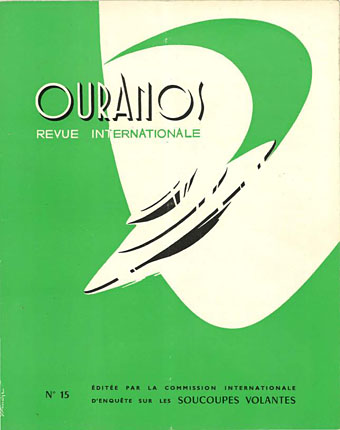
Yes, “crank” is a pejorative word but it’s used with some degree of affection, as in “harmless crank”. It’s also a convenient umbrella term for the books referred to in the weekend post which embrace diverse subjects, from lost continents and “Earth energy” to ancient astronauts and flying saucers.

The prime crank decade was the 1970s, a period when publishers were falling over themselves to cash-in on the massive popularity of Erich von Däniken’s dubious investigations, while also catering to the by-products of the hippy era and the occult revival. Books by Charles Fort, Immanuel Velikovsky and James Churchward (the Mu series) all received reprints, with some appearing in paperback for the first time. The British editions of these books were published by imprints like Corgi, Panther and Sphere who were also publishing large quantities of science fiction, a situation that led to many crank titles being packaged as though they were fiction or fantasy. Sphere was in the vanguard, presenting a wide range of books with the same cover designs, cover artists and Novel Gothic typeface as their SF titles. A cynical move, no doubt, but it also makes the crank books seem more like fiction than their authors might have intended.

This post presents a selection of crank titles with cover art by SF artists but there are many more examples out there. (Watch the skies!) I’ve limited the selection to British publishers but the same syndrome was evident in American publishing, as documented at Absolute Elsewhere. And I’ve included a couple of books by sceptics John Sladek and Dr. Christopher Evans. These were intended to dismantle the claims of L. Ron Hubbard, Erich von Däniken and co. but were still packaged in paperback to resemble the books they were attacking. The major demolition of Von Däniken is Ronald Story’s The Space Gods Revealed but covers for that one have always been relatively restrained.

Missing from this list are three paintings by SF artist Peter Jones for books by Dr. Celia Green. The art may be seen in Jones’s Solar Wind collection but I couldn’t find any of the printed covers, which suggests they had a limited run if they were printed at all. These are odd for being typical fantasy imagery attached to serious studies of lucid dreaming and out-of-body experiences. Dr. Green is a philosopher and science researcher (she coined the term “out-of-body experience”) so she doesn’t belong on a crank list in any case. Also absent is the most popular British cover illustrator of the decade, Chris Foss, who would have been too busy working through his fiction commissions and creating designs for feature films.

kolosimo1.jpg

Cover art by Tony Roberts (?), 1974.

evans.jpg

Cover art by Bruce Pennington, 1974.

Evans was a computer scientist, an occasional contributor to New Worlds magazine, and also the model for the deranged Vaughan in JG Ballard’s Crash. Cults of Unreason investigates crank sects such as the flying-saucer worshippers of the Aetherius Society (hence the cover art), and the Scientologists who caused a stir in Britain in the 1960s when L. Ron Hubbard set up an outpost at East Grinstead.

fort2.jpg

Cover art by Colin Hay, 1974.

fort1.jpg

Cover art by Angus McKie, 1979.

Continue reading “Crank book covers”