Weekend links 586

ertz.jpg

Cover by Gordon Ertz for The Inland Printer, June 1916.

• “I worry that enthusiasm is being mistaken for a moral virtue, and negative criticism for a character flaw.” Dorian Lynskey on the dying art of the hatchet job. Also a reminder (not that we require it) that the word “fan” in this context has always been an abbreviation of “fanatic”.

• Culture.pl explores the work of Stanisław Lem, the science-fiction writer “whose works, abilities and quirky sense of humor convinced Philip K. Dick that he was too brilliant to exist and must have actually been a committee of people”.

• The electronic music of Paul Schütze receives a reappraisal on Phantom Limb in November with a compilation album, The Second Law.

Aliya Whiteley on Amanita Muscaria, the hallucinogenic mushroom seen in hundreds of fairy-tale illustrations.

• Stuart Firestein talks to Roger Payne about changing the world’s attitude to whales by recording their songs.

• Jennifer Lucy Allan talks to Sam Underwood about his unique Acoustic Modular Synth.

Jóna G. Kolbrúnardóttir sings Odi Et Amo from Englabörn by Jóhann Jóhannsson.

• A forthcoming release on Dark Entries: Back Up: Mexican Tecno Pop 1980–1989.

• Luc Sante looks at Jim Jarmusch’s collages.

John Grant‘s favourite albums.

• RIP Michael Chapman.

• The Divination Of The Bowhead Whale (1978) by David Toop & Max Eastley | Keflavik: The Whale Dance (1980) by Richard Pinhas | Ballet For A Blue Whale (1983) by Adrian Belew

Weekend links 584

crowley.jpg

Cover for the 1970 US edition of Moonchild by Aleister Crowley. No artist credited (unless you know better…). Update: The artist is Dugald Stewart Walker, and the drawing is from a 1914 edition of Hans Christian Andersen’s fairy tales. Thanks to Mr TjZ!

• “…a very mid-Seventies cauldron of Cold War technology, ESP, sociology, black magic and white magic, experimental science and standing stones, secret radar and satanic rituals, whirring aerials and wild moors: a seething potion of Wyndham and Wheatley.” Mark Valentine on The Twelve Maidens, a novel by Stewart Farrar.

• “The line in the song ‘feed your head’ is both about reading and psychedelics. I was talking about feeding your head by paying attention: read some books, pay attention.” Grace Slick explains why those three little words have been attached to these pages since 2006.

Freddie deBoer reposted his “Planet of Cops” polemic, a piece I linked to when it first appeared in 2017, and which used to come to mind all the time before I absented myself from the poisonous sump of negativity that we call social media.

• RIP Charlie Watts. The Rolling Stones’ last moment of psychedelic strangeness is Child Of The Moon, a promo film by Michael Lindsay-Hogg featuring an uncredited Eileen Atkins and Sylvia Coleridge.

• Old music: A live performance by John Coltrane and ensemble of A Love Supreme from Seattle in 1965 that’s somehow managed to remain unreleased until now.

• A short film about Suzanne Cianni which sees her creating electronic sounds and music for the Xenon pinball machine in the early 1980s.

• “I’ll be in another world”: A rediscovered interview with Jorge Luis Borges.

Steven Heller explains why Magnat is his font of the month.

Clive Hicks-Jenkins on the allure of toy theatre.

• New music: Vexed by The Bug ft. Moor Mother.

• At Dennis Cooper’s: Nikola Tesla Festschrift.

Moon Child (1964) by The Ventures | Moonchild (1969) by King Crimson | Moonchild (1992) by Shakespears Sister

Weekend links 581

oz33.jpg

The back cover of Oz 33, February 1971. Art by Norman Lindsay.

Walker Mimms looks back 50 years to the trial of the editors/publishers of Oz magazine, in which the trio were accused of “conspiracy to corrupt public morals” following the appearance of Oz 28, the “Schoolkids Issue”, in May 1970. Elsewhere: corrupt your own morals by reading the offending issue; then see Hugh Grant in a hippie wig in The Trials of Oz, a BBC dramatisation of the courtroom drama; after which you can watch the real editors—Richard Neville, Jim Anderson and Felix Dennis—discuss the whole affair with other interested parties 20 years on (and also see Germaine Greer shame Jonathan Dimbleby into saying the word “cunt” on live TV).

• New music: Caves – A Compilation Of Silences by Other People (“This collection of silences and music can be used as timers for cooking, meditation, running, walking, sleeping or anything you want”), and Vaganten by ToiToiToi, the next release on the Ghost Box label.

Chris Carter‘s favourite albums. I think I own more of the albums listed here (including the ABBA) than any other entry in this long-running series. Which isn’t really surprising…

What I would say about that in general is what I’ve written in the new introduction to Teenage, which is that the 60s youth culture that we’ve been talking about, the progressive, critical side of it came as a complete surprise to adults. And once they identified what was going on, they were incredibly hostile, and authorities were incredibly hostile to it. And from the Thatcher government in the 80s you have a series of measures, a series of laws, a series of attitudes, a series of structures put in place to make sure that that never happens again. So youth itself has been deliberately depoliticised and also had a lot of the opportunities for any kind of autonomy taken away from it. That is, it has been a deliberate government policy right the way through, including Blair, and definitely with the current lot.

Echoes of the Oz debate in this discussion between Jon Savage and Owen Hatherley

• At Perfect Sound Forever: RIP Jon Hassell: honouring a one-of-kind musician/composer.

• At Spoon & Tamago: Edward Luper’s 36 Views of the BT Tower (after Hokusai).

• At Unquiet Things: Doorways into Awareness: An interview with Century Guild.

• Mix of the week: The Ivy-Strangled Path Vol. XXIV by David Colohan.

• Ghost notes: Michio Kurihara‘s favourite guitar solos.

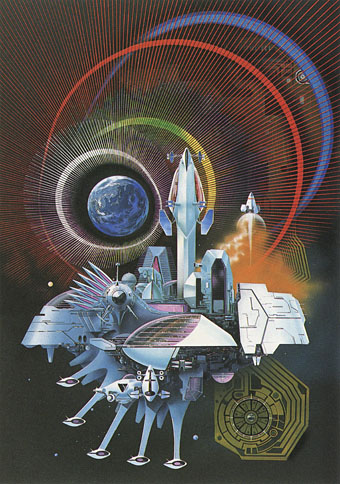
• “Future space travel might require mushrooms.”

• At Dennis Cooper’s: Alexander Hammid Day.

Wyrd Daze Lvl.4 FIVE STAR is live.

Like A Tear (1968) by The World Of Oz | Return To Oz (2004) by Scissor Sisters | Il Pavone Di Oz (Praslesh Remix) (2014) by Verrina & Ventura

Weekend links 580

kausch.jpg

The Collective Lie We All Live By, a cut-paper collage by Allan Kausch from Maintenant 15, A Journal of Contemporary Dada Writing and Art.

• “It’s unusual that an album manages to be at once so much of its moment, yet so much outside it. Time was unmistakably a response to the electronic and synth waves that rose in the wake of punk. It was also a concept album about time travel, which couldn’t have been more pre-punk had it been focus-grouped that way.” David Bennun on Time (1981), ELO’s masterwork of science-fiction pop. The first song on the album, Twilight, is a thundering piece of synth bombast that prefigures Trevor Horn’s equally bombastic productions, and was used to memorable effect in the copyright-infringing animation made in 1983 for the opening of Daicon IV.

• New music: Disciples Of The Scorpion by The Rowan Amber Mill, and Shade by Grouper.

• “Psychedelic spirituality: Inside a growing Bay Area religious movement“.

• “It’s time to farewell this project,” says Ballardian.

• At Wormwoodiana: the seven greek vowels.

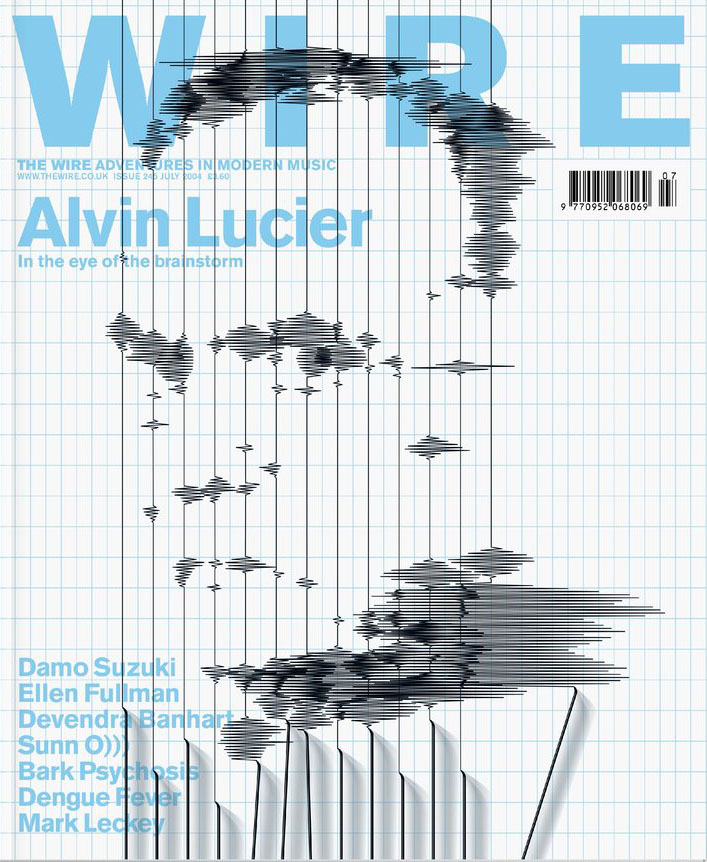
• A playlist for The Wire by Douglas Benford.

Norman Blake‘s favourite albums.

Astronomia Playing Cards.

• RIP Dusty Hill.

Time (1973) by David Bowie | Time (1976) by La Düsseldorf | Time (1992) by Lull

Pynchonian cinema

tpa.jpg

(Pynchonian? Pynchonesque? Pynchon-heads can no doubt supply the most common descriptor but for now Pynchonian will do.)

Is it possible to identify a Pynchonian strand in cinema? This question came to mind while I was reading the end of Gravity’s Rainbow, and probably a little before then during a scene that takes place in the Neubabelsberg studio in Berlin. The Pynchon reading binge is still ongoing here—after finishing the Rocket book I went straight on to Vineland, and I’m currently immersed in Mason and Dixon—so I’ve been watching films that complement some of the preoccupations in the Pynchon oeuvre, at least up to and including Vineland. This is a small and no doubt contentious list but I’m open to further suggestions. Inherent Vice is excluded, I’ve been thinking more of films that are reminiscent of Pynchon without being derived from his work.

Elements that increase the Pynchon factor would include: a serio-comic quality (essential, this, otherwise you’d have to include a huge number of thrillers); detective work; paranoia; songs; and a conspiracy of some sort, or the suspicion of the same: a mysterious cabal–the “They” of Gravity’s Rainbow—who may or may not be manipulating the course of events.


tpa2.jpg

The President’s Analyst (1967)
I’d be very surprised if Pynchon didn’t like this one. James Coburn as the titular analyst, Dr Sidney Schaefer, has little time to enjoy his new job in Washington DC before half the security services in the world are trying to kidnap him to discover what he’s learned about the President’s neuroses. This in turn leads the FBI FBR to attempt to kill Schaefer in order to protect national security. Pynchonian moments include a bout of total paranoia in a restaurant, Canadian spies disguised as a British pop group (“The ‘Pudlians”), and a visit to the home of a “typical American family” where the father has a house full of guns, the mother is a karate expert, and the son uses his “Junior Spy Kit” to monitor phone conversations. Later on, an entire nightclub gets spiked with LSD. This is also the only film in which someone evades abduction to a foreign country by the cunning use of psychoanalysis.
Is it serio-comic? Yes.
Is there detection? In the background: the CIA CEA and KGB agents have to work together in order to outwit the FBI FBR and discover who the ultimate villains might be.
Is there paranoia? You only get more paranoia in one of the serious conspiracy dramas of the 1970s like The Conversation or The Parallax View. (The latter includes the same actor who plays the All American Dad, William Daniels.)
Any songs? Yes. Coburn hides out for a while with the real-life psychedelic group Clear Light, and helps with their performance in the acid-spiked nightclub.
“They”? There are multiple “Theys” in this one.
Pynchon factor: 5. Maybe a 6 for the LSD.


nashville.jpg

Nashville (1975)
This one is a stretch but Robert Altman is the director I think of as closest to Pynchon’s sensibility even if individual works are light on the Pynchon factor. His films are often rambling, quirky and satirical—especially when he goes the ensemble route—but never too comic to avoid a sudden lurch into the dark. The Long Goodbye might seem a more likely choice, given the way it points to subsequent Chandler variations like The Big Lebowski (see below) and Inherent Vice, but it’s still Chandler’s story. Nashville is pure Altman, the best of his ensemble entries and my choice for his best film of all, a portrait of America in the mid-1970s where someone can be loved by millions yet still be a target for assassination. It’s worth noting that the director of Inherent Vice, Paul Thomas Anderson, was the insurance standby when Altman was directing his final film, The Prairie Home Companion.
Is it serio-comic? Yes.
Is there detection? No.
Is there paranoia? No, although as a portrait of the USA in the 1970s it can’t avoid a lurking sense of unease.
Any songs? Lots of songs.
“They”? No.
Pynchon factor: 2


simon.jpg

Simon (1980)
The debut feature from Marshall Brickman, Simon is an overlooked oddity with a great performance by Alan Arkin as a college professor, Simon Mendelssohn, who gets tricked by the Institute for Advanced Concepts into believing he’s an extraterrestrial. Parts of this play like a comic version of Altered States, which coincidentally was released the same year. Both films feature reckless quests for academic glory, flotation tank experiments (Simon includes a reference to Dr John Lilly), and regressions to earlier stages of evolution. Pynchonian moments include a church commune who worship the television, a gas that reduces intelligence, and a self-aware computer called “Mother” whose human interface is a giant phone receiver.
Is it serio-comic? Yes.
Is there detection? No.
Is there paranoia? A little.
Any songs? No.
“They”? The IAC are a small but powerful “They”, with carte blanche to foist their whims on an unsuspecting nation.
Pynchon factor: 2.5


tbl.jpg

The Big Lebowski (1998)
When the book trailer for Inherent Vice appeared in 2009 (with narration by the author himself…or was it? etc), a common reaction was “This sounds just like The Big Lebowski“. If The President’s Analyst is the closest Hollywood gets to The Crying of Lot 49 then The Big Lebowski may be the closest to Vineland‘s story of the youth of the hippy era coping with life in a world that’s passed them by.
Is it serio-comic? Yes.
Is there detection? Yes.
Is there paranoia? A little. Most of the time The Dude is more concerned with trying to keep up with his continual changes of fortune.
Any songs? Lots of songs on the soundtrack, plus the Busby Berkeley-style dream sequence.
“They”? Yes.
Pynchon factor: 4.5


huckabees.jpg

I Heart Huckabees (2004)
David O’Russell’s mélange of existential philosophy, environmentalism and coincidence is like Wes Anderson with a more political edge, and the kind of quirky comedy there was still space for in the Hollywood of the late 1990s/early 2000s. Jason Schwartzman is Albert Markovski, a poetry-writing environmental activist with a coincidence problem who turns to existential detectives, Vivian Jaffe (Lily Tomlin) and husband Bernard Jaffe (Dustin Hoffman), for a solution. “Everything is connected”, Bernard insists, so it’s no surprise that the presence of Lily Tomlin returns us to Nashville, while the pair require a little of Sidney Schaefer’s psychoanalysis to get to the bottom of Albert’s problems. Meanwhile, the Jaffes’ former pupil, Caterine Vauban (Isabelle Huppert), is lurking in the wings, tempting Albert with the attractions of sex and nihilist philosophy (shades of The Big Lebowski).
Is it serio-comic? Yes.
Is there detection? Yes.
Is there paranoia? A little. Albert is increasingly worried about losing control of his protest group.
Any songs? Shania Twain puts in an appearance but she doesn’t sing.
“They”? The Huckabees Corporation is a small-scale “They”, manipulating the environmentalists for their own ends.
Pynchon factor: 3.5


utsl.jpg

Under the Silver Lake (2018)
David Robert Mitchell’s surprising follow-up to the excellent It Follows is self-consciously Lynchian, and quite possibly self-consciously Pynchonian too. A long and rambling tale of burgeoning paranoia in the hip Los Angeles enclave of Silver Lake where slacker Sam (Andrew Garfield) discovers a web of interconnected mysteries after trying to find out why his attractive female neighbour has disappeared. It’s sinister, funny and bizarre, with mysterious deaths, hidden codes, treasure maps, chess games, pop music, Californian cults and more. Mitchell wisely avoids explaining too much which means the film now has a cult following determined to dredge its alleged secrets.
Is it serio-comic? Yes.
Is there detection? Yes.
Is there paranoia? Yes.
Any songs? Lots of songs, also a mysterious Songwriter character and an indie band, Jesus and the Brides of Dracula.
“They”? Multiple “Theys”.
Pynchon factor: 5


L49-01.jpg

Lodge 49 (2018–2019)
Several people recommended this TV series (thanks!) so here it is. And while Jim Gavin’s creation may not be a feature film it’s very definitely Pynchonian. See this post for details.
Is it serio-comic? Yes.
Is there detection? Yes.
Is there paranoia? A little. Dud and Ernie have a paranoid episode involving a drone.
Any songs? Yes, from the characters themselves and also from Broadcast and others on the soundtrack.
“They”? Once again, there are multiple “Theys”.
Pynchon factor: 49


Honourable mentions: WD Richter’s The Adventures of Buckaroo Banzai Across the 8th Dimension (1984) makes it to the Pynchon Zone via its appropriation of “Yoyodyne”, the name of the defence contractor from V. and The Crying of Lot 49. Despite this, and much as I like Buckaroo Banzai, I don’t think it’s Pynchonian enough for this list, although the writers at the defunct Pynchon site, Spermatikos Logos, might disagree. This archived page makes a case for the film, and also mentions a possible reciprocation from the author which I missed when I was reading Vineland.

Likewise, Richard Linklater’s debut, Slacker (1990), also came to mind. It has the requisite large cast of idlers and eccentrics (including a couple of conspiracy obsessives), plus a meandering yet connected structure, but it doesn’t otherwise seem Pynchonian enough.

Anything else I’ve missed?

Update 1: Added Lodge 49.
Update 2:
Further recommendations at Letterboxd.
Update 3: Finally added Under the Silver Lake.

Previously on { feuilleton }
Going beyond the zero
Pynchon and Varo
Thomas Pynchon – A Journey into the Mind of [P.]