Dissent

pen.jpg

If you believe in freedom of speech, you believe in freedom of speech for views you don’t like. Goebbels was in favour of freedom of speech for views he liked. So was Stalin. If you’re in favour of freedom of speech, that means you’re in favour of freedom of speech precisely for views you despise.

Noam Chomsky in Manufacturing Consent: Noam Chomsky and the Media (1992)

Terrorists don’t care about rights or laws so any debate about freedom of speech isn’t directed at them. I’d be more encouraged by the show of solidarity for dead cartoonists if I didn’t believe that many of those currently declaring their support will continue burning up social media in the next few months with demands that something be banned or stopped. We live in censorious times. Censorship (or the urge to see it enforced) never disappears, it migrates along with whatever happens to be taboo to current generations. In the 1970s much of the heat was around sexual content; today it’s predominantly about identity politics. Whatever the provocation, the results are the same: angry people step forward with a demand that something be forbidden. Last September a showing at the Barbican in London of Brett Bailey’s Exhibit B was cancelled after a petition and a demonstration outside the venue. Bonnie Greer wanted to make up her own mind but she didn’t get the opportunity:

These people largely reacted from hearsay, ideology, photos and the reactions of others who had seen it—not their own experience. I’ve seen people like this before, self-appointed judges, roaming the internet in search of what displeases and offends them. One protester went so far as to issue an absurd analysis of the possible psychological damage Exhibit B could cause the actors involved. It was ignorant and insulting psychobabble.

I don’t want to be stopped from seeing a work because, in their opinion, it’s “inappropriate”, “incorrect” or “racist”—words which are, at best, moveable feasts. I want to think for myself.

You’ll be seeing more movable feasts in the next few days when Anglophone commenters begin to discover that Charlie Hebdo was a full-spectrum offender rather like my colleagues at Savoy Books. When David Britton’s novel Lord Horror was being subject to Crown Court disapproval in 1992 The Independent wrote a prissy editorial complaining that the novel and a death metal album by Dismember were hardly worth the trouble of defending. These things weren’t art, they were trash, something that one of the UK comics mags (I forget which one) also complained about when discussing the Meng & Ecker prosecution. You can defend the principle of freedom of speech (or art) without agreeing with anything that’s being said, but for some people this often seems to be a step too far. Lord Horror escaped the obscenity charge thanks to Geoffrey Robertson QC but Meng & Ecker didn’t (comics being deemed trashier than novels by the court); my artwork for Hard Core Horror #5 was deemed obscene three years later in a separate trial in which Savoy were also declared to be unworthy of trial by jury because they were “not a bona fide publisher”. We don’t have a freedom of speech defence in Britain which is why history continues to repeat itself.

In the end all discussion about censorship comes down to this: who decides what is art and what is trash, what should be defended and what should be thrown to the dogs (or the gunmen)? You? Me? The Pope? Some guy in a ski-mask? Is freedom of speech only for the responsible people, for you and your friends? Or does it also apply to the irresponsible, the contentious, the trashy and the downright offensive? If freedom isn’t for everyone then someone, somewhere is willing to decide it’s not for you.
Weekend links 239

crystal.jpg

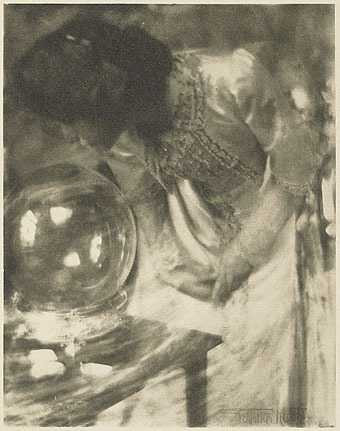
The Crystal Gazer (or The Magic Crystal, 1904) by Gertrude Käsebier.

• “I had to resort to extreme violence”: how Hipgnosis revolutionised the album sleeve. Aubrey Powell, last surviving member of the design team, talks to Joe Muggs.

• Mixes of the week: Radio Belbury: Programme 14; The Conjurer’s Hexmas by SeraphicManta; Secret Mix 139 by A Closer Listen.

• Social progress, high-speed transport and electricity everywhere: Iwan Rhys Morus on how the Victorians invented the future.

• At Cinephilia & Beyond: “The most complete investigation into the origins and making of Citizen Kane.”

Poor Souls’ Light: seven curious tales for the end of the year, and a dedication to Robert Aickman.

• Music and the Occult: Stuart Maconie and Rob Young spend an hour in the magick circle.

Alejandro Jodorowsky and Iain Sinclair in conversation at the British Library, July 2014.

• From 1972: An unpublished Victor Moscoso interview by Patrick Rosenkranz.

The Spooky Story Behind Hollywood’s Favourite Mansion.

The Lost World of British Tape Recording Clubs.

• 2014 was a year of outrage.

Wyrd Daze issue 11

Inspirograph

• Pepper-Tree (1984) by Cocteau Twins | Otterley (1984) by Cocteau Twins | Aikea-Guinea (1985) by Cocteau Twins

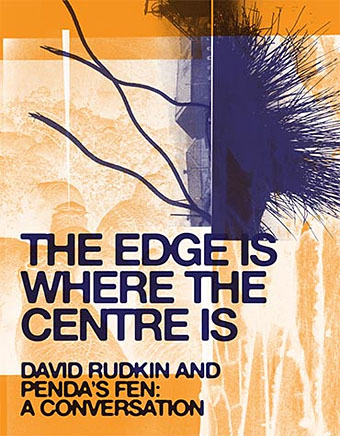
The Edge Is Where The Centre Is

pf1.jpg

Design by Rob Carmichael.

“I am afflicted by images, by things that are seen, pictures of things. They are extraordinary, momentary, but they stay with me.” (David Rudkin, 1964)

“The pattern under the plough, the occult history of Albion – the British Dreamtime – lies waiting to be discovered by anyone with the right mental equipment.” (Rob Young, Electric Eden)

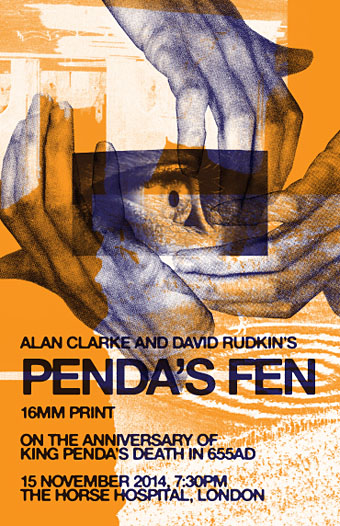
Penda’s Fen, written by David Rudkin and directed by Alan Clarke, is one of the key films in the pantheon of what has been called The Old Weird Albion. A radical archaeology of Deep England, a work of dark pastoral, a praise-song to anarchistic transformation, as militant a rejection of imperial identity as Lindsay Anderson’s If…, it culminates with perhaps the most euphoric revelation in British cinema: “My race is mixed. My sex is mixed. I am woman and man, light with darkness, nothing pure!”

The Edge Is Where The Centre Is, the first book devoted to this visionary and never-commercially-released film, has at its heart a rare and far-ranging interview with Rudkin (b. 1936), a writer who for more than fifty years has, in the words of Gareth Evans, “charted a vast topology of viscerally-realised primary narratives for our troubled times”. It also features new essays by its editors — Gareth Evans, William Fowler and Sukhdev Sandhu – that explore the film’s status as a radical horror film, an experimental topography, a work that anticipates subsequent political debates about Englishness. (more)

pf2.jpg

What could be more essential than a book (and poster) devoted to my No. 1 Cult Thing Of All Time? My copies are already on order. Even better, this is a publication from the same team—editor and designer—that produced The Twilight Language of Nigel Kneale last year, a celebration of another British television dramatist that sent me on a full-scale re-viewing of Kneale’s major works.

There’s no need to enthuse about Penda’s Fen when I did all that four years ago but there’s a couple of points worth making in the light of this publication. The first is that it’s surprising that a wider reappraisal of Rudkin and Clarke’s film has lagged behind the resurrection of so many other British TV dramas, especially those that deal with rural horror, those that share a mythic resonance or impart an atmosphere of dread. Surprising because almost all the recent resurrections—the BBC ghost films (one of which was written by Rudkin), Robin Redbreast, The Children of the Stones, etc.—are primarily entertainments with little subtextual meat on their bones. That’s not to say that a subtext can’t be found if you apply the usual academic tools but Alan Garner’s adaptation of Red Shift is one of the few films of this school that has much going on under the surface.

Penda’s Fen doesn’t need a subtext when so much of its polemic is out in the open. It’s one of the most interesting of these films in being so directly political on several levels at once, even when it’s also being directly metaphysical: a call for disobedience and nonconformity on a sexual as well as a social level that (unlike Ken Loach et al) manages to generate a succession of indelible images.

This leads to the second point, the comparison made above to Lindsay’s Anderson’s If…. The similarity between the two films has always been unavoidable for me when If…. is another film that sits at the top of the cult list (see this post). Both films share a rejection of school and society, and also share an approach to sexuality that was very unusual for the late 60s/early 70s. The difference between the two films lies in their conclusions: If…. ends with riot and massacre, and while this may be a cathartic moment Lindsay Anderson wrote in the published script: “It doesn’t look to me as though Mick can win. The world rallies as it always will, and brings its overwhelming firepower to bear on the man who says ‘No.'” By contrast, Stephen in Penda’s Fen defeats his mental demons. If the final shot is of him walking down the hill into darkness we can at least feel he’s on his way to a better life. “Cherish the flame.”

The Edge Is Where The Centre Is is limited to only 200 copies so if you’d like a copy I’d suggest you place your order now.

Previously on { feuilleton }
Afore Night Come by David Rudkin
White Lady by David Rudkin
The Horror Fields
Robin Redbreast by John Bowen
Red Shift by Alan Garner
Children of the Stones
Penda’s Fen by David Rudkin
If….
David Rudkin on Carl Dreyer’s Vampyr

Weekend links 228

moss.jpg

White, Red and Black (1949) by Marlow Moss.

• British television’s greatest director, Alan Clarke, rates on the cult scale here for his work on Penda’s Fen but his career was long, uncompromising and still hasn’t received the full appraisal it deserves. His more violent dramas—Scum, Made in Britain, The Firm, etc—have all appeared on DVD but many of his less notorious films can be hard to find. Paul Duane looks back at the remarkable Contact (1985), an hour-long study of the conflict in Northern Ireland, and a better film about soldiering than any number of big-budget features.

• I’ve wondered for years why one of the Daft Punk helmets seemed so familiar. It’s because they swiped the design from industrial designer and visual futurist, Syd Mead. Mark Wilson talked to Mead about wearable technology; Mr Mead, it seems, isn’t impressed by the French popsters. Related: paintings from Mead’s Sentinel (1979), and Syd Mead designs at Pinterest.

• Remembering that time in 1982 when Alan Moore interviewed Hawkwind. More interviews: Adam Bychawski talks to Jenny Hval about “sonic extremity, the violence of voyeurism and inhabiting bodies”, and Laurent Fintoni talks to (that man again) Bernard Szajner about Visions Of Dune, laser shows, and finding his way back to music.

Our attitudes towards work are extremely schizophrenic: we secretly aspire to sloth, while we loudly praise work. There isn’t an election poster that doesn’t promise more jobs. The call for more work is similar to the Stockholm syndrome, in which the victims of hostage-taking eventually develop a positive relationship with their captors.

Patrick Spaet on the universal employment fetish

• “Marlow Moss was one of Britain’s most important Constructivist artists…a radical lesbian and Drag King,” says Dal Chodha. An exhibition of Moss’s work has just opened at Tate Britain. Related: Marlow Moss: forgotten art maverick.

Yuki Koshimoto plays the Hang, aka the Spacedrum. Via Metafilter where there are more Hang links. The instrument was prominently featured in the score Cliff Martinez wrote for Solaris (2002).

• Broadcast’s Trish Keenan would have been 46 last week. James Cargill posted two demo songs for her birthday.

• At the BFI: Exclusive materials from the making of Powell and Pressburger’s The Tales of Hoffmann.

• Of Tutus and Tortures: Thoughts on the Decadent and the Weird by Christopher Burke.

Faber has launched a Modern Classics imprint with some smart cover designs.

• At Dangerous Minds: Good to see big scans of the Surrealists’ playing cards.

• Mix of the week: Afrofuturist Flowering by Nigel Rampant.

• Writer and editor Russ Kick has a new website.

Infographic: Why Readers Still Prefer Paper.

Superficial Music 1–3 (1981) by Bernard Szajner | Fahrenheit 451 (1982) by Hawkwind | Black Lake (2014) by Jenny Hval & Susanna

Weekend links 226

na.jpg

Fly (2012, detail) by Zhao Na.

• This week in psychedelia: the UK now has its own Psychedelic Society (just in time for the mushroom season), and is using some of my psychedelic Wonderland/Looking-Glass artwork for its headers and things. Over at The Quietus John Doran asks what makes music psychedelic in 2014, while a number of the site’s writers offer suggestions for a survey of modern European psychedelia (bonus points for using the alien head from the cover of Heldon 6: Interface at the top of the page).

Rick Poynor looks at posters by Hans Hillmann for Jean-Luc Godard’s films while at the BFI site four directors pay tribute to Hillmann. “…poster art has stagnated over the last 30 or 40 years,” says Peter Strickland. “It’s an embarrassment for film when one considers how the music industry has completely embraced the graphic form.” Related: lots of Hans Hillmann at Pinterest.

• More psychedelics (and more of the usual suspects), neurologist Andrew Lees on William Burroughs’ experiences with yagé and apomorphine, and DJ Pangburn on a word-search puzzle containing “every word Borges wrote”. The life and work of William Burroughs is celebrated in London next month with a one-day event, Language is a Virus from Outer Space.

• At Dangerous Minds: Kenneth Anger – Magier des Untergrundfilms (1970), a 53-minute documentary by Reinold E. Thiel. The subtitles are obtrusive but the material itself, which includes footage of Anger filming Lucifer Rising, is priceless.

• 73 minutes of Pye Corner Audio playing in Ibiza last month. More electronica: Colm McAuliffe talks to former members of the BBC’s Radiophonic Workshop.

The Assassination of Margaret Thatcher – August 6th 1983, an excellent story by Hilary Mantel who talks about her own assassination fantasies here.

• Mixes of the week: Cosey Fanni Tutti‘s 2014 Mix for Dazed Digital, and Secret Thirteen Mix 128 by DSCRD.

Pond i, a video for a new piece of music by Jon Brooks.

Tomorrow Never Knows (1966) by The Mirage | Tomorrow Never Knows (1976) by 801 | Tomorrow Never Knows (1983) by Monsoon