Weekend links 195

ethellerossignol.jpg

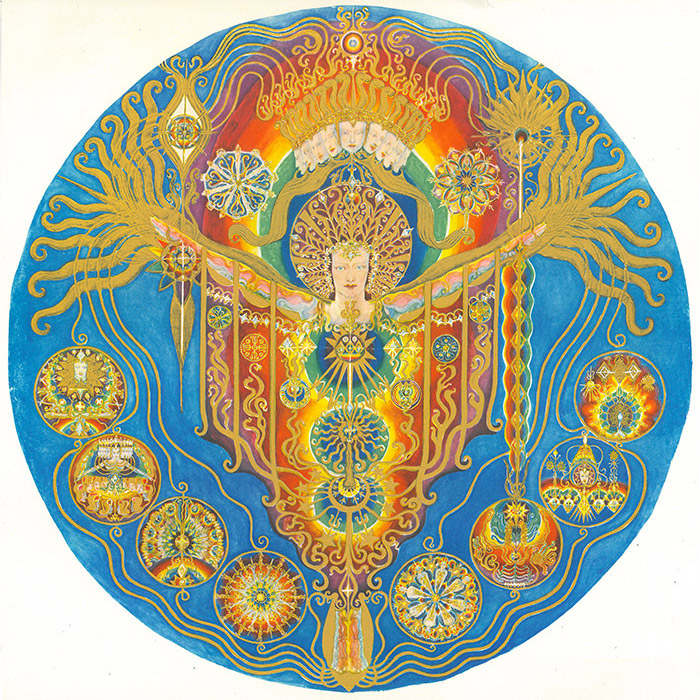
Untitled painting (c. 1920–1933) by Ethel le Rossignol depicting “the Sphere of the Spirit”. An exhibition of  Ethel le Rossignol’s channelled paintings takes place at the Horse Hospital, London, next month.

• “It’s always disconcerting to discover a favourite writer was kind of a jerk. How does this realization effect our understanding of Walter Benjamin’s work?” asks Morgan Meis.

• Mixes of the week: Georges Vert (aka Jon Brooks) presents The Pan-Europa Mix. Mr Brooks also unveiled another seasonal mix which he calls Winter Velvet.

• Knopheria by Chrome Hoof ft. Shingai Shoniwa. A video from the band’s latest album.

Without sci-fi trappings of any kind, The Metamorphosis forces us to think in terms of analogy, of reflexive interpretation, though it is revealing that none of the characters in the story, including Gregor, ever does think that way. There is no meditation on a family secret or sin that might have induced such a monstrous reprisal by God or the Fates, no search for meaning even on the most basic existential plane. The bizarre event is dealt with in a perfunctory, petty, materialistic way, and it arouses the narrowest range of emotional response imaginable, almost immediately assuming the tone of an unfortunate natural family occurrence with which one must reluctantly contend.

David Cronenberg on Franz Kafka’s story.

• “I was very much into now-ism.” Laraaji talks to Bobby Barry about his music.

• The Edge Question for 2014: “What scientific idea is ready for retirement?”

• Storybook Apocalypse: Beasts, Comets, and Other Signs of the End Times.

• Return of the wunderkammer: Philip Hoare on cabinets of curiosities.

• Birditis: Ian Penman on the “full catastrophe” of Charlie Parker.

• Rick Poynor on The Compulsively Visual World of Pinterest.

• RIP psychedelic poster artist Gary Grimshaw.

• At PingMag: The automaton clocks of Tokyo.

• Dust & Grooves: Vinyl music culture.

• Wunderkammern at Pinterest.

• Ligeti: String Quartet No. 1 “Metamorphoses nocturnes” (recorded 1978) The Arditti Quartet | Thru Metamorphic Rocks (1979) by Tangerine Dream | Metamorphosis (2012) by Demdike Stare
Weekend links 194

roberts.jpg

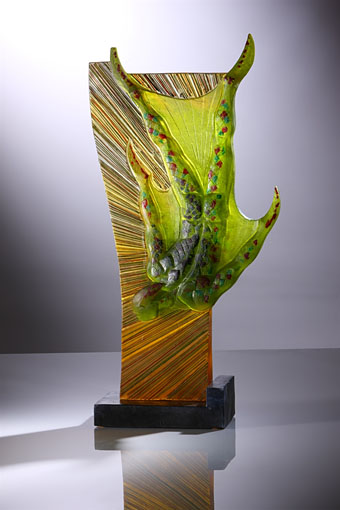
Untitled glass sculpture by Richard Roberts.

• Lord Horror: Reverbstorm, my collaboration with David Britton, makes The Quietus list of Literary Highlights of 2013. At the same site there’s Russell Cuzner talking to English Heretic. “His methodology takes in magick, psychogeography and horror film geekdom, along with firm roots in Britain’s industrial music culture of the early 1980s, to form potent, novel topographies of an otherwise unconnected world of occultists and psychopaths.”

• A slew of London links this week: Geoff Manaugh on how the capital was redesigned to survive wartime blackouts, a piece which inadvertently explains why you see so much black-and-white street furniture in post-war films | Bob Mazzer’s photos of the London Underground in the 1970s and 1980s | Philipp Ebeling’s photos of the capital and its inhabitants today.

• “Science has become an international bully. Nowhere is its bullying more outrageous than in its assault on the phenomenon known as subjectivity.” David Gelernter on “The Closing of the Scientific Mind”. Related: “When Science Becomes Scientism” by Stanislav Grof.

• My favourite book about Orson Welles is This is Orson Welles (1992), a collection of Peter Bogdanovich’s interviews with Welles edited by Jonathan Rosenbaum. Bogdanovich’s interview tapes can now be heard at the Internet Archive.

• Brian Dillon on Dada collagist Hannah Höch who he calls “art’s original punk”, and Sean O’Hagan talking to another collage artist, Linder Sterling, who says “Lady Gaga didn’t acknowledge I wore a meat dress first”.

• One Hundred Years Of Weird Fear: Daniel José Older on HP Lovecraft’s literature of genealogical terror. More fear (and Lovecraft): Will Wiles on the growth of Creepypasta.

• The Last Alan Moore Interview? A lengthy discussion with Pádraig Ó Méalóid. Shunning interviews hasn’t done Cormac McCarthy any harm so if I was Alan I wouldn’t worry.

• And speaking of Cormac McCarthy, the headline of the week: “Cormac McCarthy’s ex-wife busted after pulling gun from vagina during alien argument“.

• Where the bodies are buried: Mick Brown presents a potted biography of Kenneth Anger who offers a few reluctant quotes.

• A short animation for gore-obsessed kids: Pingu’s The Thing by Lee Hardcastle.

• Helen Yentus designs a 3D-printed slipcase for a novel by Chang-rae Lee.

• Ralph Steadman‘s illustrations for Alice’s Adventures in Wonderland.

• Mix of the week: Secret Thirteen Mix 103 by Lustmord.

• Collage art at Pinterest.

• No Escape (1966) by The Seeds | Pushin’ Too Hard (1966) by The Seeds | No Escape (1979) by Cabaret Voltaire | Pushin’ Too Hard (1982) by Paul Parker

Weekend links 193

gauger.jpg

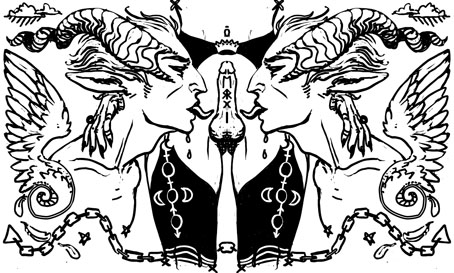
A Problem Glyph by Eliza Gauger. Problem Glyphs are “symbolic illustrations … drawn in response to problems sent in by tumblr users”.

• Kosmische Night takes place at the Museum of Bath at Work, Bath, Somerset, on January 25th (Rescheduled to February 22nd).  “…a celebration of all things Teutonic for anyone who enjoys Neu!, Can, Tangerine Dream, Stockhausen and Kraftwerk,” say the organisers. Also on the bill, The Electric Pentacle, a Carnacki-esque collaboration between Narco Lounge Combo and The Levels.

• Shock Headed Peters’ Fear Engine II: Almost As If It Had Never Happened. Joe Banks on Karl Blake, “…one of the most fascinating and colourful characters to emerge from the fertile loam of the post-punk scene”.

• “The great question in the film and the tale is not the existence of the ghosts but the way the governess understands their no-longer-lived lives and desires.” Michael Wood on The Innocents.

Nobody, however, is a greater authority on the intersection of porn and alternative spirituality than Annie Sprinkle. Beginning as a prostitute in the 1960s and 70s, she entered porn in the pre-AIDS era and made over two hundred films. She then jumped into a career as a sex-positive author and educator, which brought her into close conflict not only with feminists like Andrea Dworkin and Catharine MacKinnon, but also right-wing patriarch Jesse Helms, who denounced one of her sex magick performance pieces on the floor of the Senate. For Sprinkle, both sexuality and performance are explicitly spiritual and magical, part of her role as a cultural shaman.

In the Valley of the Porn Witches by Jason Louv.

• Stars of the Lid and Wordless Music Orchestra playing for two hours last month at the Basilica of Our Lady of Perpetual Help in Sunset Park, Brooklyn.

• Rick Poynor on the late Martin Sharp’s contributions to People, Politics and Pop: Australians in the Sixties (1968) by Craig McGregor.

• Maggie Greene on The Woman in Green: A Chinese Ghost Tale from Mao to Ming, 1981–1381.

• “TED actually stands for: middlebrow megachurch infotainment,” says Benjamin H Bratton.

• Geoff Manaugh on how corpses helped shape the London Underground.

• Tony White on Eduardo Paolozzi at New Worlds by David Brittain.

• Mix of the week: Secret Thirteen Mix 102 by Frank Bretschneider.

• At Dangerous Minds: film of Syd Barrett‘s first psychedelic trip.

• NYPL Wire: a New York Public Library Tumblr.

• Microbial art by Eshel Ben-Jacob and others.

• Interstellar Rock: Kosmische Musik (1974) by The Cosmic Jokers | I, Bloodbrother Be (1984) by Shock Headed Peters | Obscene and Pornographic Art (1991) by Bongwater

Opening the Seven Gates of Transcendental Consciousness

burchette1.jpg

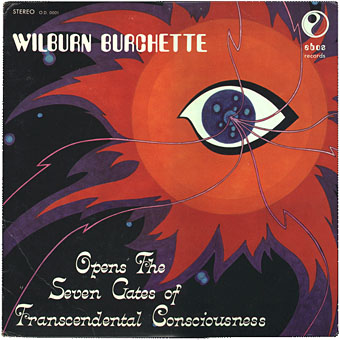
Wilburn Burchette Opens The Seven Gates Of Transcendental Consciousness (1972). Art by Caren Caraway.

For the next two weeks I’ll be playing out the end of the year with a 2-CD compilation from Light In The Attic, I Am The Center (Private Issue New Age Music In America, 1950–1990), 20 tracks of ambient/meditation music, most of which has never been widely distributed before. The “New Age” label is a thing I’ve loathed for years so buying this has meant trashing a decades-long embargo; it helps to examine your prejudices now and then.

burchette2.jpg

New Age in the 1970s referred, among other things, to the oft-promised, seldom-evident “Age of Aquarius”, a term vague enough to be used on albums by Steve Hillage, Manuel Göttsching and others without referring to anything specific. In the 1980s it was taken up by publishers as a marketing label, a catch-all for anything “spiritual” or mildly occult. (I can’t imagine the Goetic Demons ever being called New Age, even if you sprayed them pink.) Out went all the witchy strangeness of the occult boom of the 1970s—spiky typefaces, magical primers sold like Dennis Wheatley novels—in came a profusion of pastel shades, airbrushed pyramids and sparkly, crystal things. Having a fondness for the witchy strangeness I wasn’t impressed. I was even less impressed when New Age became a prevalent label for a style of instrumental music which was too obtrusive to be ambient (in the Brian Eno sense of the word), and also too bland and unassertive to be either jazz or electronica. The popularity of labels such as Windham Hill meant that the large record chains started using New Age as another catch-all label, this time for anything that wouldn’t fit the rock, jazz or folk categories. Along with Windham Hill releases you’d find Eno’s ambient recordings, Harold Budd, Jon Hassell, various German things like Cluster, and anything else that resisted easy labelling. The way the music business tries to hammer everything into a small number of boxes has always been annoying but this seemed like a major insult, hence my loathing of the term.

burchette3.jpg

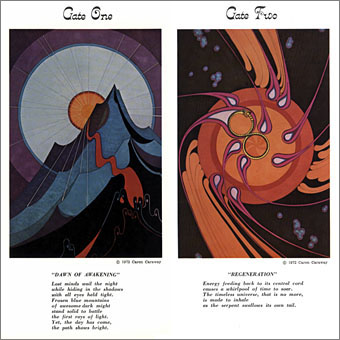
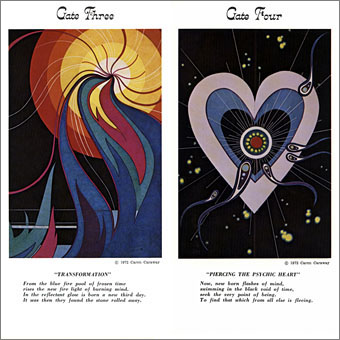
I Am The Center is a curious album in that it embraces both the recent New Age music label while also harking back to the spiritual yearnings of the 1970s. The general effect is of an impossible collision between the Harold Budd of Pavilion of Dreams, Steve Hillage’s Rainbow Dome Musick, and the lighter moments of Alice Coltrane. Many of the tracks are so good I’ve been searching through Discogs.com to discover more about the artists which is how I came across this album art from Wilburn Burchette. Witch’s Will is Burchette’s track on I Am The Center, from his Guitar Grimoire (1973) album. Looking through his discography, with its attention-grabbing titles and cover art, it’s surprising that his albums haven’t yet been reissued. This will no doubt change soon, especially when his music is like an American equivalent of Achim Reichel’s spacey guitar improvisations. The sleeve and booklet art for Wilburn Burchette Opens The Seven Gates Of Transcendental Consciousness is by Caren Caraway, and the album features notes by the indefatigable UFO/paranormal researcher Brad Steiger. They really don’t make them like this any more.

Joe Muggs enthused about I Am The Center last month for FACT. As I said about the Outer Church album earlier this year, compilations provide an invaluable service in concentrating the attention on overlooked or under-examined areas of music. I’m looking forward to seeing what emerges in the wake of this one.

Continue reading “Opening the Seven Gates of Transcendental Consciousness”

Aleister Crowley: Wandering The Waste

crowley1.jpg

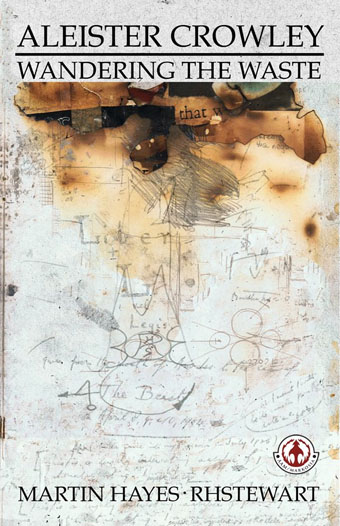
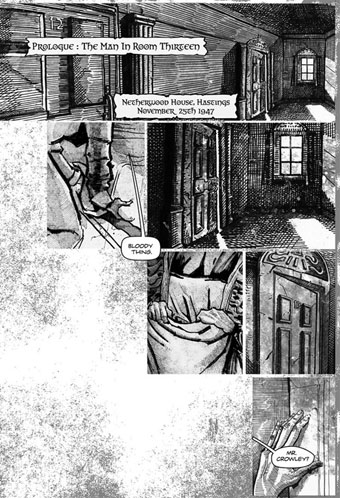
I mentioned this graphic biography of Aleister Crowley earlier in the year but pressure of work has meant it’s taken me all this time to finally read it. Aleister Crowley: Wandering The Waste is written by Martin Hayes and illustrated by RH Stewart. The title alludes to Alastor, or The Spirit of Solitude, a Shelley poem concerning an itinerant poet with whom Crowley often identified.

Crowley isn’t a stranger to the comics world but this book is the first I’ve encountered that devotes itself to the facts of the man’s life rather than using his notorious persona as a general purpose scare figure. Crowley’s life was nothing if not eventful: in addition to the numerous rituals and magickal exploits, he was also a serious mountaineer, and something of a globetrotter before his inheritance ran out; he wrote novels, memoirs, several volumes of poetry, even more volumes of occult philosophy, and was a world-class drug-taker and libertine in an age when sexual escapades of the mildest sort could provoke the deepest outrage.

Given all of this you’d expect somebody to have tried to film his life by now, but doing so presents a number of problems. Period biopics are by their nature very expensive which is why they tend to take the least controversial figures for their subjects. Crowley isn’t only controversial, his life’s work remains esoteric and difficult for a general audience; you’d have to work hard to dispel Devil Rides Out clichés for people who’ve never opened an occult book. There’s no life without the magick, however, so you’re unlikely to get either trying to follow the costume-drama route. In the past I’ve thought that a better solution would be to adopt the jigsaw approach used in François Girard’s Thirty Two Short Films About Glenn Gould (1993); significant moments could be dramatised as they are in the Gould film while other sections could be more graphical, abstract or theoretical.

crowley2.jpg

Hayes and Stewart’s book goes for the traditional biopic approach (albeit with some deviations), there being no reason not to when you have an unlimited budget. It’s 1947, and Crowley in his Hastings nursing home remembers his life for a young visitor, delivering a narrative that ranges across seventy years, and which acknowledges the more scandalous moments whilst also repudiating some of the rumours. Hayes backs up his facts with copious endnotes, some of which offer more detail about disputed incidents. Alan Moore and Eddie Campbell’s From Hell is the obvious progenitor here; both books show the strength of comics in being able to deliver historical material in a visual form without having to worry about the constraints of cinema.

Stewart’s artwork is from the sketchy, collaged Sienkiewicz/McKean school of comic art. In some scenes I would have preferred more visual detail but then having drawn historical comics myself I know how difficult it can be having to research the appearance of every last piece of clothing or furniture. (The lettering is also afflicted with a few typos.) Some of the scenes away from 1947 are delivered in a fragmented, hallucinatory style in which occult figures and symbols are confused with Crowley’s memories. The technique enables many years to be covered without padding the book to doorstop size while also keeping the magick as a continual background presence. It’s quite a change to have the aged Crowley as the focus for once, a dishevelled magus rather than the usual libidinous firebrand. After so much turmoil, there’s always a sombre atmosphere around the Great Beast’s less-than-beastly final days, although they were considerably more peaceful than those of some of his wives and associates. Whatever regrets or disappointments Crowley may have felt, his books are still in print, and we’re still talking about him.

The Atlantis Bookshop in London has been showing some of Stewart’s artwork throughout this month. I’ve always liked the way the Atlantis doubles as a mini-gallery, I saw some Austin Spare drawings there a few years ago; it’s a good venue, and the ideal place to view this work. The exhibition will run to December 24th.

Previously on { feuilleton }
• Brush of Baphomet by Kenneth Anger
• Rex Ingram’s The Magician
• The Mysteries of Myra
• Aleister Crowley on vinyl