Weekend links 352

taggart.jpg

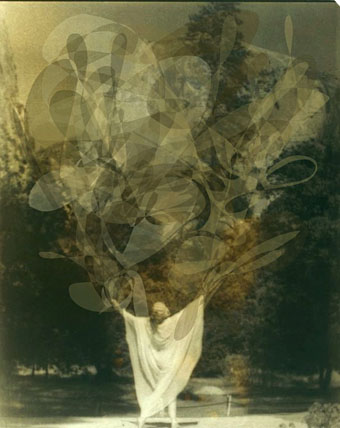
Table-Tipping Workshop at Rev. Jane’s House, Erie, Pennsylvania, 2014 by Shannon Taggart.

• Canadian electronic musician Sarah Davachi talks to Erik Davis about analogue synthesizers, reverberating cathedrals, attention spans, and her ambient drone album All My Circles Run.

• Orson Welles’ The Other Side of the Wind may now be released by Netflix. (I’m restraining my excitement for the moment since this one has been a long time arriving.)

• Mixes of the week: VF Mix 86: Jah Shaka by Roly Porter, Secret Thirteen Mix 215 by Twins, and What Good Is God? (1:11:11.111 Melon Collie Mix) by Gregg Hermetech.

• Making sense of The Weird and the Eerie: Roger Luckhurst reviews the final book from the late Mark Fisher.

• Pye Corner Audio has been very productive this year (I’m not complaining); the latest release is The Spiral.

• “I don’t like acceptance,” says Cosi Fanni Tutti, “it makes me think I’ve done something wrong.”

• Jon Brooks on the Continental inspiration for his next album, Autres Directions.

Séance: Spiritualist Ritual and the Search for Ectoplasm by Shannon Taggart.

• Corny and clichéd: Matthew Bown on bad painting in the twentieth century.

• At Wormwoodiana: Douglas A. Anderson on Borges and a forgotten book.

• At the BFI: Samuel Wigley chooses 10 great films set in the jungle.

Jungle Flower (1951) by Les Baxter | Jungle Fever (1973) by The Upsetters | The Jungle Dream (1973–1980) by Patrick Cowley

Weekend links 351

burgkmair.jpg

Herald on Griffin (1516-1518) from The Triumphal Procession of Emperor Maximilian I series by Hans Burgkmair the Elder.

• My design and illustration work for Pirate Utopia by Bruce Sterling continues to gain favourable comments, a novelty when reviewers often pass over the visual component of the books under their consideration. One of the most recent examples is in the latest edition of Locus Magazine; this can only be read in full by subscribers but the Tachyon Tumblr has an extract.

Paul La Farge on the complicated friendship of HP Lovecraft and Robert Barlow. Related: The Night Ocean, a short story by Barlow & Lovecraft. Meanwhile, Lovecraft enthusiasts are still raising money for a Providence statue (spot my art and design work in the photo of the Lovecraft Art and Sciences Council).

• At The Quietus this week: Children Of Alice talk to Patrick Clarke about audio collage and English Surrealism, Lottie Brazier enters The Strange World of Annette Peacock, and Manuel Göttsching tells Robert Barry how Ash Ra Tempel became the loudest band in Berlin.

• “Mind the doors!” Eight reviewers pick ten films featuring the London Underground. Not a bad list but choosing a Doctor Who film while ignoring the great Quatermass and the Pit (1967) is an error.

• Mixes of the week: Swedenborgian Hobos by acephale, Secret Thirteen Mix 214 by Fabio Perletta, and a mix for NTS by Six Organs Of Admittance.

• More Surrealism: Leonor Fini, Surrealist Sorceress, a lecture by Dr Sabina Stent, will take place at Treadwell’s Bookshop, London, on 19th May.

• “Michael Chapman’s road-weary guitar resonates with a new generation,” says Joel Rose.

A Journey Round my Room (1794), a book by Xavier de Maistre.

Lyrical Nitrate (1991), a film by Peter Delpeut.

The Sorcerer (1967) by Miles Davis | Impressions Of Sorcerer (1977) by Tangerine Dream | Venom Sorcerer (2014) by Cultural Apparati

Weekend links 350

eaton.jpg

Transition H50 (2016) by Jessica Eaton.

• One of my weekend posts in 2012 contained details about Taking Tiger Mountain, a low-budget feature film put together in 1983 by Tom Huckabee using footage originally shot in Tangier and Wales in the 1970s. Huckabee’s film is a strange “experimental” work of science fiction, based in part on William Burroughs’ Blade Runner script (no relation to the Ridley Scott film apart from the title), and described here as “a psychotropic apocalyptic odyssey”. The most notable aspect of the film for many will be the presence of a young Bill Paxton in the lead role, something I was reminded of when Paxton’s death was announced earlier this week. Five years ago there was only a short clip of Taking Tiger Mountain available on YouTube but since then a full copy has appeared; watch it here while you can. (The widescreen frame is cropped, and the sound is all in one channel but it’s still watchable.) Tom Huckabee talked about the film’s production (and the Burroughs connections) to Beatdom. A curio that deserves wider attention.

• “With Biller, the references come thick and fast. In The Love Witch, she channels, among others, 50s Hitchcock, Douglas Sirk’s lurid lushness, Rainer Werner Fassbinder’s deadpan gaze, Nicholas Ray’s poetry, Sam Fuller’s tabloid style and Todd Haynes’s revisionist sexual politics. […] Then add the Technicolor, widescreen, haute-Hollywood “women’s pictures” of the 50s, a touch of Hammer Studios, The Wicker Man, Rosemary’s Baby and any number of studio melodramas and musicals.” John Patterson talks to director Anna Biller about her new film, The Love Witch.

• Mix of the week is the Anxious Heart Mix by Moon Wiring Club, another excellent blend of electronica, industria and dialogue samples from the outer limits of the televisual sphere. Also of note this week: VF Mix 83, an Adrian Sherwood selection by Pinch, XLR8R Podcast 479 by Chris SSG, and Secret Thirteen Mix 213 by -N.

• “Anthropologically, this was going on all around me: it was amazing and nobody was dealing with it like that, so I just went for it.” Hal Fischer on his photo-art series, Gay Semiotics, which is on display at Project Native Informant, London, until 1st April.

• Coming in May from Luaka Bop, World Spirituality Classics 1: The Ecstatic Music of Alice Coltrane Turiyasangitananda, the first-ever compilation of Alice Coltrane’s scarce releases on the Avatar Book Institute label.

Cinephilia looks back at Robert Wise and Nelson Gidding’s film of The Andromeda Strain (1971).

• Psychedelic Speed Freak: Remembering the blistering experimentalism of Hideo Ikeezumi.

• More witchery: S. Elizabeth talks to Pam Grossman about art, film and hex power.

• At The Quietus: Harry Sword on the strange world of Surgeon.

Leonor Fini playing cards

The Feathered Tiger (1969) by Kaleidoscope | Taking Tiger Mountain (1974) by Brian Eno | Plain Tiger (1985) by Cocteau Twins

The Marks Upon The Land

marks1.jpg

The latest release from A Year In The Country, The Marks Upon The Land, sees the label pushing its roots into a new medium with a 60-page book collecting the monochrome imagery featured on the label’s website and CD packaging. That imagery—described on the website as “explorations of an otherly pastoralism, a wandering amongst subculture that draws from the undergrowth of the land – the patterns beneath the plough, pylons and amongst the edgelands”—converts the bucolically familiar into something more eerie or even sinister, a series of widescreen mutations that create pareidolia spectres through symmetry and layering. Seen in isolation, these images are arresting enough but they gain power by being collected together, fashioning a statement of intent.

marks2.jpg

Statement or not, it can be difficult to sell people semi-abstract imagery so it’s probably wise that The Marks Upon The Land comes with a musical accompaniment in the form of two 4-track CDs—Wild Hope Flowers by David Colohan and Richard Moult, and The Dark Chamber EP by A Year In The Country—and a 12-track cassette, Airwaves: Songs From The Sentinels by A Year In The Country (the book will also be available on its own). The Dark Chamber is described as an audio exploration of the imagery in the book although I found that Airwaves: Songs From The Sentinels was just as fitting, if not more so, since the pieces are fluid soundscapes with a sinister edge. The Dark Chamber is a series of electronic instrumentals, one of which, The Dark Chamber, is an uptempo piece of a kind more usually associated with city streets (bleating sheep and a distant rookery notify us that we’re still in the country). After appearing separately on previous A Year In The Country releases, David Colohan and Richard Moult provide a contrast to the electronic processing with four short piano-led songs, a reminder that the folk spirit still lurks in the hedgerows (what’s left of them).

The Marks Upon The Land will be released on 6th March, 2017. Order details and previews may be found here.

Previously on { feuilleton }
The Forest / The Wald
The Quietened Bunker
Fractures

Weekend links 349

burgess.jpg

• Before Stanley Kubrick fixed an image of Alex and his droogs in the popular imagination, artists could get away with playing on the threat of biker gangs as Wilson McLean does in this vaguely psychedelic cover from 1969. (McLean’s interpretation may possibly derive from a 1965 edition.) LibraryThing has a collection of Clockwork Orange covers from around the world which run the gamut of cogs, orange hues and variations on David Pelham’s famous Penguin design from 1972. Meanwhile, AL Kennedy celebrates 100 years of Anthony Burgess by examining the writer’s career as a whole, although the web feature still manages to get a photo of Malcolm McDowell in there.

• “Even bad books can change lives,” says Phil Baker reviewing The Outsider by Colin Wilson and Beyond the Robot, a Wilson biography by Gary Lachman. I wouldn’t call The Outsider a bad book but Wilson’s more wayward opinions (and later works) are best treated with scepticism.

• “Murtaugh refers to his subject’s ‘pervasive sense of doom’ and Welch himself speaks of ‘the extraordinary sadness of everything.'” David Pratt reviewing Good Night, Beloved Comrade: The Letters of Denton Welch to Eric Oliver, edited by Daniel J. Murtaugh.

• At The Quietus this week: Tinariwen bassist Eyadou Ag Leche is interviewed by Richie Troughton, Jane Weaver unveils a new song from her forthcoming album, Modern Kosmology, and Danny Riley explores the strange world of Ben Chasny.

• “A micro-history of cultural gatekeeping: once told by the censors what we may read, then by critics what we should, we are now told merely what we can read.” Ben Roth writing against the use of “readability” as a literary value.

• Yayoi Kusama’s amazing infinity rooms are at the Hirshhorn Museum and Sculpture Garden, Washington DC, until May. For the rest of us, Peter Murphy’s panoramic photo is still online.

• More music: my friends Watch Repair have become visible enough to be interviewed by an Argentinian website. The group’s Bandcamp page recently made three new releases available.

• Yet more music: They Walk Among Us, a new song and video by Barry Adamson, and Anymore, a new song and video by Goldfrapp.

• Earth and The Bug announce Concrete Desert, a collaborative album inspired by Los Angeles and the fiction of JG Ballard.

• Bad Books for Bad People: Episode 7: The Incal – Epic French Space-Opera Comics.

• Mixes of the week: FACT Mix 589 by Aisha Devi, and Secret Thirteen Mix 212 by Qual.

Eduardo Paolozzi‘s forays into fashion and furnishings.

Cooking with Vincent [Price]

Moroccan Tape Stash

• Tin Toy Clockwork Train (1986) by The Dukes Of Stratosphear | Clock (1995) by Node | Clockwork Horoscope (2009) by Belbury Poly