Weekend links 339

hiorns.jpg

Untitled (2011) by Roger Hiorns. Photograph by Kate Green.

• “Most surprising and troubling of all is the status of a series of new paintings, also depicting naked male bodies. The figures look archaic, painted using latex and molten and folded plastic. They have sex with each other and with themselves. Extra penises float about, and fill any otherwise unoccupied orifice. There’s a lot of rogering going on, anal and oral, the figures consumed entirely by the act.” Adrian Searle reviews Roger Hiorns’ latest show at the Ikon Gallery, Birmingham.

• “At the heart of magical belief is the belief in your own free will, in your ability to make changes and influence the world. It wasn’t accepting your circumstances, it was working to understand and directly change them.” Jessa Crispin on the women of the Hermetic Order of the Golden Dawn.

Addison Nugent on William Hope Hodgson: “The Forgotten Bodybuilding, Shark-Fighting Sailor who Invented Cosmic Horror (and annoyed Houdini)”. I’d quibble with the “forgotten”—Hodgson is sometimes overlooked but not exactly unknown—but the appraisal is welcome.

• More end-of-year lists: The Quietus posts its Albums of the Year, Bandcamp does the same, while Adrian Curry at MUBI announces his favourite film posters of the year.

Callum James has devised The Quite Difficult Book Quiz for those who’d like a challenge (and a donation to charity) over Christmas.

• “A profoundly poetic anomaly”: Kenan Malik on the Tantric paintings that pre-empt Modernist abstraction.

Patricia M’s Flickr albums contain a wealth of antique graphic design, advertising art and undigitised letterforms.

• “Cronky, shonky, soggy, knackered”: Simon Reynolds on ten years of Moon Wiring Club.

Michael LePointe on the delightful mysteries of The Voynich Manuscript.

Veloelectroindustrial: Wandering the wastelands of former industry.

• Mix of the week: Secret Thirteen Mix 202 by JG Biberkopf.

• “Was Edmund Wilson jealous of Lolita?” asks Alex Beam.

• “Research finds MP3s drain your music of emotion.

Richard H. Kirk‘s favourite albums.

Pavel Banka‘s surreal abstractions.

Dennis Cooper‘s Alan Clarke Day.

Cosmic Surfin’ (1978) by Yellow Magic Orchestra | Cosmic Meditation (1991) by Moondog | Cosmic Call (2006) by The Evpatoria Report
Weekend links 338

lee.jpg

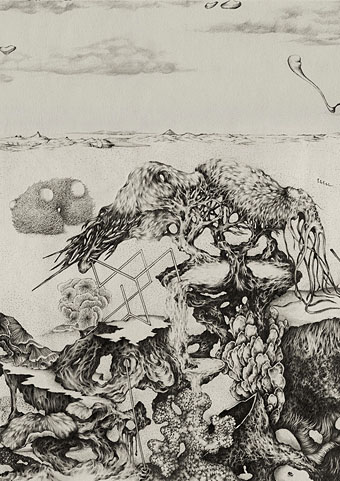
At the mountains of madness, fragment I (2014–16) by Céli Lee.

Spirits of Place, edited by John Reppion: new writings from Bryndís Björgvinsdóttir, Vajra Chandrasekera, Maria J. Pérez Cuervo, Warren Ellis, Alan Moore, Silvia Moreno-Garcia, Kristine Ong Muslim, Dr. Joanne Parker, Mark Pesce, Iain Sinclair, Gazelle Amber Valentine and Damien Williams.

• “Are we wrong to neglect [Jean Cocteau]? We are.” Kevin Jackson reviews Jean Cocteau: A Life, a biography by Claude Arnaud that’s finally available in an English edition (translated by Lauren Elkin & Charlotte Mandell). Related: Jean Cocteau speaks to the year 2000.

Void Beats / Invocation Trex by Cavern of Anti-Matter has been one of my favourite music releases this year. Tim Gane talks about the inadvertent origin of the group, and there’s also the welcome news of a reissue for the scarce first album, Blood Drums.

• Pauline Oliveros: 1932–2016; Geeta Dayal looks back on the life of US composer Pauline Oliveros, including reflections from, amongst others, Betsey Biggs, Fred Frith, Terry Riley, and Morton Subotnick.

• The relaunched Jayde Design website is selling copious Moorcock publications and ephemera, back issues of New Worlds magazine, and much else besides, including rare works of my own.

• New from Mute Records: Richard H. Kirk #7489 (Collected Works 1974–1989) and Sandoz #9294 (Collected Works 1992–1994).

• Drawings by Austin Osman Spare are on display for the next two weeks at the Atlantis Bookshop, London.

The Architecture of the Overlap: Sir John Soane’s Museum, London, scanned in three dimensions.

• Mixes of the week: Secret Thirteen Mix 201 by Félicia Atkinson, and FACT mix 579 by Jenny Hval.

• “No one has the slightest idea what is and isn’t cultural appropriation,” says Fredrik deBoer.

• I’m never keen on end-of-year lists but I’ll read any list that John Waters writes.

• “The Driller Killer and the humanist behind the blood and sickening crunch”.

• More Lovecraft: Stories to make you say UGH! by Pete Von Sholly.

Alan Moore talks to Stewart Lee.

At The Mountains Of Madness (1968) by H.P. Lovecraft | Mountains Falling (2001) by Bluebob | Mountains Crave (2012) by Anna von Hausswolff

Weekend links 337

avery.jpg

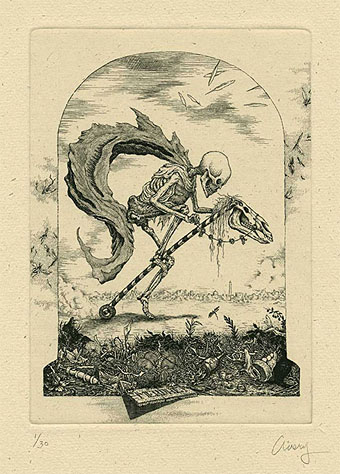
A Post-traumatic History Lesson (2009) by David Avery.

• Last week it was the teaser, this week it’s the full thing: When a New Trick Comes Out, I do an Old One / Exit Pantomime Control by Moon Wiring Club, 29-minutes of woozy and degraded psychedelic VHS weirdness.

• Over the summer I watched 32 Robert Altman films. When faced with such a diverse and unpredictable filmography it helps to have a guide; Geoff Andrew suggests where to begin.

• Some tools in the ongoing war against the Agents of the Control Virus: The Best Anonymous VPN Services of 2016.

Sky Blue Press bills Auletris as a work that “breaks many taboos.” Fans of [Anaïs] Nin know that she has covered plenty of salacious territory before: tubercular nymphomaniacs, exhibitionists, voyeurs, orgies, gender bending, bondage, bestiality, incest, hermaphroditism, etc. Nin was a pioneer of women’s sex writing in English, and all contemporary erotica authors are indebted to her, whether they realize it or not. In the 1940s, she wrote risqué stories for an anonymous private collector at the rate of a dollar a page. Despite how Nin downplayed her bespoke smut as “literary prostitution,” compared to other explicit writing of her time in English, hers was revolutionary. The two steamy volumes, Delta of Venus and Little Birds, were not published for the public until the ’70s, just after her death, but they were best sellers and set a new standard for erotica.

Laura Frost reviewing Auletris, a book of rare fiction by Anaïs Nin

HP Lovecraft’s Fungi From Yuggoth and Other Poems, a new collection of readings by William E. Hart.

The Harlan Ellison® Books Preservation Project is on the brink of achieving its Kickstarter target.

The Haunted Ceiling, a neglected ghost story by HG Wells, is being published for the first time.

• A Quietus Hour Radio Special: Shirley Collins on her favourite songs.

Kellie Woodson recommends “5 transgressive horror publishers”.

Alice in Wonderland‘s engravings—a forgotten story in pictures.

• “Alan Moore’s Jerusalem is a moveable feast,” says Alan Wall.

Musiceureka: “collecting vinyl in a special way”.

• At Dennis Cooper’s: Terrarium makers.

• RIP Pauline Oliveros.

Bye Bye Butterfly (1965) by Pauline Oliveros | Lear (1989) by Pauline Oliveros / Stuart Dempster / Panaiotis | Silence Echoes (1997) by Pauline Oliveros & Randy Raine-Reusch

Things

thing01.jpg

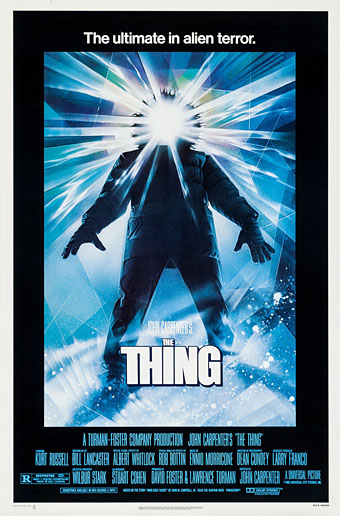
Art by Drew Struzan.

One of my current commissions is a piece of art for a book based on John Carpenter’s The Thing, due to be published next year. This was a request I agreed to immediately, having been astonished by the film when it appeared in 1982 (I saw it three times), and having rated it ever since as Carpenter’s best, as well as one of my all-time favourite horror films. I haven’t started on the planned piece just yet but the commission encouraged me to upgrade my DVD copy of the film to the Blu-ray version, and to also read for the first time John W. Campbell’s “Who Goes There?”, the short story that was the origin of both Carpenter’s film and The Thing From Another World (1951) directed by Christian Nyby. Reading the story set me hunting around for other interpretations of Campbell’s alien.

thing02.jpg

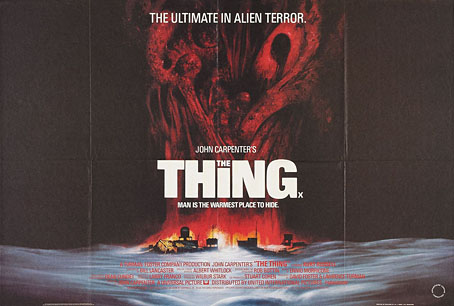
UK poster. Art by Les Edwards.

The story was instructive in several ways, the first being how closely Bill Lancaster’s script for the Carpenter film follows the story’s outline. The paperback collection I was reading has an introduction by James Blish which complains about the Howard Hawks/Christian Nyby production turning the polymorphous alien into another clone of Frankenstein’s monster. That’s true but the Nyby film still scared me to death when I first saw it aged 11 or so, and it has its merits. Lancaster not only stayed closer to the original shape-shifting premise but also kept many of the character names, plus details such as the blood test and the Thing’s attempt at the end to build a machine to escape from the encampment. The unforgettable opening, however, with the lone helicopter pursuing the dog, is all Lancaster’s.

thing03.jpg

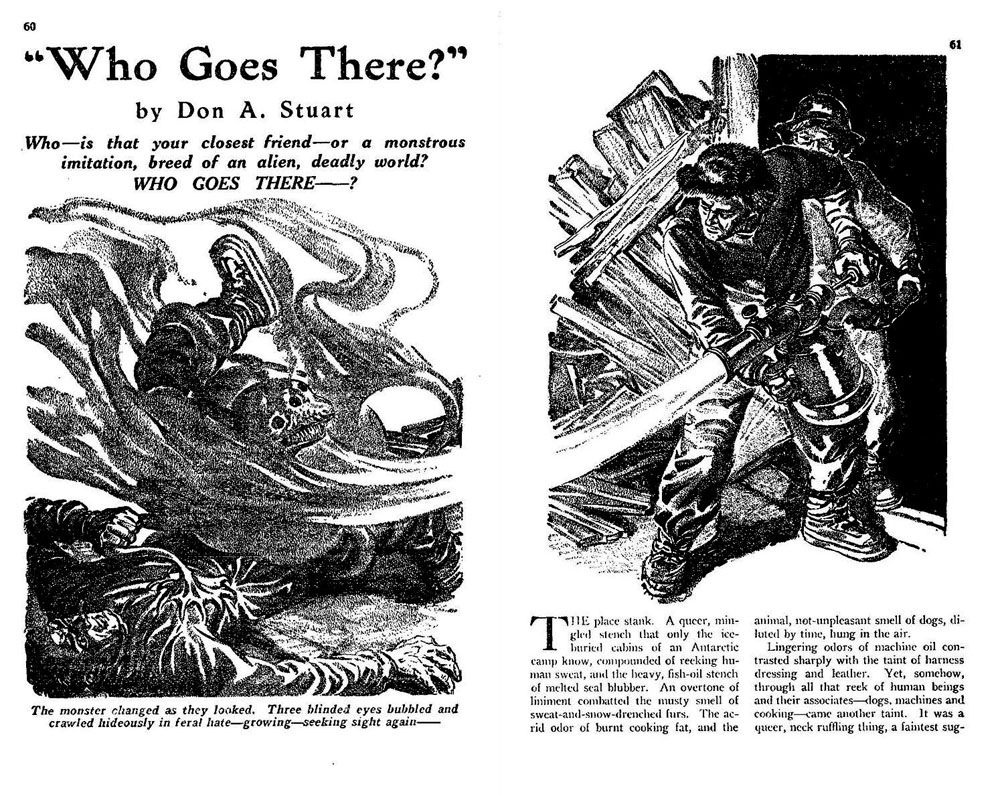
Astounding Science-Fiction, August 1938; artist unknown. “Don A. Stuart” was a pseudonym for John W. Campbell, at that time the newly appointed editor of Astounding. Campbell’s editorship changed the name of the magazine from Astounding Stories to Astounding Science-Fiction.

It was face up there on the plain, greasy planks of the table. The broken haft of the bronze ice-axe was still buried in the queer skull. Three mad, hate-filled eyes blazed up with a living fire, bright as fresh-spilled blood, from a face ringed with a writhing, loathsome nest of worms, blue, mobile worms that crawled where hair should grow—

Campbell’s description of the ice-bound alien is better than some of his writing elsewhere. I’m used to tempering my judgement when visiting stories written for the pulps but Campbell’s writing is really awful, and a reminder of why I never got very far with the early SF writers. Weird Tales magazine had its share of ham-fisted journeymen (and women), but Campbell’s contemporaries such as Clark Ashton Smith and HP Lovecraft read like the most finessed and mandarin prose stylists in comparison. Well, The Thing isn’t the first great film to be based on a poor-quality story so we can at least thank Campbell for his scenario, although how much of it was his own has never been clear. The idea of ancient aliens in Antarctica (some of which are amorphous shape-shifters) had already been explored by HP Lovecraft in At the Mountains of Madness; Lovecraft’s story was published in 1936 by Astounding Stories, the same magazine that published “Who Goes There?” two years later. This lineage, and the possible influence, makes The Thing one of the foremost Lovecraftian films even without all of its tentacled abominations.

thing04.jpg

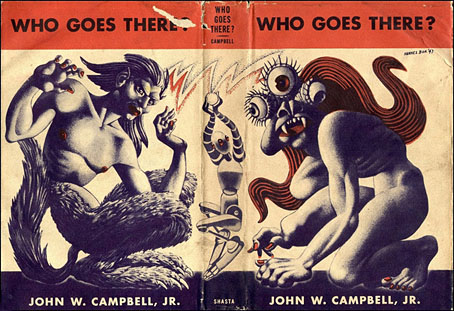
Art by Hannes Bok.

The story provided the title of Campbell’s debut collection of short fiction in 1948. I’ve known the Hannes Bok cover art for many years but hadn’t realised until recently that the three-eyed monster on the front was a Bokian rendering of Campbell’s alien. The figure on the back is presumably a human/husky hybrid, while I’d guess the robot relates to one of the author’s other stories.

Continue reading “Things”

Weekend links 336

okanoue.jpg

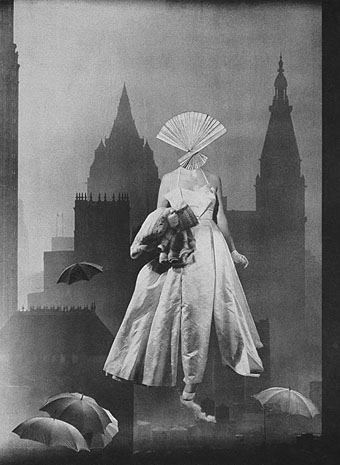
Visit in Night (1951) by Toshiko Okanoue.

• Rhythms of the World: Bombay and All That Jazz; a 60-minute BBC documentary featuring Trilok Gurtu, L. Shankar, Don Cherry, Alice Coltrane, Zakir Hussain and others. The quality of the full-length copy is a little rough so it’s worth noting the six-part version here.

Adam Scovell talks to Leah Moore and John Reppion about adapting the ghost stories of MR James for the comics medium. Related: The Corner of Some Foreign Field, a short piece of folk horror written by Martin Hayes with art by Alfie Gallagher.

Callum James on the overtly gay nature of Films and Filming magazine (1959–1990). Having seen a few copies over the years I’d always suspected this but didn’t realise it was so persistent. Related: The Boy and the Wolf by Callum James.

• At Dangerous Minds: Lucifer Rising live in concert: Bobby Beausoleil and the Freedom Orchestra perform their Kenneth Anger soundtrack, 1978.

Simon Says: A rare cassette tape of instructions by Peter Levenda for using the Simon Necronomicon (1977) as a grimoire.

• Mixes of the week: Fact Mix 577 by Outer Space, and Incantations and Manifestations by Melmoth_The_Wanderer.

• At Dennis Cooper’s: _Black_Acrylic presents … Art Sex Music: A Cosey Fanni Tutti Day.

• Up from the Abyss: Brenda SG Walter on Rammstein, Lovecraft and Sea Zombies.

• Cinematic Alchemy: Christopher Gibbs on designing sets for Performance (1970).

• Magic carpets: the art of Faig Ahmed‘s melted and pixellated rugs.

• Drips, pop and Dollars: the music that made Ennio Morricone.

• At Bibliothèque Gay: Cocteau et quelques autres.

• “Sleepers Awake!” says Moon Wiring Club.

Can your city change your mind?

The Paul Laffoley Archive

The Ambivalent Abyss (2001) by Lustmord | Byss And Abyss (2004) by Espers | Dark Bullet From The Abyss (2010) by Pleq