Weekend links 194

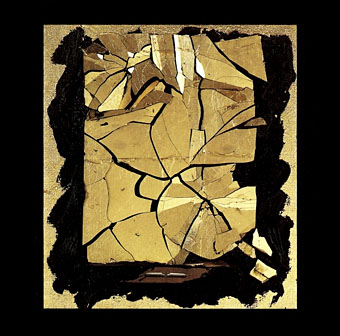
roberts.jpg

Untitled glass sculpture by Richard Roberts.

Lord Horror: Reverbstorm, my collaboration with David Britton, makes The Quietus list of Literary Highlights of 2013. At the same site there’s Russell Cuzner talking to English Heretic. “His methodology takes in magick, psychogeography and horror film geekdom, along with firm roots in Britain’s industrial music culture of the early 1980s, to form potent, novel topographies of an otherwise unconnected world of occultists and psychopaths.”

• A slew of London links this week: Geoff Manaugh on how the capital was redesigned to survive wartime blackouts, a piece which inadvertently explains why you see so much black-and-white street furniture in post-war films | Bob Mazzer’s photos of the London Underground in the 1970s and 1980s | Philipp Ebeling’s photos of the capital and its inhabitants today.

• “Science has become an international bully. Nowhere is its bullying more outrageous than in its assault on the phenomenon known as subjectivity.” David Gelernter on “The Closing of the Scientific Mind”. Related: “When Science Becomes Scientism” by Stanislav Grof.

• My favourite book about Orson Welles is This is Orson Welles (1992), a collection of Peter Bogdanovich’s interviews with Welles edited by Jonathan Rosenbaum. Bogdanovich’s interview tapes can now be heard at the Internet Archive.

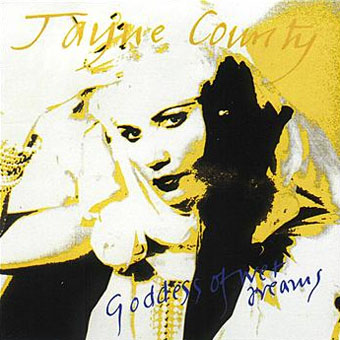
• Brian Dillon on Dada collagist Hannah Höch who he calls “art’s original punk”, and Sean O’Hagan talking to another collage artist, Linder Sterling, who says “Lady Gaga didn’t acknowledge I wore a meat dress first”.

• One Hundred Years Of Weird Fear: Daniel José Older on HP Lovecraft’s literature of genealogical terror. More fear (and Lovecraft): Will Wiles on the growth of Creepypasta.

The Last Alan Moore Interview? A lengthy discussion with Pádraig Ó Méalóid. Shunning interviews hasn’t done Cormac McCarthy any harm so if I was Alan I wouldn’t worry.

• And speaking of Cormac McCarthy, the headline of the week: “Cormac McCarthy’s ex-wife busted after pulling gun from vagina during alien argument“.

• Where the bodies are buried: Mick Brown presents a potted biography of Kenneth Anger who offers a few reluctant quotes.

• A short animation for gore-obsessed kids: Pingu’s The Thing by Lee Hardcastle.

Helen Yentus designs a 3D-printed slipcase for a novel by Chang-rae Lee.

Ralph Steadman‘s illustrations for Alice’s Adventures in Wonderland.

• Mix of the week: Secret Thirteen Mix 103 by Lustmord.

Collage art at Pinterest.

No Escape (1966) by The Seeds | Pushin’ Too Hard (1966) by The Seeds | No Escape (1979) by Cabaret Voltaire | Pushin’ Too Hard (1982) by Paul Parker

Wound Man

woundman.jpg

Wound Man from Feldbuch der Wundarzney (Field Book of Surgery, 1517).

For years I wondered about the precise appearance of Wound Man after reading the following in Red Dragon (1981) by Thomas Harris:

“It was a coincidence,” Graham said. “The sixth victim was killed in his workshop. He had woodworking equipment and he kept his hunting stuff out there. He was laced to a pegboard where the tools hung and he was really torn up, cut and stabbed and he had arrows in him. The wounds reminded me of something. I couldn’t think what it was.”

“And you had to go on to the next ones.”

“Yes. Lecter was very hot – he did the next three in nine days. But this sixth one, he had two old scars on his thigh. The pathologist checked with the local hospital and found he had fallen out of a tree-blind five years before while he was bow hunting and stuck an arrow through his leg.

“The doctor of record was a resident surgeon, but Lecter had treated him first – he was on duty in the emergency room. His name was on the admissions log. It had been a long time since the accident, but I thought Lecter might remember if anything had seemed fishy about the arrow wound, so I went to his office to see him. We were grabbing at anything then.

“He was practicing psychiatry by that time. He had a nice office. Antiques. He said he didn’t remember much about the arrow wound, that one of the victim’s hunting buddies had brought him in, and that was it.

“Something bothered me though. I thought it was something Lecter had said or something in the office. Crawford and I hashed it over. We checked the files and Lecter had no record. I wanted some time in his office by myself but we couldn’t get a warrant. We had nothing to show. So I went back to see him.

“It was Sunday, he saw patients on Sunday. The building was empty except for a couple of people in his waiting-room. He saw me right away. We were talking and he was making this polite effort to help me and I looked up at some very old medical books on the shelf above his head. And I knew it was him.

“When I looked at him again maybe my face changed, I don’t know. I knew it and he knew I knew it. I still couldn’t think of the reason though. I didn’t trust it. I had to figure it out. So I mumbled something and got out of there, into the hall. There was a pay phone in the hall. I didn’t want to stir him up until I had some help. I was talking to the police switchboard when he came out of a service door behind me in his socks. I never heard him coming. I felt his breath was all and then – there was the rest of it.”

“How did you know, though?”

“I think it was maybe a week later in the hospital I finally figured it out. It was Wound Man – an illustration they used in a lot of the early medical books like the ones Lecter had. It shows different kinds of battle injuries, all in one figure. I had seen it in a survey course a pathologist was teaching at G.W.U. The sixth victim’s position and his injuries were a close match to Wound Man.”

Wound Man, you say? That’s all you had?”

“Well, yeah. It was a coincidence that I had seen it. A piece of luck.”

With the proliferation of online archives mysteries no longer stay unresolved for very long. There’s more than one Wound Man to be discovered, but the one that’s reproduced most often is probably the same one to which Harris refers. Feldbuch der Wundarzney by Hans von Gersdorff features a number of illustrations which turn up in later textbooks, if only as examples of the hazards of medieval medicine. Wound Man is one of the more popular examples, as is this illustration showing the treatment of a head wound which I think I used somewhere inside The Thackery T Lambshead Pocket Guide to Eccentric and Discredited Diseases (2003). Wound Man has also seen service in one of my book designs, appearing on the contents pages of Lucy Swan’s The Adventures of Little Lou in 2007.

Weekend links 193

gauger.jpg

A Problem Glyph by Eliza Gauger. Problem Glyphs are “symbolic illustrations … drawn in response to problems sent in by tumblr users”.

Kosmische Night takes place at the Museum of Bath at Work, Bath, Somerset, on January 25th (Rescheduled to February 22nd).  “…a celebration of all things Teutonic for anyone who enjoys Neu!, Can, Tangerine Dream, Stockhausen and Kraftwerk,” say the organisers. Also on the bill, The Electric Pentacle, a Carnacki-esque collaboration between Narco Lounge Combo and The Levels.

• Shock Headed Peters’ Fear Engine II: Almost As If It Had Never Happened. Joe Banks on Karl Blake, “…one of the most fascinating and colourful characters to emerge from the fertile loam of the post-punk scene”.

• “The great question in the film and the tale is not the existence of the ghosts but the way the governess understands their no-longer-lived lives and desires.” Michael Wood on The Innocents.

Nobody, however, is a greater authority on the intersection of porn and alternative spirituality than Annie Sprinkle. Beginning as a prostitute in the 1960s and 70s, she entered porn in the pre-AIDS era and made over two hundred films. She then jumped into a career as a sex-positive author and educator, which brought her into close conflict not only with feminists like Andrea Dworkin and Catharine MacKinnon, but also right-wing patriarch Jesse Helms, who denounced one of her sex magick performance pieces on the floor of the Senate. For Sprinkle, both sexuality and performance are explicitly spiritual and magical, part of her role as a cultural shaman.

In the Valley of the Porn Witches by Jason Louv.

Stars of the Lid and Wordless Music Orchestra playing for two hours last month at the Basilica of Our Lady of Perpetual Help in Sunset Park, Brooklyn.

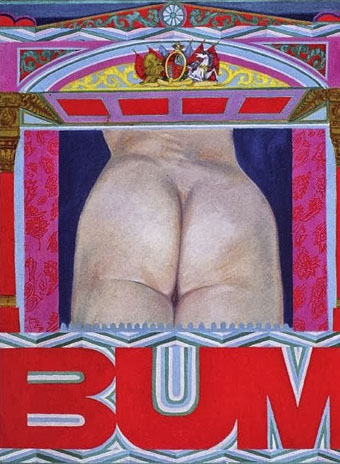
Rick Poynor on the late Martin Sharp’s contributions to People, Politics and Pop: Australians in the Sixties (1968) by Craig McGregor.

Maggie Greene on The Woman in Green: A Chinese Ghost Tale from Mao to Ming, 1981–1381.

• “TED actually stands for: middlebrow megachurch infotainment,” says Benjamin H Bratton.

Geoff Manaugh on how corpses helped shape the London Underground.

Tony White on Eduardo Paolozzi at New Worlds by David Brittain.

• Mix of the week: Secret Thirteen Mix 102 by Frank Bretschneider.

• At Dangerous Minds: film of Syd Barrett‘s first psychedelic trip.

NYPL Wire: a New York Public Library Tumblr.

Microbial art by Eshel Ben-Jacob and others.

Interstellar Rock: Kosmische Musik (1974) by The Cosmic Jokers | I, Bloodbrother Be (1984) by Shock Headed Peters | Obscene and Pornographic Art (1991) by Bongwater

The weekend artists, 2013

fournier.jpg

“Chloromgonfus detectis, a dragonfly that can detect volatile pollutants.” A speculative insect by artist Vincent Fournier.

The annual review of artists/designers/photographers featured in the weekend posts should have run at the end of December but MR James got in the way. Big thanks, and happy new year to Form is Void and Beautiful Century for pointing the way to many of these people.

strongowski.jpg

Two cover designs from Eliash Strongowski’s 30 Days—30 Covers project.

gebbie.jpg

Pink Boy by Melinda Gebbie.

lipton.jpg

Seam Stress (1987) by Laurie Lipton. The Drawings of Laurie Lipton is out now from Last Gasp.

blackwell.jpg

The Baron in the Trees (2011), a book-cut sculpture by Su Blackwell.

Continue reading “The weekend artists, 2013”

Weekend links 191

strongowski.jpg

Two cover designs from Eliash Strongowski’s 30 Days—30 Covers project.

My thanks once again to Dennis Cooper for placing this blog on his end-of-year lists. Meanwhile. one of the albums I designed earlier this year, Cold Mission by Logos, made the 30 Best Album Covers of 2013 list at FACT.

• “Many of their more outlandish ideas never saw fruition: an organ powered by an entire factory, an electro-acoustic orchestra mounted on a fleet of airplanes.” Colin McSwiggen reviews Sound in Z: Experiments in Sound and Electronic Music in Early 20th Century Russia by Andrey Smirnov.

Queer Pagan Punk, a major film retrospective of the work of Derek Jarman, will take place in February and March 2014 at the BFI Southbank, London.

• “For over forty years, Iain Sinclair’s work has combined obsessive myth-making with urban despair. But what do we know about him?” asks Fatema Ahmed.

• “Rather than trying to intercept alien communications, perhaps we should go looking for alien artefacts.”

• Mix of the week: Radio Belbury Programme 12, and Winter Hours, the Cafe Kaput 2013 winter mix.

BEEP BEEP. BLOOP BLEEP: Road Runner cartoons soundtracked by a Eurorack synthesizer.

Historia Discordia: Documenting the Origins, History & Chaos of the Discordian Society.

gebbie.jpg

Pink Boy by Melinda Gebbie.

Suffered From The Night: Queering Stoker’s Dracula edited by Steve Berman.

• At Dangerous Minds: An interview with soundtrack composer Cliff Martinez.

Sarah Schoenfeld puts recreational drugs under the microscope.

• Powerplant Art-déco, a set of photos by Romain Veillon.

Adrian Curry chooses the best film posters of 2013.

Portent’s Content Idea Generator

Tarkovsky at Pinterest

The Sea Named Solaris (1977) by Tomita | Is That What Everybody Wants? (2002) by Cliff Martinez | Reyja (2011) by Ben Frost & Daníel Bjarnason