Folk Horror Revival: Field Studies

folkhorror.jpg

The particularly British sub-genre of folk horror receives a substantial examination in Folk Horror Revival: Field Studies, a 500-page collection of essays, interviews and artwork edited by Andy Paciorek.

Featuring essays and interviews by many great cinematic, musical, artistic and literary talents, Folk Horror Revival: Field Studies is the most comprehensive and engaging exploration to date of the sub-genre of Folk Horror and associated fields in cinema, television, music, art, culture and folklore.

Includes contributions by Kim Newman, Robin Hardy, Thomas Ligotti, Philip Pullman, Gary Lachman and many many more.

100% of all profits from sales of the book will be charitably donated to environmental, wildlife and community projects undertaken by The Wildlife Trusts.

sun2.jpg

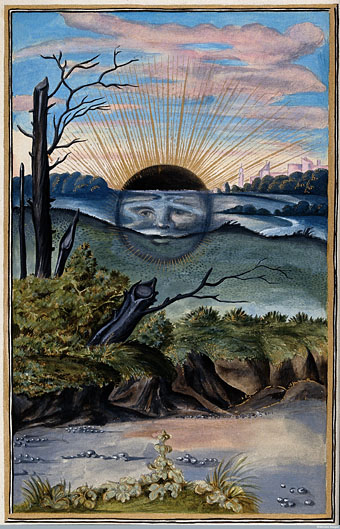
Nuada rising, 1973 & 1976.

Among the contents there’s my 4000-word essay Sacred Demons: The Dramatic Art of David Rudkin, parts of which will be familiar to readers of my previous posts about Rudkin’s work. I’m not sure Rudkin would appreciate being subjected to such a narrow focus when his plays and TV films are much more personal and cerebral than most generic entertainments. But there is an intersection in a number of them with folk horror at its widest reach, and Rudkin did happen to adapt The Ash-Tree (1975) by MR James for the BBC’s series of ghost stories at Christmas. My piece covers this along with other TV films such as Penda’s Fen (1974) and Artemis 81 (1981), and many of the stage plays including Afore Night Come (1962), The Sons of Light (1965/76) and The Saxon Shore (1983). The stage plays I only know from their scripts which makes them difficult to appraise; maybe the renewed interest in Rudkin’s work will spur some revivals.

oldweird.jpg

Sight and Sound, August 2010. Illustration by Becca Thorne.

Paciorek’s book isn’t solely concerned with British subjects, other essays include studies of Weird Americana, the music of The Cremator and Morgiana, and Czech folk horror. The Lulu page apparently didn’t allow the listing of a full table of contents so I’m posting the details below.

Continue reading “Folk Horror Revival: Field Studies”

Weekend links 285

graphic.jpg

Some of the art from my collage adaptation of The Picture of Dorian Gray appears on the cover of The Graphic Canon: Volume 2, published this month in a German edition by Verlag Galiani. Out next month (although possibly available now) is the same book in a Brazilian edition from Boitempo Editorial. One of the disappointments this year was having to abandon plans to contribute to Russ Kick’s forthcoming graphic canon of crime fiction. I was overstretched during the summer, and what with projects slipping their deadlines and the trip to Providence there wasn’t any time left for other things.

• For those who missed the first edition, a second and final expanded edition of the Penda’s Fen study/celebration The Edge Is Where The Centre Is.

• Whipping up a storm: how Robert Mapplethorpe shocked America; Kevin Moore on the photographer’s Perfect Moment exhibition.

In the best scenario, metaphysical art distributes the work of understanding among cultural traditions and symbolic systems, and it is along these lines that Carrington’s work has been described as a productive combination of Mexican, Egyptian, Hebrew, Celtic, Greek, and Mesopotamian elements. Her paintings, plays, and stories mix the symbols of alchemy, astrology, Tarot, herbalism, magic, witchcraft, and a personal iconography.

Leif Schenstead-Harris on the life, art and fiction of Leonora Carrington

• Mixes of the week: Hieroglyphic Being collects favourite cosmic jazz of the 1970s; NTS Radio presents an hour of Annette Peacock.

• At Kill Your Darlings: Alexandra Heller-Nicholas enthuses about Dario Argento’s delirious masterwork, Suspiria.

Pye Corner Audio releases a new album (only limited vinyl at the moment—boooo!) and remixes Stealing Sheep.

• The Trip Planners: Emily Witt meets the founders behind Erowid, the online drug encyclopedia.

Woven Processional (1985), music on the Long String Instrument by Ellen Fullman.

• “The Paris attacks prove Charlie Hebdo’s critics wrong,” says Dorian Lynskey.

• Photographs by Danila Tkachenko of abandoned Soviet technology.

Come Wander With Me / Deliverance by Anna von Hausswolff.

• The collages of Guy Maddin.

CAN HALEN

Let’s Take A Trip (1965) by Godfrey | Trip On An Orange Bicycle (1968) by The Orange Bicycle | Last Trip (1968) by We Who Are

Paul Laffoley, 1940–2015

laffoley1.jpg

Alchemy: The Telnomic Process of the Universe (1973).

Another week, another incomparable artist gone. This small selection of Laffoley’s unique art and sculpture manages to combine references to (among other things) alchemy, William Blake, Charles Baudelaire, Oscar Wilde, HP Lovecraft, Mark of the Vampire, and Night of the Demon. And this is only a fraction of his work. Richard Metzger has a memorial post at Dangerous Minds together with more paintings and some video links. There’s more at the official website and Kent Fine Art. It’s good to read that the University of Chicago Press will be publishing The Essential Paul Laffoley in March, 2016.

laffoley2.jpg

The Death and Life of Monsieur Sebastian Melmoth: Au Théâtre du Grand Guignol (2001–2003).

laffoley3.jpg

The Solitron (1997).

Continue reading “Paul Laffoley, 1940–2015”

Weekend links 284

molinier.jpg

Les Hanel I by Pierre Molinier. There’s more at The Forbidden Photo-Collages of Pierre Molinier.

• Western anti-hero Josiah Hedges, better known as Edge, was the creation of prolific British author Terry Harknett. The famously violent Edge novels, credited to “George G. Gilman”, were ubiquitous on bookstalls in the 1970s. They were Harknett’s most successful works, and are still collectible today; if you’re interested there are 61 of them to search for. Amazon Originals have just launched Edge as a new TV series although anything for a mass audience is unlikely to retain the exploitative qualities of novels that often sound like pulp precursors of Blood Meridian.

Related: Terry Harknett discusses the creation of the Edge series at Drifter’s Wind; Ben Bridges on Harknett’s career, including a look at the writer’s many other Western and thriller novels; Bill Crider on Edge, Harknett and the British group of Western novelists known as “The Piccadilly Cowboys”.

• Boyd McDonald’s queer-eye film guide, Cruising the Movies: A Sexual Guide to Oldies on TV (1985), has been republished by Semiotext(e) in an expanded edition. Related: True Homosexual Experiences: Boyd McDonald and Straight to Hell by William E. Jones.

• “…a film that plumbs the dark recesses of all our imaginations: dangerous, glorious, absurd, vivid and terrifying by turns.” Charlotte Higgins on her favourite film, The Red Shoes (1948).

Art Forms from the Abyss, a new collection of illustrations by Ernst Haeckel for the report of the HMS Challenger expedition (1872–76). Related: Silentplankton.com

• “The biggest kick I ever get is to find myself pursuing some group of images without knowing why,” says M. John Harrison in conversation with Tim Franklin.

• “Plots didn’t interest him much. They were just pegs on which to hang characters and language.” Barry Day on Raymond Chandler.

• “Zdeněk Liška’s music thrived in unrealities,” says David Herter in a lengthy appraisal of the great Czech film composer.

• At Dirge Magazine: S. Elizabeth delights in the dark decor of Dellamorte & Co.

• Nabokov scholar Brian Boyd selects his ten favourite Nabokov books.

• Mix of the week: The Ivy-Strangled Path Vol. XIII by David Colohan.

Take me to the cosmic vagina: inside Tibet’s secret tantric temple.

• Pour Un Pianiste (1974) by Michèle Bokanowski | 13’05” (1976) by Michèle Bokanowski | Tabou (1992) by Michèle Bokanowski

Graft by Matt Hill

graft1.jpg

UK edition.

This latest cover design has been made public much sooner than some of the other things I’ve been working on this year. Graft is another cover for Angry Robot, a novel set in near-future Manchester by local author Matt Hill. The title plays on the multiple meanings of the word “graft”, not only the colloquial term for work (honest or otherwise) but also the sense of a medical graft. Once again, Barnes & Noble have provided a convenient précis:

Manchester, 2025. Local mechanic Sol steals old vehicles to meet the demand for spares. But when Sol’s partner impulsively jacks a luxury model, Sol finds himself caught up in a nightmarish trans-dimensional human trafficking conspiracy.

Hidden in the stolen car is a voiceless, three-armed woman called Y. She’s had her memory removed and undertaken a harrowing journey into a world she only vaguely recognises. And someone waiting in the UK expects her delivery at all costs.

Now Sol and Y are on the run from both Y’s traffickers and the organization’s faithful products. With the help of a dangerous triggerman and Sol’s ex, they must uncover the true, terrifying extent of the trafficking operation, or it’s all over.

Not that there was much hope to start with.

A novel about the horror of exploitation and the weight of love, Graft imagines a country in which too many people are only worth what’s on their price tag.

graft2.jpg

US edition.

The challenge with this one was to create something that might be read as futuristic yet also included elements of the real Manchester. All the buildings are worked up from photos of my own, many of them taken during a long day out spent wandering around the Cornbrook area and Salford Quays. The latter has been extensively redeveloped in recent years so there’s a lot of new architecture out there, including the new BBC headquarters. The elegant pylons are the supports of the Lowry Bridge which can be raised to allow ships into the docks.

I couldn’t settle on a final colour scheme for this one so I made a number of variations then let author and publisher decide. This resulted in three covers: the UK edition, US edition and e-book. It took a while but I think I’m happiest now with the blue-and-purple version. Matt Hill talks about Graft here.

graft3.jpg

E-book.