Weekend links 96

nunez.jpg

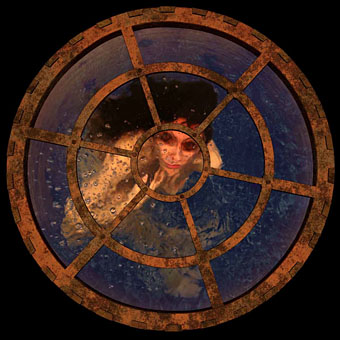
Sin título (monstruas) (2008) by Marina Núñez.   

• Salon asks Christopher Bram “Is gay literature over?” Bram’s new book, Eminent Outlaws: The Gay Writers Who Changed America, is reviewed here.

Robert Montgomery is profiled at the Independent as “The artist vandalising advertising with poetry.”

In addition to aesthetics, McCarthy noted a deeper link between great science and great writing. “Both involve curiosity, taking risks, thinking in an adventurous manner, and being willing to say something 9/10ths of people will say is wrong.” Profound insights in both domains also tend arise from a source beyond the limits of analytic reason. “Major insights in science come from the subconscious, from staring at your shoes. They’re not just analytical.”

Nick Romeo meets Cormac McCarthy at the Santa Fe Institute.

• For FACT mix 316 Julia Holter mixes radio broadcasts, street recordings and music.

• This week in the Tumblr labyrinth: fin de siècle art and graphics from Nocnitsa.

“There’s a widespread cultural barrenness across art and political culture. But there are some pockets of resistance on the extreme margins, like the techno-savvy protest movements, small press, the creator-owned comics, that seem to be getting some signs of hope for the future,” he says. “All of the genuinely interesting work is being done on the margins, with independent companies, self-producing, and alternative distribution networks.”

Alan Moore on Watchmen’s “toxic cloud” and creativity v. big business.

Stone Tape Shuffle, a 12” LP of readings by Iain Sinclair. Limited to 400 copies.

Monolake on how we cope with death: mythologies, rituals, drugs and Ghosts.

Kraftwerk perform at New York’s Museum of Modern Art in April.

Kathy Acker (in 1988?) interviewing William Burroughs.
pogany.jpg

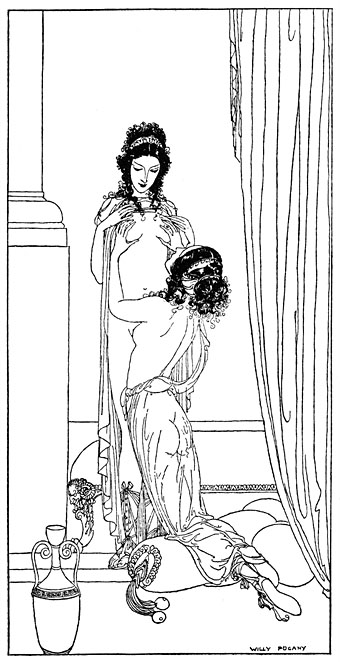
Willy Pogány’s erotica: illustrations for a 1926 edition of The Songs of Bilitis by Pierre Louÿs.

• Nicholas Lezard on David Lynch: director of dreams.

Did otherworldly music inspire Stonehenge?

Coilhouse has an Eyepatch Party.

Tanzmusik (1973) by Kraftwerk | The Model (1992) by the Balanescu Quartet | Trans Europe Express (2003) by the Wiener Sinfonie Orchestra & Arnold Schönberg Choir.
Weekend links 92

bmc1.jpg

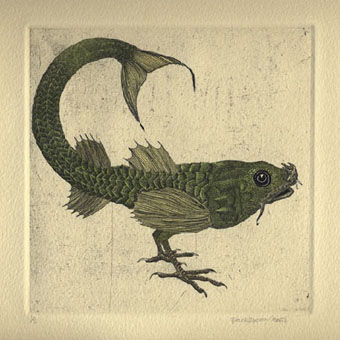
Untitled etching by Briony Morrow-Cribbs.

• An interview with author Paul Russell whose new novel, The Unreal Life of Sergey Nabokov, concerns the gay brother of the celebrated Vladimir.

• Joseph Cornell turns up again in a report at Strange Flowers about Locus Solus, an exhibition in Madrid devoted to the work of Raymond Roussel.

Night of Pan: 42 seconds of occult freakery by Bill Butler featuring Vincent Gallo, Twiggy Ramirez plus (blink and you miss him) Kenneth Anger.

Jan Švankmajer talks (briefly) about his new film Surviving Life. A subtitled trailer is here; the very different Japanese trailer is here.

Cormac McCarthy turns in his first original screenplay. I’d rather he turned in a new novel but any new Cormac is better than none at all.

Barnbrook show off another design for the latest CD from John Foxx & The Maths.

Melanie McDonagh asks “Where have all the book illustrators gone?”

• Congrats to Evan for getting his poetry in the New York Times.

Margaret Atwood on writing The Handmaid’s Tale.

Subliminal Frequencies: An Interview With Pinch.

The (Lucas) Cranach Digital Archive

The M.O.P. Radionic Workshop

• Music promos of the week from the Weird Seventies: All The Years Round (1972) by Amon Düül II, and Supernature (1977) by Cerrone.

Dead roads

west1.jpg

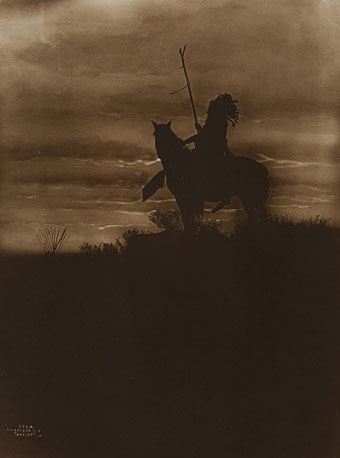
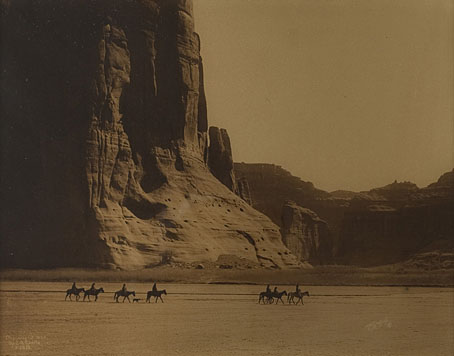
Canon de Chelly — Navaho (1904) by Edward Sheriff Curtis.

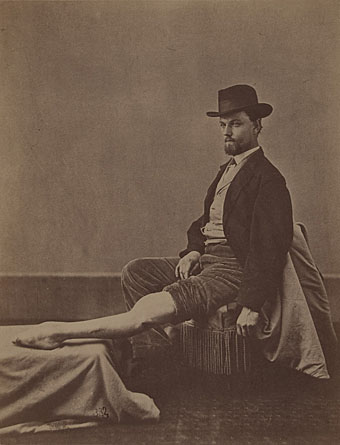
A few pictures from the substantial Flickr collection belonging to San Diego’s Museum of Photographic Arts. Many of these are views of the western states of the USA from a time when photographers were documenting the vanishing world of Native American tribes. A couple of pictures in the series by Edward Sheriff Curtis would work as cover illustrations for Cormac McCarthy’s Blood Meridian, while the results of a gunshot injury below is the kind of thing you never see in Westerns.

west2.jpg

Untitled (1910) by Richard Throssel.

And speaking of McCarthy’s baleful masterpiece, William Gibson recently recounted his first experience of reading the book on a journey to Berlin. “I awoke from it as from some terribly potent dream, and found myself, quite unexpectedly, in a strange city,” he says. Read the rest here.

Photo tip via Beautiful Century.

west3.jpg

Distortion of Left Lower Extremity after Gunshot Injury, November 30, 1865.

Previously on { feuilleton }
Repackaging Cormac
Cormac McCarthy book covers

Weekend links 54

starowieyski.jpg

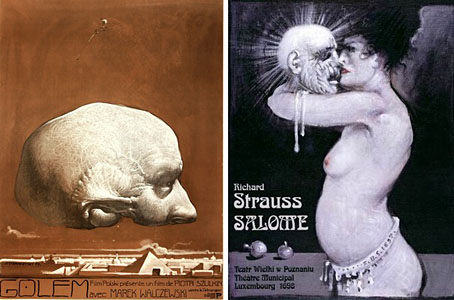
Film and opera posters by Franciszek Starowieyski (see below).

• At first glance, Jerzy Skolimowski’s new film, Essential Killing, sounds like Joseph Losey’s Figures in a Landscape (1970) reworked for our era of renditions, torture and war without end. The trailer is here; Sight & Sound liked the film and dismissed any Losey comparisons. The Quietus interviewed the director this week, and there’s also a video interview here.

“He was trying to tell the truth about war. In the 1950s the US was telling itself a mythic, grandiose, heroic story about the second world war and GI Joe saving the world. [James] Jones was saying, ‘That wasn’t the war I saw, I want to write something more honest and realistic. Whatever the mid-America myth, one of the things men were doing was giving blow jobs for money.'”

From Here to Eternity is published in an uncensored edition.

Edogawa Rampo‘s sinister short story The Human Chair concerns a man who conceals himself inside a chair. Taiwanese artist Lan Hungh may have had Rampo’s story in mind for his Demolished Chair art piece about which we’re told “Hungh’s flaccid penis is the only body part that’s visible, and becomes hard as soon as anyone starts discussing the chair or sitting on it.” BUTT magazine spoke to the artist.

…unaware of their double standards, the police objected to the portrayal of men in Harrison’s work as demeaning. There was Hugh Hefner squeezed into a bunny girl costume, a beefy but emasculated Captain America wearing false breasts and a stars ‘n’ stripes-patterned basque, and Valerie Solanas, the radical feminist who tried to murder Andy Warhol, stamping on his Brillo box artwork.

A piece about artist Margaret Harrison whose work is on show at Payne Shurvell, London.

Connecting Science and Art: “Novelist Cormac McCarthy (!), filmmaker Werner Herzog, and physicist Lawrence Krauss discuss science as inspiration for art and Herzog’s new film on the earliest known cave paintings.”

• At Tumblr: Gurafiku, “a collection of visual research that encompasses the history of Japanese graphic design”, and Archidose.

• “Michael Moorcock’s Modem Times 2.0 is a good introduction to the literary legend.”

• The Spring 2011 edition of Periwinkle Journal (Queer Art + Creativity) is now live.

• Rick Poynor (again) on [Franciszek] Starowieyski’s Graphic Universe of Excess.

• Coudal now have a page of links for the great Terrence Malick.

Wake in Progress is Finnegans Wake illustrated.

Brown Study, a blog by Jay Babcock.

• RIP Sidney Lumet.

Ry Cooder & The Moula Banda Rhythm Aces: Let’s Have a Ball is a film by Les Blank of a fantastic performance by Cooder’s band in Santa Cruz, California, in 1987. It’s not available on DVD but most of it can be seen on YouTube.

Weekend links 43

broadcast.jpg

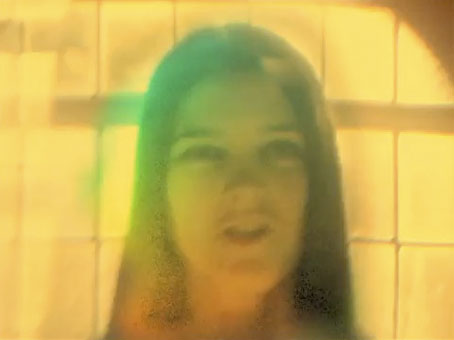
From the video for I See, So I See So by Broadcast.

RIP Trish Keenan of Broadcast. Tributes here and here. The Broadcast/Focus Group collaboration …investigate Witch Cults of the Radio Age was The Wire‘s album of the year for 2009. Joseph Stannard interviewed Trish Keenan and James Cargill in October of that year.

Who Knows What Tomorrow Might Bring, a new pay-what-you-please Arthur mixtape. Also at Arthur, Sunday Lectures by Freeman House here, here, here and here.

• Cormac McCarthy’s description of American pioneers in Suttree (1979) kept coming to mind during the past week:

Where hunters and woodcutters once slept in their boots by the dying light of their thousand fires and went on, old teutonic forebears with eyes incandesced by the visionary light of a massive rapacity, wave on wave of the violent and the insane, their brains stoked with spoorless analogues of all that was, lean aryans with their abrogate semitic chapbook reenacting the dramas and parables therein and mindless and pale with a longing that nothing save dark’s total restitution could appease.

Born This Way: “A photo/essay project for gay viewers (male and female) to submit pictures from their childhood (roughly ages 4 to 14), with snapshots that capture them, innocently, showing the beginnings of their innate LGBT selves. It’s nature, not nurture!”

Mischievous street art characters. Chris Marker wouldn’t want us to forget Monsieur Chat. Speaking of Chris Marker, there’s Plato’s Cave as Kino: Owl’s Legacy Excerpt & Becoming Imperceptible.

With the point of a knife Dr. LeBaron took from the little round box a small quantity of a dark, greenish-colored gum, which, as it was passed from one to another for inspection, gave off an agreeable, aromatic odor. Then, as he was engaged in filling two capsules from the box, he explained:

“As le docteur read from ze book of Monsieur Richet, ze favoreet méthode in ze Orient ees to take ze Haschisch by ze smoke in ze Persian pipe—ze hookah, ze nargileh. But zey also take eet in ze great varieté. Ze principal kind zat come to ze market of Europe, ees zat I show you—ze Haschisch, an’ ve take eet like ze dose of quinine,” said he, as he handed a well-filled capsule to both Smith and Arnold.

Throwing back his head, Smith bolted his dose without ceremony, and Arnold immediately followed his example.

Haschisch: A Novel (1886) by Thorold King. Related: Haschisch Hallucinations (1905) by HE Gowers.

• Dan Hill’s personal report from the drowned world of Brisbane. Related: Hayley Campbell recalls swimming in the city’s hazardous floodwaters when she was a wild child. Also: Canoeing in McDonald’s.

Cabinet Card Backmarks, florid advertisements from Victorian cabinet photos. Callum James made a post on the subject in 2008 and has a Flickr set showing his discoveries.

• The Brothers Quay made a public information film about AIDS in 1996. (Now deleted from YouTube…boo!)

The secret stories of book inscriptions. Related: The Book Inscriptions Project.

• Ani, Turkey: City of 1001 Churches, all of them abandoned and ruined.

Vulgar Army: Octopus in Propaganda and Political Cartoons.

• Designer John Gall makes collages in his spare time.

Phantasmaphile at Tumblr.

Witch Cults and I See, So I See So, both by Broadcast & The Focus Group.