Weekend links 269

cluster.jpg

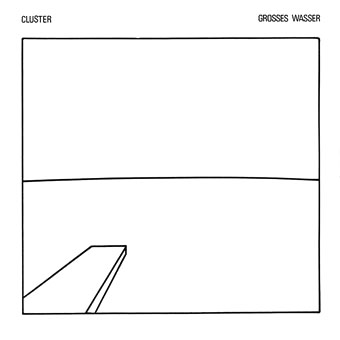
Grosses Wasser (1979) by Cluster. Cover art by Dieter Moebius.

• RIP Dieter Moebius: one half of Cluster (with Hans-Joachim Roedelius), one third of Harmonia (with Roedelius and Michael Rother), and collaborator with many other musicians, including Brian Eno and Conny Plank. Geeta Dayal, who interviewed Moebius for Frieze in 2012, chose five favourite recordings. From 2008: Cosmic Outriders: the music of Cluster and Harmonia by Mark Pilkington. At the Free Music Archive: Harmonia playing at ATP, New York in 2008. Live recordings of Cluster in the 1970s have always been scarce but in 1977 they played a droning set at the Metz Science-Fiction Festival, a performance that was broadcast on FM radio (the Eno credit there seems to be an error).

• “I’ve since had the feeling that, if the attacks against The Satanic Verses had taken place today, these people would not have defended me, and would have used the same arguments against me, accusing me of insulting an ethnic and cultural minority.” Salman Rushdie on the fallout from the Charlie Hebdo killings.

• “The effect of these memories is to make you think you know the film better than you do, and wonder what it’s like actually to sit down and watch it.” Michael Wood on rewatching Orson Welles’ Touch of Evil (1958). Related: Tipping My Fedora on the film’s source novel, Badge of Evil (1956).

“To me, it’s simple,” he says. “Fantasy became as bland as everything else in entertainment. To be a bestseller, you’ve got to rub the corners off. The more you can predict the emotional arc of a book, the more successful it will become.

“I do understand that Game of Thrones is different. It has its political dimensions; I’m very fond of the dwarf and I’m very pleased that George [R R Martin], who’s a good friend, has had such a huge success. But ultimately it’s a soap opera. In order to have success on that scale, you have to obey certain rules. I’ve had conversations with fantasy writers who are ambitious for bestseller status and I’ve had to ask them, ‘Yes, but do you want to have to write those sorts of books in order to get there?’”

Michael Moorcock talking to Andrew Harrison about fantasy, science fiction, the past and the present.

• “Architects love Blade Runner, they just go bonkers. When I was working on the film, it was all about, let’s jam together Byzantine and Mayan and Post-Modern and even a little bit of Memphis, just mash it all together.” Designer and visual futurist Syd Mead talking to Patrick Sisson.

• “Lucian of Samosata’s True History reads like a doomed acid trip,” says Cecilia D’Anastasio, who wonders whether or not the book can be regarded as the earliest work of science fiction.

• Mixes of the week: A Tribute to Dieter Moebius by Vegan Logic, and another by Totallyradio.

• The Phantasmagoria of the First Hand-Painted Films by Joshua Yumibe.

Islamic Geometric: calligraphic tessellations by Shakil Akram Khan.

Michael Prodger on The Dangerous Mind of Richard Dadd.

A chronological list of synth scores and soundtracks.

Touch Of Evil (Main Theme) (1958) by Henry Mancini | Badge Of Evil (1982) by Cabaret Voltaire | Touch Of Evil (2009) by Jaga Jazzist

The Dead, a film by Stan Brakhage

brakhage.jpg

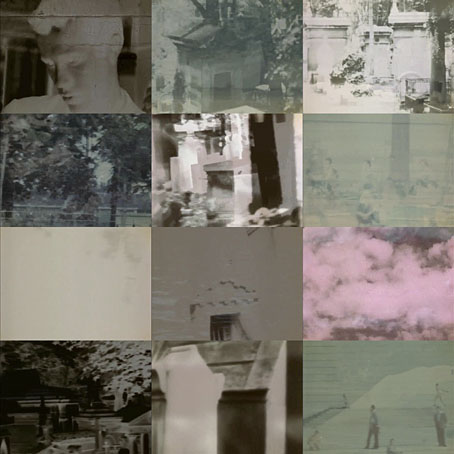
In The Dead (1960), Stan Brakhage’s roaming camera explores the funerary architecture of the huge Père Lachaise Cemetery in Paris. Shots of the tombs and the banks of the Seine viewed from a river boat may be typical tourist fare but Brakhage transforms his footage with fragmented editing, superimposition and continual cutting from positive to negative. The youthful figure glimpsed at the beginning is Kenneth Anger. As usual with Brakhage, the film is a silent one. Watch it here.

Previously on { feuilleton }
Mothlight, a film by Stan Brakhage
Thot-Fal’N, a film by Stan Brakhage

Beyond the Fragile Geometry of Space

1: A fictional book by a fictional character.

beyond1.jpg

Don’t Look Now (1973): written by Allan Scott & Chris Bryant, directed by Nicolas Roeg. In the published screenplay Laura Baxter is described consulting a book written by her husband, John, but no title is given.


2: An architectural proposal for Venice.

beyond3.jpg

Beyond the Fragile Geometry of Space. Studio 6 (Tutors Eamonn Canniffe and Renata Tyszczuk) – University of Sheffield School of Architecture: Exhibition at Sylvester Works Sheffield (Location, exhibition now closed). The studio projects dealt with the possibilities for the northern edge of Venice of the proposal to build a ‘sublagunare’ underground rapid transit system between Marco Polo Airport and the island. Stretching from the Sacca della Misericordia to the Arsenale the projects were developed as a group masterplan with a series of individual interventions, each of which dealt with the down-at-heel historic fabric or proposed new islands for transport, museological or environmental uses. As an ensemble the projects in effect create a new facade to the city, opposite to David Chipperfield’s extension to the cemetery on the island of San Michele.


3: A jazz album by Peter Bolte.

beyond2.jpg

Beyond the Fragile Geometry of Space (2007).


4: A mix by cat_dentures.

beyond4.jpg

Beyond the Fragile Geometry of Space (2011) at 8tracks.

Previously on { feuilleton }
Canal view
Petulia film posters

Weekend links 266

dune.jpg

Spine and cover art by John Schoenherr for the first American edition of Dune, 1965.

• “[Herbert] had also taken peyote and read Jung. In 1960, a sailing buddy introduced him to the Zen thinker Alan Watts, who was living on a houseboat in Sausalito. Long conversations with Watts, the main conduit by which Zen was permeating the west-coast counterculture, helped turn Herbert’s pacy adventure story into an exploration of temporality, the limits of personal identity and the mind’s relationship to the body.” Hari Kunzru on Frank Herbert and Dune, 50 years on. Related: “To save California, read Dune,” says Andrew Leonard. There’s a lot more Dune cover art at ISFDB.

• “Embedded in Adam’s footage were several dark forms, human-ish in outline, unidentifiable but unmistakable, visible within the leaves or the shadows.” Holloway is a short film by Adam Scovell based on the book by Robert Macfarlane, Dan Richards and Stanley Donwood.

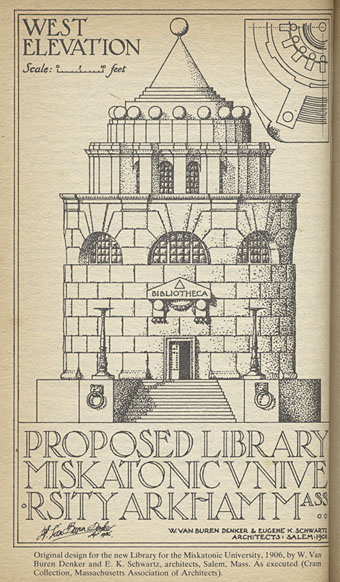
The Library of the Lost: In Search of Forgotten Authors by Roger Dobson; edited and with an introduction by Mark Valentine. Roger and Mark were my first publishers in 1988 when their Caermaen Books imprint produced the large-format edition of The Haunter of the Dark.

• “…over the years he created a series of ‘Pharmacies’: rows of glass bottles filled not with medicines to cure the body…but objects to stimulate the mind.” Clare Walters reviews Joseph Cornell: Wanderlust, an exhibition at the Royal Academy, London.

• “The sound machines we build today are invariably one-offs, made from salvaged parts, with all the precariousness of a prototype.” Sarah Angliss on the art of making music machines.

Mission Desire is a new single by Jane Weaver whose video is “set to scenes from Marie Mathématique – the French 1960s mini-series about Barbarella’s younger sister”.

• Ghost signs, ginnels and hidden details: an alternative guide to Manchester by Hayley Flynn aka Skyliner.

• “I want to be despised,” says John Waters who has a new art exhibition at Sprüth Magers, London.

Sonic Praise, an album of “Krautprogbikermetal” by Ecstatic Vision.

• The Evolution of the Great Gay Novel: an overview by Rebecca Brill.

• At Bibliothèque Gay: more homoerotic drawings by Jean Cocteau.

Wyrd Daze Lvl2 Issue 3 is a free download.

Nicolas Winding Refn: vinyl collector.

Art With Naked Guys In It

Caladan (2011) by Roly Porter | Giedi Prime (2011) by Roly Porter | Arrakis (2011) by Roly Porter

Invisible Cities: Miscellanea

cities01.jpg

Cover art: The Castle in the Pyrenees (1961) by René Magritte.

A final post for this week devoted to Italo Calvino’s Invisible Cities, and it occurs to me that “Miscellanea” could easily be the name of one of Marco Polo’s cities.

One thing that’s become apparent over the past few days is that this subject is a very popular one with artists, especially in Italy. This is understandable but it also means you could probably fill another week of posts pursuing further illustrations and homages. Rather than belabour things I’m ending with a few of the more notable derivations including some cover designs. The Einaudi volume above was the first printing in Italy in 1972.

cities03.jpg

Cover design by Arnold Skolnick.

And this was the first American edition from Harcourt, Brace and Jovanovich in 1974. The cover is printed in silver foil which makes the book a particularly desirable item. This might explain why it’s also rather expensive today.

cities04.jpg

Cover art: Martyrdom of a Saint by Monsù Desiderio.

The 1979 Picador edition is one of two paperback editions I own. The enigmatic “Monsù Desiderio” has a confused identity (see this post), and specialised in curious architectural paintings so this is an apt choice.

Continue reading “Invisible Cities: Miscellanea”