Weekend links 477

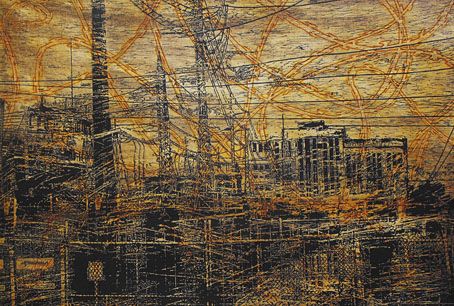
starling.jpg

Edge of Industry (2009) by Anne Starling.

• “In her darkroom with her silver salts and gelatine plates, she experimented with the mercurial effects of light, time and temperature.” Hailey Maxwell on the photographic art of Dora Maar.

• A Visionary Work Renew’d: A conversational review of Swan River Press edition of William Hope Hodgson’s The House on the Borderland by the late Sam Gafford & The joey Zone.

Brian Blomerth’s graphic novel Bicycle Day tells the story of the psychedelic ride made in 1943 by Swiss chemist Albert Hofmann while he was researching LSD.

• “The cinema is not the industrial cinema. The cinema is independent cinema.” Francis Ford Coppola on Apocalypse Now and related matters.

• More lunacy: “Fireworks, wild swans and super-cannons were propelling people mentally Moonwards long before 1969,” says David Seed.

• Mix of the week: Then Beautiful Swift Sparrows Led You Over the Black Earth by The Ephemeral Man.

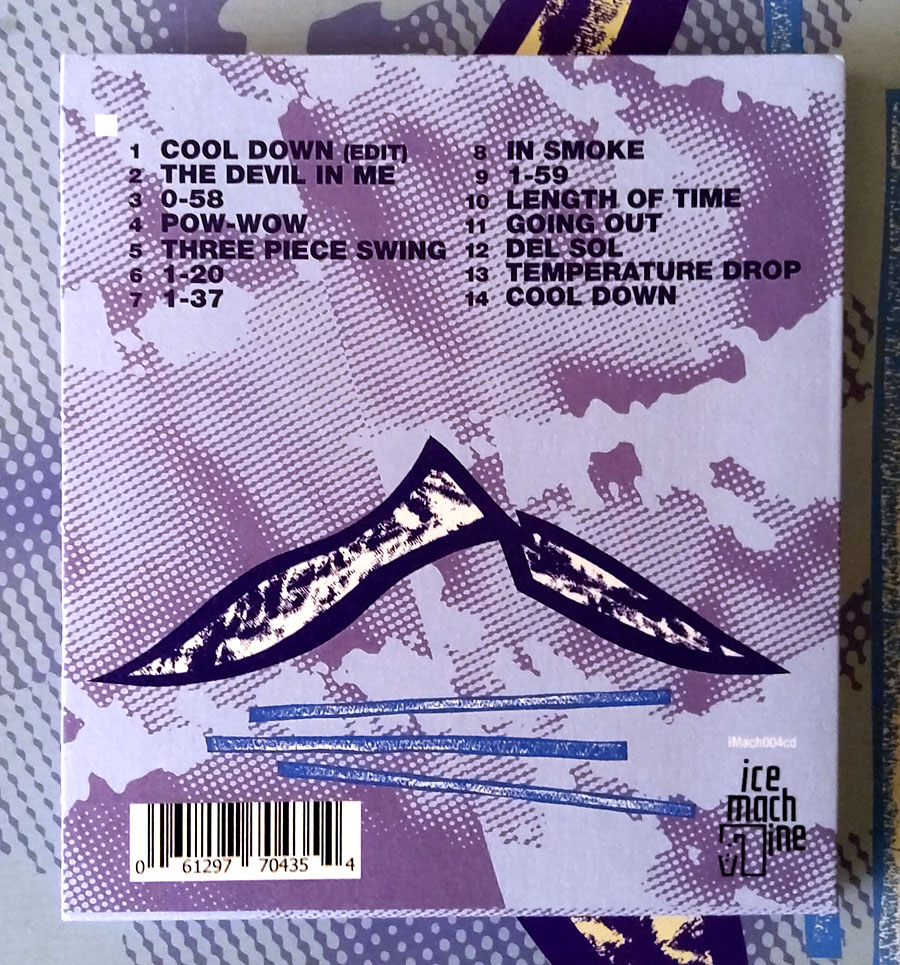
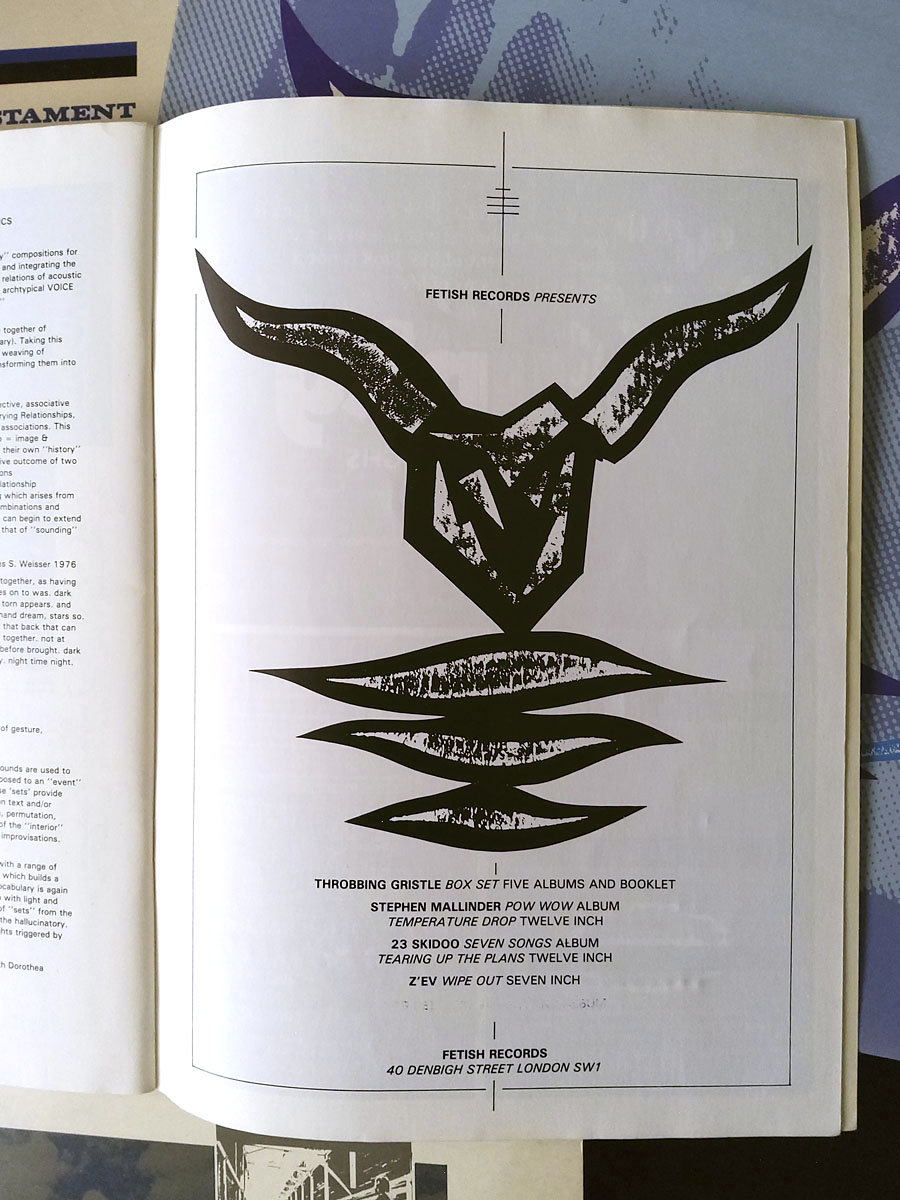
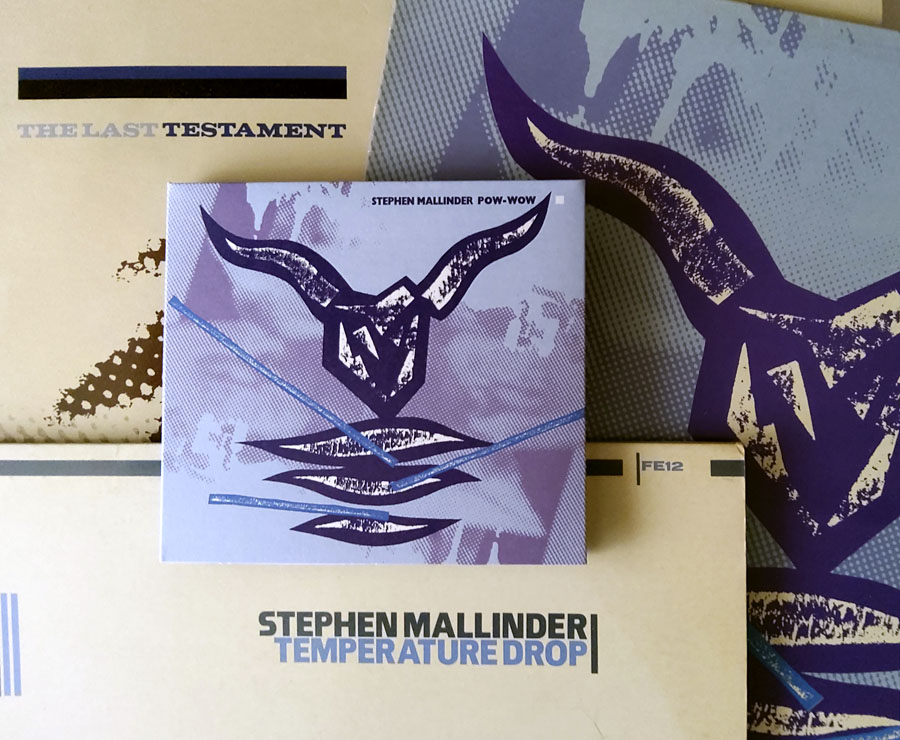
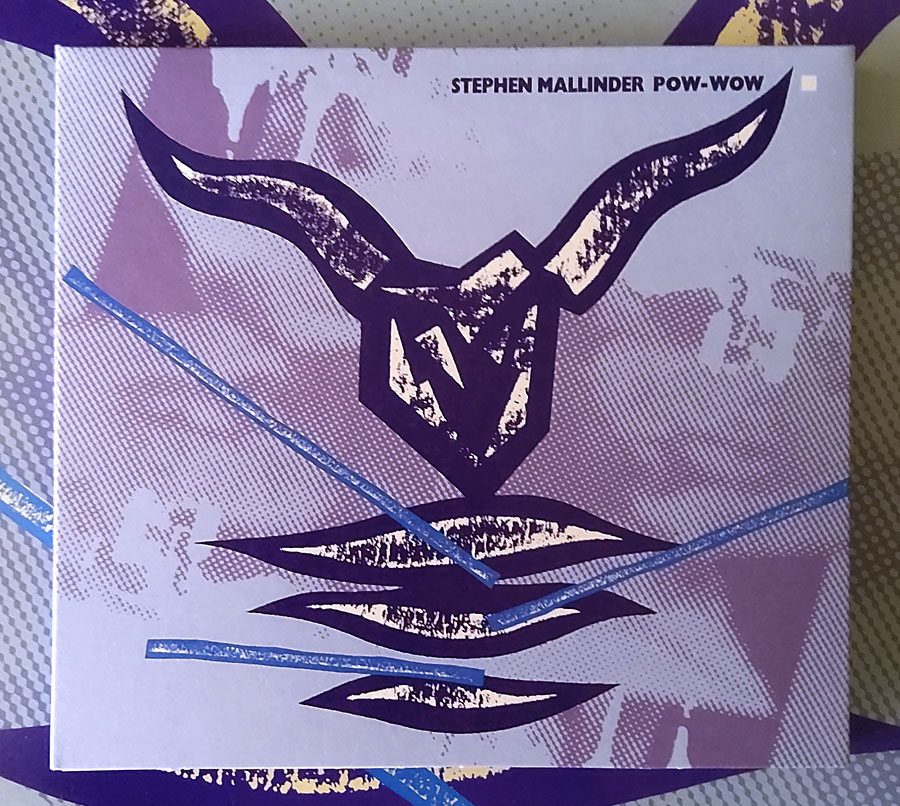
Working (You Are), a new recording by Stephen Mallinder, his first solo work since Pow Wow in 1982.

Lost Proust stories of homosexual love finally published (but only in French for the moment).

Oren Ambarchi‘s favourite albums.

My White Bicycle (1967) by Tomorrow | Trip On An Orange Bicycle (1968) by The Orange Bicycle | Blue Bicycle (2008) by Hauschka

Weekend links 396

laswell.jpg

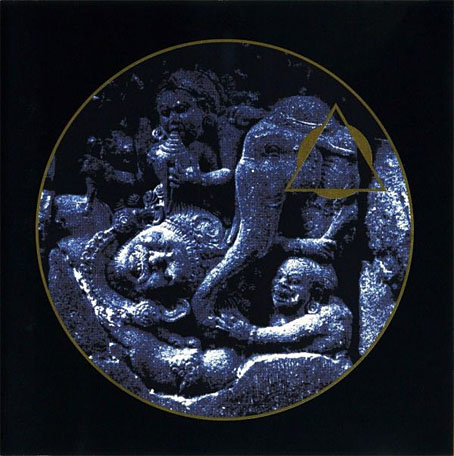
Cover art for Outer Dark (1994) by Bill Laswell. Photography by Thi-Linh Le.

• “In an era where music, among other creative endeavors, has been devalued as mere ‘content,’ freely accessed through the new digital medium, the very survival of those who create music and art and culture has been threatened. Bassist, iconic producer, and sonic visionary Bill Laswell becomes the latest legendary talent to fall victim to the vagaries of these crazy times. Beset by health problems while trying to navigate this harsh and uncertain economic landscape, Laswell is struggling to maintain Orange Music, the legendary New Jersey studio that he as helmed for the last 20 years. He is putting the call out to all fans, friends, and fellow artists alike: If you can help, please do so now. No contribution is too small.”

A Perspex Town is a video by Ian Hodgson (aka Moon Wiring Club) for Applied Music Vol.2: Plastics Today, a new album by Jon Brooks (aka The Advisory Circle).

• The strangeness in the land: Adam Scovell on the BBC’s Play for Today adaptation of Red Shift by Alan Garner. I’d recommend reading the novel as well.

• “My last album was pretty perfect,” says Scott Walker. Sundog, a book of his lyrics, is out now from Faber.

Popular Graphic Arts at the Library of Congress, a new resource of free-to-use, high-resolution scans.

• At The Quietus: LoneLady & Stephen Mallinder offer playlists of music they’ve enjoyed recently.

• Another Green World: Lewis Gordon on how Japanese ambient music found a new audience.

• The discography of Drew Mullholland (aka Mount Vernon Arts Lab) is now at Bandcamp.

• Mixes of the week: FACT mix 635 by Riobamba, XLR8R Podcast 526 by DJ Sports.

The occult roots of higher dimensional research in physics.

• Animated Britain: a YouTube playlist from the BFI.

Pye Corner Audio remixes Knightstown.

• At Dennis Cooper’s: John Waters Day.

• A World Of Different Dimensions (1979) by Tomita | Into The Fourth Dimension (Essenes In Starlight) (1991) by The Orb | New Dimensions In (2010) by The Advisory Circle

Weekend links 324

waliszewska.jpg

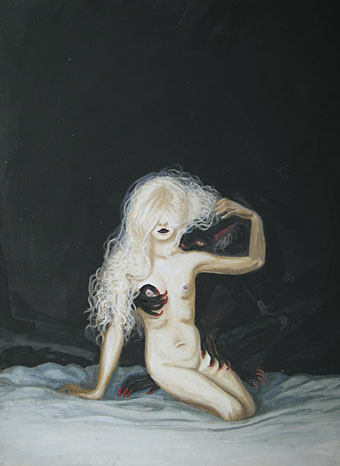
Untitled painting by Aleksandra Waliszewska. The artist is profiled by S. Elizabeth at Dirge Magazine.

• “…from my point of view, the only thing to do with any genre, any medium, is pretty much to break it, to transcend it, to find out what its limits are, and then go beyond them, and see what happens.” Alan Moore (again) talking to Heidi MacDonald about his novel, Jerusalem, which is out next month.

• A Monument to Outlast Humanity: Dana Goodyear gets the reclusive Michael Heizer to talk about his decade-spanning sculptural project, City, work on which is almost finished.

William Burroughs’ appearances in adult men’s magazines: a catalogue which includes some downloads of uncollected Burroughs essays and other writings.

• Mixes of the week: Homegirls & Handgrenades Mix by Moor Mother, Secret Thirteen Mix 194 by Kareem, and hieroglyphics #014 by Temples.

Remoteness of Light is a new album by The Stargazer’s Assistant inspired by the depths of the oceans and the vastness of space.

• RIP Gilli Smyth. “The silliness ran deep in Gong, but they could groove like mothers, too,” says Joe Muggs.

Guide to Computing: historic computers presented by James Ball as though they were new machines.

• “Oscar Wilde’s De Profundis is one of the greatest love letters ever written,” says Colm Tóibín.

• “Will You Dance With Me?” Derek Jarman films dancers in a gay club in 1984.

• Snapshots from an editor: Donald Weise on working with Edmund White.

Stupid by Wrangler (Stephen Mallinder, Phil Winter and Benge).

The Rutt-Etra-Izer

Dynamite/I Am Your Animal (1971) by Gong | Witch’s Song/I Am Your Pussy (1973) by Gong | Prostitute Poem (1973) by Gong

Weekend links 258

stalenhag.jpg

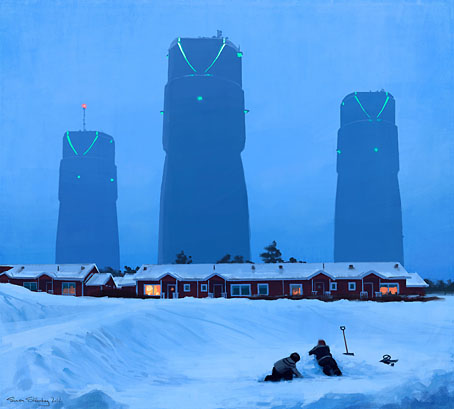
Simon Stålenhag‘s SF artwork will be published in book form if funding is secured. In the future everything will be crowdfunded for 15 minutes.

• Mixes of the week: FACT Mix 494 is a fantastic dub selection by Colleen; Secret Thirteen Mix 151 is by Sally Dige; Stephen Mallinder‘s return to the doom-laden Industrial music of the 1980s suits the post-election mood. Mallinder’s mix is helping promote Industrial Soundtrack for the Urban Decay, a documentary by Amélie Ravalec.

• “…it felt more like real life to me than the average hour-long television show.” Sopranos creator David Chase on what he enjoyed about Twin Peaks. Related: Twin Peaks Tarot cards.

Sound & Song in the Natural World edited by Tobias Fischer & Lara Cory. A book about animal music and communication with a 60-minute CD of field recordings.

• “The psychedelic renaissance has already begun, and for the most part I welcome it,” says Erik Davis in a wide-ranging interview with Sean Matharoo.

• It rumbles on: Brown Pundits on “An Embarrassment at PEN”. A useful collection of stories, reactions and polemic from the past two weeks.

Fanny and Stella: The Shocking True Story, a play by Glenn Chandler about Victorian London’s scandalous pair of cross-dressing men.

• Artist Charles Ray causes a problem for the Whitney Museum of American Art with his sculpture of a naked Jim and Huckleberry Finn.

• “Don’t believe Orson Welles,” says his biographer Simon Callow, “especially when he calls himself a failure.”

• A return to Adolph Sutro’s Cliff House features several photos I’d not seen before.

• More Tarot: Arcana: The Tarot Poetry Anthology is looking for funding.

• At Dangerous Minds: The ancient magic of the record label.

Foreign Movie Posters

Tarot (Ace of Wands theme, 1970) by Andy Bown | Distant Dreams (Part Two) (1980) by Throbbing Gristle | The Devil In Me (1982) by Stephen Mallinder

The original Cabaret Voltaire

cv1.jpg

Cabaret Voltaire #1 (1916). Cover by Hans Arp.

Richard H. Kirk’s announcement that he’ll be performing at the Berlin Atonal festival as Cabaret Voltaire caused some raising of eyebrows recently, although if Stephen Mallinder isn’t involved I won’t be getting too excited myself. The last few releases under the Cabaret Voltaire name were credited to Kirk/Mallinder but from Plasticity (1992) on they don’t sound very different to Kirk’s solo releases from the same period. That’s not to say the music suffers but you have to wonder why the group name is being perpetuated if there’s nothing unique attached to it.

cv2.jpg

Dune, parole in libertà by Filippo Marinetti.

The group, old or new, will be the first thing that comes to mind for most people when they hear the name Cabaret Voltaire, something that might have surprised Hugo Ball who founded the original Cabaret Voltaire in Zurich almost a century ago. Cabaret Voltaire (the group) named themselves after Ball’s project, their intentions in the mid-1970s being similarly Dadaist. Early Cabs performances were more audience provocations than anything to do with entertainment; the music came later, and only after several years of very uncommercial tape experimentation, some of which can be heard on Methodology ’74–’78: Attic Tapes (2003). Thanks to Switzerland staying out of the war the original Cabaret didn’t get wrecked by bombs or destroyed by the Nazis, and is still active today. Ball also published a Cabaret Voltaire journal, two pages of which can be seen here. If this doesn’t look very dramatic to our eyes it needs to be remembered that everyone who first saw it would have been born in the 19th century so the contents would have seemed a lot more radical. A slim publication but with a formidable list of contributors: Guillaume Apollinaire, Hans Arp, Blaise Cendrars, Wassily Kandinsky, Filippo Marinetti, Amedeo Modigliani, Pablo Picasso, Tristan Tzara and others.

Also at Ubuweb (where else?) there are several recordings of Hugo Ball’s Dada poetry including a recital of Karawane by (of all people) Marie Osmond. Who knew there was a connection between the Osmonds and Cabaret Voltaire?

Previously on { feuilleton }
Cabaret Voltaire on La Edad de Oro, 1983
Doublevision Presents Cabaret Voltaire
Just the ticket: Cabaret Voltaire
TV Wipeout
The Crackdown by Cabaret Voltaire