Weekend links 399

quays.jpg

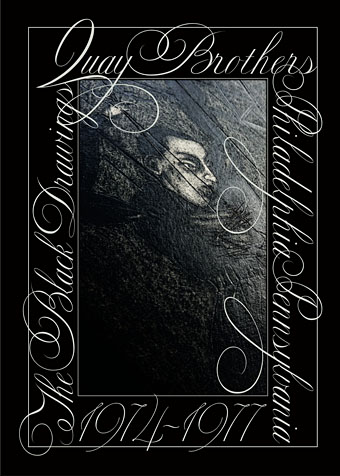
• “In the mid-Seventies the influential stop-motion animators, Stephen and Timothy Quay, embarked on a series of dark graphite drawings, conceived as imaginary film posters. They kept their first autonomous art project hidden for decades, allowing only a few glimpses to transpire in some of their animation classics such as Noctura Artificialia and Street of Crocodiles. In hindsight, the Black Drawings can be considered as a blueprint for their future work. This book offers a first in-depth exploration of this important graphic series that reveals many of the themes and techniques that would come to life in their celebrated animation films.” Quay Brothers: The Black Drawings 1974—1977 is a book by Edwin Carels and Tommy Simoens.

• The first of the BFI’s forthcoming blu-ray boxes of Derek Jarman films is now available for preorder. In addition to what I presume will be an uncensored presentation of Sebastiane (1976) the set also includes the digital premiere of In the Shadow of the Sun (1980) an “alchemical” blending/transmutation of Jarman’s early Super-8 films with a score by Throbbing Gristle. Related: Adam Scovell on another of the films in the set, Jubilee (1978), and one that Jarman disliked even though it incorporates many of his obsessions, especially in the punk-baiting sequences derived from Shakespeare and Elizabethan metaphysics.

• Mixes of the week: FACT mix 638: Circuit des Yeux, XLR8R Podcast 528 by Huxley Anne, Secret Thirteen Mix 246 by Hiro Kone, and drone works from Abby Drohne. And since the untimely death of composer Jóhann Jóhannsson was announced a few hours ago, a return to his sombre mix for FACT from 2015.

Nabokov’s ambitions weren’t interpretive. He “held nothing but contempt for Freud’s crude oneirology,” Barabtarlo explains, and in tracking his dreams he wasn’t turning his gaze inward. For him, the mystery was outside—far outside. Nabokov had been reading deeply into serialism, a philosophy positing that time is reversible. The theory came from JW Dunne, a British engineer and armchair philosopher who, in 1927, published An Experiment with Time, arguing, in part, that our dreams afforded us rare access to a higher order of time. Was it possible that we were glimpsing snatches of the future in our dreams—that what we wrote off as déjà vu was actually a leap into the metaphysical ether? Dunne himself claimed to have had no fewer than eight precognitive dreams, including one in which he foresaw a headline about a volcanic eruption.

Daniel Piepenbring reviewing Insomniac Dreams by Gennady Barabtarlo

• Gavin Stamp 1948—2017: a eulogy to the late architectural writer by Jonathan Meades. One of Stamp’s more offbeat assignments was providing illustrations for the George Hay Necronomicon in 1978.

Embassy of the Free Mind is the name of the new online library whose digitisation of rare occult volumes was financed by author Dan Brown.

• At Dangerous Minds: Meet Princess Tinymeat, the obscure genderbending trashglam post-punk goth offshoot of Virgin Prunes.

• “Why are film-makers obsessed with the story of doomed British sailor Donald Crowhurst?” asks Jonathan Coe.

• “Asian music influenced Debussy who influenced me—it’s all a huge circle,” says Ryuichi Sakamoto.

• At Spoon & Tamago: The birds of Tokyo beautifully illustrated by Ryo Takemasa.

Mark Pilkington is In Wild Air

Professor Yaffle

The Sun’s Gone Dim And The Sky’s Turned Black (2006) by Jóhann Jóhannsson | The Great God Pan is Dead (2008) by Jóhann Jóhannsson | A Pile of Dust (2016) by Jóhann Jóhannsson
Weekend links 359

azuma.jpg

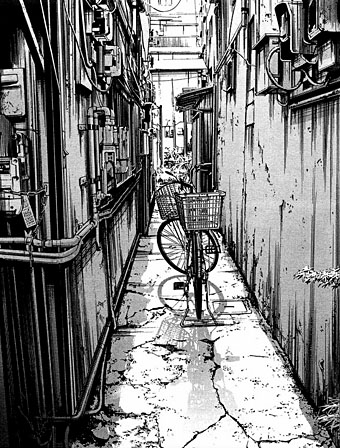
An urban scene from Yotsuba&! by manga artist Kiyohiko Azuma.

• The resurgence of interest in Alice Coltrane’s music is very welcome even if she joins for the moment the list of those artists (usually women: see Leonora Carrington) tagged by editors as “lost”, “forgotten”, “unrecognised”, etc. Alice Coltrane was only ever lost if you weren’t paying attention, and was notable enough fifteen years ago to be given the cover of The Wire magazine. Articles appearing this week have been prompted by a compilation of the devotional music that Coltrane recorded for a series of self-released cassettes in the 1980s. Geeta Dayal writes about the creation of the ashram recordings, while Stewart Smith suggests starting points for new listeners.

• Mentioned here before, but there’s now a page for the book: a new edition of Hashish (1902) by Oscar Schmitz will be published by Wakefield Press in November. “A collection of decadent, interweaving tales of Satanism, eroticism, sadism, cannibalism, necrophilia, and death”, illustrated by Alfred Kubin.

• Mixes of the week: A Dark Entries mix for the 400th issue of The Wire, Procedure, LA, April 25, 2017 by Pinkcourtesyphone, and Secret Thirteen Mix 220, a 4-hour epic by Ricardo Gomez Y De Buck.

• More off-the-beaten-path film lists: Sarah Lyons for Dirge Magazine on three occult documentaries, and Terry Ratchett for Dennis Cooper on 18 needlessly obscured avant-garde films.

• An Island of Peace: James Conway on Amanda DeMarco’s new translation of Walking in Berlin: A Flâneur in the Capital by Franz Hessel.

Ryuichi Sakamoto talks to Aaron Coultate about overcoming cancer, The Revenant and his new album, async.

Ingrid D. Rowland on Caravaggio: The Virtuoso of Compassion.

• “I think I am weirdly politically correct,” says John Waters.

Mnemonic Generator

• Berliner Nächte Part 1 (1990) by Seigen Ono | Berlinerstrasse (1995) by Coco, Steel & Lovebomb | Berlin (1998) by Pole

Weekend links 310

monogenis.jpg

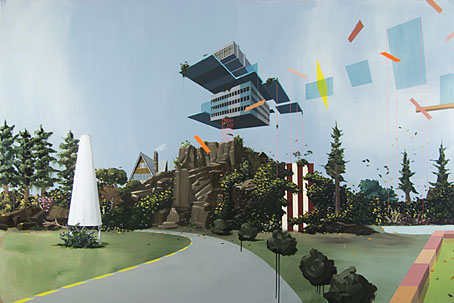
Parkland (2012) by Dean Monogenis.

• “The Story Behind the Planet’s Most Influential Road Map of ‘Weird Music’“. Gustavo Turner investigates the enduring influence of The Nurse With Wound List. Related: A Discogs list of links to all the NWWL discographies, and a recommended listening guide by Ultima Thule.

Tokyo Melody: Un film sur Ryuichi Sakamoto (1985) by Elizabeth Lennard features Sakamoto at work on Illustrated Musical Encyclopedia, together with Akiko Yano, Haruomi Hosono and Yukihiro Takahashi.

• “We wanted to fuse the aesthetics, histories and values of witchcraft, the traditional ideas with a contemporary edge,” says editor and creative director of Sabat magazine, Elisabeth Krohn.

There is a very seductive and very dangerous demon: the demon of generalities. He captivates man’s thought by marking every phenomenon with a little label, and punctiliously placing it together with another, similarly carefully wrapped and numbered phenomenon. Through him a field of human knowledge as changeable as history is turned into a neat little office, where this many wars and that many revolutions sleep in folders – and where we can pore over bygone ages in complete comfort. This demon is fond of words such as “idea”, “tendency”, “influence”, “period”, and “era”. In the historian’s study this demon reductively combines in hindsight the phenomena, influences and tendencies of past ages. With this demon comes appalling tedium – the knowledge (utterly mistaken, by the way) that, however humanity plays its hand or fights back, it follows an implacable course. This demon should be feared. He is a fraud. He is a salesman of centuries, pushing his historical price list.

Vladimir Nabokov in a previously unpublished lecture, On Generalities

• More Tom Phillips: 20 Sites n Years, a film by Jake Auerbach & David Thorp about the artist’s long-term urban photography project, is showing at Camberwell College of Arts next month.

• Mixes of the week: Sass In Pocket by Abigail Ward, Near Mint, 17th May 2016 by Robin the Fog & Hannah Brown, and Secret Thirteen Mix 184 by Andi Stecher.

• Grey Dog Tales talks to Brian J Showers of Swan River Press about horror and supernatural fiction.

• “Magic mushrooms lift severe depression in clinical trial.” But their use is still illegal in the UK.

• “Your brain does not process information, and it is not a computer,” says Robert Epstein.

Cliff Martinez’s theme for Nicolas Winding Refn’s forthcoming The Neon Demon.

Diamanda Galás, Still Wild and Primal, Returns to the New York Stage.

Janae Corrado on the photography of Joel-Peter Witkin.

Alastair Gee on gay home movies from the 1940s on.

People Laugh At Me (Coz I Like Weird Music) (1980) by The Instant Automatons | Weird Caravan (1980) by Klaus Schulze | Call It Weird (1983) by Xymox

Weekend links 235

shadows.jpg

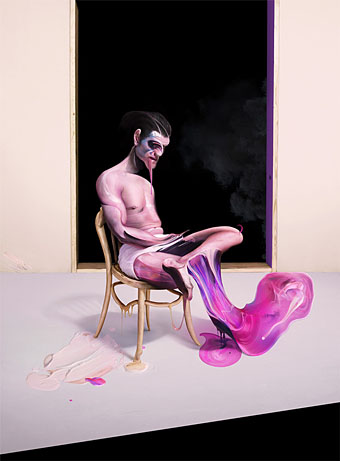
Shadows (1974) by Pawel Nolbert & Lukasz Murgrabia, one of three images recreating Francis Bacon’s Triptych–August 1972.

Breaking the Code (1996), a BBC film by Herbert Wise based on Hugh Whitemore’s stage play about Alan Turing. Wise’s film has been linked here before but it’s relevant again thanks to the release of The Imitation Game. Derek Jacobi played Turing on stage and screen, and Whitemore’s script managed to deal with Turing’s life and work without insulting the man or the intelligence of its audience.

• “…if you listen to A Beacon From Mars by Kaleidoscope or if you listen to some Turkish taxim then something starts happening.” Robert Plant talking to Julian Marszalek about the music that excites him.

• “CGI has become wearingly dull and clichéd. Can its deep weirdness be recovered and filmgoers’ minds stretched again?” asks Jonathan Romney.

The cult of the Thirty-Seven Nats is unique to Burma. […] The junta’s attempts to subdue nat worship had an unintended effect: the role of the nat wife was embraced by an already marginalized group. Homosexuality is illegal in Burma and has been since its British colonizers instituted a late-nineteenth-century ban on “intercourse against the order of nature”. Government restrictions opened a professional vacuum, says scholar Tamara C. Ho. Becoming a nat kadaw offered the achauk—a Burmese term for gay and transgender men—both “a vocation and queer visibility”.

After the Green Death by Will Boast

• “Cat memes and other frivolities aren’t the work of an Internet culture. They’re the work of an American one, ” says Caitlin Dewey.

• Hear the cavernous reverb of Berlin’s Kraftwerk captured by Emptyset’s James Ginzburg and Yair Elazar Glotman.

• Take part in the first #psychedelicpride photoshoot in central London on Saturday, December 13th.

• Mix of the week: FACT Mix 470 by Jonny Trunk who also appears in the list of vinyl hoarders below.

• Queer Noise: Abigail Ward on the history of LGB music and club culture in Manchester.

More photos of the steampunk exhibition at 751 D-Park, Beijing, China.

A chronological list of synth scores & soundtracks.

• Animated photography by Julien Douvier.

• A Third Ear Band archive at SoundCloud.

The secret lives of vinyl hoarders.

Taxim (1968) by Kaleidoscope | Water (1970) by Third Ear Band | Love Is The Devil (1998) by Ryuichi Sakamoto

Made To Measure

mtm1.jpg

When you’ve sated yourself on a group’s back catalogue there’s always the solo albums. In the case of Tuxedomoon there are a number of these to choose from, thanks to several of the band members being both multi-instrumentalists and talented songwriters. Some of the more offbeat solo outings may be found among the albums released as part of the Made To Measure series, an offshoot of the excellent Belgian record label, Crammed Discs. Crammed have been Tuxedomoon’s label for some time, and seem increasingly unique in a world where independent labels tend to cater to narrow genres and small, select audiences. Crammed’s roster of artists is extremely eclectic, ranging from the expected Euro-pop and dance releases to a wide range of traditional and contemporary music from around the world.

mtm2.jpg

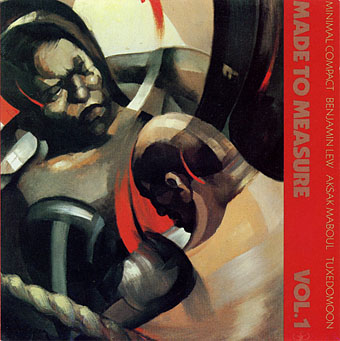
Made To Measure Vol. 1 (1984). Painting by Fernand Steven.

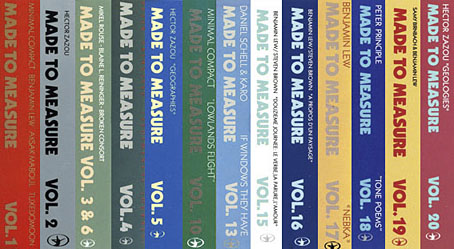
From 1984 to 1994 the Made To Measure series released over 30 albums that represent the more esoteric side of an already fairly esoteric label. All of the early releases were numbered, and Tuxedomoon happen to be on the first release, Made To Measure Vol. 1, together with Minimal Compact, Benjamin Lew, and Aksak Maboul. The series title refers to all of the music being “made to measure” some pre-existing work—film, theatre, dance performance, etc—although some of the later releases were simply an excuse to put out new music by an established Crammed artist. In addition to the first release, Tuxedomoon members Blaine L. Reininger, Peter Principle and Steven Brown were regular contributors to subsequent albums. Two of the Steven Brown albums, A Propos D’Un Paysage (MTM 15, 1985) and Douzième Journée: Le Verbe, La Parure, L’Amour (MTM 16, 1988) are marvellous instrumental collaborations with Benjamin Lew that are very different in tone to Tuxedomoon but well worth seeking out. Brown also recorded a soundtrack album, De Doute Et De Grace (MTM 22, 1990), with readings by actress Delphine Seyrig. The series has been discontinued in recent years but the MTM numbering was resurrected for the latest Tuxedomoon album, Pink Narcissus, which is MTM 39.

mtm3.jpg

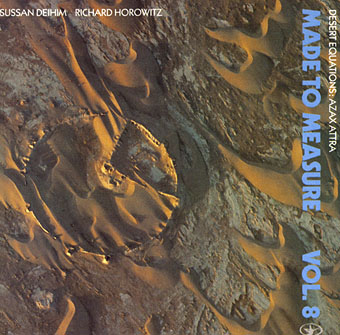
Desert Equations: Azax Attra (1986). Photography by Georg Gerster.

I’ve still not heard all of the Made To Measure series, and I don’t like everything I have heard—I have to be in the mood for Hector Zazou’s quirkier moments. Aside from those mentioned above, the notable releases for me would include Desert Equations: Azax Attra (MTM 8, 1986) by Sussan Deyhim (here credited as Deihim) & Richard Horowitz, an album that led me to acquire almost everything Sussan Deyhim has recorded; If Windows They Have (MTM 13, 1986) by Daniel Schell & Karo; Nekonotopia Nekonomania (MTM 29, 1990) by Seigen Ono; Water (MTM 31, 1992) by David Cunningham; Sahara Blue (MTM 32, 1993) by Hector Zazou; Glyph (MTM 37, 1995) by Harold Budd & Hector Zazou. Sahara Blue exemplifies in miniature the eclecticism of Crammed Discs, being a tribute to Arthur Rimbaud featuring (among others) John Cale, Ryuichi Sakamoto, Gérard Depardieu, Khaled, David Sylvian, Bill Laswell, Lisa Gerrard, Sussan Deyhim and Tim Simenon.

mtm4.jpg

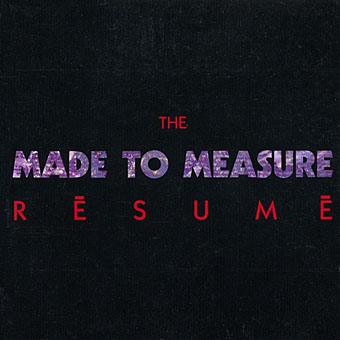
For those wishing to explore further without shelling out on mysterious, unknown quantities, I’d recommend The Made To Measure Résumé (1987), a compilation of tracks from the first 16 MTM releases, and an ideal introduction to the series.

Previously on { feuilleton }
Subterranean Modern: The Residents, Chrome, MX-80 Sound and Tuxedomoon
Tuxedomoon on La Edad de Oro, 1983
Tuxedomoon designs by Patrick Roques
Pink Narcissus: James Bidgood and Tuxedomoon