Weekend links 318

wellinger.jpg

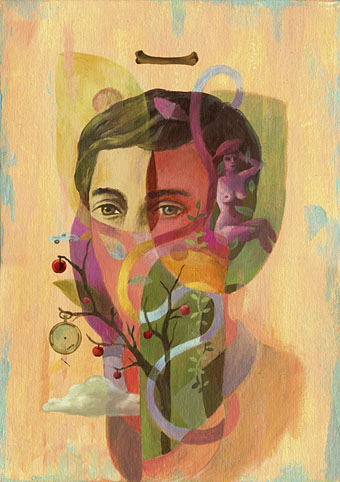
The Meaning of Life by Alice Wellinger.

• A Kickstarter for A Hidden Landscape Once A Week edited by Mark Sinker: “How UK music-writing became a space for unruly curiosity, in the words of those who made it happen”.

• RIP Steven Young, one of the musicians in a cult group of mine, Colourbox, and the “S” in M|A|R|R|S, creators of Pump Up The Volume in 1987.

• At Greydogtales: The Pale Brown Thing & A Dose of De Quincy—Fritz Leiber, Dario Argento, Megapolisomancy, and The Three Mothers.

Pye Corner Audio lists some influences. Zones by Head Technician, another Martin Jenkins project, has just been reissued on vinyl.

• Mixes of the week: The Middle Eastern & African playlist For July by John Doran, and a Pye Corner Audio mix for 20jazzfunkgreats.

Evan Kindley on how the Proust Questionnaire went from literary curio to prestige personality quiz.

• To Surprise a Voice: Max Nelson on the subtitling and translation of foreign-language films.

• How the ’70s dethroned the ’60s as popular music’s Golden Age: Judy Berman investigates.

• “It puts a spell on people.” Ryan Gilbey on Stanley Kubrick’s Barry Lyndon.

• “Dennis Cooper fears censorship as Google erases blog without warning.”

Charlie Kaufman on freedom, the future, and the failure of Anomalisa.

Danny Heitman on why Nabokov’s Speak, Memory still speaks to us.

Daphne Oram‘s radical turntable experiments finally come to life.

Adam Kirsch on Walter Benjamin’s genius for surreal visions.

Shotgun (1983) by Colourbox | Baby I Love You So (1986) by Colourbox | Looks Like We’re Shy One Horse/Shoot Out (1986) by Colourbox
Weekend links 316

pca.jpg

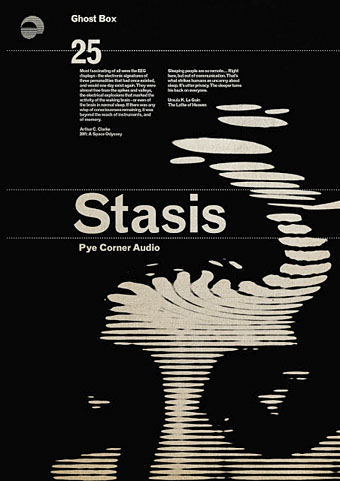
Stasis, the second album by Pye Corner Audio for the Ghost Box label, will be released at the end of August. Design, as always, is by Julian House.

• “In the modern internet world you have what I talk about as the ‘War of the Certain’: people insisting that their absolutist viewpoint, in 140 characters, is exactly the right way to think, and anyone who doesn’t agree with them is terrible. If you’ve grown up reading Robert Anton Wilson this is awful. Having all of these certain people with no nuance or doubt, and no understanding of multiple-model agnosticism, is not going to go anywhere good.” Writer John Higgs talking to Ben Graham about RAW, Discordianism and related matters. A related matter: Higgs talks to Alan Moore about virtual-reality mysticism, creating a new counterculture, reinventing magick, and the eternal nature of time.

• Nicolas Winding Refn’s The Neon Demon is out this month so features and interviews are proliferating. I’ve been avoiding them for the usual spoiler-shunning reasons, but this was worth noting: Refn’s mood-establishing playlist for the production. More Neon Demon: Cliff Martinez talks about working with Refn.

• ” ‘Paint me like one of your French girls” takes on a whole new meaning in Nicole G. Albert’s book Lesbian Decadence: Representations in Art and Literature in Fin-De-Siècle France,” says Rachel Wexelbaum.

The decaying low-baroque tableau of conjugal tenderness, features eaten away by the syphilis of time, played so well, on an anvil of whitewashed cement, alongside a municipal bowling green, that it became the provocation for a pedestrian expedition testing the Brexit boundaries of a timeless mead-hall England, before the fleet of plundering Papist Normans came sailing over the horizon. Just as tabloid gangs of Albanian drug-trafficking white slavers were now reputed to be sneaking ashore on Romney Marshes, at Deal and Camber Sands, on their Rigid Inflatable Boats, kayaks and leaking air mattresses. Could anyone bring themselves actually to cast a vote for Brexit, a commodity that sounds like a cereal bowl of Nordic cattlecake manufactured from wood shavings with an added ingredient to purge the bowels?

Iain Sinclair and company head south in turbulent times

• At Dangerous Minds: a video recording of Psychic TV live in Manchester, 1983 (I’m in the audience but up on the balcony so you won’t see me), and an interview with dub maestro Adrian Sherwood.

The Columbia Years, 1968–1969: fabled recording sessions by Betty Davis are to receive an official release by Light In The Attic.

We’re Here Because We’re Here – Jeremy Deller’s silent commemoration of the soldiers of the Somme.

• Inside Las Pozas, Edward James’ Surrealist Garden in the Mexican Jungle.

• The body as amusement park: A history of masturbation by Barry Reay.

Nicholas Olsberg on the mirage of an ideal metropolis.

The Strange World of…David Toop

Static Electrician (1994) by ELpH | Static (1998) by Redshift | Static (2001) by Monolake

Weekend links 285

graphic.jpg

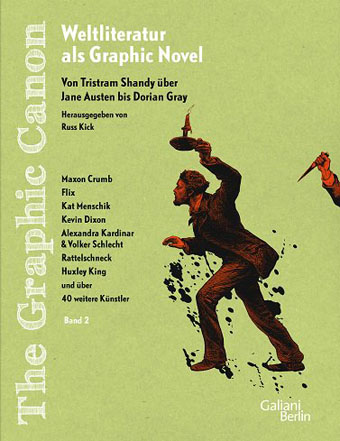
Some of the art from my collage adaptation of The Picture of Dorian Gray appears on the cover of The Graphic Canon: Volume 2, published this month in a German edition by Verlag Galiani. Out next month (although possibly available now) is the same book in a Brazilian edition from Boitempo Editorial. One of the disappointments this year was having to abandon plans to contribute to Russ Kick’s forthcoming graphic canon of crime fiction. I was overstretched during the summer, and what with projects slipping their deadlines and the trip to Providence there wasn’t any time left for other things.

• For those who missed the first edition, a second and final expanded edition of the Penda’s Fen study/celebration The Edge Is Where The Centre Is.

• Whipping up a storm: how Robert Mapplethorpe shocked America; Kevin Moore on the photographer’s Perfect Moment exhibition.

In the best scenario, metaphysical art distributes the work of understanding among cultural traditions and symbolic systems, and it is along these lines that Carrington’s work has been described as a productive combination of Mexican, Egyptian, Hebrew, Celtic, Greek, and Mesopotamian elements. Her paintings, plays, and stories mix the symbols of alchemy, astrology, Tarot, herbalism, magic, witchcraft, and a personal iconography.

Leif Schenstead-Harris on the life, art and fiction of Leonora Carrington

• Mixes of the week: Hieroglyphic Being collects favourite cosmic jazz of the 1970s; NTS Radio presents an hour of Annette Peacock.

• At Kill Your Darlings: Alexandra Heller-Nicholas enthuses about Dario Argento’s delirious masterwork, Suspiria.

Pye Corner Audio releases a new album (only limited vinyl at the moment—boooo!) and remixes Stealing Sheep.

• The Trip Planners: Emily Witt meets the founders behind Erowid, the online drug encyclopedia.

Woven Processional (1985), music on the Long String Instrument by Ellen Fullman.

• “The Paris attacks prove Charlie Hebdo’s critics wrong,” says Dorian Lynskey.

• Photographs by Danila Tkachenko of abandoned Soviet technology.

Come Wander With Me / Deliverance by Anna von Hausswolff.

• The collages of Guy Maddin.

CAN HALEN

Let’s Take A Trip (1965) by Godfrey | Trip On An Orange Bicycle (1968) by The Orange Bicycle | Last Trip (1968) by We Who Are

Weekend links 283

wassmann.jpg

Behind by Lisa Wassmann.

• “Without space art, nobody would know what Mars would look like.” Artist David A. Hardy talking to Nadja Sayej about a life spent painting the cosmos and—briefly—working for Hawkwind. Visions of Space, an exhibition of astronomical art, is at the Wells & Mendip Museum throughout November.

• Mixes of the week: Something Beautiful Happened by Cafe Kaput; Autumn Vybes: Mist, Mystery and Motion by Abigail Ward; and Secret Thirteen Mix 166 by Ron Morelli.

• More Ghost Box: Two new singles in the Other Voices series will be released next month. And the label is profiled in the latest issue of Electronic Sound magazine.

It breaks my heart when one writer tells another what she can or cannot do. I once knew a woman, a professor of literature, who said that Flaubert had no right to write Madame Bovary because he was a man. Such dangerous foolishness! This is just another form that dogmatic thinking takes. And it seems to me that the imagining mind—which is also a profoundly human mind—must be unfettered, boundless. To write from the perspective of another’s world demands a generous and a rigorous leap of the spirit; it demands empathy and mindfulness. Writing is so much about subverting dogmatisms of all kinds, above all the ones that insist you cannot go there! You must not say that! Writers need to go anywhere, to take anything on. And the only rule is to do it well.

Rikki Ducornet in a retrospective feature at Dennis Cooper’s blog

• “Horror at its best has always existed outside the mainstream,” says Brian Ennis in another celebratory piece about Thomas Ligotti.

• Alan Clarke & David Rudkin’s Penda’s Fen receives another cinema screening next week at the Sallis Benney Theatre, Brighton.

• “[David] Lynch’s films abound with gnomic pronouncements and incantations,” says Dennis Lim.

Stars of the Lid play a tremendous hour-long set at St. Agnes Church in Brooklyn.

Drawn in Stereo: a book of music-related art and illustration by Michael Gillette.

• At Dangerous Minds: Only the coolest people get to sit in the wicker peacock chair.

Everything Is Erotic Therefore Everything Is Exhausting by Johanna Hedva.

Moon Mist (1961) by The Out-Islanders | River Mist (1989) by Brian Eno | Black Mist (Long Version) (2013) by Pye Corner Audio

Weekend links 282

ligotti.jpg

Thomas Ligotti photographed by Jennifer Gariepy.

• More Thomas Ligotti (he’s been marginalised for decades, the attention is overdue): “Songs of a Dead Dreamer and Grimscribe are fugues of the creeping unknown,” says Peter Bebergal who profiles Ligotti for The New Yorker, and gets him to talk about the impulses that produce his fiction; at the Lovecraft eZine eleven writers and editors ask Ligotti a question related to his work.

• As usual, Halloween brings out the mixes. This year there’s a choice of The Ivy-Strangled Path Vol. XII by David Colohan, Samhain Séance 4 : The Masks of Ashor by The_Ephemeral_Man, The Voluptuous Doom of Bava Yaga by SeraphicManta, Spool’s Out Radio #27 with Joseph Curwen, and The Edge Of The Holloween Oven – 10/26/15 by The Edge Of The Ape Oven.

Broadcast’s James Cargill has provided a soundtrack for Peter Strickland’s radio adaptation of The Stone Tape by Nigel Kneale. John Doran and Richard Augood review the new and old versions for The Quietus. Related: Peter Strickland’s favourite horror soundtracks.

My mission was to make sounds that didn’t exist in reality, whether it’s a star ship or a laser or a monster or an exploding planet. You started with basic sounds that were acoustic and then you manipulated them. There’s a scene in Raiders of the Lost Ark, when he falls into the well of souls and pushes over that statue and there are all those snakes? The sound of the snakes was made by pulling masking tape off glass. When the statue falls over and breaks the wall there’s the noise of lots of big rocks breaking. We just took some bricks and smashed them up and then slowed the tape recording down. I remember doing a lot of great scary effects using dry ice and a bunch of pots and pans out of the kitchen. You heat them up really hot and then you drop a load of dry ice into the hot pan so the rapid thermal change would make it scream.

Composer and sound designer Alan Howarth talks to Mat Colegate about working for films

Jordan Hoffman reviews Jacques Rivette’s legendary 13-hour feature film Out 1: Noli Me Tangere (1971). The film will be in cinemas next month, and available on DVD/BR in January.

The Stone Tape was originally a one-off TV drama shown at Christmas in 1972. Michael Newton looks at the BBC’s habit in the 1970s of screening ghost stories at Christmas.

Steven Arnold’s Epiphanies: A look back at some of the artist’s surrealist photographs.

Greydogtales just concluded a month of posts dedicated to William Hope Hodgson.

• At Dirge Magazine: Tenebrous Kate on seven songs based on dark literary classics.

Phil Legard opens some grimoires for a short history of signs and seals.

Micah Nathan on Tuesday’s Child, “LA’s best Satanist magazine”.

• “The Occult was a kind of awakening,” says Colin Wilson.

Shagfoal: witchcraft and horror-blues by Dante.

Jenny Hval‘s favourite albums.

The Attic Tapes (1975) by Cabaret Voltaire | Those Tapes Are Dangerous (1997) by The Bug | The Black Mill Video Tape (2012) by Pye Corner Audio