The poster art of Vic Fair

fair1.jpg

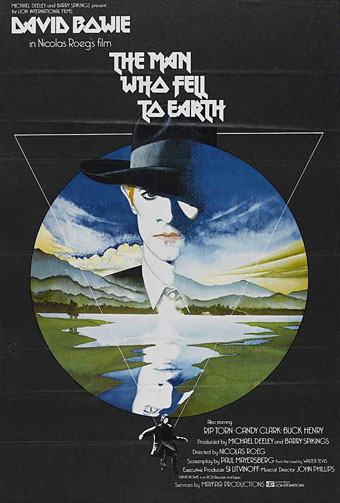
The Man Who Fell to Earth (1976).

This weekend’s viewing was The Man Who Fell to Earth on Blu-ray, highly recommended for anyone who likes the film, Anthony Richmond’s photography looks better than ever. I’ve had this for a while on DVD and what’s notable about the old and new formats is that both UK editions use Vic Fair’s poster design as the cover art. It often seems a hit-or-miss affair whether the original poster gets used for home release. This tends to happen more with older films that have acquired an artistic reputation; the recent UK release of The Conformist by Arrow Films prints four different poster designs on the inlay, with the box enclosure having a clear window that allows one or other of the designs to be facing out. A great idea which makes owning the physical copy a little more worthwhile.

I’d known the poster for Nic Roeg’s film for years but until this weekend I’d never thought to find out who was responsible for the artwork. Vic Fair was a prolific artist for UK film releases during the 1970s and 1980s so this is a small selection of his work. Apparently he was so pleased with the Roeg poster that he signed it. As is often the case with film posters, there’s no record of the designers for these examples so we don’t know who was responsible for the type layouts.
fair5.jpg

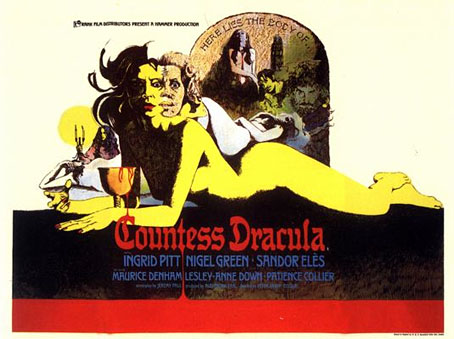
Countess Dracula (1972).

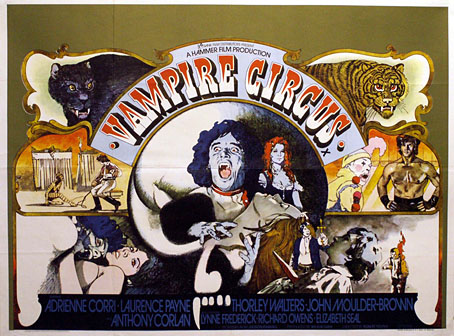
The Countess Dracula art looks surprisingly similar to some of the promotional art that Roger Dean produced around this time for UK studios, Hammer included. A few examples appear in his Views book but it’s a side of his work that’s seldom seen or discussed. I recall being impressed by the Vampire Circus poster in the past (although the big cats look a little silly). One of the better Hammers of the 70s, with a cast including cult cutie John Moulder-Brown.
fair2.jpg

Vampire Circus (1972).

fair3.jpg

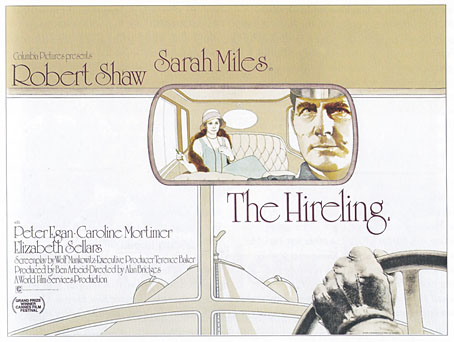
The Hireling (1973).

As with many posters of the 1970s, The Hireling is a great example of an approach that marketing departments would never allow today.
fair4.jpg

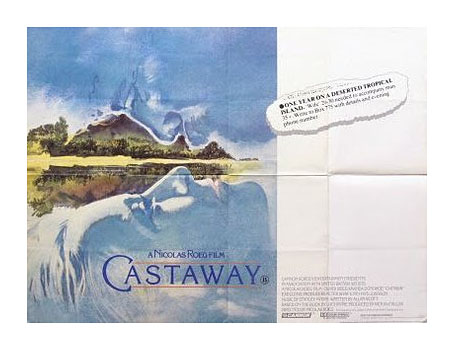
Castaway (1987).

Another Nic Roeg film, and another subtle design, possibly too subtle as I don’t recall seeing it used anywhere. First time I saw this was on the cover of a soundtrack album a few years back when I was putting together Jon Hassell’s website. There’s a piece of his music used in the film so we were trying to trace all the relevant cover art.

There’s more about Vic Fair and his contemporaries in British Film Posters: An Illustrated History by Sim Branaghan & Steve Chibnall, a book I think I ought to buy. If anything it may spare me the temptation to start collecting film posters again.

Previously on { feuilleton }
Petulia film posters
Lucifer Rising posters
Wild Salomés
Druillet’s vampires
Bob Peak revisited
Alice in Acidland
Salomé posters
Polish posters: Freedom on the Fence
Kaleidoscope: the switched-on thriller
The Robing of The Birds
Franciszek Starowieyski, 1930–2009
Dallamano’s Dorian Gray
Czech film posters
The poster art of Richard Amsel
Bollywood posters
Lussuria, Invidia, Superbia
The poster art of Bob Peak
A premonition of Premonition
Metropolis posters
Film noir posters

Petulia film posters

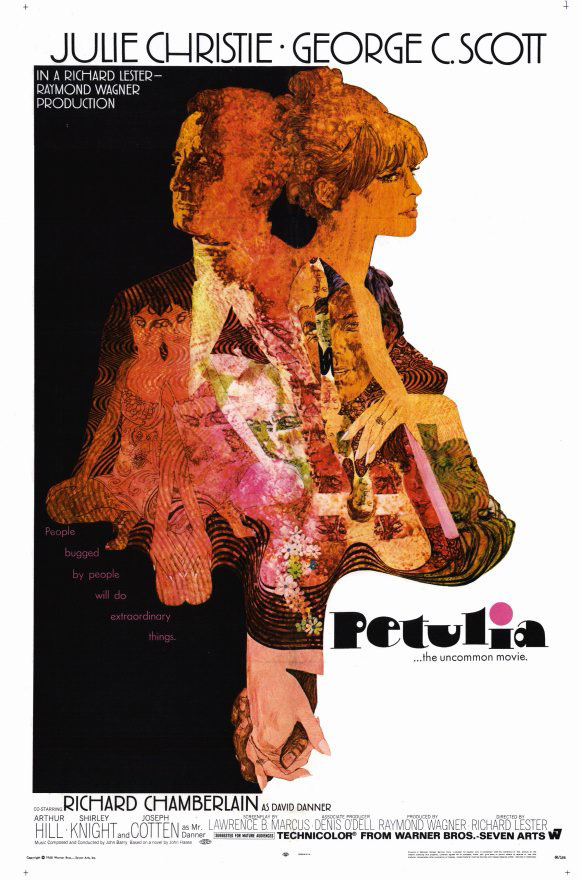
petulia1.jpg

Illustration by Bob Peak.

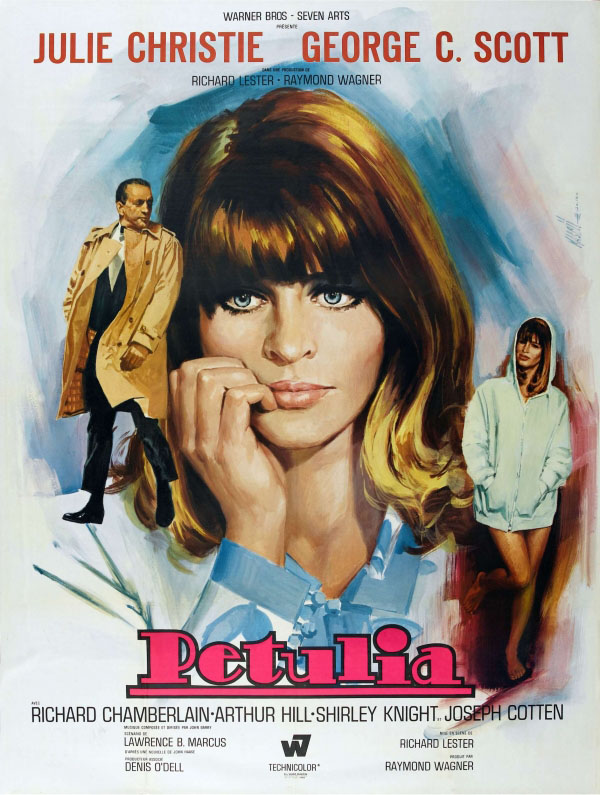
Further examples of those things you find when you’re searching for something else, these posters for Richard Lester’s Petulia (1968) are a good example of just how differently the same film can be presented by its advertising materials. Petulia (“the uncommon movie”) is a fascinating, unjustly neglected gem, a serious adult drama quite unlike the comedies (or comic dramas) Lester was making before and after. Nicolas Roeg photographed Petulia shortly before embarking on his own directing career, capturing San Francisco just after the Summer of Love in a more documentary fashion than the exploitation films of the period. There are nods to the psychedelic scene with party appearances by Big Brother and the Holding Company, and the Grateful Dead, but the narrative concerns the flipside of hippiedom with a group of middle-class professionals ensnared in adultery and marital failure.

A commonly remarked feature of Petulia is Antony Gibbs’ fragmented editing style which flashes backwards and forwards throughout, even showing events that never happen. The technique is usually taken to be derived from Alain Resnais although Gibbs had earlier edited The Knack…and How to Get It for Lester which is often as fragmented, albeit for a more comic effect. What’s notable about the technique is that Gibbs went on to edit Nicolas Roeg’s first two features, Performance (co-directed with Donald Cammell) and Walkabout, both of which take the fragmentation even further, creating the style which Roeg made his own.

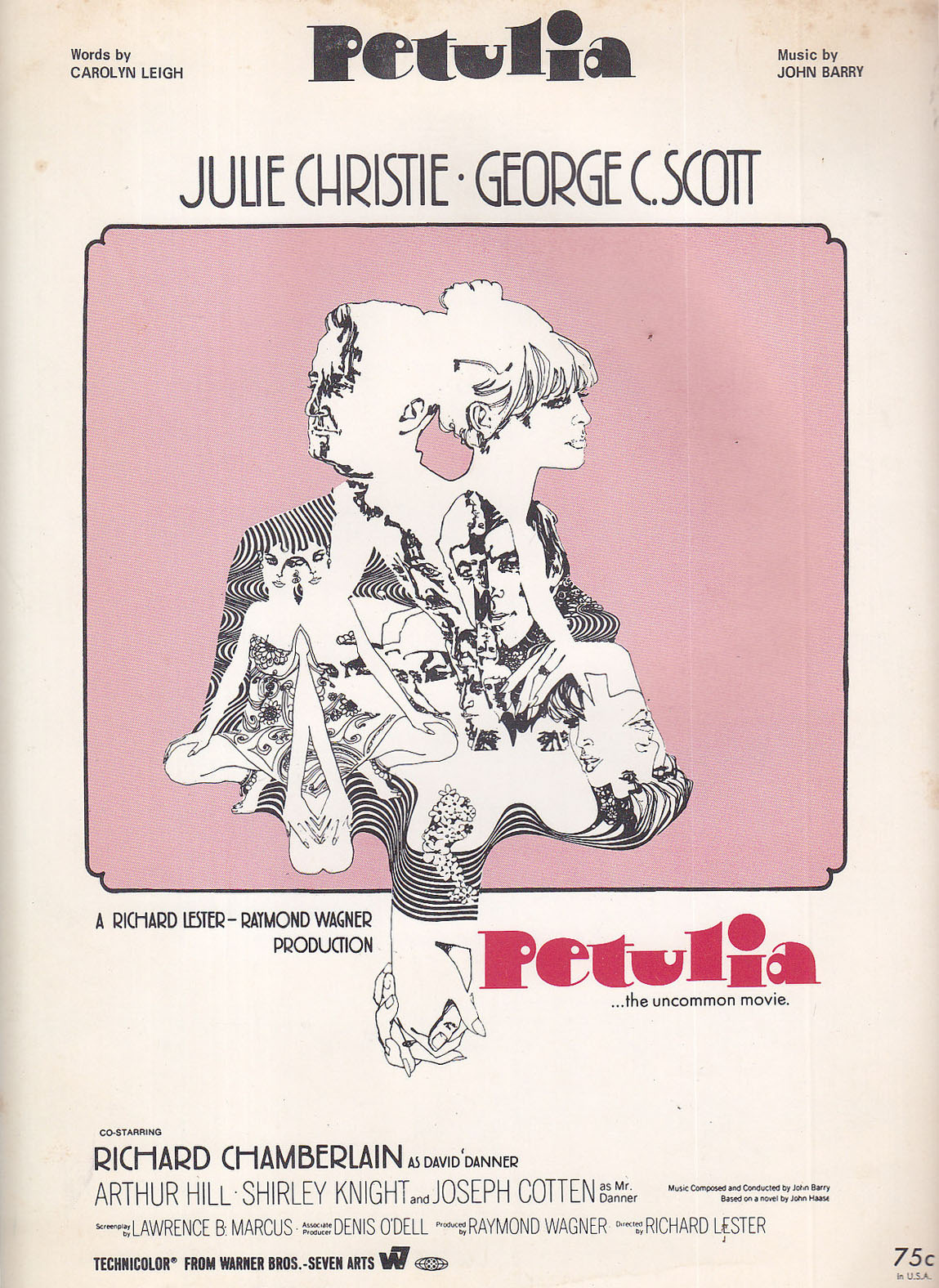
petulia4.jpg

The poster that caught my attention was the marvellous one by Bob Peak who manages to depict the awkward relationship between the two leads—holding hands yet facing away from each other—whilst alluding to the psychedelic backdrop in the details. It’s difficult to tell at a small size but the sheet music design above shows that Peak’s drawing is a complex arrangement of blended faces, the reflected figure of a woman and a pattern of Bridget Riley swirls. If I was still collecting film posters I’d be sorely tempted to buy one of these.

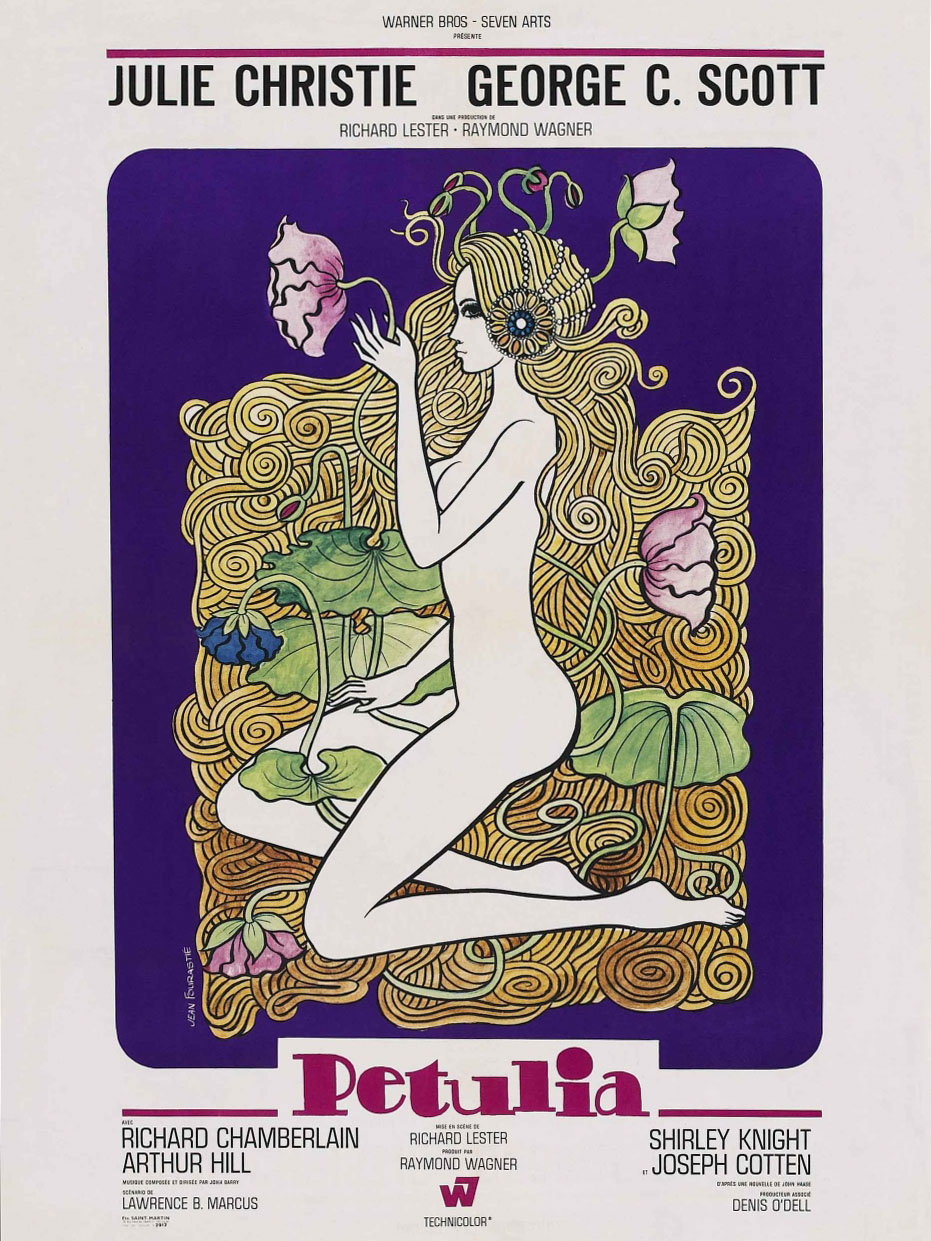
petulia2.jpg

Illustration by Jean Fourastié.

Compared to which this pair of French designs veer off in opposite and unsatisfying directions. Jean Fourastié seems to have been under the impression that the story concerned a San Francisco flower child not a bored housewife, while Jean Mascii’s painting isn’t inaccurate but is more suited to a romance paperback. Big heads were apparently Mascii’s métier even if there were no people in the film.

petulia3.jpg

Illustration by Jean Mascii.

Petulia has been available on DVD for a while now, it’s well worth seeking out. Watch the trailer here.

Previously on { feuilleton }
Lucifer Rising posters
Wild Salomés
Druillet’s vampires
Bob Peak revisited
Alice in Acidland
Salomé posters
Polish posters: Freedom on the Fence
Kaleidoscope: the switched-on thriller
The Robing of The Birds
Franciszek Starowieyski, 1930–2009
Dallamano’s Dorian Gray
Czech film posters
The poster art of Richard Amsel
Bollywood posters
Lussuria, Invidia, Superbia
The poster art of Bob Peak
A premonition of Premonition
Metropolis posters
Film noir posters

Lucifer Rising posters

lucifer1.jpg

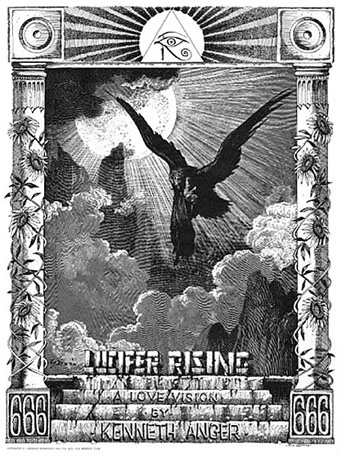
Lucifer Rising: A Love Vision by Kenneth Anger (1967) by Rick Griffin.

The status of Kenneth Anger’s Lucifer Rising as a kind of poly-cultural crossroads even extends to its poster art. The original poster by Rick Griffin dates back to the earliest drafts of the film, and with its swipe from Gustave Doré makes me think it’s the kind of thing Wilfried Sätty might have produced for Anger had he been asked. (They were both living in San Francisco at this time.)

dore.jpg

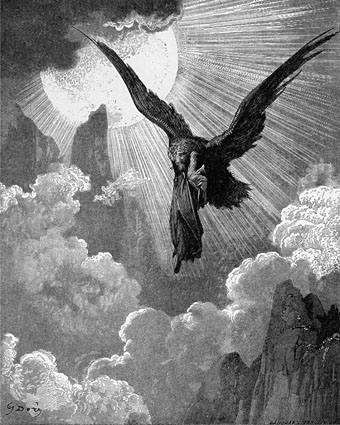
The San Francisco poster artists happily plundered the past for unusual images; Doré was a popular choice since his images are frequently striking and copies of the books (or reprints) would have been easy to find. This is one of the illustrations from the Purgatorio section of his illustrated Divine Comedy (1867) showing Dante being ferried up Mount Purgatory (“like Ganymede”) by a giant eagle.

lucifer2.jpg

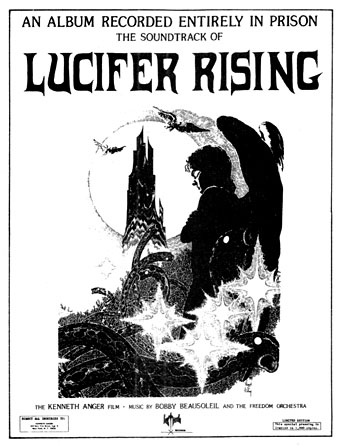
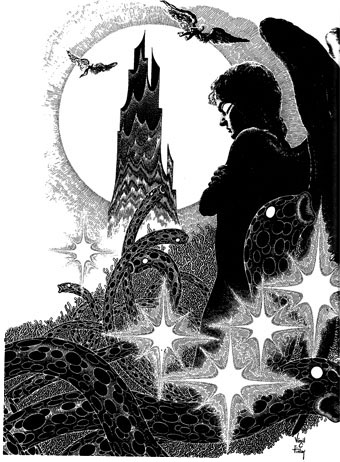
From Dante and Virgil to Virgil Finlay, one of whose illustrations was used on this promo sheet advertising a limited run of Bobby Beausoleil’s soundtrack for the film.

finlay.jpg

Earth’s Last Citadel (1950) by Virgil Finlay.

The illustration this time is for a reprint of Earth’s Last Citadel by CL Moore and Henry Kuttner in Fantastic Novels Magazine for July 1950. I’ve never seen any mention of William Burroughs meeting Kenneth Anger which is a shame since they had acquaintances in common and Burroughs occasionally showed an interest in some of Aleister Crowley’s ideas. The Henry Kuttner connection in this case would provide a link to some of the borrowings Burroughs himself made from Kuttner’s writing. But no, it’s too much of a reach.

lucifer3.jpg

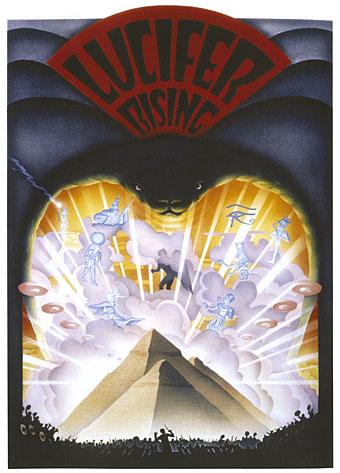
Lucifer Rising (1980) by Page Wood.

After all that the final poster is an original piece of work by Page Wood for a premier screening at the Whitney Museum, New York in 1980. The art avoids the overt occultism in favour of making a resolutely low-budget piece seem like a Hollywood epic. Given Anger’s lifelong obsession with Hollywood’s myths and tragedies I think he would have appreciated that.

Previously on { feuilleton }
Externsteine panoramas
San Francisco by Anthony Stern
The art of Alia Penner
Missoni by Kenneth Anger
Anger in London
Arabesque for Kenneth Anger by Marie Menken
Edmund Teske
Kenneth Anger on DVD again
Mouse Heaven by Kenneth Anger
The Man We Want to Hang by Kenneth Anger
Relighting the Magick Lantern
Kenneth Anger on DVD…finally

Weekend links 111

thefox.jpg

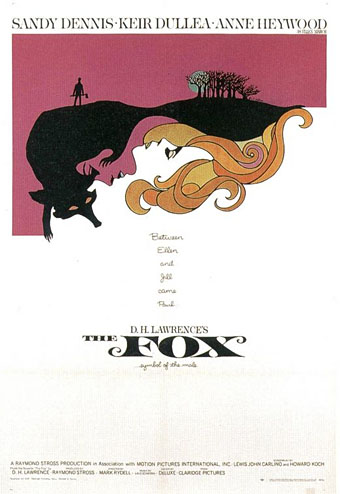
The Fox (1968). Design by Bill Gold, art by Leo & Diane Dillon.

Mark Rydell’s The Fox may be regarded unfavourably now for its retrograde idea of a lesbian relationship but that’s still a great poster by the Dillons. Equally retrograde (well it was 1957) is Anders als du und ich, a film about wayward German youth directed by ex-Nazi propagandist Veit Harlan:

Klaus is a young man in post-war Berlin. He is drawn to his friend Manfred and, under the encouragement of their acquaintance, Dr. Winkler, explores the underground world of gay clubs and electronic music. His family begins to learn of his other life and do everything they can to set him straight.

A saving grace is the conspicuous deployment of Oskar Sala’s Trautonium. They’re deviants—of course they like weird electronic music! Sala’s instrument was his own invention which means it has a unique pre-Moog sound, famously used by Alfred Hitchcock in the score for The Birds. YouTube has a collection of the electronica moments from Anders als du und ich. Wait for the wrestling scene…

Netherwood: Last Resort of Aleister Crowley by A Gentleman of Hastings. Related: Jimmy Page’s Lucifer Rising sessions part 1 and part 2.

• “This coming 16 June, [BBC] Radio 4 will be a wall-to-wall Joycefest, kicking off at 9am and running until midnight.”

A World Where Architecture is the Driving Force Behind Society, Core77 on the Cités Obscures of François Schuiten.

• At The Hooded Utilitarian an examination of the thorny problem of adapting Lovecraft for the comics medium.

• Plates from La Plante et ses Applications Ornementales (1897–1900) by Eugene Grasset.

• Coilhouse found a rough copy of Todd Haynes’ Superstar: The Karen Carpenter Story.

Three Quick Ways to Introduce Yourself to the Work of Harlan Ellison.

Daniel Buren’s Monumenta 2012 at the Grand Palais, Paris.

Our Sorrows, a new video from Julia Holter.

I, Cyclops: Monocularity in a 3-D World.

JG Ballard: The Concordance.

• RIP Pete Cosey.

• Pete Cosey with Miles Davis et al, November 1973: Ife | Turnaroundphrase

Externsteine panoramas

externsteine3.jpg

Lucifer Rising (1973).

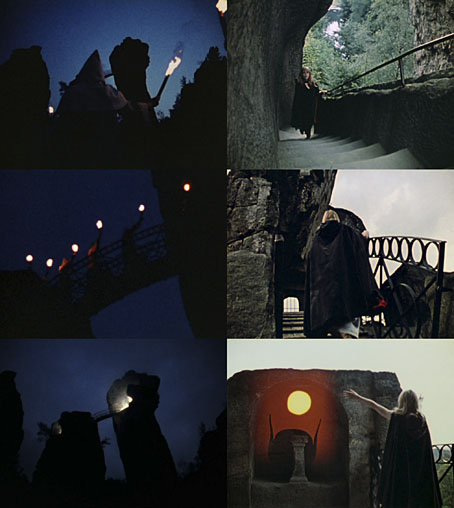
The first time I saw Kenneth Anger’s Lucifer Rising (1983, at a film club) I recognised all the ancient monuments apart from the peculiar group of rocks where we see a line of robed and cowled torchbearers ascending a stairway at night. These shots are intercut with a caped Marianne Faithfull making the same ascent in daytime until she reaches an alcove where she’s given a vision of an Egyptian sunset. It took a few more years to discover the location was the Externsteine rock formation in northwest Germany, one of those singular outcrops which—like Glastonbury Tor—was a focus of pagan ritual before being co-opted by the Christian church.

externsteine1.jpg

Photo by Markus Krueger.

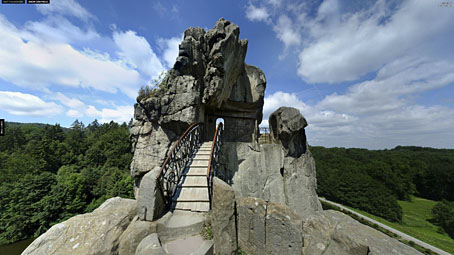
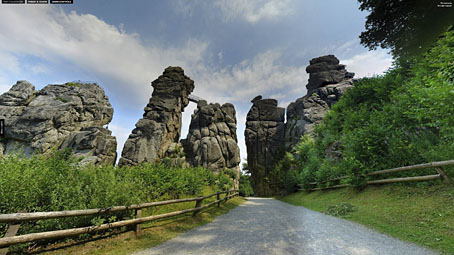
360cities.net has a number of panoramic views of the area, the best being the one above which shows Marianne’s alcove as well as allowing views of the surrounding countryside. Photos such as the one below are far more common. While these give some idea of the unusual nature of the site they don’t show just how isolated the rocks are. For an older view, the Library of Congress has this Photocrom print.

externsteine2.jpg

Photo by Wilfried Pinsdorf.

Elsewhere on { feuilleton }
The panoramas archive

Previously on { feuilleton }
Kenneth Anger on DVD again