Weekend links 145

brundage.jpg

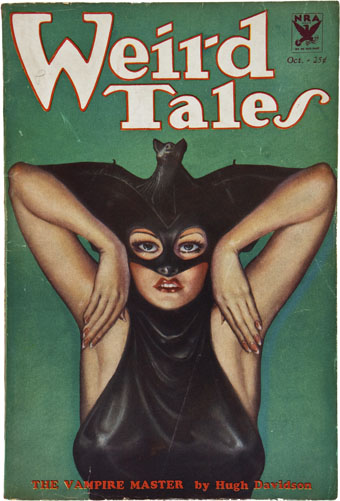
Weird Tales, October 1933. Cover art by Margaret Brundage.

• Michael Moorcock’s novels are being republished this year by Gollancz in a range of print and digital editions. Publishing Perspectives asks Is Now a Perfect Time for a Michael Moorcock Revival? • Related: Dangerous Minds posted The Chronicle of the Black Sword: A Sword & Sorcery Concert from Hawkwind and Michael Moorcock. My sleeve for that album was the last I did for the band. • Obliquely related: Kensington Roof Gardens appear as a location in several Moorcock novels, and also provided a venue for the author’s 50th birthday party. If you have a spare £200m you may be interested in buying them once Richard Branson’s lease expires.

• One of my favourite things in Mojo magazine was a list by Jon Savage of 100 great psychedelic singles (50 from the UK, 50 from the US). This week he presented a list of the 20 best glam-rock songs of all time. For the record, Blockbuster by The Sweet was the first single I bought so I’ve always favoured that song over Ballroom Blitz.

The Alluring Art of Margaret Brundage is a forthcoming book by J. David Spurlock about the Weird Tales cover artist. Steven Heller looks at her life (I’d no idea she knew Djuna Barnes) while io9 has some of her paintings. Related: Illustrations for Weird Tales by Virgil Finlay.

The masterpiece of Mann’s Hollywood period is, of course, Paracelsus (1937), with Charles Laughton. Laughton’s great bulk swims into pools of scalding light out of greater or lesser shoals of darkness like a vast monster of the deep, a great black whale. The movie haunts you like a bad dream. Mann did not try to give you a sense of the past; instead, Paracelsus looks as if it had been made in the Middle Ages – the gargoyle faces, bodies warped with ague, gaunt with famine, a claustrophobic sense of a limited world, of chronic, cramped unfreedom.

The Merchant of Shadows (1989) by Angela Carter. There’s more of her writing in the LRB Archive.

• Television essayist Jonathan Meades was back on our screens this week. The MeadesShrine at YouTube gathers some of his earlier disquisitions on culture, place, buildings and related esoterica.

• Sometimes snark is the only worthwhile response: An A-Z Guide to Music Journalist Bullshit.

• London venue the Horse Hospital celebrates 20 years of unusual events.

The Politics of Dread: An Interview with China Miéville.

How Giallo Can You Go? Antoni Maiovvi Interviewed.

A guide to Terry Riley’s music.

• Three more for the glam list: Coz I Love You (1971) by Slade | Get It On (1971) by T. Rex | Starman (40th Anniversary Mix) (1972) by David Bowie
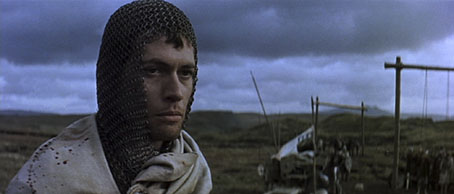
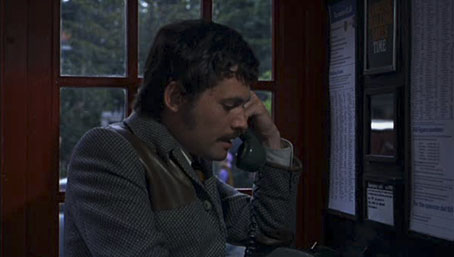
Jon Finch, 1941–2012

finch1.jpg

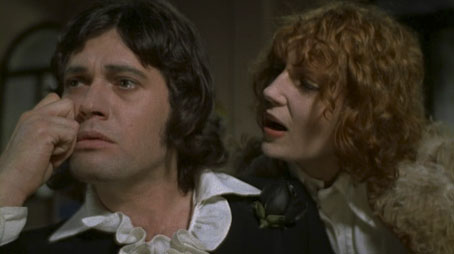
Macbeth (1971).

There are few actors I’ve ever felt sufficiently cultish about who could make me watch films or TV dramas I wouldn’t otherwise be interested in. Orson Welles would be one (up to a point, he was in a lot of crap in later years), Patrick McGoohan another and Jon Finch most definitely a third. Having watched Finch just over a week ago in Roman Polanski’s superb adaptation of Macbeth it’s been a shock to discover that he’d died shortly after Christmas, the news of his funeral only being announced this week.

finch4.jpg

Frenzy (1972).

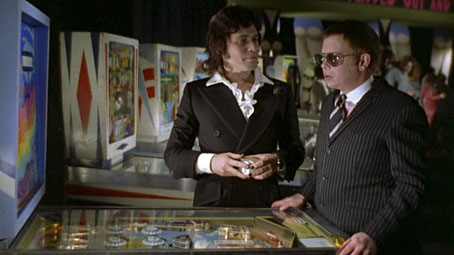
The cult status stems from the remarkable run of lead roles he was offered in the early 1970s: playing Macbeth for Polanski, the “wrong man” role in Hitchcock’s last great film, Frenzy, and a perfect Jerry Cornelius in Robert Fuest’s adaptation of Michael Moorcock’s The Final Programme. There were plenty of other roles, of course, but those three are standouts which also show something of his range: suitably brooding, weak and malevolent in Macbeth, in Frenzy a hounded man who seems disreputable enough for his friends to suspect he may be a murderer, in The Final Programme as smart and insouciant as Moorcock’s Cornelius ought to be.

finch2.jpg

The Final Programme (1973): Finch with Jenny Runacre (Miss Brunner).

I’m happier that Finch played Cornelius instead of James Bond, a role he was offered after Sean Connery quit. Jerry Cornelius, “the English Assassin”, in the first novel in Moorcock’s Cornelius quartet is a kind of anti-Bond, and there were few actors around in 1973 who would have possessed the necessary charisma and intelligence for the part. Mike Moorcock was friends with Finch around the time the film was being made so when I was visiting the Moorcocks in Paris a few years ago I asked him why Finch hadn’t done more with his career after such an impressive start. Mike says he was one of those actors who often preferred to be doing something else with his time.

finch3.jpg

Finch and Ronald Lacey (Shades) in The Final Programme.

finch5.jpg

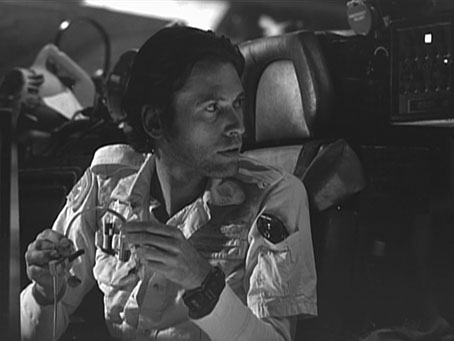
On the set of Alien (1978).

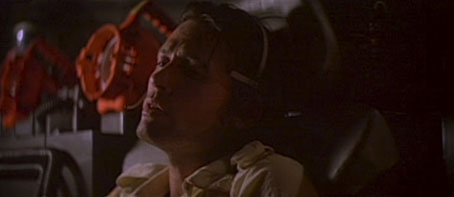
Obituaries will no doubt regard Finch’s rejection of the Bond role as a missed opportunity but I wish we could have seen him as intended in Ridley Scott’s Alien where he’d been cast as Kane but had to drop out after contracting a severe case of bronchitis once shooting was underway. The photo and screen grab below are seldom-seen images from the Alien DVD extras. I’ve nothing against John Hurt in the role but with Finch playing the part it would have made a cult film a little more special. He did get to act for Ridley Scott eventually with a small role in Kingdom of Heaven in 2005.

finch6.jpg

An outtake from Alien.

finch7.jpg

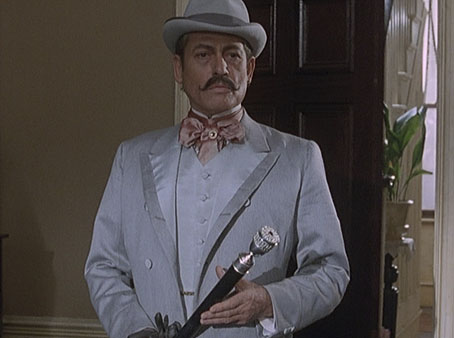
As Count Sylvius in The Memoirs of Sherlock Holmes (1994).

finch8.jpg

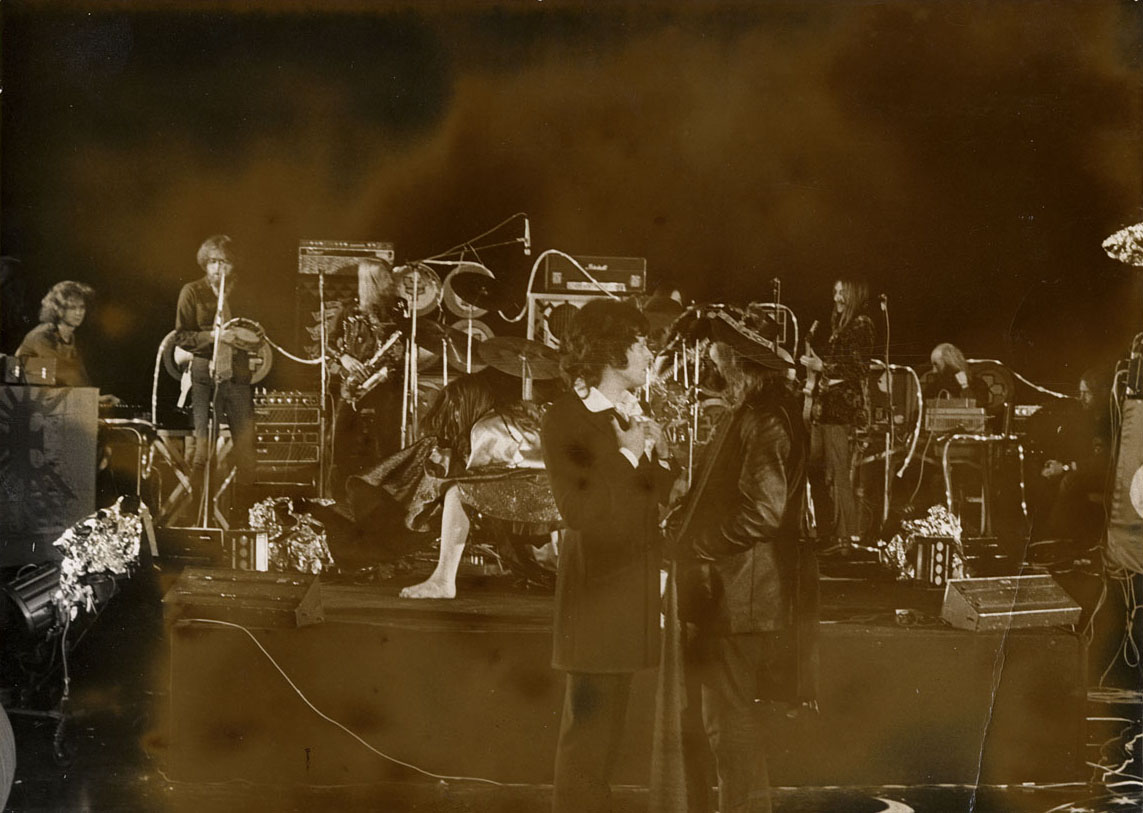
Update: Found on an archive disc, this rare photo from the set of The Final Programme showing Finch as Jerry Cornelius facing off with his creator, Michael Moorcock. (Click for a larger copy.) That’s the Space Ritual line-up of Hawkwind in the background. Band and author appear for a fraction of a second in a shot during the film’s arcade scene. Considering how common it was to have rock bands in feature films during this time it still surprises me that Fuest and co. went to all this trouble then left them on the cutting-room floor. The photo was Moorcock’s own, as I recall, something we ran in one of the Savoy books.

Guardian obituary
Independent obituary
Telegraph obituary
Macbeth trailer
Frenzy trailer
The Final Programme trailer

Previously on { feuilleton }
Dan O’Bannon, 1946–2009
Patrick McGoohan and The Prisoner

Weekend links 118

owczarek.jpg

The Garden of Urban Delights (2010) by Marcin Owczarek.

His protagonists are misfits: alienated, implicitly gay, longing for love, frequently hard to be around, always fixated on small pleasures that compensate for an essential feeling of not belonging. […] His patroness Edith Sitwell termed him “that rare being, a born writer.” William Burroughs dedicated The Place of Dead Roads to him, declaring Welch “certainly the writer who most directly influenced my work.” John Waters has called In Youth is Pleasure “so precious, so beyond gay, so deliciously subversive, [it] is enough to make illiteracy a worse social crime than hunger.”

Sadie Stein on Denton Welch, a writer I’m embarrassed about still not having read. Edith Sitwell and William Burroughs had a famously disputatious correspondence in the pages of the TLS over The Naked Lunch. An appreciation of Welch’s work was one of the few things they had in common.

• Don’t mention guitars: Robert Hampson on acousmatic music, the curse of Loop and the rebirth of Main.

• No Straight Lines: A Collection Of Queer Comics part one, part two, part three. A history by Justin Hall.

Pieces Of Gold by The Aikiu: shots from gay porn videos repurposed via some smart editing.

• RIP İlhan Mimaroğlu, electroacoustic composer. Ubuweb has a selection of his recordings.

“A good ground rule for writing in any genre is: start with a form, then undermine its confidence in itself,” he says. “Ask what it’s afraid of, what it’s trying to hide – then write that.” For Harrison, the most satisfying writers are “at odds with their cultural context. They’re trying to fit in and failing, or they’re trying to remove themselves and failing. The attempt to resolve the conflict is an angle – a frame or a context – in itself.”

The Guardian’s A Life in Writing profiles M. John Harrison. His new novel, Empty Space, was published on Thursday. There’s also this recent video interview with Arc magazine.

• Stephen Usery interviews editor Russ Kick about The Graphic Canon: Volume One.

At home with Prince Zaleski, the “most decadent and imperial detective in fiction”.

• A Visit with Magritte: photographs by Duane Michals.

Loitering airships could dispense drones on demand.

• Creating a Forever Object: Ian Schon’s Pen Project.

• A Tumblr for the late, lamented Arthur Magazine.

• “Few cities can boast a railway line for the dead.”

The Lost Tapes by Can: An Oral History.

Space Reflex (1963) by Dick Hyman & Mary Mayo | Space Is Deep (1972) by Hawkwind | Space Is The Place (1973) by Sun Ra | Space Moment (1995) by Stereolab | Space Pong (2006) by T++

Weekend links 70

swinburne1.jpg

Faustine (1928) by Harry Clarke.

• This week’s Harry Clarke fix: 50 Watts reposts the Faust illustrations while Golden Age Comic Book Stories has the illustrated Swinburne.

What Goes Steam in the Night is an evening with contributors to The Steampunk Bible hosted in London by The Last Tuesday Society on September 6th:

Co-author S. J. Chambers invites you to the official U.K. celebration of her book The Steampunk Bible (Abrams Image). Part lecture, part signing, and part entertainment, S. J. will be accompanied by contributors Jema Hewitt (author of Steampunk Emporium ) and Sydney Padua (Lovelace & Babbage) for a discussion of the movement, a special performance by Victorian monster hunter, Major Jack Union, and inevitable hi-jinks and shenanigans to later be announced.

• RIP Conrad Schnitzler, an incredibly prolific electronic musician, and founder member of Tangerine Dream and Kluster/Cluster.

Golden Pavilion Records reissues fully-licensed late 60’s and 70’s psychedelic, progressive, acid-folk & art-rock music.

Dressing the Air is “an exclusive consulting and online resource for the creative industries”.

Luke Haines explains how to cook rabbit stew whilst listening to Hawkwind.

Wood pyrography by Ernst Haeckel from his home, the Villa Medusa.

swinburne2.jpg

Satia Te Sanguine (1928) by Harry Clarke.

The truth is, the best novels will always defy category. Is Great Expectations a mystery or The Brothers Karamazov a whodunnit or The Scarlet Letter science fiction? Does Kafka’s Metamorphosis belong to the genre of fantasy? In reality men don’t turn into giant insects. And it’s funny. Does that mean it’s a comic novel? […] At a time when reading is in trouble, those readers left should define themselves less rigidly.

Howard Jacobson: The best fiction doesn’t need a label.

Pace the redoubtable Jacobson, Alan Jacobs believes We Can’t Teach Students to Love Reading.

How Ken Kesey’s LSD-fuelled bus trip created the psychedelic 60s.

Salvador Dalí creates something for Playboy magazine in 1973.

JG Ballard: Relics of a red-hot mind.

Electric Garden (1978) by Conrad Schnitzler | Auf Dem Schwarzen Kanal (1980) by Conrad Schnitzler.

Weekend links 66

kunz.jpg

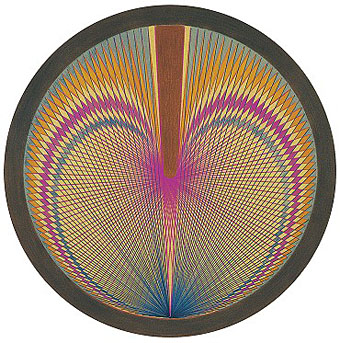
A design by Emma Kunz (1892–1963).

• Following the news this week it’s worth reminding people of a great post put together by Adam Curtis back in January, Rupert Murdoch—A portrait of Satan. One detail there concerns the death of chat show host Russell Harty in 1988. This week the London Review of Books posted an extract from Alan Bennett’s diaries referring to the Harty episode where he notes how the tabloid practice of getting private phone numbers from the police was common and widespread, not simply the actions of a single newspaper. For more about the deathbed hounding of Russell Harty (and Bennett’s loathing of Murdoch) see Writing Home. Related: Dennis Potter shortly before his death discussing his desire to kill Rupert Murdoch.

• Don’t get mad, get even: Hakim Bey’s Black Djinn Curse: “How to invoke a terrible curse on a malign institution.” See also: Black magic as revolutionary action.

Village Voice talks to Linda Manz about her experience as a young actor in Days of Heaven, The Wanderers and Out of the Blue.

Truth Wins Out infiltrates the “ex-gay” clinic run by Michelle Bachmann’s husband.

Free Situationist booklets by Larry Law. Related: films by Guy Debord at Ubuweb.

• Have tea with Doctor Dee in Mortlake, London, next Wednesday.

Publisher Peter Owen: Sixty years of innovation.

Wilhelm Reich: the man who invented free love.

A conversation with Brian Eno by Ben Sisario.

The mysterious minaret of Jam, Afghanistan.

Stereolab cover designs at Hardformat.

Orgone Accumulator (1973) by Hawkwind | Cloudbusting (1985) by Kate Bush | Orgasmatron (1986) by Motörhead | Orgasmatron (1993) by Sandoz | Orgone Donor (2004) by Deathprod.