The Bowmen by Arthur Machen

bowmen.jpg

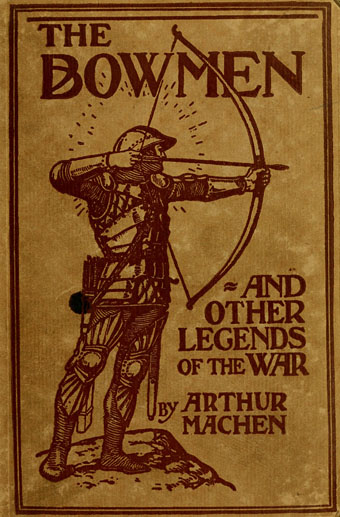
The Bowmen was a short piece of fiction by Arthur Machen published in a London newspaper, The Evening News, on the 29th September, 1914. By Machen’s standards it’s not one of his best pieces, written at a time when he was working at the paper as a journalist. The First World War was in its early days, and the story was conceived as a Kipling-like morale-boost following the retreat of British forces at Mons a few weeks before. The stories for which Machen is remembered today had never provided the success he hoped for so it must have been a surprise when his invention of angelic bowmen appearing during the battle gained him national attention:

On the last Sunday in August, 1914, Machen read in his morning paper of the retreat from Mons.

“I no longer recollect the details, but I have not forgotten the impression that was then made on my mind. I seemed to see a furnace of torment and death and agony and terror seven times heated, and in the midst of the burning was the British army: in the midst of the flame, consumed by it, scattered like ashes and yet triumphant, martyred and for ever glorious.”

That was the way, indeed, in which the English thought about the army at the beginning of the Great War; since then we have come to take a less romantic view of warfare. With this picture in his mind, Machen conceived and wrote a story called The Bowmen, told, as most stories are, as if it were true—that is, he did not begin by saying: “what you are about to read is all my own invention”—in which St. George with an army of English mediaeval bowmen appeared at the critical moment to cover the British retreat. Not, to be sure, a very probable story nor, as Oswald Barron pointed out, was it likely that the Agincourt bowmen, most of whom came from Wales, would use the French expressions Machen evokes from them: and Machen himself felt he had not done justice to his original conception.

“But if I had failed in the art of letters, I had succeeded, unwittingly, in the art of deceit.”

The Bowmen appeared in The Evening News on September 29th, 1914, at a moment when people were looking for a miracle, and many promptly embraced it as an account of one. That such journals as The Occult Review and Light should fasten on it, might have been anticipated; but it was taken up by parish magazines all over the country, and people came forward on every side to say that they had friends and relatives who had seen the “Angels of Mons” with their own eyes. As a result, Machen became, for the first time in his life, a man of nation-wide fame. To thousands of people, the idea, whether true or false, gave consolation or hope, but when Machen protested that his story was entirely the child of his own imagination, the fame threatened to turn to notoriety; he was rebuked for his impudence at claiming originality for the tale. Nevertheless a legend had been born and a shoal of publications appeared to satisfy public demand—On the Side of the Angels (Harold Begbie), Guardian Angels (GP Kerry—a sermon reprinted), Angels, Saints and Bowmen of Mons (IE Taylor, Theosophical Publishing Society).

Aidan Reynolds & William Charlton in Arthur Machen: A Short Account of His Life and Work (John Baker, 1963)

Continue reading “The Bowmen by Arthur Machen”

Weekend links 225

mori.jpg

Still from The Shaman-Girl’s Prayer (1997), a video piece by Mariko Mori. This page has pictures of Mori’s futuristic/cosmic performances, films & environments.

Time Out of Mind (1979) was a BBC TV series about science fiction writers, five short films concentrating on Arthur C. Clarke, John Brunner, Michael Moorcock, Anne McCaffrey and an sf convention. I was only interested in the Moorcock film at the time, not least because it featured a short clip of Hawkwind playing Silver Machine, and inserted scenes from the film of The Final Programme (1973) between the interviews. The Moorcock episode is less about his books than about New Worlds magazine and the so-called New Wave of sf in general, so you also see rare footage of M. John Harrison in a Barney Bubbles “Blockhead” T-shirt talking then ascending a limestone cliff, and bits of interviews with Brian Aldiss and Thomas Disch. Ballard isn’t interviewed but is present via a scene from the Harley Cokeliss film Crash! (1971) in which Gabrielle Drake slides in and out of a car while someone reads Elements of an Orgasm from The Atrocity Exhibition.

• “…there happened to be a book on Ritual Magick that talked about John Dee and summonings and Dr. Faust and all that kind of stuff. So then obviously at that age, too, I read HP Lovecraft and then Michael Moorcock and what they call fantasy literature. Through HP Lovecraft I discovered Arthur Machen, and I think that sort of percolated down inside…” Dylan Carlson of Earth talking to Steel for Brains. The Wire has the vinyl-only track from the new Earth album, Primitive And Deadly, and a track from Carlson’s solo album, Gold. Related: Artwork by Samantha Muljat, designer/photographer for the new Earth album.

Phantasmaphile has details of the next two issues of deluxe occult magazine Abraxas. Issue 6 includes a major feature on Leonora Carrington while Luminous Screen is a special issue devoted to occult cinema.

• More Broadcast: Video of a performance at Teatro Comunale di Carpi, March 2010 (part 2 here), and “constellators and artifacts” at A Year In The Country.

• “Petition demands return of ‘Penis Satan’ statue to Vancouver.” There’s an uncensored photo of the contentious statue here.

• Literary Alchemy and Graphic Design: Adrian Shaughnessy on James Joyce’s writings among graphic designers.

• Frank Pizzoli talks to John Rechy about “the gay sensibility”, melding truth and fiction, and his literary legacy.

• Mixes of the week: Secret Thirteen Mix 127 by Roberto Crippa, and FACT Mix 459 by Craig Leon.

Alan Moore has finished the first draft of his million-word novel, Jerusalem.

• Crazy pavings: Alex Bellos on Craig Kaplan’s parquet deformations.

Noise Not Music: “Live recordings, obscure cassettes and more…”

Pylon of the Month

Zoot Kook (1980) by Sandii | Rose Garden (1981) by Akiko Yano | Telstar (1997) by Takako Minekawa

Intertextuality

cthulhu17.jpg

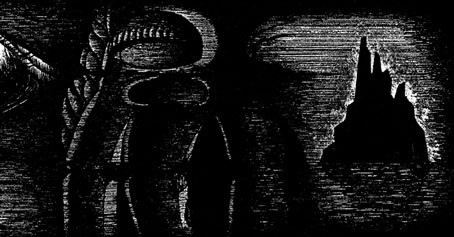
The Call of Cthulhu (1988): in the upper half there’s the big sun from Bob Peak’s poster for Apocalypse Now, in the lower half a radical reworking of Arnold Böcklin’s The Isle of the Dead.

In 1990, shortly after the first season of Twin Peaks had finished showing in the US, Video Watchdog magazine ran a feature by Tim Lucas which attempted to trace all the various cultural allusions in the character names and dialogue, references to old TV shows, song lyrics and the like. This was done in a spirit of celebration, with Lucas and other contributors welcoming the opportunity to dig deeper into something they’d already enjoyed. This week we’ve had a similar unravelling of textual borrowings in a TV series, only now we have the internet which, with its boundless appetite for accusing and shaming, can often seem like something from the grand old days of the Cultural Revolution.

cthulhu01.jpg

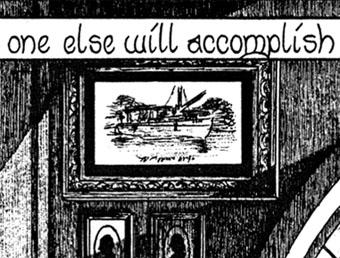
The Call of Cthulhu (1988): a more subtle allusion to Apocalypse Now.

The latest culprit ushered to the front of the assembly for the Great Internet Struggle Session is Nic Pizzolatto whose script for True Detective has indeed been celebrated for its nods to Robert Chambers and The King in Yellow. It’s also in the process of being condemned for having borrowed phrases or aphorisms from Thomas Ligotti’s The Conspiracy Against the Human Race (2011). See this post for chapter and verse.

cthulhu02.jpg

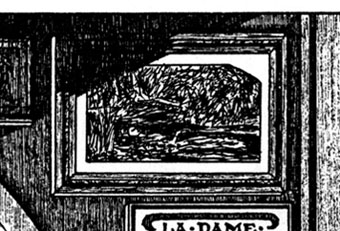
The Call of Cthulhu (1988): It’s not very clear but that’s a boat from The Creature from the Black Lagoon.

If I find it difficult to get worked up over all this pearl-clutching it’s because a) it shows a misunderstanding of art and the way many artists work; b) True Detective was an outstanding series, and I’d love to see more from Pizzolatto and co; and c) I’ve done more than enough borrowing of my own in a variety of media, as these samples from my adaptation of The Call of Cthulhu demonstrate, a 33-page comic strip where there’s a reference to a painting, artist or film on almost all the pages, sometimes several on the same page.

cthulhu03.jpg

The Call of Cthulhu (1988): Ophelia by Millais.

Cthulhu is a good choice here since Pizzolatto’s story edged towards Lovecraft via the repeated “Carcosa” references. You’d think a Lovecraft zine of all things would know better than to haul someone over the coals for borrowing from another writer when Lovecraft himself borrowed from Robert Chambers (and Arthur Machen and others), while “Carcosa” isn’t even original to Chambers’ The King in Yellow but a borrowing from an Ambrose Bierce story, An Inhabitant of Carcosa (1886). Furthermore, Lovecraft famously complained about his own tendencies to pastiche other writers in a 1929 letter to Elizabeth Toldridge: “There are my ‘Poe’ pieces and my ‘Dunsany pieces’—but alas—where are any Lovecraft pieces?”

Continue reading “Intertextuality”

Lyrical Substance Deliberated

beatles.jpg

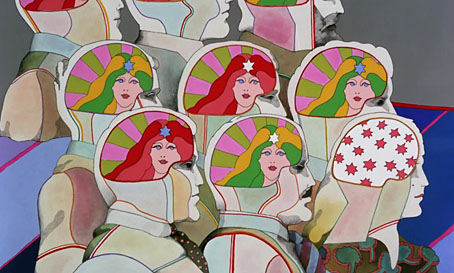
Lucy In The Sky With Diamonds from Yellow Submarine (1968).

The advent of spring invariably gets me listening to favourite psychedelic songs, and this year has been no exception. Earlier this week I was idly wondering how many songs there are that follow the Beatles’ lead in telegraphing their drug metaphors by using the initials L-S-D in their titles. Wikipedia’s page for Lucy In The Sky With Diamonds (1967) relates John Lennon’s oft-repeated claim that the initialism in the title was a coincidence, and the song itself is really a bit of Lewis Carroll-like whimsy. This might be credible if works of art only ever carried one meaning but they don’t, of course, and the song is both a piece of Lewis Carroll-like whimsy as well as being a pretty obvious paean to the drug experience: “Climb in the back with your head in the clouds / And you’re gone”. Jefferson Airplane’s White Rabbit (1967) was similarly ambivalent with mushrooms/pills replacing acid.

Among the many things birthed by the enormous success of the Sgt Pepper album, a small flurry of songs or instrumentals have imitated Lennon’s initialism for their titles. The ones that came immediately to mind are detailed below, and they make a curious group. If anyone knows of any others—there must be others…—then please leave a comment.

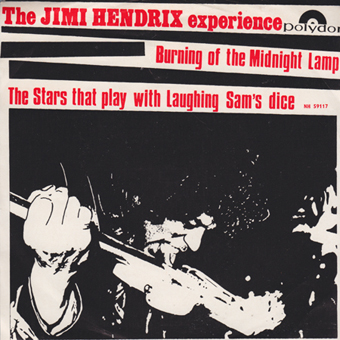
hendrix.jpg

Burning Of The Midnight Lamp/The Stars That Play With Laughing Sam’s Dice (Aug, 1967).

The Jimi Hendrix Experience’s B-side not only alludes to LSD but also to STP. The song itself doesn’t go very far before collapsing into freakout mode.

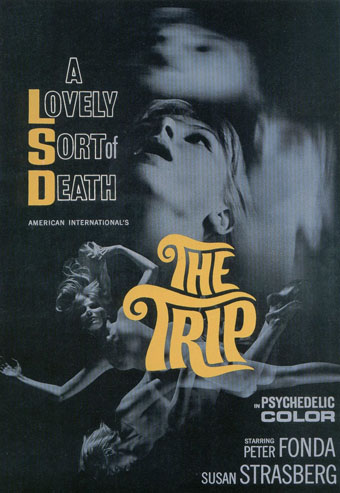
trip.jpg

The Trip (1967).

Not a song but included here for that “Lovely Sort of Death” tag. Written by Jack Nicholson! With Dennis Hopper as the acid dealer! See the trailer here, then watch the whole film here.

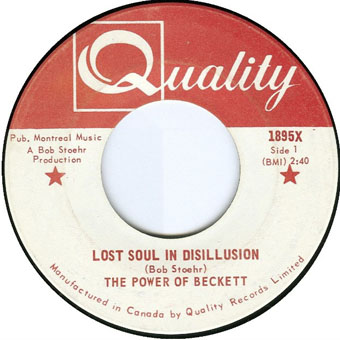
power.jpg

Lost Soul In Disillusion (November, 1967).

Hard to imagine anyone in London would have heard this in 1967. The Power of Beckett were a Montreal garage group who only released two singles. Lost Soul In Disillusion turned up years later on compilation albums.

Continue reading “Lyrical Substance Deliberated”

Morning of the Magicians book covers

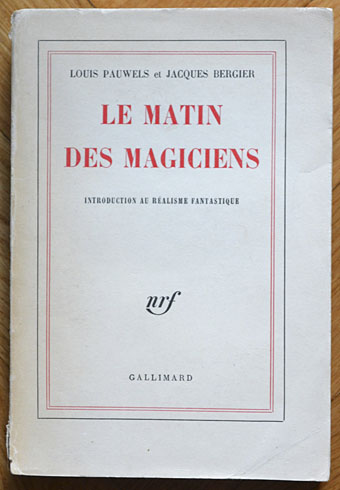
motm01.jpg

Éditions Gallimard, France, 1960.

Yesterday’s post proved popular so it seemed worthwhile taking another look at the book that birthed Planète magazine. The main problem The Morning of the Magicians presents for an art director is how to encapsulate such wildly diverse contents in a cover design. To judge from the examples here, most people seem to have either given up or gone for vaguely symbolic designs which at the most correspond to the contents in a minor way. The biggest surprise for me was seeing the cover of the first edition above, one of those typically sober French titles which gives away nothing of the intellectual fireworks within. Few of these designs have any credits, and this is nothing like a complete list (more editions may be seen at Goodreads). More recent editions have been avoided altogether since they’re pretty terrible.

motm10.jpg

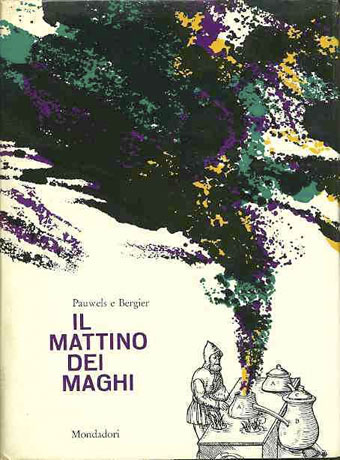
Arnoldo Mondadori Editore, Italy, 1963. This edition, which runs to 476 pages, includes three translated stories inserted into the text: The Nine Billions Name of God by Arthur C. Clarke, A Canticle for Leibowitz by Walter M. Miller Jr, and The White People by Arthur Machen.

A hardback edition showing an alchemist at work.

motm03.jpg

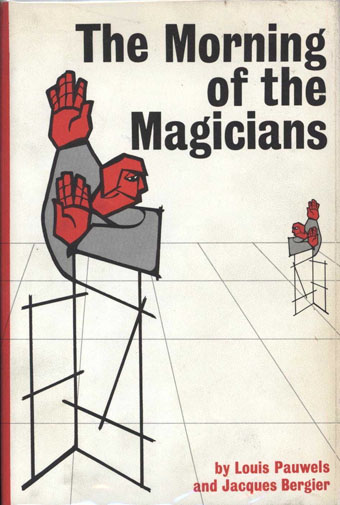
Stein and Day, USA, 1964.

You know a cover is failing when it could easily be applied to any number of other titles.

Continue reading “Morning of the Magicians book covers”