Essex House book covers

essex01.jpg

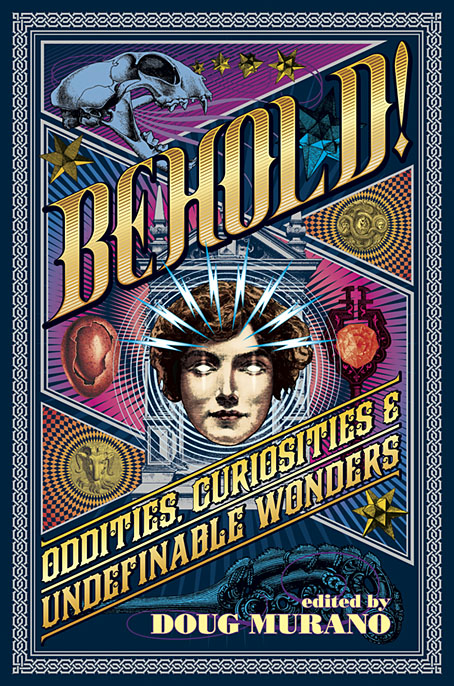
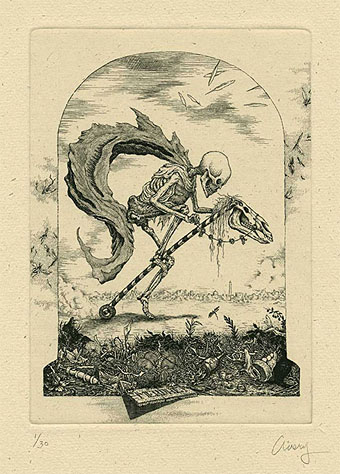
I’ve known the name of American publisher Essex House for many years but the books they published, all of which appeared in a frenzy of activity from 1968 to 1969, have never been easy to find in the UK. The company is chiefly of note today for having three original Philip José Farmer novels on their list, all works of fantasy with the erotic side more dominant than in Farmer’s previous work. Erotic fiction with a generic slant was the Essex House speciality, and while the Farmer covers have appeared here before, I’d not seen any other Essex House covers until the discovery of this page which collects 38 of the 42 published titles.

essex13.jpg

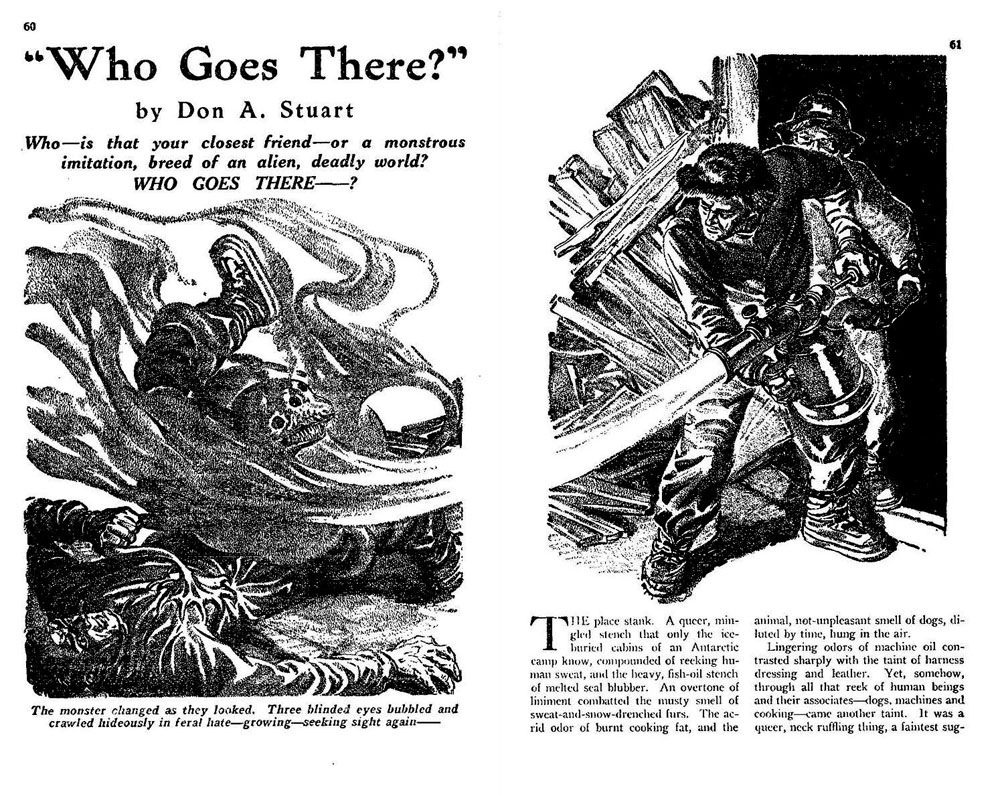
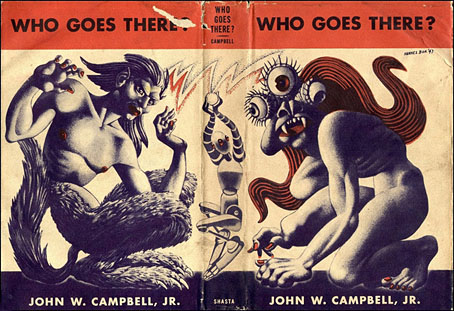
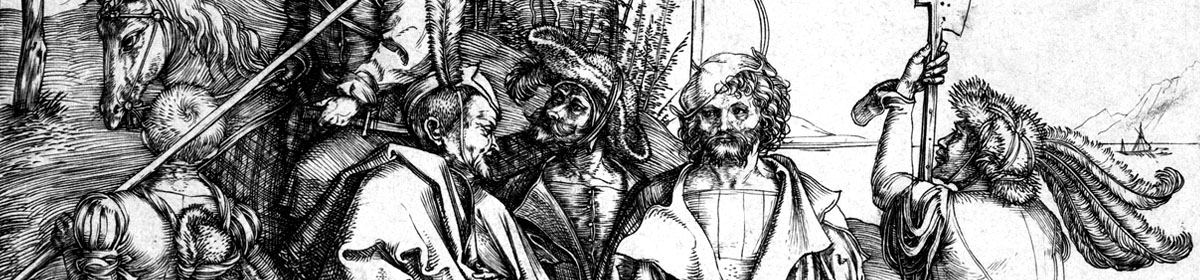
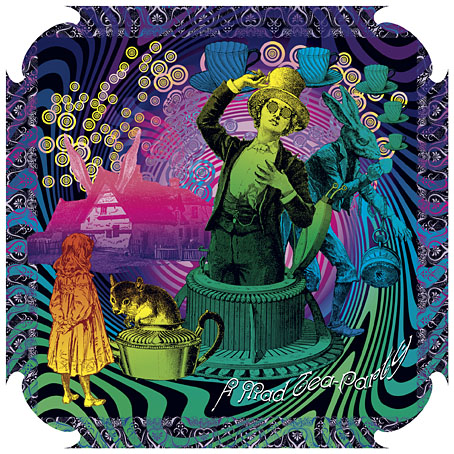
It’s immediately evident looking down the list that the (uncredited) designer managed to forge a distinctive identity for the books at a time when any cover would suffice if the written material was sufficiently pornographic. Many of the covers borrow (or mutate) pre-existing artworks, while others emulate the watered-down psychedelic style that by the late 60s was visible everywhere in the US and much of Europe. These aren’t all great pieces of design but the graphics on erotic titles in the 60s either played safe by favouring text-only covers or sported technically crude emulations of paperback illustration. (For an example of just how technically crude, see this post about some of the many gay pulps on sale in the US.)

essex33.jpg

Essex House may not have been around for long but they seemed to be attempting something different, at least where the covers were concerned. I’ve only read the Farmer books so I can’t vouch for the other titles but the Encyclopedia of Science Fiction writes that

…about half the 42 titles published by Essex House were sf/fantasy; they included novels by Philip José Farmer, Richard E Geis, David Meltzer (perhaps the most distinguished), Michael Perkins and Hank Stine…of which a number were ambitious, some literary, and most somewhat joyless—even emetic—and redolent of 1960s radicalism.

Pornography as a tool of radical politics had a brief vogue in the late 60s and early 70s, something that’s particularly evident in the underground magazines of the period. The results may be “joyless” to some but then I find a lot of the alleged classics of science fiction joyless so it’s all a matter of taste. There was no equivalent of Essex House in the UK but in the 1970s France had the Chute Libre imprint which not only published all of the Essex House Farmer titles but did so with a collection of equally striking (or “joyless”) cover designs.

essex23.jpg

Artwork is a solarised version of Le Bout du monde (1949) by Leonor Fini.

Continue reading “Essex House book covers”

Weekend links 307

chew.jpg

Demon (2014) from the Witch Series by Camille Chew.

• Released next month, Machines Of Desire is the first album of new music by Peter Baumann since Strangers In The Night in 1983. Baumann’s first two solo albums, Romance 76 (1976) and Trans Harmonic Nights (1979), are exceptional works of analogue electronica that frequently outmatch his former colleagues in Tangerine Dream. Both albums have been unavailable for over 20 years so it’s good to know that Cherry Red are reissuing them at the end of May (see here and here).

• RIP Jenny Diski whose death from cancer wasn’t a surprise when she’d been writing about her condition for many months. Linked here in 2013 was this pre-diagnosis meditation on death that takes in Nabokov, Beckett and Francis Bacon (philosopher, not artist). “Jenny offered a living example of how, sometimes, compassion can be born of misanthropy,” says Justin EH Smith. The LRB’s archive of Diski writings is currently free to all.

Murder by Remote Control, a graphic novel by artist Paul Kirchner and writer Janwillem van de Wetering that “resembles a Raymond Chandler-esque noir ‘whodunnit,’ viewed through the psychotropic lens of filmmaker Alejandro Jodorowsky”.

Inspired by Gore Vidal’s 1968 satirical novel, Myra Breckinridge which was denounced as obscene by conservatives, [Boyd] McDonald embarked on a radically, offensive publication, one that avoided the sexless influence of middle class gay mores that sought to whitewash the homosexual experience in order to present a more palatable image of assimilated gays to the general society. This political strategy was successful in achieving gay marriage and more tolerance, but, in the opinion of McDonald, came at a cost. Straight to Hell was in fact the first queer zine. Utilizing erotic photos, interviews and news, McDonald saw it as a “newsletter for us,” the small group of deviates who were its earliest subscribers.

Walter Holland reviewing True Homosexual Experiences: Boyd McDonald and Straight to Hell by William E. Jones

• “HP Lovecraft’s…fascination with all things tentacular and aquatic is unmistakably imprinted on Evolution“, a new film by Lucile Hadžihalilović. Watch the trailer.

• At Dangerous Minds: Broken, the notorious Nine Inch Nails video collection with “snuff movie” interludes by Peter Christopherson, is available online (again).

BEAK> (Geoff Barrow & Billy Fuller) make “claustrophobic, hypnotic music, drawing…on krautrock, post-punk and Interstellar-Overdrive psychedelia”.

• Mixes of the week: Bacchus Beltane 3 : The Age of Abrasax by The Ephemeral Man, and Secret Thirteen Mix 183 by December.

Tease by Jan Rattia, photographs of male strippers on display at ClampArt, NYC.

Wu Zei (2010), a sea-monster sculpture by Huang Yong Ping.

• “I was born weird,” says Robert Crumb.

Sacred Revelation by Susanna

Broken Head (1978) by Eno, Moebius & Roedelius | Broken Horse (1984) by Rain Parade | Broken Harbours (Part 1) (2001) by Stars Of The Lid

Leather Cthulhu unleashed

cthulhu1.jpg

The beautiful leatherbound Complete Cthulhu Mythos Tales is officially published this Friday but the books are in Barnes & Noble stores already, and my complimentary copies arrived this week. Photos don’t do justice to the volumes in this series of classic reprints, you really need to hold one to see how well made they are. The leather is smooth and flawlessly printed—I was worried that I might have pushed the limits with some of the details in my cover design but every line and edge is where it should be. The pages of this particular volume are edged with gold, an effect applied to some of the books I’ve designed for Savoy but an uncommon thing in today’s book world.

cthulhu2.jpg

As I mentioned earlier, this edition also features endpapers showing details of my R’lyeh spread from The Call of Cthulhu, plus a poster of my Cthulhu Rising piece from 2004. Which leads to an important note for purchasers: the temporary glue that fixes the poster to the back endpapers, and the ad sheet (see below) to the back cover was stronger than intended so care needs to be taken when detaching these items from the book. I’ve been told that a warning about this will be added to the next batch of books, and the glue (which is that clear stuff used to fix things to magazine covers) will also be changed.

A couple more photos and a list of contents follow below. I’ve worked on a lot of books over the years but this one is up there with the very best; Lovecraft’s finest fiction in a single gorgeous volume, and all for $20.

cthulhu3.jpg

Continue reading “Leather Cthulhu unleashed”

Weekend links 306

midian.jpg

• The Midian Books Occulture catalogue launched this week sporting a cover that I pieced together for Midian’s Jonathan Davies. The design pastiches the look of the Process Church magazines of the early 1970s; inside there’s a haul of Process material on sale together with COUM/Throbbing Gristle ephemera (that’s Cosi Fanni Tutti on the right, as seen on her modelling business card), Kenneth Anger ephemera (that’s Bobby Beausoleil on the left) and much more.

• More occulture: Lost Envoy: The Tarot Deck of Austin Osman Spare launches on 11 May at Camden Arts Centre, Arkwright Road, London NW3 6DG, from 7–9pm. All are welcome.

• Out this week: Close To The Noise Floor – Formative UK Electronica 1975–1984: Excursions in Proto-Synth Pop, DIY Techno and Ambient Exploration.

• Mixes of the week: Spin Doctor’s All Vinyl Prince Tribute Mix, and the Rum Music Mix by Russell Cuzner.

David Gentleman’s illustrations for New Penguin Shakespeare books, 1967–1977.

• More electronica: Walberswick by Jon Brooks is now available in a digital edition.

• Blown up: Steve Rose on how cinema captured the dark heart of the swinging 60s.

• Six Quietus writers choose favourite Prince songs. Related: The A–Z of Prince

A Timeline of Slang Terms for Male Homosexuality by Jonathan Green.

Berenice Abbott’s views of New York streets then and now.

• Jan Švankmajer is crowd-funding his next film, Insects.

Laurie Anderson on the creation of O Superman.

• Blood Ceremony: The Great God Pan (2011) | Oliver Haddo (2011) | Ballad Of The Weird Sisters (2013) | Let It Come Down (2014)

Night’s black agents

dulac.jpg

Poster by Edmund Dulac (1911).

This month sees a profusion of events marking the 400th anniversary of Shakespeare’s death so here’s my contribution, a rundown of Macbeths-I-have-seen on screen and stage. I’ve mentioned before that Macbeth and The Tempest are my favourite Shakespeare plays, two dramas concerned with magic of very different kinds. Macbeth is the more popular play, not least for being the more easily adaptable: the supernatural dimension may not suit every circumstance but the themes of treachery, fear, paranoia and a murderous struggle for power are universal. This list contains a wide range of adaptations but there are many film versions I’ve yet to see, including the most recent directed by Justin Kurzel.

welles.jpg

Macbeth (1948), directed by Orson Welles
Orson Welles as Macbeth
Jeanette Nolan as Lady Macbeth

I think the Welles adaptation was the first Macbeth of any kind that I saw so it’s fitting that it begins this chronological list. Famously shot over three hectic weeks on the sound stages of Republic Studios, and with sets made from props previously used in cheap westerns, the result is often eccentric. I’ve a lot of time for Welles as a director but this is one film of his that I’ve never enjoyed very much. His theatre performances (and productions) of Shakespeare began at school, and he was seldom precious with the texts: Chimes at Midnight is a fusion of several different plays while this version of Macbeth uses the same doctored script that he directed for the Voodoo Macbeth in Harlem in 1936. I don’t mind some editing—short scenes such as the witches’ meeting with Hecate are often excised—but some of Welles’ changes are made to support his belief that the witches are directly responsible for Macbeth’s actions, a theory I don’t agree with, and which I’ve never seen given credence elsewhere. This explains oddities such as the appearance of the witches at the very end of the film delivering words from the beginning of the play: “Peace! The charm’s wound up.”

Worse than this is the decision to have most of the cast speaking with vague Scottish accents (a “burr” Welles called it), something that would work with a Scottish cast but which courts disaster with a group of Americans working in haste. The accents may be warranted by the setting but the words of the play are English ones, free of common Scottish colloquialisms such as “ken”, “bairn” and the like. On the plus side, it’s good to see Harry Lime-era Welles performing Shakespeare, and the mist-shrouded production has a barbaric quality that Jean Cocteau appreciated. The forked staff that each witch carries is a detail that I’ve borrowed for drawings on a number of occasions.

joemacbeth.jpg

Joe MacBeth (1955), directed by Ken Hughes
Paul Douglas as Joe MacBeth
Ruth Roman as Lily MacBeth

The play reworked as a cheap gangster picture set in the Chicago of the 1930s but made in Britain with a partly American cast. I’ve only seen this once (and many years ago) but I recall it being pretty ludicrous, not least for another accent problem with the English actors doing bad impersonations of Chicago hoodlums. Anyone who grew up watching the Carry On comedy films has a hard time taking Sid James seriously in heavy roles, and here he plays the Banquo character, “Banky”. Joe MacBeth is chiefly notable today for being the first entry in the Macbeth-as-gangster sub-genre; after this there was Men of Respect (1990), Maqbool (2003, an Indian film set in Mumbai), and Macbeth (2006, an Australian film set in Melbourne), none of which I’ve yet seen.

Continue reading “Night’s black agents”