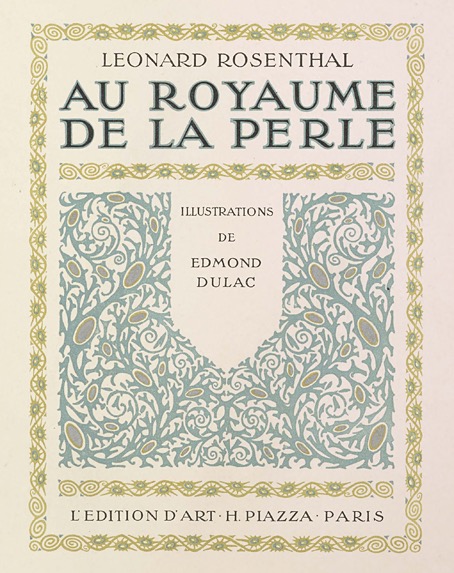
Edmund Dulac’s In the Kingdom of the Pearl

dulac01.jpg

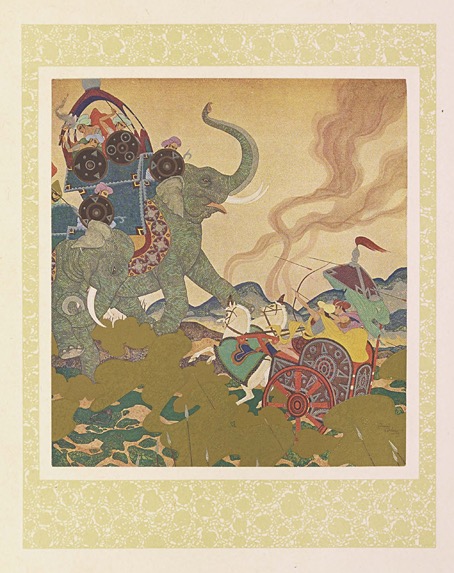
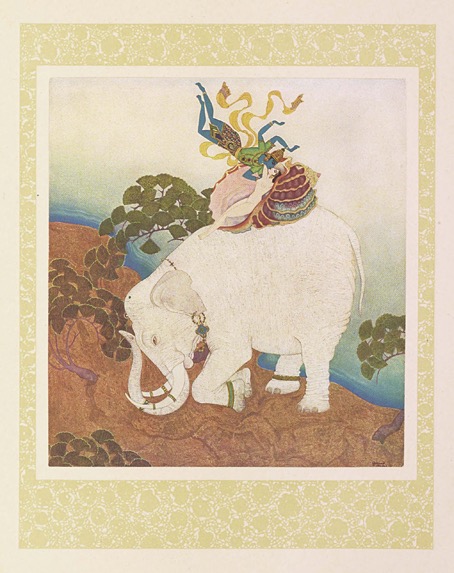
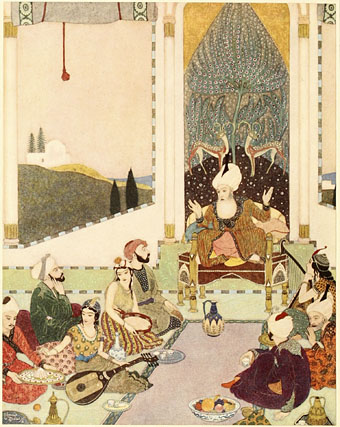
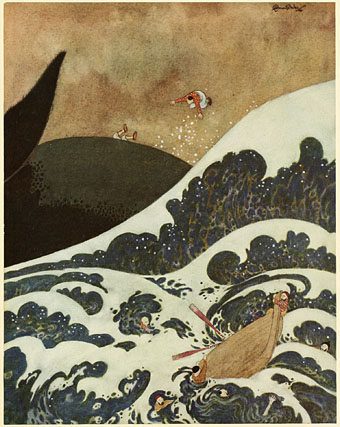
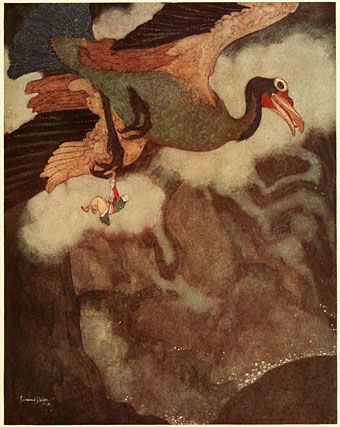
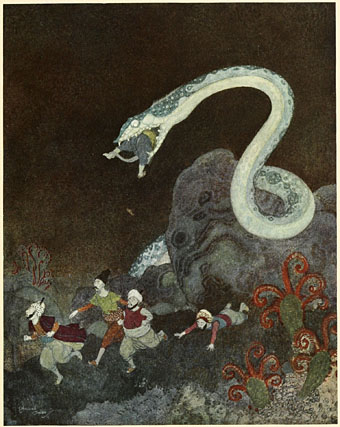
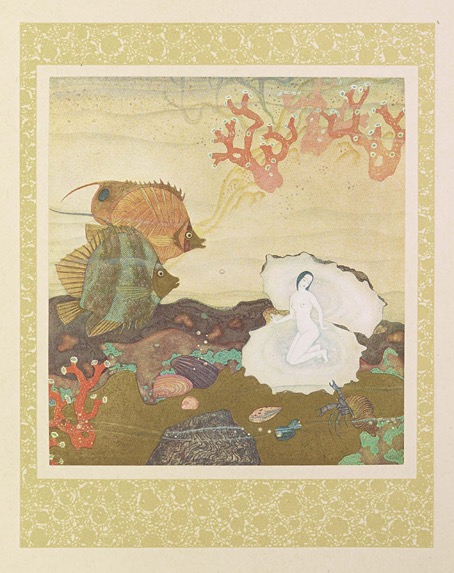
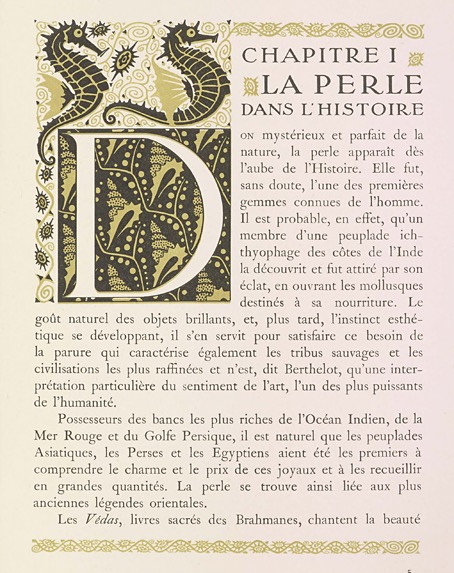
An unusual commission for Edmund Dulac, being a work of non-fiction published in France in 1920, with a British edition following in the same year. The author, Léonard Rosenthal, was a French diamond merchant who wrote a handful of books intended to celebrate and promote his line of business, of which this was the first. In the Kingdom of the Pearl is a history of the pearl-fishing trade and the use of pearls in jewellery, decoration and storytelling. I can’t vouch for the text but the book itself is a beautiful production, with fine colour printing, and a variety of aquarian embellishments throughout. It’s common in illustrated books for the decorative details to repeat themselves but Dulac has drawn a different fishy capital for the opening page of each chapter. His colour illustrations continue the flattened style he was using in Tanglewood Tales, only here the paintings look as though he may have been aiming at the appearance of Mughal miniatures. This is a period of Dulac’s work that’s often overlooked in favour of the Rackham-like illustrations he was producing earlier in his career.
dulac02.jpg

dulac03.jpg

dulac04.jpg

dulac05.jpg

Continue reading “Edmund Dulac’s In the Kingdom of the Pearl”
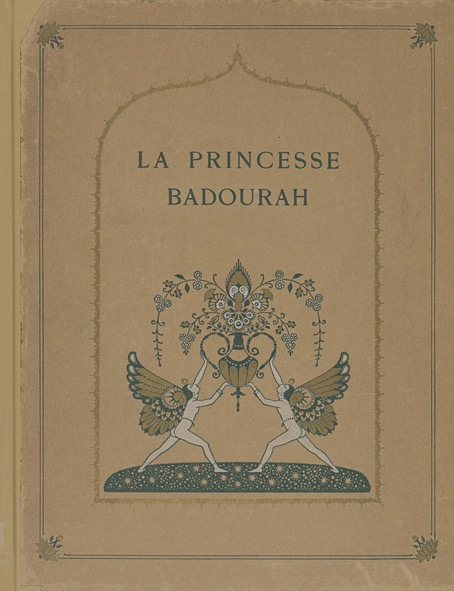
Edmund Dulac’s Princesse Badourah

dulac01.jpg

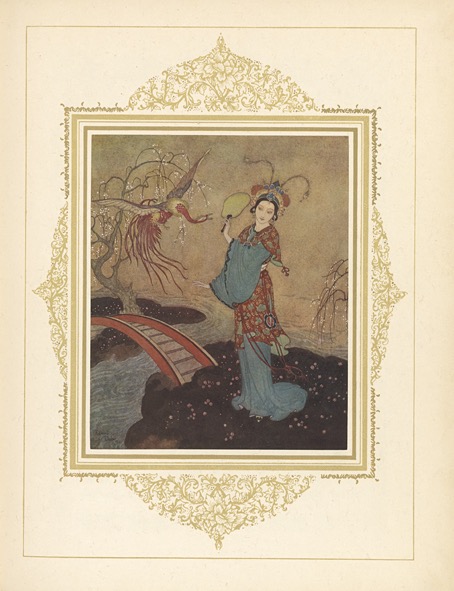
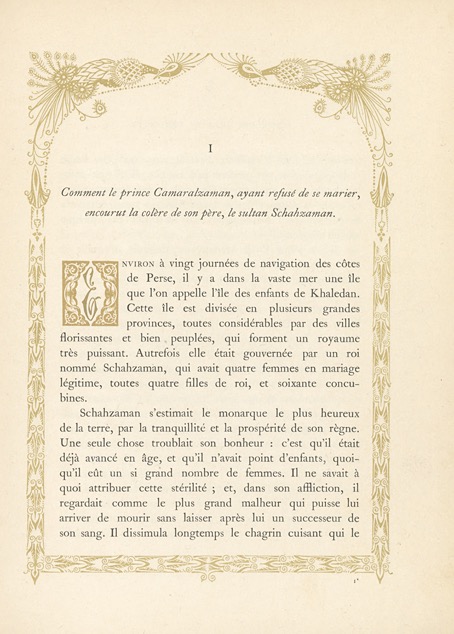
The Chinese princess is usually named Badoura in English editions of The Thousand and One Nights but this volume is a French book which reprints the art that Edmund Dulac created for a retelling of the story by Laurence Housman published in 1913. The English edition was itself a recycled volume, expanded from an earlier Housman/Dulac collection, Stories from the Arabian Nights (1907). The story itself reads like an odd mirroring of some of the versions of Aladdin which end with the triumphant hero marrying a Chinese princess named Badroulbadour. The male character in Princess Badoura is Camaralzaman, the shy son of an Arabian king whose repudiation of women causes his father to throw him into a dungeon. As in Aladdin, a genie helps engineer events to bring the story to a happy resolution.

dulac02.jpg

Some of the art may be recycled but the book design is better than the English editions, with gold frames embracing the tipped-in colour plates. The paintings are consequently reduced in size but this doesn’t harm them too much. One thing the book doesn’t contain is any clue to the writer of the text. I’d guess it was a translation of the Housman version but it could equally be a French retelling taken from another edition altogether.

dulac03.jpg

dulac04.jpg

dulac05.jpg

Continue reading “Edmund Dulac’s Princesse Badourah”

Edmund Dulac’s illustrated Poe

dulac10.jpg

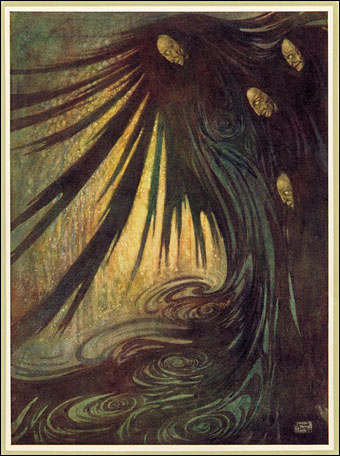
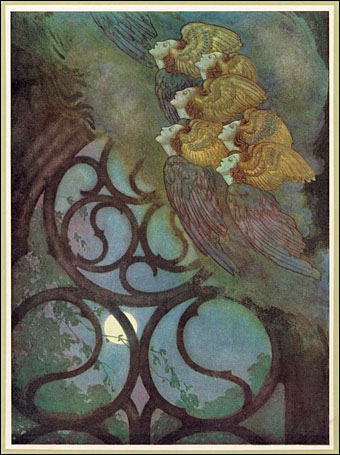
The Haunted Palace.

There’s always more Poe. Which means, in the context of these pages, there’s always another illustrated edition to be found. It’s good to finally discover a complete edition of The Bells, and Other Poems; I’d seen a few of these paintings before—Alone was used on the cover of a biography of Poe by Wolf Mankowitz—but the collection tends to be overshadowed by Dulac’s other books. The Internet Archive has had a scan available for several years but most of the colour plates are missing, picture theft being a common hazard for library books. These copies are from a more recent addition to Project Gutenberg.

dulac01.jpg

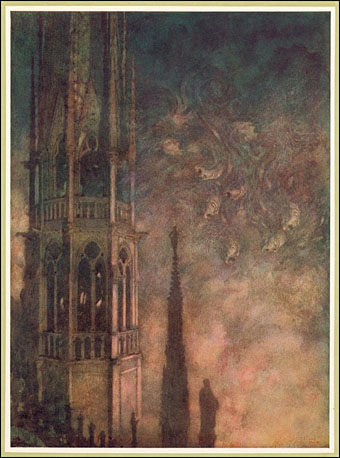
The Bells.

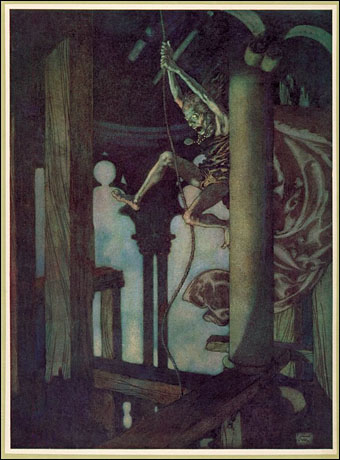
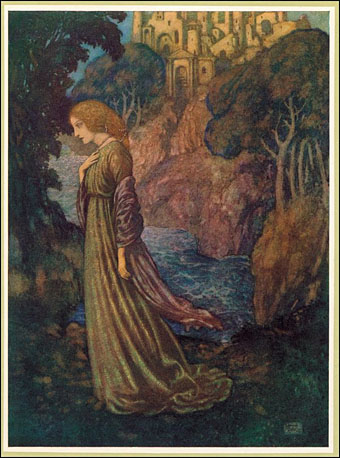
The Bells was published 12 years after W. Heath Robinson had produced his own illustrated edition of Poe poems in 1900. The two books complement each other more than you might expect; all of Robinson’s illustrations are line drawings with an Art Nouveau quality that soon vanished from his work, and was long gone by the time he found a popular audience for his drawings of whimsical inventions. Dulac’s edition includes a few monochrome drawings but these are little more than spot illustrations scattered among the watercolour plates. Several of the paintings, especially the one for Israfel, are Symbolist art as much as they’re illustration. This might seem inevitable given the Symbolist tendencies of Poe’s verse but not all illustrators manage to reflect these qualities.

dulac02.jpg

The Bells.

dulac03.jpg

The Bells.

dulac04.jpg

Annabel Lee.

Continue reading “Edmund Dulac’s illustrated Poe”

Edmund Dulac’s Sinbad the Sailor

dulac17.jpg

I mentioned Edmund Dulac’s Sinbad book in an earlier post but didn’t show many his illustrations on that occasion so here they are. Most of these pictures are a long way from Ray Harryhausen’s Sturm und Drang but they’re not without their complement of monsters and afreets.

dulac01.jpg

Sinbad the Sailor & Other Stories from the Arabian Nights was published in 1914. No author is credited, which suggests the text might have been by Dulac himself but it’s more likely to be another retelling of the tales by Laurence Housman with whom Dulac collaborated on similar titles. Sinbad the Sailor is one of Dulac’s best books, a prime example of the ease with which he could combine influences from Persian miniatures, Chinese painting and Japanese prints all done in the watercolour technique employed by contemporaries such as Arthur Rackham.

dulac02.jpg

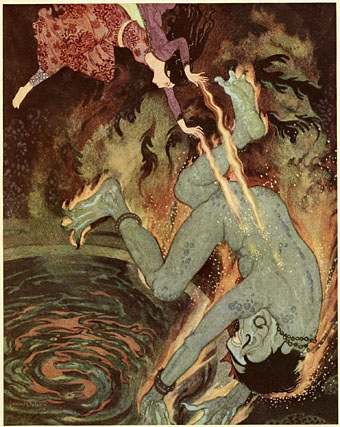
The plate at the top of this post showing a princess battling an afreet made a striking cover image for the American edition of Fantasy: The Golden Age of Fantastic Illustration (1975) by Brigid Peppin, a study of book illustration from the 1860s to the 1920s. The British edition used a Dulac illustration from The Snow Queen which seems dull in comparison, and an odd choice for a volume filled with so much exceptional art. The book itself is an excellent collection, however, and one I’d recommend to anyone interested in this period of illustration.

dulac03.jpg

dulac04.jpg

Continue reading “Edmund Dulac’s Sinbad the Sailor”

1918

dardel.jpg

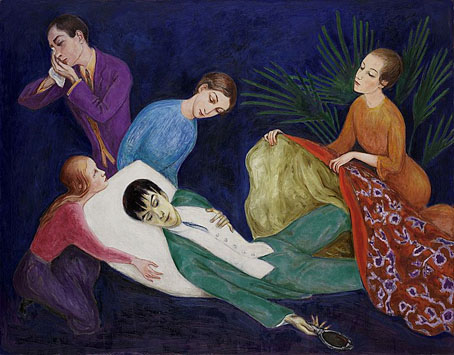
The Dying Dandy by Nils Dardel.

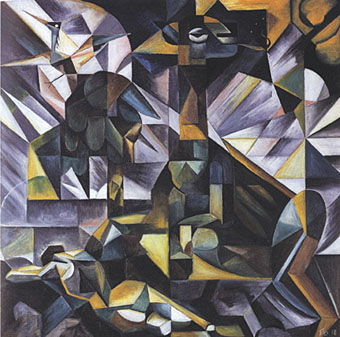
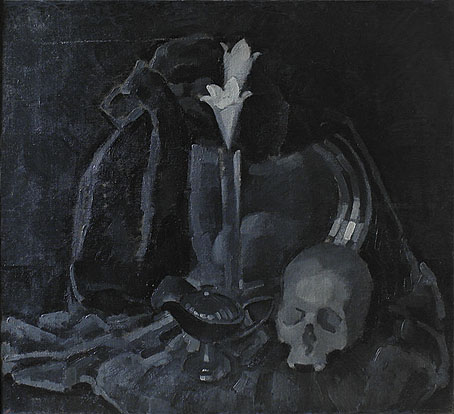
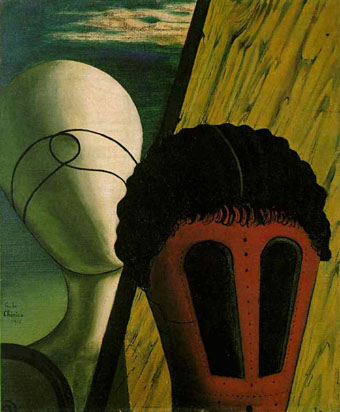
Wishing you all a happy new year with a small selection of art from a century ago.

baumann.jpg

Schicksal by Fritz Baumann.

blumenfeld.jpg

Black Still Life by Genrich Matveevich Blumenfeld.

dechirico.jpg

Two Heads by Giorgio de Chirico.

Continue reading “1918”