Weekend links 515

huysmans.jpg

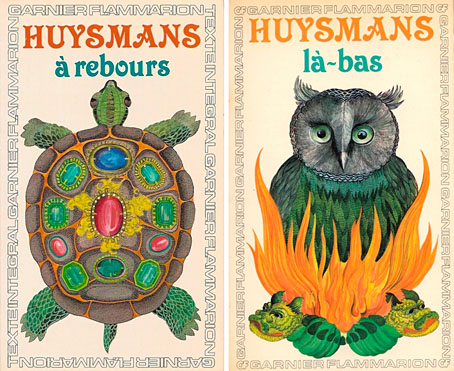
A pair of Huysmans covers from 1978 designed by Gérard Deshayes.

• Friends of the great composer/musician Jon Hassell set up a GoFundMe account a few days ago to help raise money for Jon’s medical costs. It’s always dispiriting having to link to these fund-generators when they shouldn’t be required at all but until America sorts out its health situation this is how things are. For those who’d prefer to help Jon by buying his music, there’s a Bandcamp page with a handful of releases, and more available at Bleep, the online distributor of Warp Records who helped produce his last release, Listening To Pictures (Pentimento Volume One). Related: Words With The Shaman: Jon Hassell interviewed by Chris May.

• Every time I think I must have heard all the best of the early Kraftwerk concerts another one turns up. This new posting at YouTube is taken from a recent file upload at the concert-swapping site Dimedozen, and is believed to be a radio recording of the group playing in Vancouver, Canada, in 1975. It’s very good quality (some slight bleed from other stations) and features excellent versions of their concert repertoire at that time. The version of Autobahn is especially good.

• in 2009 Dana Mattocks built a machine he called Steampunk Frankenstein, a construction which was attended by a frame containing my first piece of steampunk art. Dana’s latest creation is TILT, the Robot with Rocket Jet-Pack.

• RIP Tony Allen, the drummer about whom Fela Kuti said “without Tony Allen, there would be no Afrobeat”. Allen was interviewed by John Doran in 2012. Related: Tony Allen: the Afrobeat pioneer’s 10 finest recordings.

• “Robert Fripp’s ‘Music for Quiet Moments’ series. We will be releasing an ambient instrumental soundscape online every week for 50 weeks. Something to nourish us, and help us through these Uncertain Times.”

• How to avoid Amazon: the definitive guide to online shopping – without the retail titan; Hilary Osborne & Poppy Noor have some suggestions. I favour eBay for many of my purchases, large or small.

• Adam Scovell on A Cinematic Lockdown: Confinement in the films of Alfred Hitchcock.

• Liberty Realm, a book of art by Cathy Ward, is coming soon from Strange Attractor.

• One Great Reader: Luc Sante talks to Wes del Val about his favourite books.

• Oscar Wilde and the mystery of the scarab ring by Eleanor Fitzsimons.

• Unica Zürn at Musée D’art Et D’histoire De L’hôpital Sainte-Anne.

• Mix of the week: Secret Thirteen Mix 302 by Avizohar.

• Another concert: Tuxedomoon live in Rome in 1988.

• Rarefilmm | The Cave of Forgotten Films.

• At Dennis Cooper’s: Ghosts.

• Ghost Song (1978) by Jim Morrison & The Doors | Ghost Song (2000) by Air | Ghost Song (2005) by Patrick Wolf
Weekend links 514

kircher.jpg

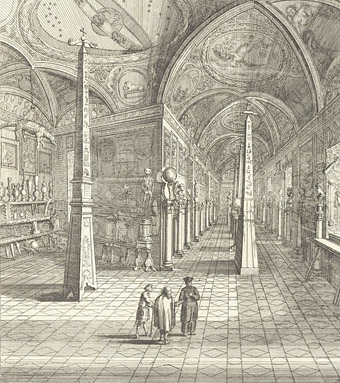
Athanasius Kircher welcoming two guests to the Collegio Romano, a detail from the frontispiece to his Romani Collegii Societatis Jesu Musaeum celeberrimum (1678).

• Opium (1919) by Robert Reinert: “A Chinese opium dealer takes revenge on Westerners who have corrupted his wife.” With Werner Krauss and Conrad Veidt a year before their pairing in The Cabinet of Doctor Caligari.

• Aubrey Beardsley at Tate Britain: in which the gallery thinks that 7 minutes is enough to give us a taste of a major exhibition that we can’t otherwise see.

• Joe Pulver (RIP): His Highness in Yellow. A memorial piece that includes artist Michael Hutter talking about his paintings of Carcosa.

• Court Mann on the strange history of Robert Smithson’s Spiral Jetty, 50 years old this month.

• “Invisible Little Worms”: Athanasius Kircher’s Study of the Plague by John Glassie.

• Sophie Monks Kaufman on why literary lesbians are having a moment on screen.

• Photographer Ryan McGinley: “I was taught to believe in Satan. It scared me.”

• At Dennis Cooper’s: Ellen Burstyn Day, and the ghostly novels of WG Sebald.

• Dorian Lynskey on where to start with Nina Simone’s back catalogue.

• Wie funktioniert ein Synthesizer? (1972). Bruno Spoerri explains.

• Banham avec Ballard: On style and violence by Mark Dorrian.

• John Boardley on the most dangerous book in the world.

• Improvisation for Sonic Cure by Ryuichi Sakamoto.

• The Strange World of…JG Thirlwell.

• Diet Of Worms (1979) by This Heat | Stomach Worm (1992) by Stereolab | Heartworms (1998) by Coil

Weekend links 513

tower.jpg

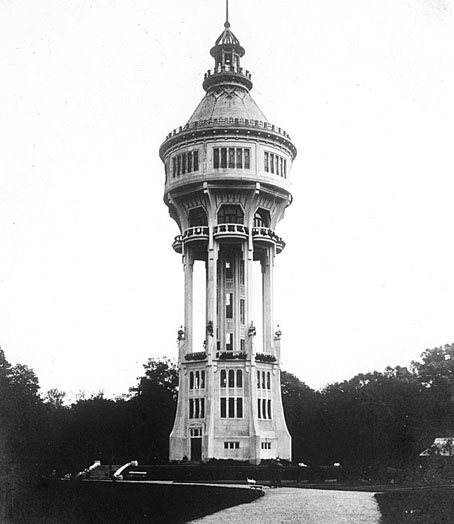
Water Tower (1914), Margaret Island, Budapest, Hungary.

• George Bass on five ways The Year of the Sex Olympics (1968) predicted the way we live now. Nigel Kneale’s TV play will be reissued on DVD next week.

• Ballardism (Corona Mix): three new drone pieces by Robert Hampson available as free downloads.

• Grace Jones: where to start in her back catalogue; John Doran has some suggestions.

Hal was the wry and soulful and mysterious historical rememberer. He specialized in staging strange musical bedfellows like Betty Carter and the Replacements or The Residents backing up Conway Twitty. Oh, the wild seeds of Impresario Hal. He was drawn equally to the danger of a fiasco and the magical power of illumination that his legendary productions held. Many years ago he bought Jimmy Durante’s piano along with Bela Lugosi’s wristwatch and a headscarf worn by Karen Carpenter. Some say he also owned Sarah Bernhardt’s wooden leg. He had a variety of hand and string puppets, dummies, busts of Laurel and Hardy, duck whistles and scary Jerry Mahoney dolls and a free ranging collection of vinyl and rare books. These were his talismans and his vestments because his heart was a reliquary.

Tom Waits pens a letter to remember Hal Willner

• The food expiration dates you should actually follow according to J. Kenji López-Alt.

• Blown-up buildings and suffocating fish: the Sony world photography awards, 2020.

• Rumbling under the mountains: a report on Czech Dungeon Synth by Milos Hroch.

• Sophie Pinkham on The Collective Body: Russian experiments in life after death.

• Mix of the week: Spring 2020: A Mixtape by Christopher Budd.

• Olivia Laing on why art matters in an emergency.

• At Dennis Cooper’s: Bloody.

• Blood (1972) by Annette Peacock | Blood (1994) by Paul Schütze | Blood (1994) by Voodoo Warriors Of Love

Weekend links 512

white

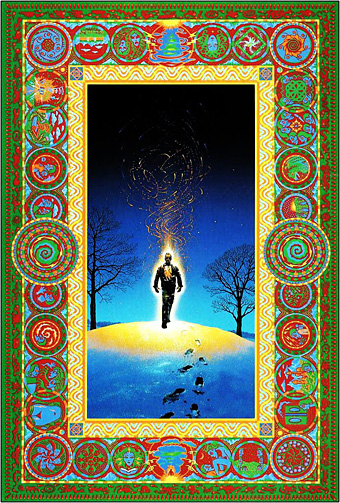
Cover art by Tim White for Weaveworld (1987) by Clive Barker.

• Another week leading with obituaries but that’s where we are just now. Among others, we had film maker Bruce Baillie, cartoonist Mort Drucker, lesbian/gay rights activist Phyllis Lyon, film director Nobuhiko Obayashi, artist Tim White, and music producer Hal Willner. Related to the last: Hal Willner’s Vanishing, Weird New York.

• Open Door is a new recording by Roly Porter from his forthcoming album, Kistvaen. I designed the CD and vinyl packaging for this one.

• From 1995: Peter Wollen on dandyism, decadence and death in Donald Cammell & Nicolas Roeg’s Performance.

• “Fear, bigotry and misinformation—this reminds me of the 1980s AIDS pandemic,” says Edmund White.

• David Lynch wants you to meditate, maybe make a lamp during self-isolation.

• “Weird tale” by Secret Garden author Frances Hodgson Burnett discovered.

• Behind the iron curtain, the final frontier: Soviet space art in pictures.

• Mix of the week: Secret Thirteen Mix 301 by Asher Levitas.

• At Dennis Cooper’s: Raymond Queneau, Party Animal.

• Oren Ambarchi Archive at Bandcamp.

• Japan’s Tourism Poster Awards.

• Hal Willner produces: Juliet Of The Spirits (1981) by Bill Frisell | Apocalypse (1990) by William S. Burroughs | The Masque Of The Red Death (1997) by Gabriel Byrne

Weekend links 511

marber.jpg

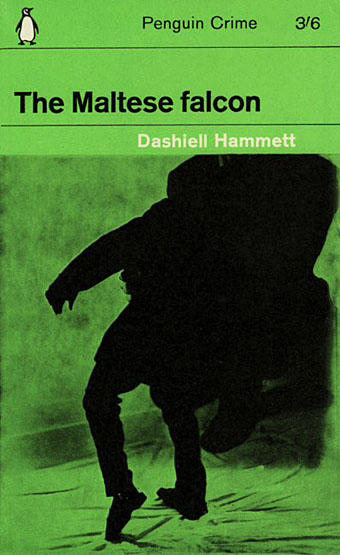
Design by Romek Marber, 1963.

• The death of Polish composer Krzysztof Penderecki prompted so many “Shining composer” headlines you have to wonder what kind of notices he might have received if his early work hadn’t been purloined by Hollywood. György Ligeti always seemed ambivalent about having his music used as cinematic illustration (Kubrick annoyed him by altering some of it without permission) but Penderecki worked as a composer for Polish films in the 1960s, not only providing a score for The Saragossa Manuscript (1965) but also (surprisingly) writing music for a number of short animations. I’ve been listening to his music for almost 40 years, after a chance discovery of the stunning Threnody For The Victims Of Hiroshima led me to seek out more. I have to admit that the appeal of his recordings lay in their ability to thrill and terrify—qualities that musicologists seldom address—and I’ve never paid any attention to Penderecki’s later work which was less of an assault on the senses. At The Quietus James Martin argues for listening to the entire oeuvre, not just the early works. For more about the composer’s life and work, Culture.pl has a number of good articles, eg: Mazes, Notes & Dali: The Extraordinary Life of Krzysztof Penderecki, and Music Is Not for Everyone: An Interview with Krzysztof Penderecki.

• The late Romek Marber (1925–2020) was a designer/illustrator whose name is familiar to collectors of Penguin books via the Marber Grid, the template he created in the early 1960s for the Penguin Crime series, and which was later extended across the entire paperback range. Marber talked about this period of his work in Penguin by Illustrators in 2009. Elsewhere: Rick Poyner on Marber’s design, and a suggestion for how the Marber Grid was designed.

• “…you’ll see Lego and children’s toys, but also Rawlplugs, tile spacers, Monopoly houses, cigarillo tips, curtain hooks, biofilters, Smarties tube lids, fishing beads, broken security seals, razor parts, bits of toothbrushes, roofing screw caps, medical lancets, golf tees, false teeth, plastic soldiers, posties’ rubber bands, bungs and stoppers.” Beachcomber Tracey Williams talks to Andrew Male about the undying ubiquity of plastic waste.

• “Thanks to Bookshop, there is no reason to buy books on Amazon anymore,” says Alex Lauer. The caveat is that the service is limited to the USA. I order books direct from publishers or from eBay and Abe; the latter may be Amazon-owned but you’re still paying most of the money to the individual sellers.

• Mixes of the week: Radio Belbury 19: Family Fun Time, and Through A Landscape Of Mirrors Vol. VII – France IV by David Colohan.

• “[Amanda Sewell’s] Wendy Carlos: A Biography is a great work of scholarship,” says Geeta Dayal.

• “Part of me expects to go on forever.” David Barnett on Michael Moorcock at 80.

• “What is the point of a critic if not to tell the truth?” asks Rachel Cooke.

• John Boardley on medieval road-trips and the invention of print.

• Anna Bogutskaya on where to begin with the Weird West.

• Inside Tove Jansson’s private universe by Sheila Heti.

• Memory Of Hiroshima (1973) by Stomu Yamash’ta’s Red Buddha Theatre | Hiroshima Mon Amour (1977) by Ultravox! | Hiroshima (1982) by Borsig