Weekend links 107

schwabe.jpg

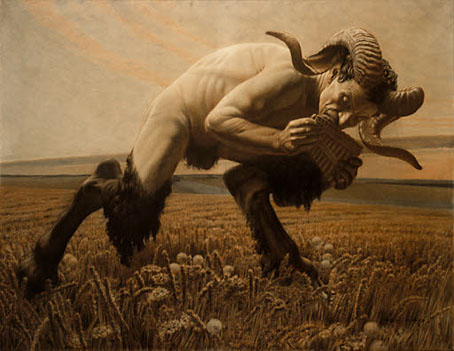
Le Faune (1923) by Carlos Schwabe.

• “When I recently attended a conference in China, many of the presenters left their papers on the cloud—Google Docs, to be specific. You know how this story ends: they got to China and there was no Google. Shit out of luck. Their cloud-based Gmail was also unavailable, as were the cloud lockers on which they had stored their rich media presentations.” Ubuweb’s Kenneth Goldsmith on why he doesn’t trust the Cloud.

• “I’m a poet and Britain is not a land for poets anymore.” A marvellous interview with the great Lindsay Kemp at Dangerous Minds. Subjects include all that you’d hope for: Genet, Salomé, David Bowie, Ken Russell, Derek Jarman, The Wicker Man and “papier maché giant cocks”.

• “As early as the 1950s, Maurice Richardson wrote a Freudian analysis which concluded that Dracula was ‘a kind of incestuous-necrophilious, oral-anal-sadistic all-in wrestling match’.” Christopher Frayling on the Bram Stoker centenary.

Björk gets enthused by (among other things) Leonora Carrington, The Hourglass Sanatorium and Alejandro Jodorowsky’s YouTube lectures.

• Before Fritz Lang’s Metropolis there was Algol – Tragödie der Macht (1920). Strange Flowers investigates.
marsh.jpg

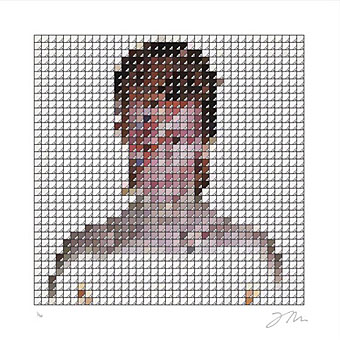
David Marsh recreates famous album covers using Adobe Illustrator’s Pantone swatches.

• New titles forthcoming from Strange Attractor Press. Related: an interview with SAP allies Cyclobe.

• 960 individual slabs of vinyl make an animated waveform for Benga’s I Will Never Change.

• An exhibition of works by Stanislav Szukalksi at Varnish Fine Art, San Francisco,

Keith Haring‘s erotic mural for the NYC LGBT Community Center is restored.

The Situationist Times (1962–1967) is resurrected at Boo-Hooray.

• Doors Closing Slowly: Derek Raymond‘s Factory Novels.

Will Wilkinson insists that fiction isn’t good for you.

• More bookplates at BibliOdyssey and 50 Watts.

The Top 25 Psychedelic Videos of All Time.

Flannery O’Connor: cartoonist.

• RIP Adam Yauch.

• Their finest moment: Sabotage (1994) by Beastie Boys.
Weekend links 106

oshiro.jpg

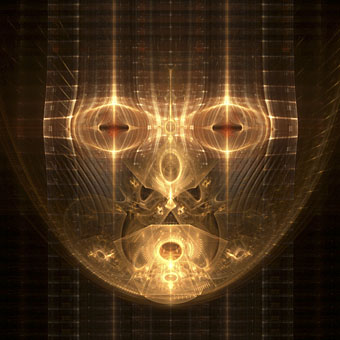
Gold Head 2 (2011) by Kouji Oshiro.

Josef Hartwig’s 1922 Bauhaus chess set. Contemporary copies can be bought from Naef Spiele but they’re not cheap. Related: Bauhaus: Art as Life, a major exhibition at the Barbican, London. Related, related: Art as life by Fiona MacCarthy.

• Rattera is a new font by Barnbrook Design for Fuse 1–20, Taschen’s collection of the experimental typography publication. Related: The Fuse poster explained.

Genesis (1981), video feedback and computer animation by Ron Hays with an electronic score by Ragnar Grippe.

Deadly Doris, a recording by Malcolm Mooney-era Can from the forthcoming Lost Tapes collection.

• “How did a pop band end up in a museum” Sasha Frere-Jones on Kraftwerk.

Philip Glass & Robert Wilson on how they made Einstein on the Beach.

• An astonishing aerial photo of post-quake San Francisco in 1906.

• More electronic music: Buddha Machine’s SoundCloud page.

My Baby, music and video from Julia Holter & Jib Kidder.

Homotography‘s photos can now be browsed at Pinterest.

Deviates, Inc., a Tumblr.

• Raoul Björkenheim live: Apocalypso pt. 1 | Apocalypso pt. 2 | 1-2-11 DMG, NYC

Weekend links 105

klikovac.jpg

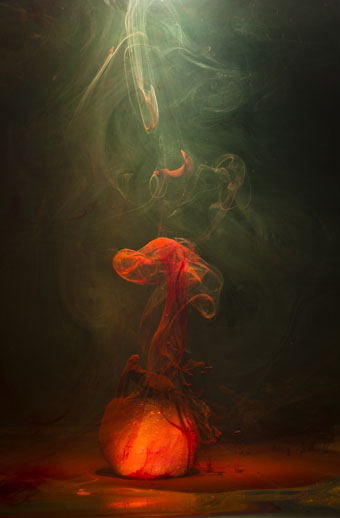
A suspended fluid photograph from Demersal, a series by Luka Klikovac.

• “Soon, Mr. Lachman was writing occult music. His song “(I’m Always Touched by Your) Presence, Dear,” which appeared on Blondie’s 1977 album Plastic Letters, was an example.” Gary Lachman: from Blondie to Swedenborg.

Neil Krug’s cover art for the new Scissor Sisters album, Magic Hour, channels the cloudless skies and photographic surrealism of Storm Thorgerson.

Implicate Explicate, a multiple 16mm film installation by Rose Kallal. Sound by Rose Kallal & Mark Pilkington using modular synthesizers.

Despite conservative queerdom’s best efforts to hide its “otherness” behind a velvet wall of “same as you” Tom and Hank and Jill and Janes, Mattilda and her like will not be ignored. As parades of neo-nuclear same sex families mug for the cameras on courthouse steps, queer body boys parade and flex impossibly taut muscles across our nation’s gym runways and circuit parties, and far, far too many proudly proclaim in knee-jerk defensiveness how “straight-acting” they are across the net, Sycamore blows raspberries at the forced mirage and holds up faded pictures of yesteryear boys and girls whose one claim to fame once was their difference.

Mattilda Bernstein Sycamore is interviewed at Lambda Literary

Paul Oestreicher, an Anglican priest, sets the cat squarely among the pigeons with the question (and answer) “Was Jesus gay? Probably.”

Andromeon, video by Alexander Tucker and Serena Korda for a new song by Alexander Tucker.

• Museums of Melancholy: Iain Sinclair on London’s memorials. An LRB essay from 2005.

FACT mix 325 is by Battles: from Boredoms to Cluster and The Alchemist.

The glass hills of Mars, “a region the size of Europe”.

Labyrinths and clues, an essay by Alan Wall.

The Alchemy of Emptiness.

Drop (1972) by Soft Machine | Drop (2002) by Hope Sandoval & The Warm Inventions | Airdrop (2006) by Kashiwa Daisuke.

Weekend links 104

cummings.jpg

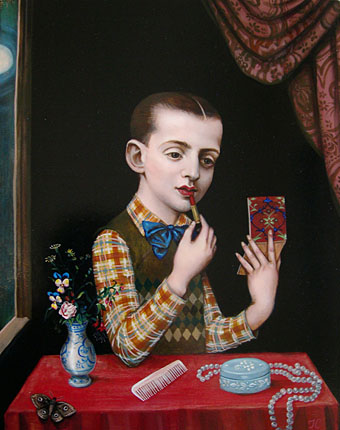
Prettiest Star (2004) by Timothy Cummings.

I Want Your Love, a feature film directed by Travis Mathews catches my attention for having been described as “the gay Shortbus” even though (as the director notes) Shortbus was pretty gay to begin with.

• I’ve always found Hans Christian Andersen’s story of The Tinderbox—a tale of spectral dogs with enormous eyes—to be rather weird. But these illustrations by Heinrich Strub for a 1956 edition beat everything.

• “From an early age, however, I became in secret the slave of certain appetites.” The line that Robert Louis Stevenson deleted from The Strange Case of Dr Jekyll and Mr Hyde.

Scientific American: Homophobes might be hidden homosexuals. Not exactly fresh news but always worth bearing in mind when someone starts ranting about those evil gays.

Minimal Wave: The 80s synth-pop underground. The Minimal Wave label releases a vinyl compilation by Hard Corps this month.

• “Blame the Victorians for making menswear boring.” Alex Jung on the endless tyranny of the suit-and-tie combination.

• Women, Vaginas and Blood: Breaking menstrual taboos with artist Sarah Maple.

London’s lost rivers (again): the hidden history of the city’s buried waterways.

Vincenzo Pacelli says the Knights of Malta murdered Caravaggio.

Street style 1906: Edward Linley Sambourne’s fashion blog.

Architectural Stationery Vignettes at BibliOdyssey.

Hans Bellmer & Unica Zürn at Ubu Gallery, NYC.

Pam Grossman admits to being a “candle hooch”.

Dirty (1986) by Hard Corps | Lost Rivers Of London (1996) by Coil | The Tinderbox (2009) by Patrick Wolf.

Weekend links 103

fripp.jpg

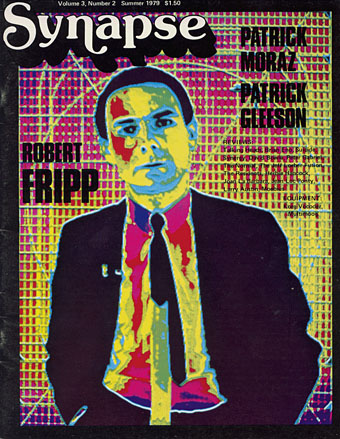
Robert Fripp photographed by Chris Stein. Video posterization by Michael Schiess.

Scans of Synapse, “The electronic music magazine”, are posted here. Issues range from 1976 to 1979, and include interviews with the more notable synthesists of the period, Kraftwerk included. Brian Eno was regularly interviewed by synth mags despite always being reluctant to talk about what equipment he might be using; sure enough he’s featured here. Far more interesting is a longer interview with Robert Fripp that catches the guitarist as he emerged from his self-imposed retirement in the mid-70s with the extraordinary Exposure album. (See a 1979 promo video for that here.) Related: TR-808 drum sequences in poster form by Rob Ricketts.

• More electronic music from the 1970s: “[Don Buchla] showed me that the idea of playing a black-and-white keyboard with one of these instruments was completely ridiculous. It was inappropriate and had nothing to do with the way you would use an electronic instrument.” Suzanne Ciani talks to John Doran about electronic music composition. A collection of her early recordings, Lixiviation, is released by Finders Keepers. Related: The Attack of the Radiophonic Women: How synthesizers cracked music’s glass ceiling.

• “Her writing—full of immigrants, circus animals, freaks, socialists, hipsters, servants, and suffragettes—revels in the atmosphere of the ‘Yellow Nineties,’ a period characterized by Wildean decadence and art for art’s sake.” Jenny Hendrix on Djuna Barnes.

brunovsky.jpg

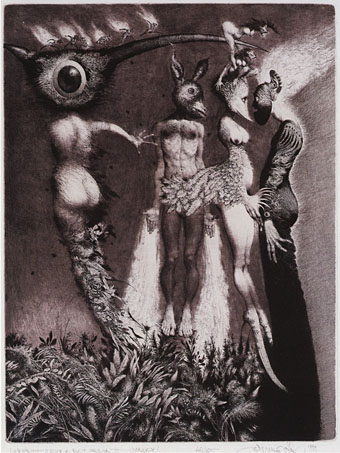
More etchings by Albin Brunovsky at But Does It Float.

• More scanned magazines: the Fuck You Press archive at Reality Studio. A trove of rare publications produced by Ed Sanders in the 1960s with contributions from world-class writers, William Burroughs included.

• “[My parents] were horrified by what I did, but they encouraged me to keep doing it because I was obsessed, and what else could I do?” John Waters writing in (of all places) the Wall Street Journal.

• A time-lapse assembly of Alfred Hitchcock’s Rear Window (1954) by Jeff Desom who explains how he did it here.

The Occult Experience: a 95-minute documentary on the international occult scene, filmed in 1984–85.

• Compost and Height re-post A Gold Thunder, a song by Julia Holter first sent to them in 2010.

• Drawings by Bette Burgoyne.

Schroeter’s Salomés

Cats are liquids

Fade Away And Radiate (1978) by Blondie (featuring Robert Fripp) | Exposure (1978) by Peter Gabriel (produced by and featuring Robert Fripp) | Exposure (1979) by Robert Fripp | Babs And Babs (1980) by Daryl Hall (produced by and featuring Robert Fripp) | Losing True (1982) by The Roches (produced by and featuring Robert Fripp).