Tuxedomoon: some queer connections

roques18.jpg

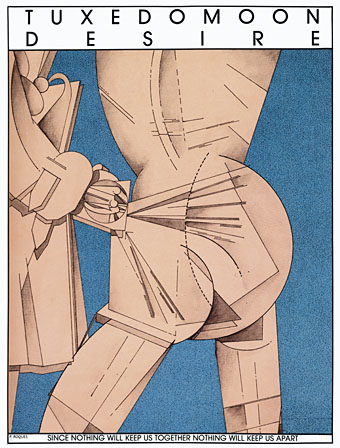
UK poster insert by Patrick Roques for Desire (1981).

Yes, more Tuxedomoon: there’s a lot to explore. It’s always a pleasure when something that you enjoy one medium connects to things that interest you elsewhere. From the outset Tuxedomoon have had more than their share of connections to gay culture—to writers especially—but it’s more of an ongoing conversation than any kind of proselytising concern. This post teases out those connections some of which I hadn’t spotted myself until I started delving deeper.

The Angels of Light: Not the Michael Gira group but an earlier band of musicians and performers in San Francisco in the early 1970s. The Angels of Light formed out of performance troupe The Cockettes following a split between those who wanted to charge admission for their shows, and those who wanted to keep things free to all. Among the troupe there was Steven Brown, soon to be a founding member of Tuxedomoon:

The group began as an offshoot of The Angels of Light, ‘a “family” of dedicated artists who sang, danced, painted and sewed for the Free Theater’, says Steve Brown. ‘I was lucky to be part of the Angels—I fell for a bearded transvestite in the show and moved in with him at the Angels’ commune. Gay or bi men and women who were themselves works of art, extravagant in dress and behaviour, disciples of Artaud and Wilde and Julian Beck [of the Living Theater] … we lived together in a big Victorian house … pooled all our disability cheques each month, ate communally … and used the rest of the funds to produce lavish theatrical productions—never charging a dime to the public. This is what theatre was meant to be: a Dionysian rite of lights and music and chaos and Eros.’

Rip it Up and Start Again: Postpunk 1978-1984 by Simon Reynolds

(Special Treatment For The) Family Man (1979): A sombre commentary from the Scream With A View EP on the trial of Dan White, the assassin of Harvey Milk and George Moscone. White’s “special treatment” in court led to a conviction for manslaughter which in turn resulted in San Francisco’s White Night riots in May, 1979.

James Whale (1980): An instrumental on the first Tuxedomoon album, Half-Mute, all sinister electronics and tolling bells as befits a piece named after a director of horror films. Whale’s Bride of Frankenstein (1935) is not only the best of the Universal horror series, it’s also commonly regarded as a subversive examination of marriage and the creation of life from a gay perspective. (Whale’s friends and partner disagreed, however.)
joeboysf.jpg

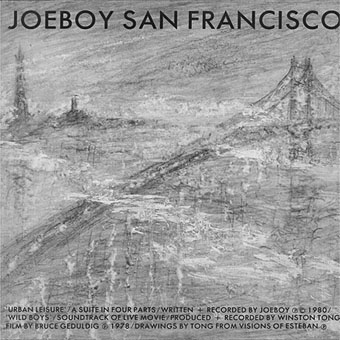
Cover art by Winston Tong.

Joeboy San Francisco (1981): The Joeboy name was lifted from a piece of San Francisco graffiti to become a name for Tuxedomoon’s DIY philosophy. It’s also a record label name, the name of an early single, and a side project of the group which in 1981 produced Joeboy In Rotterdam / Joeboy San Francisco. The SF side features a collage piece by Winston Tong based on The Wild Boys by William Burroughs, a key inspiration for the band which first surfaces here.

In one piece, the band cites its influences as: “burroughs, bowie, camus, cage, eno, moroder”. Can you say what you admired or drew on vis-à-vis these artists?

William S. Burroughs — ideas concerning use of media — tapes, projections, his radical anti-control politic in general as well as his outspoken gayness. Early on we duplicated on stage one of his early experiments projecting films of faces onto faces.

Simon Reynolds interview with Steven Brown

Continue reading “Tuxedomoon: some queer connections”

Weekend links 216

heathen.jpg

Why Do The Heathen Rage? (2014) by The Soft Pink Truth. Cover art by Mavado Charon.

Drew Daniel’s latest release as The Soft Pink Truth is Why Do The Heathen Rage?, a witty electronic riposte to the often reactionary attitudes of black metal music and the people who create it. (The album is dedicated to Magne Andreassen, a gay man stabbed to death by the drummer from Emperor.) Dorian Lynskey talked to Daniel about queering the metal world, as did Angus Finlayson at FACT. Daniel’s project has been receiving press everywhere but you wouldn’t know it to read US/UK gay news sites where the music coverage is relentlessly narrow and insular. To date, only BUTT magazine has mentioned Why Do The Heathen Rage? but then BUTT have always stood apart from their parochial contemporaries. Never mind, here’s another fucking article about “petite pop princess” Kylie Minogue.

• “By the letter of the law, Ulysses was obscene. Obviously, gratuitously, relentlessly obscene.” Josh Cook on censorship and dangerous books. One of my own dangerous publications, the fifth issue of the Lord Horror comics series, Hard Core Horror (declared obscene in a UK court in 1995), received a very belated review at The Comics Journal. More censorship: Judy Bloom on the perennial panics in US school libraries. Lest we feel superior to American prudery, Leena McCall’s painting of a semi-naked woman caused some consternation in a London gallery last week.

• “Over and over, we’re told that nobody buys [compact discs] anymore.” Steven Hyden on the latest obituaries being written for a music format. Ten years ago the death of vinyl was being confidently predicted: “The physical presence of the popular song is gone,” Paul Morley declared. Related: The death of mp3s.

There is nothing quite like Maryanne Amacher’s third ear music. It is alarming. Some of her fellow artists never quite believed that their ears were not being damaged. Third ear music invades you, wraps inside your body, your head, your eyes — just like she says. You can’t be sure, after a while, if the sounds you hear are those created by your ears or Maryanne Amacher.

Stefany Anne Golberg on the music of Maryanne Amacher

• At Dangerous Minds: Nothing Lasts Forever (1984), Bill Murray in a “lost sci-fi comedy set in a totalitarian New York City”.

• More Joyce (there’s always more Joyce): Humument Images to Accompany James Joyce’s Ulysses by Tom Phillips.

• Another celebration of Penda’s Fen by David Rudkin, and another reminder that it’s still not available on DVD.

• Stairway to Heaven: Atlas Obscura on the Gustave Moreau Museum, an essential stop if you visit Paris.

• Mix of the week: Secret Thirteen Mix 121 by Higher Intelligence Agency.

• MetaFilter has a wealth of links to pulp magazine archives.

Yan Nascimbene’s illustrations for Italo Calvino’s stories.

• Rebecca Litchfield’s Orphans of Time and Soviet Ghosts.

• RIP Charlie Haden

Going Home (1972) by Alice Coltrane (Charlie Haden, bass) | Earth (1974) by Joe Henderson Featuring Alice Coltrane (Charlie Haden, bass) | Malkauns (1975) by Don Cherry (Charlie Haden, bass)

The original Cabaret Voltaire

cv1.jpg

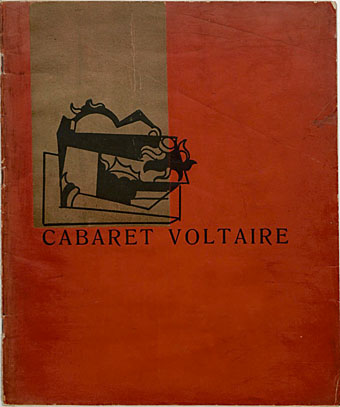
Cabaret Voltaire #1 (1916). Cover by Hans Arp.

Richard H. Kirk’s announcement that he’ll be performing at the Berlin Atonal festival as Cabaret Voltaire caused some raising of eyebrows recently, although if Stephen Mallinder isn’t involved I won’t be getting too excited myself. The last few releases under the Cabaret Voltaire name were credited to Kirk/Mallinder but from Plasticity (1992) on they don’t sound very different to Kirk’s solo releases from the same period. That’s not to say the music suffers but you have to wonder why the group name is being perpetuated if there’s nothing unique attached to it.

cv2.jpg

Dune, parole in libertà by Filippo Marinetti.

The group, old or new, will be the first thing that comes to mind for most people when they hear the name Cabaret Voltaire, something that might have surprised Hugo Ball who founded the original Cabaret Voltaire in Zurich almost a century ago. Cabaret Voltaire (the group) named themselves after Ball’s project, their intentions in the mid-1970s being similarly Dadaist. Early Cabs performances were more audience provocations than anything to do with entertainment; the music came later, and only after several years of very uncommercial tape experimentation, some of which can be heard on Methodology ’74–’78: Attic Tapes (2003). Thanks to Switzerland staying out of the war the original Cabaret didn’t get wrecked by bombs or destroyed by the Nazis, and is still active today. Ball also published a Cabaret Voltaire journal, two pages of which can be seen here. If this doesn’t look very dramatic to our eyes it needs to be remembered that everyone who first saw it would have been born in the 19th century so the contents would have seemed a lot more radical. A slim publication but with a formidable list of contributors: Guillaume Apollinaire, Hans Arp, Blaise Cendrars, Wassily Kandinsky, Filippo Marinetti, Amedeo Modigliani, Pablo Picasso, Tristan Tzara and others.

Also at Ubuweb (where else?) there are several recordings of Hugo Ball’s Dada poetry including a recital of Karawane by (of all people) Marie Osmond. Who knew there was a connection between the Osmonds and Cabaret Voltaire?

Previously on { feuilleton }
Cabaret Voltaire on La Edad de Oro, 1983
Doublevision Presents Cabaret Voltaire
Just the ticket: Cabaret Voltaire
TV Wipeout
The Crackdown by Cabaret Voltaire

Weekend links 215

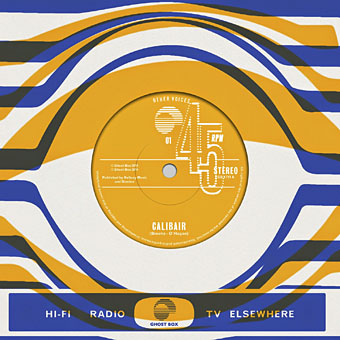
calibair.jpg

Julian House artwork for Other Voices, a new singles series on the Ghost Box label. Other Voices 01 is a collaboration between Sean O’Hagan of the High Llamas and Jon Brooks of The Advisory Circle.

Last week I linked to a copy Zadie Smith’s new introduction for Crash by JG Ballard. That piece could only be read in full by NYRB subscribers but this week the Guardian has the full text:

I was in college when the Daily Mail went to war with [David Cronenberg’s] movie, and found myself unpleasantly aligned with the censors, my own faux-feminism existing in a Venn diagram with their righteous indignation. We were both wrong: Crash is not about humiliating the disabled or debasing women, and in fact the Mail‘s campaign is a chilling lesson in how a superficial manipulation of liberal identity politics can be used to silence a genuinely protesting voice, one that is trying to speak for us all.

Related: Thomas Jones in 2008 reviewing Miracles of Life:

Despite all the bodily fluids spurted and smeared onto wrecked dashboards, the problem isn’t that it’s too pornographic but that it isn’t pornographic enough: the novel is too conscious of the deeper meaning of the sex and violence for the sex and violence to work as elements in themselves.

The fetishisation of Ballard’s novel (and Ballard’s fetishes) show no signs of abating: B-Movie (Ballardian Video Neuronica), is a short film by John Foxx, Karborn and Jonathan Barnbrook.

• Last Thursday I was watching a live performance by Pye Corner Audio and Not Waving, so it’s good to find this mix by the pair surfacing in the same week. Kudos to the latter for choosing something by Chrome. More mixes: FACT mix 468 by Throwing Snow, and Secret Thirteen mix 120 by Drøp.

• Ellen Datlow’s horror anthology, Lovecraft’s Monsters, continues to gather plaudits. Among recent reviews there’s Matt Barone at Complex who included the book in his Year’s Best Genre Fiction Books (So Far) list, and also praised my illustrations.

In recent years, many of the people on book covers have been women without faces. So prevalent is this visual cliché that the publishing industry has cycled through at least two well-documented iterations. The first, the Headless Woman, features some poor thing cut off above the neck, like the swimsuit-clad beachgoer on Alice Munro’s story collection “The View from Castle Rock.” The website Goodreads’s Headless Women page has 416 entries. Last year, the Headless Woman was supplanted by the Sexy Back, in which a woman is shown from behind, often gazing out over a vista.

Eugenia Williamson on the packaging of books for a female readership.

• The latest Taschen volume from Dian Hanson, editor of (among other titles) The Big Penis Book, is My Buddy. World War II Laid Bare, featuring photos from the archives of Michael Stokes. World of Wonder has pages from the interior.

I Have Walked This Body by Jenny Hval and Susanna is a track from a forthcoming album inspired by Maya Deren and Alexander Hammid’s Meshes of the Afternoon. It sounds fantastic so I’m looking forward to hearing more.

• If you have a spare half-million dollars, and don’t mind the possibility of possession by murderous supernatural entities, the Palmer house from Twin Peaks is for sale.

• Read an extract from Season of the Witch: How the Occult Saved Rock and Roll by Peter Bebergal.

The Stars and Their Courses: over six hours of the Nevada night sky in 4k definition.

Lee Siegel on the fraught friendship of TS Eliot and Groucho Marx.

Harmony Korine talked to Kenneth Anger for Interview Magazine.

New Scientist: How magic mushrooms induce a dream-like state.

• 3D-print your own Marcel Duchamp chess set.

Scott O)))

Crash (1980) by Tuxedomoon | Burning Car (1980) by John Foxx | A Crash At Every Speed (1994) by Disco Inferno | Burning Car (Dubterror Remix, 2008) by John Foxx

Dune: some French connections

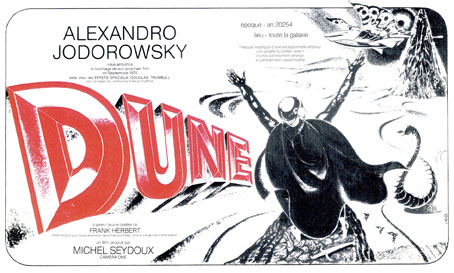
landi.jpg

French poster by Michel Landi for the ill-fated Jodorowsky film.

There’s more to French music than Air and Daft Punk, and there’s more to cosmic French music than Magma, although you wouldn’t always know it to read Anglophone music journalists. I’ve been championing the electronica recorded by Bernard Szajner for a long time, and even tried without success to get one of his albums reissued a few years ago. (Which reminds me: Gav, you’ve still got my Szajner albums!) That album (credited to “Zed”), Visions Of Dune (1979), has been out-of-print since 1999 so it’s good to know it’s being reissued on vinyl and CD next month by Finders Keepers’ Andy Votel. FACT has a mix of extracts to give the curious some idea of its buzzing analogue soundscapes.

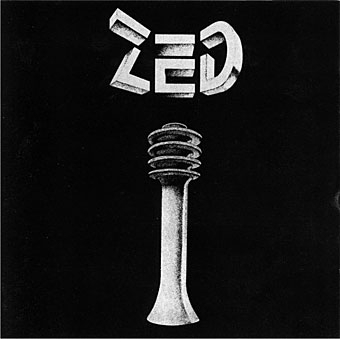
szajner.jpg

Visions Of Dune (1979) by Zed (Bernard Szajner). Artwork by Klaus Blasquiz.

Visions Of Dune attempts to illustrate Frank Herbert’s novel in musical form; you wouldn’t really know this without the track titles but that’s the way it often is with instrumental music. The album has gained a surprising cult reputation in recent years although it’s difficult to tell whether this is merely a consequence of its rarity or whether it’s because people like Carl Craig have taken to listing it as a favourite electronic record. It’s a decent enough album but I’ve always preferred Szjaner’s follow-up, Some Deaths Take Forever (1980), a conceptual polemic against the death penalty which is ferocious enough in places to be classed among the post-punk electronica being produced in the same year by Throbbing Gristle and Cabaret Voltaire. Szajner later recorded an album with Howard Devoto, Brute Reason (1983), which puts him even more firmly in the post-punk camp. I suspect Some Deaths… offends the hardcore synth-heads with its squalls of electric guitar and other traces of the rock milieu. More amenable is another Szajner album, Superficial Music (1981), which remixes the Visions Of Dune tracks into seven chunks of doom-laden ambience. I’ve never thought of the resulting sound as very superficial, “unsettling” is closer to the mark which is why I included an extract in my Halloween mix last year.

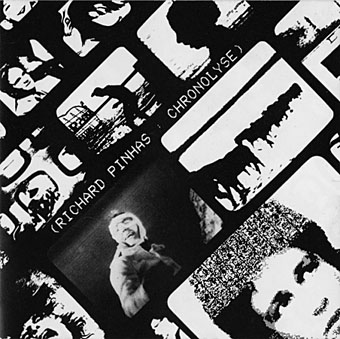
pinhas.jpg

Chronolyse (1978) by Richard Pinhas. Artwork by Patrick Jelin.

Visions Of Dune isn’t the only Dune-related synth album from France. Chronolyse (1978) is the second solo album by Richard Pinhas, another musician you won’t find many Brit writers discussing even though he’s been recording since 1974. Pinhas’s inspirations are an unusual amalgam of science fiction and contemporary French philosophy, a subject he studied at the Sorbonne; prior to going solo he was performing with Heldon, a French prog band whose name is taken from Norman Spinrad’s The Iron Dream. Heldon may be classed as a prog group but their first album, Electronique Guerilla (1974), has one side dedicated to William Burroughs, features a track with “lyrics by Nietzsche”, and also contains an appearance by Gilles Deleuze. Deleuze and Norman Spinrad appeared on later Pinhas solo albums although neither of them are on Chronolyse which, like Visions of Dune, is a wordless (and often tuneless) meander through synthesised soundscapes named after Dune characters. The music on the first side is much more sparse than Szajner’s, and less satisfying as a result; the second side improves with the 29-minute Paul Atreïdes, a typical Pinhas guitar-and-synth jam with extended Fripp-like soloing. As with Szajner, all the Heldon/Pinhas output tends towards the abrasive, and looking at the recent Pinhas discography the man is showing no sign of growing soft, having played shows recently with notorious noise merchants Merzbow and Wolf Eyes.

dune.jpg

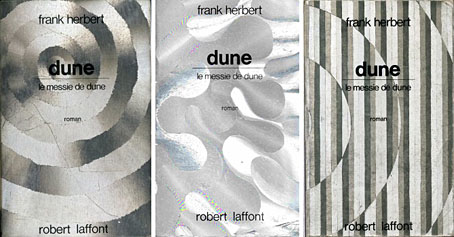
Dune paperbacks from Robert Laffont (1975–1983). Designer unknown.

Has there been any other Dune-related music from France? Given the French enthusiasm for science fiction I wouldn’t be surprised. A search for French covers of Frank Herbert’s novels turned up these strikingly abstract examples from Robert Laffont which I’d not seen before. That combination of foil backing and lower-case Helvetica is clearly derived from the celebrated Prospective 21e Siècle series of new music albums released by Philips in the late 1960s. Many of those albums featured exclusive recordings of musique concrète or electro-acoustic compositions (and many of them featured French composers) so there’s another electronica connection. Incidentally, if you ever find one of those Philips albums going cheap in a shop, buy it! The series is very collectible and some of them command high prices. Even if you don’t like the music, they’re worth having for the shiny sleeves.

Update: Further investigation reveals another French album with Dune connections, Eros (1981) by Dün, a Magma-like band whose name is taken from Herbert’s novel. So too are some of the track titles on their sole release: L’Epice and Arrakis.

Previously on { feuilleton }
Alejandro Jodorowsky’s Dune