Bikers and witches: Psychomania

psychomania1.jpg

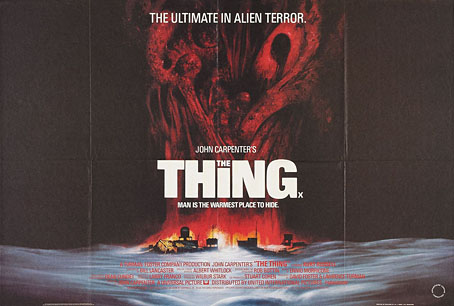
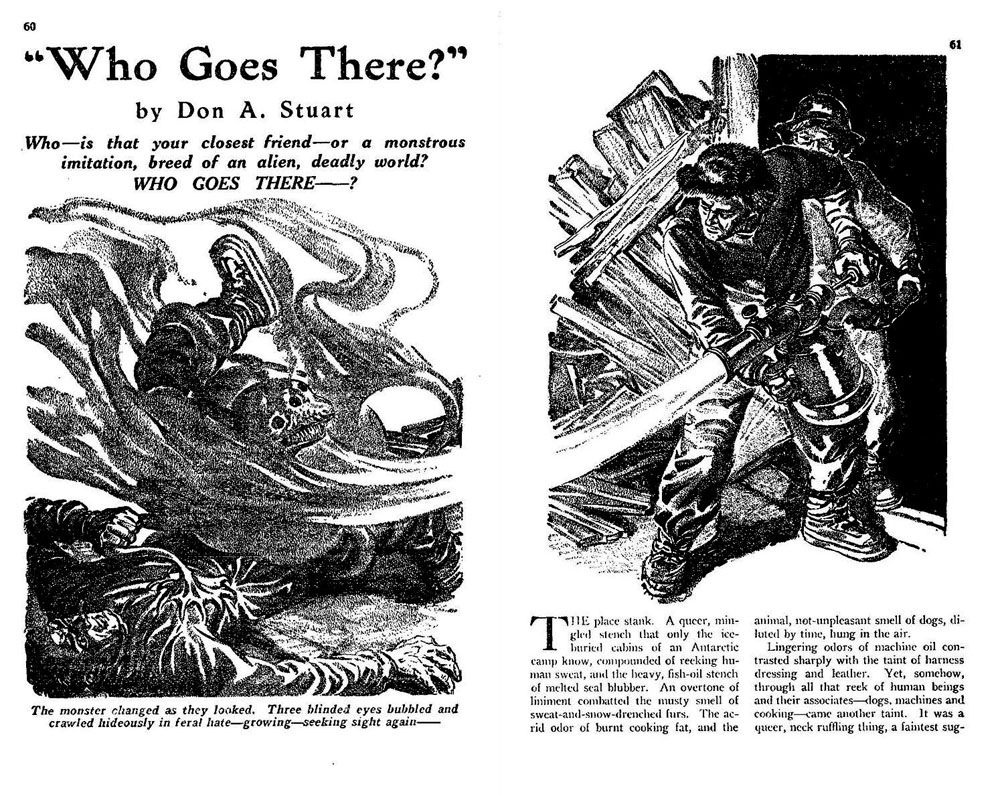
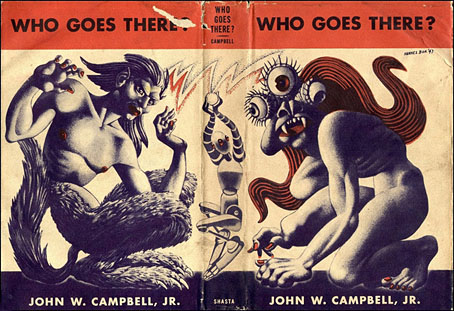
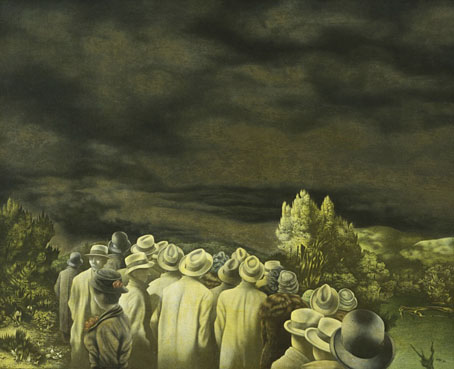
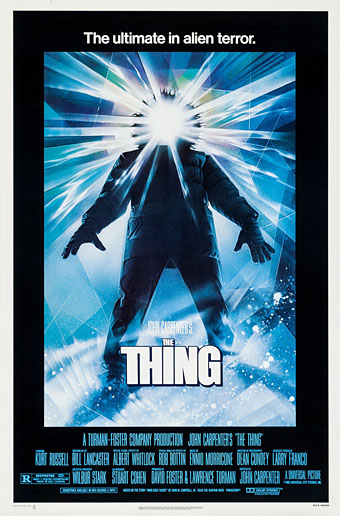
Among the film viewing this past week there was Psychomania (1973), another advance Blu-ray courtesy of the BFI. Americans may know this as The Death Wheelers, a more accurate (if clumsily literal) retitling, although Psychomania does a better job of grabbing the attention. In the micro-genres of the horror film the occult biker picture is a niche with few entries; offhand I can only think of Werewolves on Wheels (1971), a low-grade American production. Most biker films are American so Psychomania is unusual for being British (with an Australian director, Don Sharp), and with a pitch that’s memorable if nothing else: biker gang kill themselves then return from the dead so they can cause mayhem with impunity. The script was the work of Arnaud d’Usseau and Julian Zimet whose only other credit is for a curious chiller made the year before, Horror Express. This was a British/Spanish period piece with a good cast (Christopher Lee, Peter Cushing, Telly Savalas) that’s notable—and often overlooked—for being another film based on John W. Campbell’s SF story “Who Goes There?”.

psychomania2.jpg

The Seven Witches and The Living Dead.

Psychomania also has a decent supporting cast despite its frequent swerves into absurdity. Since the subject is a Home Counties’ bike gang, the leader, Tom Latham (Nicky Henson), has a mother (Beryl Reid) who lives in a country house with a very modish interior: all abstract art, scatter cushions, leather furniture and Trimfones. Mrs Latham is the local table-tapper and may also be a witch, although it’s never clear whether the scene of her offering her son to the Devil is Tom’s hallucination or a replaying of past events. Tom’s father has died after some unspecified supernatural encounter in a mysterious locked room where Tom later has the vision of his being sold to the Devil. Then there’s Shadwell (George Sanders), ostensibly the butler of the household but devilish enough to shrink from a cross when it’s offered by grateful séance attendees. Reid and Sanders lend the proceedings some gravitas, even if Sanders (in his final role, and not well at the time) seems to have stooped far below his usual level. Nicky Henson makes a charismatic leader of bike gang The Living Dead, although his tight leather pants, and the shiny leather gear worn by the others, belong to an earlier decade. This is biker gear as imagined by people remembering The Wild One or The Leather Boys, and a long way from the reeking, never-washed denim “originals” favoured by Hell’s Angels and their ilk.

psychomania3.jpg

Chopped Meat (Harvey Andrews) sings Riding Free while Tom is being buried.

It’s probably too much to expect of a low-budget horror film, but watching Psychomania again had me thinking that an opportunity was missed to more accurately reflect the real bike gangs of Britain in the 1970s. Biker culture was a country-wide phenomenon at the time; boys I was at school with were too young to own motorbikes but many had brothers who did, and had picked up from them the fetishising of dying British manufacturers such as Triumph, Norton and BSA. (The Living Dead all ride Triumphs.) A few years later I was hanging around with the bikers who were always present among any group of metal-heads, many of whom were too poor to own British bikes but behaved as though they did. The bikerdom of the 70s had little to do with the bike groups of earlier decades even if the bike brands remained the same. The new model, of course, was California’s Hell’s Angels whose first British chapters appeared in London in the late 1960s, and whose legend was popularised by Hunter S. Thompson in Hell’s Angels: The Strange and Terrible Saga of the Outlaw Motorcycle Gangs (1967). Every biker seemed to have read to Thompson’s book, and the presence of Hell’s Angels on British soil led to the swift founding of many imitation groups, forbidden from using the name without Californian approval but grouping themselves under similar handles. A measure of the culture’s appeal to the popular British imagination may be found in the many biker exploitation novels published by New English Library through the mid-70s.

Given all this you’d expect biker culture to be more prevalent in British cinema of the period but the examples are so few there’s really only Psychomania and Sidney J. Furie’s The Leather Boys (1964). The latter documents the pre-Hell’s Angels biker scene via a pseudonymous gay novel that makes similar connections to Kenneth Anger’s almost contemporaneous Scorpio Rising. The gay content is diluted in the film but there’s enough there to make it seem surprisingly bold for the time. Furie’s bikers are a tame bunch compared to The Living Dead, they only want to ride their bikes, not play hogs of the road, and the film as a whole is kitchen-sink-on-wheels, with a link to A Taste of Honey (1961) via Rita Tushingham.

psychomania4.jpg

Abby meets dead Tom at the stone circle.

Psychomania is glossier—well, it’s in colour!—and aims for lurid AIP-style mayhem even if such antics seem out-of-place in leafy Surrey. When Tom’s mother inadvertently gives him the secret of bodily resurrection he goes out and kills himself; after his return from the grave (on a motorcycle!) his gang eagerly follow his example. The film runs out of steam when it becomes apparent that The Living Dead’s idea of making the most of their post-death freedom is the same harassing of pedestrians and other motorists as before. The only question is whether Tom’s girlfriend, Abby (Mary Larkin), will kill herself and join them in an eternity of trashing supermarkets. Abby’s equivocation is signalled by her being the only member of the gang who doesn’t wear leather. The film touches on folk horror with the location of “The Seven Witches”, a circle of standing stones which the gang use as their meeting place, and where they bury Tom after he plunges off a bridge. As with The Wicker Man, which was being filmed around the same time, there’s even an acoustic song interlude from one of the more hippyish bikers.

psychomania5.jpg

George Sanders and Beryl Reid indulge in some home Satanism.

Psychomania was always a welcome sight when it used to appear on late-night television. The combination of bikers and occult rites is unusual enough to sustain the attention even if the implications of the premise go unexplored. Unlike The Wicker Man, however, or the excellent Blood on Satan’s Claw (1970), Psychomania‘s disparate threads fail to cohere, and the film is held together largely by its sense of black humour. Don Sharp’s direction manages a couple of clever single-take sleights, and the soundtrack by John Cameron is very good. Cameron wrote a great deal of library music so was adept at capturing the essence of a style. Psychomania‘s soundtrack plays on the rock grooves of the period, and the theme was issued as a single credited to “Frog” (after the possibly supernatural amphibian that Tom finds in a graveyard).

The film looks excellent on Blu-ray albeit grainier in low-light scenes than other BFI transfers. The audio is also more noise-reduced than I’d prefer. The disc includes the usual wealth of BFI extras: interviews with the surviving cast members; a short interview with John Cameron; an amateur film, Roger Wonders Why (1965), about a pair of Christian (!) bikers; and a black-and-white short for Shell narrated by John Betjeman about the Avebury stone circle. George Sanders is absent from the extras since he killed himself shortly after finishing work on the film. As Michael Weldon notes with typical drollery in The Psychotronic Encyclopedia of Film, Sanders didn’t return from the dead on a motorcycle. A pity.

Psychomania is released on 19th September.

Weekend links 324

waliszewska.jpg

Untitled painting by Aleksandra Waliszewska. The artist is profiled by S. Elizabeth at Dirge Magazine.

• “…from my point of view, the only thing to do with any genre, any medium, is pretty much to break it, to transcend it, to find out what its limits are, and then go beyond them, and see what happens.” Alan Moore (again) talking to Heidi MacDonald about his novel, Jerusalem, which is out next month.

• A Monument to Outlast Humanity: Dana Goodyear gets the reclusive Michael Heizer to talk about his decade-spanning sculptural project, City, work on which is almost finished.

William Burroughs’ appearances in adult men’s magazines: a catalogue which includes some downloads of uncollected Burroughs essays and other writings.

• Mixes of the week: Homegirls & Handgrenades Mix by Moor Mother, Secret Thirteen Mix 194 by Kareem, and hieroglyphics #014 by Temples.

Remoteness of Light is a new album by The Stargazer’s Assistant inspired by the depths of the oceans and the vastness of space.

• RIP Gilli Smyth. “The silliness ran deep in Gong, but they could groove like mothers, too,” says Joe Muggs.

Guide to Computing: historic computers presented by James Ball as though they were new machines.

• “Oscar Wilde’s De Profundis is one of the greatest love letters ever written,” says Colm Tóibín.

• “Will You Dance With Me?” Derek Jarman films dancers in a gay club in 1984.

• Snapshots from an editor: Donald Weise on working with Edmund White.

Stupid by Wrangler (Stephen Mallinder, Phil Winter and Benge).

The Rutt-Etra-Izer

Dynamite/I Am Your Animal (1971) by Gong | Witch’s Song/I Am Your Pussy (1973) by Gong | Prostitute Poem (1973) by Gong

Weekend links 323

taylor.jpg

Mescaline Woods (1969) by Gage Taylor.

• The soundtrack to The Man Who Fell to Earth will be released for the first time next month in a double-disc set (CD & vinyl). This isn’t, as some people have hoped, David Bowie’s unheard music for the film, but a collection of the pre-existing songs and other pieces, plus the original compositions by John Phillips. Consequence of Sound has a track list.

• At Scream Addicts: Joe R. Lansdale talks about the only film adaptation of Shirley Jackson’s The Haunting of Hill House that you need to see: the 1963 version directed by Robert Wise.

• The new wave of new age: How music’s most maligned genre finally became cool by Adam Bychawski.

• Transmissions From The Abyss: Dark ambient music for the perfect headspace by S. Elizabeth.

Jason Farrago reviews Art Aids America, an exhibition at the Bronx Museum, New York.

Curse Go Back: a limited reissue of tape experiments by William Burroughs.

Samuel Wigley on Notorious at 70: toasting Hitchcock’s dark masterpiece.

Toyah Willcox remembers working with Derek Jarman on The Tempest.

• “Why are musicians so obsessed with David Lynch?” asks Selim Bulut.

• Read the original 32-page programme for Fritz Lang’s Metropolis.

David Parkinson chooses 10 essential films starring Oliver Reed.

• Mixes of the week: The Sounds of the Dawn NTS radio shows.

Keith Haring envisions Manhattan as a kingdom of penises.

Frank Guan on Massive Attack’s Blue Lines, 25 years on.

Honky Tonk Pts 1 & 2 (1956) by Bill Doggett | I’ve Told Every Little Star (1961) by Linda Scott | I’m Deranged (1995) by David Bowie

Weekend links 322

quays.jpg

• Cover art by the Quays for Inner Sanctums—Quay Brothers: The Collected Animated Films 1979–2013, a Blu-ray collection which will be released by the BFI next month. Being something of an obsessive where the Quays are concerned I have a lot of this material already (some of the films in multiple copies), but I’ve been hankering for a BR collection for some time. The new set will include everything that’s on the BFI’s DVD collection plus more recent films, some of which have been the subject of previous { feuilleton } posts.

• Aubrey Beardsley: “The subjects were quite mad and a little indecent. Strange hermaphroditic creatures wandering about in Pierrot costumes or modern dress; quite a new world of my own creation.” Alan Hollinghurst reviews the catalogue raisonné of Beardsley’s work.

• How to find the spirit of HP Lovecraft in Providence. Related: there’s now a funding page for the statue of Lovecraft by Gage Prentiss being proposed for downtown Providence. Read about it here.

• At The Quietus: Robert Barry on KPM and the history of library music, and James De Carteret on Mike Hodges’ underrated The Terminal Man (1974).

Michael Newton reviews Erica Wagner’s First Light, “a festschrift of essays, reminiscences, poems and stories dedicated to Alan Garner and his work”.

Cosey Fanni Tutti‘s forthcoming memoir Art Sex Music should prove more interesting than some of the recent music business autobiographies.

• Mixes of the week: A New Age mix by Matthewdavid, FACT mix 563 by Deerhoof, and Secret Thirteen Mix 193 by Nite Fields.

Underground music, echoes of war: using the vast Inchindown storage chamber for its resonant properties.

Totally Lost: a photographic and video exploration of abandoned European totalitarian architecture.

• More animation: Nonsense, Cartoons, and My Post-Soviet Adolescence by Naré Navasardyan.

Annie Rose on the allure of the predatory lesbian vampire in film.

• “Let’s write an encyclopedia of things blue,” says Bernd Brunner.

• Ferrets can be gods: Katherine Rundell on the inimitable Saki.

• The Mystery of Hieronymus Bosch by Ingrid D. Rowland.

iO-808: A TR-808 drum machine for browsers.

A Good Book

Terminal Hotel (1981) by Synergy | Sataan Is Real (1992) by Terminal Cheesecake | Terminal (1999) by Monolake

Weekend links 321

miyabi.jpg

The Addams Family In Kimonos by Matsuyama Miyabi. Via S. Elizabeth.

• “They’re not the men you’ll walk down the street and lock eyes with, or that you’ll spot at a bar casually. They’re a fantasy.” Michael Valinsky reviewing Tom House: Tom Of Finland In Los Angeles edited by Michael Reynolds. Related (and almost a polar opposite): Nick Campbell on The Life to Come and Other Stories by EM Forster.

Randall Dunn, musician (Master Musicians of Bukkake), producer (Sunn O))), Earth, etc), engineer, discusses making and recording music.

John Waters brings back Multiple Maniacs: “Of course I went a little too far.” he says. Waters also talked about the film at Gawker.

Q: Most cherished book on your shelves? Why?

A: Depends on the day. Today it’s Blood Meridian by Cormac McCarthy. Blood Meridian is an indictment of Manifest Destiny, the Westward Expansion, of Hollywood and its portrayal of the west; it’s confrontational and bellicose. The sheer brutality of it affected me like I’d swallowed poison or taken a shot to the liver that I didn’t remember. Blood Meridian is a reminder that literature isn’t always tame. It can bite you.

Laird Barron talking to Smash Dragons about favourite writers and his own fiction

• In East Tower Dreaming Howlround, aka Robin the Fog, processes the sounds of a former BBC office building.

• At The Headless Hashasheen: Magic Mirrors and Specters: Paschal Beverly Randolph, Hashish, & Scrying.

• At Dangerous Minds: The astonishingly beautiful three-colour photography of Bernard Eilers.

Samm Deighan on Gothic Film in the ’40s: Doomed Romance and Murderous Melodrama.

• On a scale from 1–100, Milton Glaser rates every single Olympic logo design in history.

• The overwhelming A/V experience of Paul Jebanasam and Tarik Barri.

Patrick Feaster describes how to “play back” a picture of a sound wave.

• Mix of the week: Secret Thirteen Mix 192 by Shadows.

COLLAGE—The London Picture Archive

Madrigal Meridian (1978) by Tangerine Dream | Meridian Moorland (1979) by Peter Baumann | Meridian (2009) by Espers