Weekend links 677

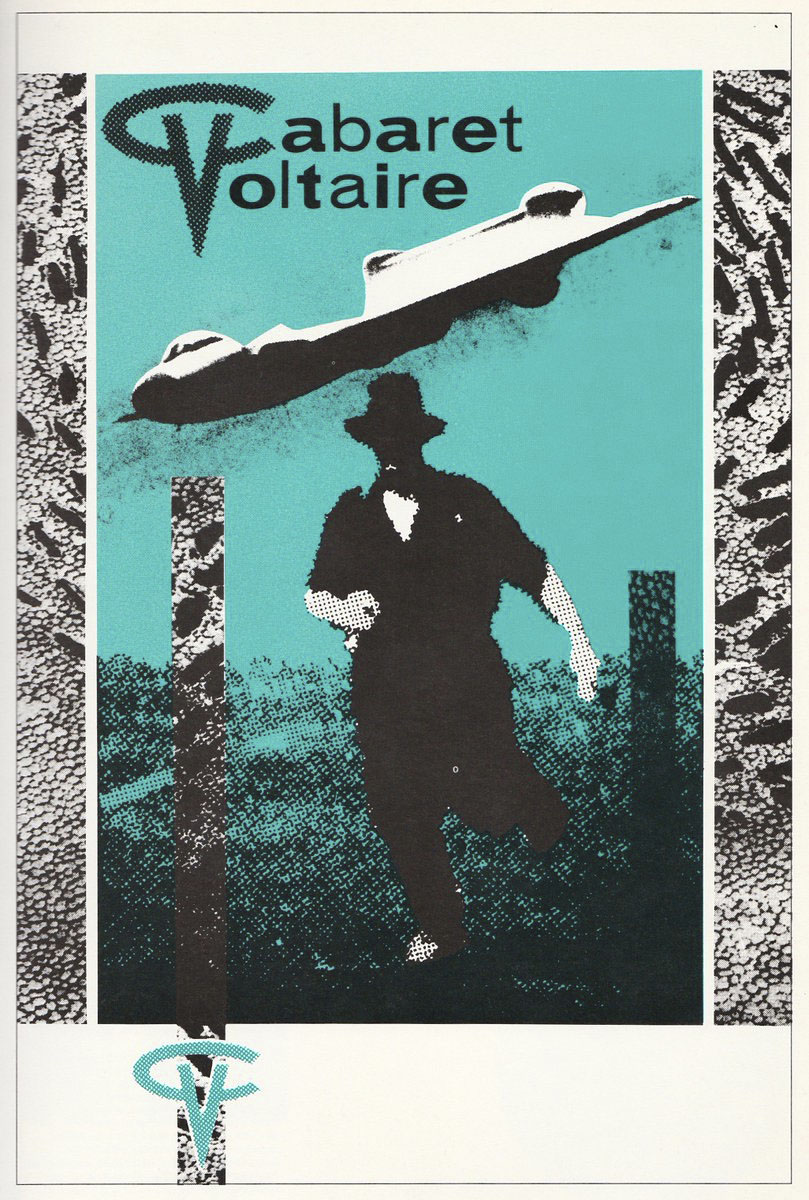
cv-brody.jpg

Design by Neville Brody, 1980.

• My work soundtrack for the past couple of weeks has been non-stop Cabaret Voltaire so this is pertinent. Neville Brody designed many of the group’s record sleeves in the 1980s as well as this poster and another one that I’ve only seen as a small picture in the first Brody book. He was also responsible for the CV logo which I never managed to find in badge form.

• “Anger’s preferred mode of artistry in his last decades was self-mythologising, and while he would return to filmmaking late in life, it was less as hierophant than totem—the worn keepsake of a once powerful magick.” Ryan Meehan remembers Kenneth Anger.

• New music: Waves by Ben Chasny and Rick Tomlinson, Topos by UCC Harlo, and Zango by WITCH.

Kafka’s perpetual redescription of his plight suggests that throughout his writing life he was less interested in finding a solution or even arriving at a single, definitive formulation of the problem than he was in exploring the implications and complications of his situation from new, unexpected angles and crafting an ever-expanding lexicon of figures for its inescapability.

Ross Benjamin, the translator of Franz Kafka’s diaries, on the neurotic concerns that Kafka turned into art

• “Why are men seemingly always naked in ancient Greek art?” Sarah Murray investigates.

Artists for Bibi: an auction in aid of Arthur Machen’s great-great-granddaughter.

• At Public Domain Review: Unidentified Floating Object: Edo Images of Utsuro-bune.

• Steven Heller’s font of the month is Acorn.

• Old music: Moon Journey by Mort Garson.

• RIP Tony McPhee.

Kafka (1964) by The Rowdies | Kafka (1982) by Masami Tsuchiya | Kafka (Main Title) (1992) by Cliff Martinez

Weekend links 676

binnie.jpg

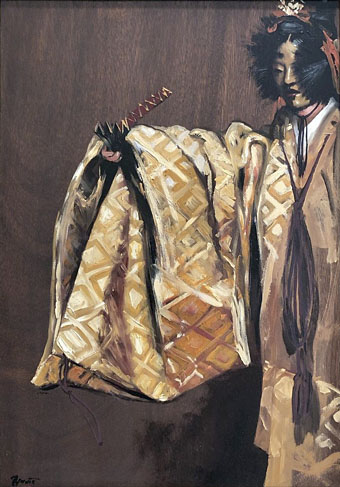
Sleeve Study, from Kakitsubata (1998) by Paul Binnie.

• “London was not a project for me. It was the curse that never stops giving.” Iain Sinclair talking to Matthew Stocker about his new book for Swan River Press, Agents of Oblivion.

The Ultimate DMT Breakthrough Replication Compilation, a video guide to the DMT experience by Josie Sims. Related: Kristen French on what hallucinogens will make you see.

• At Spoon & Tamago: A return to Tokyo Genso’s depictions of an urban Japan transformed by vegetation and neglect.

• New music: The Shell That Speaks The Sea by David Toop & Lawrence English.

• At Bajo el Signo de Libra: San Sebastián de Mártir a Icono Homosexual.

• Cosmic views from the Milky Way Photographer of the Year, 2023.

Nakamura Mitsue makes a Noh mask from a single block of wood.

• Mix of the week: A mix for The Wire by Eleni Poulou.

• At Dennis Cooper’s: Delphine Seyrig Day.

Of Ancient Memory (The Oblivion Seekers) (1994) by Jarboe | Oblivion (2001) by Lustmord | Oblivion (2004) by Redshift

Weekend links 674

moon.jpg

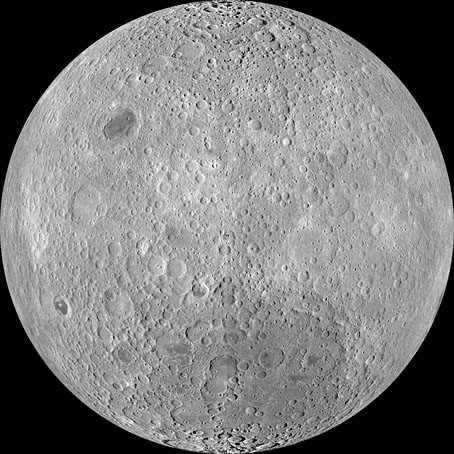
The Far Side of the Moon, as photographed by NASA’s Lunar Reconnaissance Orbiter.

• “It goes against centuries of traditional belief to accept that the moon is barren, that it is indifferent, that it is innocent of any role in monthly spikes in the crime rate or in the cycles of menstrual unreason. When telescopic observation had found nothing on the near side (Roger Boscovich had established by 1753 that it lacks even an atmosphere), the far side still remained a site for the projection of fantasies of a different, neighbouring world.” Justin EH Smith working his way towards a history of the dark side of the moon.

• “It shocks me that movies still lean in so hard to all these outmoded gay narrative tropes: coming out, coming of age; very identity-oriented representations of gay characters. It’s much easier to represent a gay boy who’s repressed in high school and comes out and makes friends. It’s very mainstream, and kind of played out.” Bruce LaBruce on cinematic trends in relation to his new film, a gay-porn take on Pasolini’s Teorema.

• At Cartoon Brew: Pavel Sannikau explains how he developed his own techniques of digital animation in order to create the ever-expanding Floor796.

• There’s always more Poe: Mysterium, Incubus et Terror, Poe-inspired music by a variety of artists, plus illustrations by John D. Chadwick.

• At Smithsonian Magazine: The results of a themed contest in the Close-Up Photographer of the Year Challenge.

• Mixes of the week: In Praise of the Saddest Chord at Ambientblog, and The Funky Eno Pts 2 & 3 by DJ Food.

• Steven Heller talks to Hungarian artist István Orosz about his Escher-like drawings.

• At Unquiet Things: Caitlin McCormack’s ghostly chains of knotted memory.

• At Spoon & Tamago: Intricate and organic sculptures by ceramicist Eriko Inazaki.

• New music: Illumina by Call Super with Julia Holter.

Dark Side Of The Mushroom (1967) by The Chocolate Watchband | Dark Side Of The Star (1984) by Haruomi Hosono | On The Dark Side Of The Sun (live) (2003) by Helios Creed

Weekend links 673

ay-o.jpg

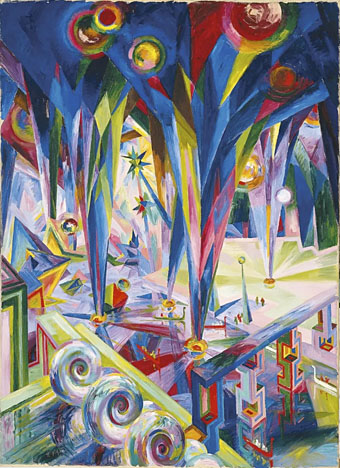
Butterfly (1988) by Ay-O.

• “[Mike] Jay says there are notional lessons to be learned about what happens next from the characters who populate Psychonauts but says they would have been of greatest benefit to ‘the legislators, the bureaucrats, the statisticians and social scientists of the early 20th century who created the idea of “good drugs” and “bad drugs”.’ It is the framework of ‘drugs’ itself which needs to be dismantled.” John Doran discussing Psychonauts: Drugs and the Making of the Modern Mind with the book’s author, Mike Jay. The piece ends with an extract from the book itself. There’s another extract at Nautilus.

• “From the eerie electronics of Earth Calling through to the warp speed crescendo of Master Of The Universe, Space Ritual is like no other live record released at the time or since.” Joe Banks explores the events that led to the recording of the definitive Hawkwind album, Space Ritual, which was released 50 years ago this week.

• “You know, it’s actually all about life, and love, and death, and it’s sexy, and it’s funny and it’s not depressing.” Simon Fisher Turner talking to Emily Bick about Blue Now, a new live staging of Derek Jarman’s final film.

mm.jpg

From The Castaway Captives (1934): Mickey Mouse in a deep fix.  Ignore the signature, this one was written and illustrated by Floyd Gottfredson.

• New music: Kinder Der Sonne (From Komplizen) by Alva Noto, and S.W.I.M. by Gunnar Jónsson Collider.

• Mixes of the week: Isolatedmix 120 by Lord Of The Isles, and XLR8R Podcast 799 by KMRU.

• Take a radiating, immersive trip into Ay-O’s Happy Rainbow Hell.

• At Dennis Cooper’s: New Queer Cinema 1985–1998 Day.

• Steven Heller’s font of the month is Hopeless Diamond.

Rainbow Chaser (1968) by Nirvana | Rainbows (1969) by Rainbows | Rainbow (2006) by Boris With Michio Kurihara

Into the Midnight Underground

midnight01.jpg

Browsing Vimeo recently I found a film by Anna Thew, Cling Film, which I remembered seeing years ago on Midnight Underground, a TV series devoted to avant-garde cinema. The series was broadcast by Channel 4 (UK) for eight weeks in 1993, with each episode being screened shortly after midnight. The presenter was the always reliable Benjamin Woolley, sitting before a backdrop resembling one of Verner Panton’s psychedelic environments from where he introduced the cinematic offerings, an eclectic blend of avant-garde and experimental films, unusual dramas plus a couple of animations. Episodes ran for around an hour, with each installment following a different theme. The films were a mix of the old and the new: “classics” (for want of a better term) of underground cinema set alongside more recent works. This was very much a television equivalent of the screenings of avant-garde cinema which Film and Video Umbrella had been touring around Britain’s arthouses since the mid-1980s; one of the founders of FVU, Michael O’Pray, is thanked in the series credits. Midnight Underground was so tailored to my interests at the time it was easy to feel like this was being screened for my benefit alone. I taped everything as it was broadcast but I never got round to digitising all the episodes, so that many of the films shown there, Cling Film included, I haven’t seen for a long time.

midnight02.jpg

Benjamin Woolley.

The discovery of Anna Thew’s film set me wondering whether it would be possible to replicate the contents of Midnight Underground via links to various video sites. Since this post exists, the answer is obviously yes, or almost… Of the 44 films shown in the series only 3 are currently unavailable, with one more being limited to an extract and another as pay-to-view. This was a much better result than I expected, especially for works with such a limited appeal. The majority of the films shown in the series were being screened on British TV for the first time, also the last time for most of them. In 1993 Channel 4 was still maintaining its original brief, offering a genuine alternative to the programming on the other three terrestrial channels. As I’ve often complained here, this didn’t last; the underground remained underground. Woolley’s series was a brief taste of a televisual world where the concept of diversity could apply to form and content as well as identity. It’s a world the corporate channels will never show you, one you have to find for yourself.

* * *

1: Strange Spirits
The opening episode shows why I felt they were broadcasting this for me alone. Derek Jarman’s grainy film of a Throbbing Gristle performance is probably the first (and only?) time the group appeared on British TV. This was the first surprise. The second one was Kenneth Anger’s film being shown with its Janácek score. I’d seen this at an FVU screening a couple of years before with its ELO soundtrack, the so-called “Eldorado Edition”, which Anger later discarded. As for Daina Krumins’ weird and creepy religiose short, I expected this one to be unavailable but the director now has several of her films on YouTube. Don’t miss her even-weirder animated slime moulds, Babobilicons. The angel in Maggie Jailler’s film is artist (and Jarman/TG associate) Cerith Wyn Evans.

midnight03.jpg

TG: Psychic Rally in Heaven (Derek Jarman, 1981)
The Divine Miracle (Daina Krumins, 1973)
Inauguration of the Pleasure Dome (Kenneth Anger, 1954)
L’ange frénétique (Maggie Jailler, 1985)


2: Music for the Eye and Ear
Bruce Conner’s films are continually elusive on the internet, especially those made to accompany music by Devo and Eno & Byrne. The version of Mongoloid linked here differs slightly from the original but it’s essentially the same film. Versailles II is taped from the Midnight Underground broadcast, and includes Benjamin Woolley’s introduction.

midnight04.jpg

Eaux d’artifice (Kenneth Anger, 1953)
Mongoloid (Bruce Conner, 1978)
Versailles II (Chris Garratt, 1976)
Stille Nacht II: Are We Still Married? (Quay Brothers, 1992)
All My Life (Bruce Baillie, 1966)
Scorpio Rising (Kenneth Anger, 1964)


3: New Sexualities
Stephen Dwoskin’s film is the one that shows a close-up of a woman’s face during the act of masturbation. This is paralleled later in the series by Antony Balch’s masturbatory self-portrait in Towers Open Fire. Cling Film is all about safe sex, and was broadcast in a slightly amended form to avoid being too explicit. The version on Vimeo is uncensored.

midnight05.jpg

Kiss (Chris Newby, 1992) (no video)
Kustom Kar Kommandos (Kenneth Anger, 1965)
Cling Film (Anna Thew, 1993)
Stain (Simon Pummell, 1992)
Asparagus (Suzan Pitt, 1979)
6/64: Mama und Papa (Materialaktion Otto Mühl) (Kurt Kren, 1964)
Moment (Stephen Dwoskin, 1969)


4: London Suite
Sundial and Mile End Purgatorio have both appeared here before as a result of my seeing them on Midnight Underground.

midnight06.jpg

Latifah and Himli’s Nomadic Uncle (Alnoor Dewshi, 1992)
Sundial (William Raban, 1993)
The London Story (Sally Potter, 1987) (pay-to-view)
Mile End Purgatorio (Guy Sherwin, 1991)
London Suite (Vivienne Dick, 1989) (no video)


Continue reading “Into the Midnight Underground”