Weekend links 42

martin.jpg

Blasphemous Rumours (2009/2010) by Ryan Martin. The artist now has a dedicated site for his paintings.

The Museum of Censored Art, a mobile gallery, will be showing the withdrawn David Wojnarowicz film outside the National Portrait Gallery, Washington DC, until their contentious gay art exhibition closes next month. Related: Bishop of Mallorca criticises calendar—which shows Catholic youths posing naked—for ‘not respecting Christian symbols’.

• Didier Lestrade published French gay zine Magazine in the 1980s, and later co-founded Têtu. He’s interviewed at BUTT and has started uploading the entire run of Magazine about which he says: “I don’t want to stamp some kind of logo on this material. It’s gay. It’s gay history. It belongs to everybody. If you want to take a piece of it, please try to mention the origins of it, a simple code word “Magazine” will be enough. If you wanna be more specific, be my guest.”

HMV, Britain’s last big music chain, is closing 60 branches. Yet a new wave of CD stores is thriving. Oh, HMV, how I’ll miss your £17 CDs (and double-CDs at £34)… On second thoughts, no I won’t, your wretched retail barns always exemplified the greed endemic in the music business.
kasner.jpg

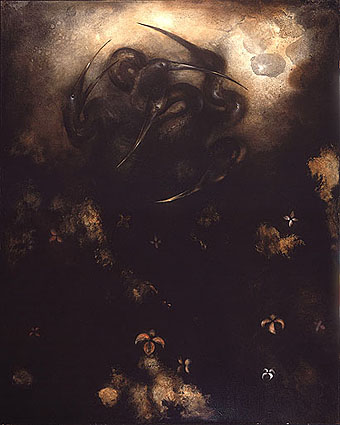
Love Comes/Destroyer by Stephen Kasner.

• Artist Stephen Kasner‘s work has adorned music releases by Sunn O))), Isis and others. He’s currently another American creator in need of assistance with medical expenses. Details here.

The Ghosts of Old London: the gloomy Victorian metropolis in all its deteriorated splendour. See also: In Search of Relics of Old London.

• “It’s time to recognise [Sandy] Denny as not simply a folksinger but one of Britain’s great poets of song,” says Rob Young.

Louis Pattison talks to Locrian about JG Ballard, old VHS tapes and their new album The Crystal World.

The Dreams That Stuff Is Made Of: Lebbeus Woods’ big drawings.

Hannes Bok portfolios at Golden Age Comic Book Stories.

An Iranian rapper named Salome. Also here and here.

A Moment of (Alan) Moore.

RIP Mick Karn.

Book Worship.

Sons of Pioneers (1981) by Japan; Tao-Tao (1982) by Masami Tsuchiya; Glow World (1983) by Bill Nelson.
The Snow Queen

dulac1.jpg

Edmund Dulac.

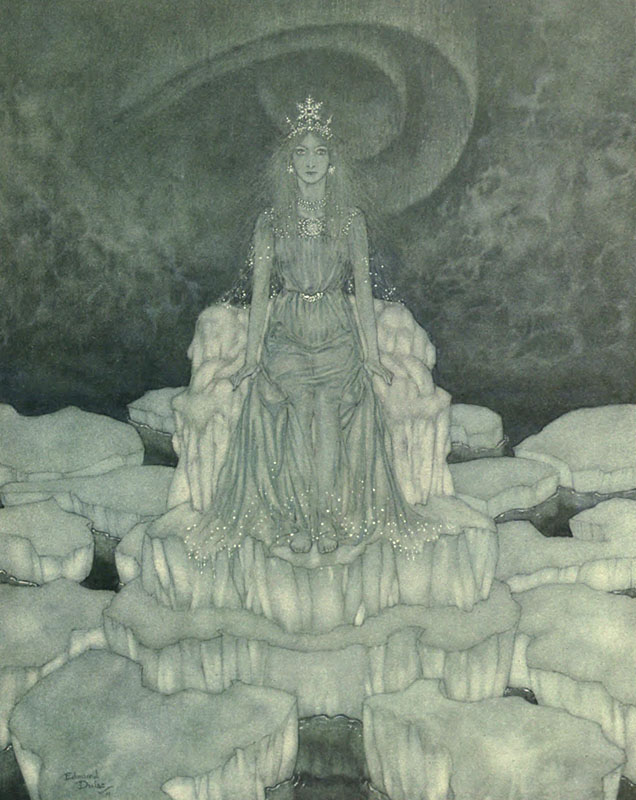
Empty, vast, and cold were the halls of the Snow Queen. The flickering flame of the northern lights could be plainly seen, whether they rose high or low in the heavens, from every part of the castle. In the midst of its empty, endless hall of snow was a frozen lake, broken on its surface into a thousand forms; each piece resembled another, from being in itself perfect as a work of art, and in the centre of this lake sat the Snow Queen, when she was at home. She called the lake “The Mirror of Reason,” and said that it was the best, and indeed the only one in the world.

Here in Britain it may not be quite as cold as it was earlier in the month but the Snow Queen still has us in her thrall. Hans Christian Andersen’s fairy tale was published in 1845 and, like many of the writer’s stories, is a blend of the beguiling and irritating: beguiling for the traces of older folk tales in its trolls, their magic mirror, and the Snow Queen as an embodiment of the season; irritating for the Christian gloss which is layered over everything like a sugar-coating. In this respect it’s a lot like Christmas; religiose sentimentality papered over winter rituals that are older and darker than the celebrations we’re supposed to acknowledge.

dulac2.jpg

Edmund Dulac.

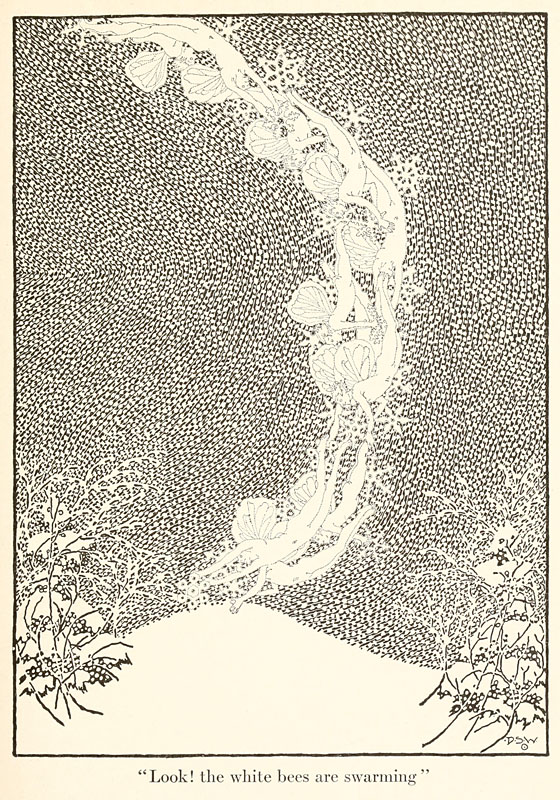
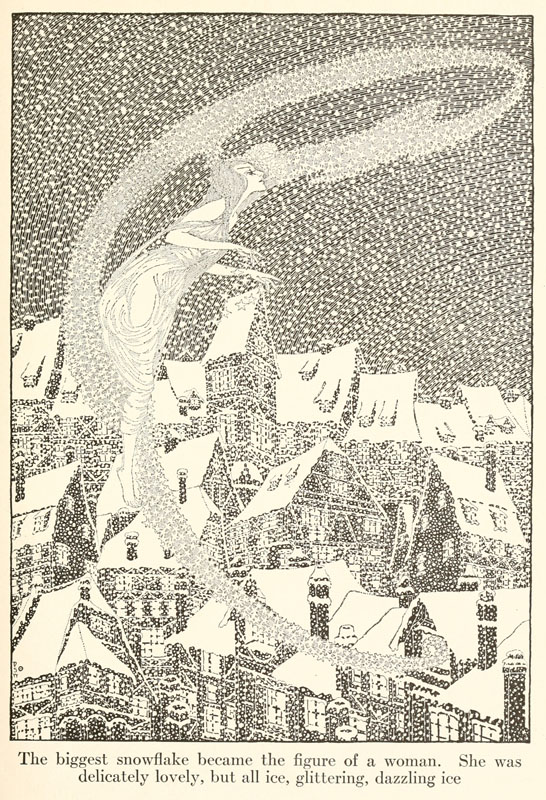
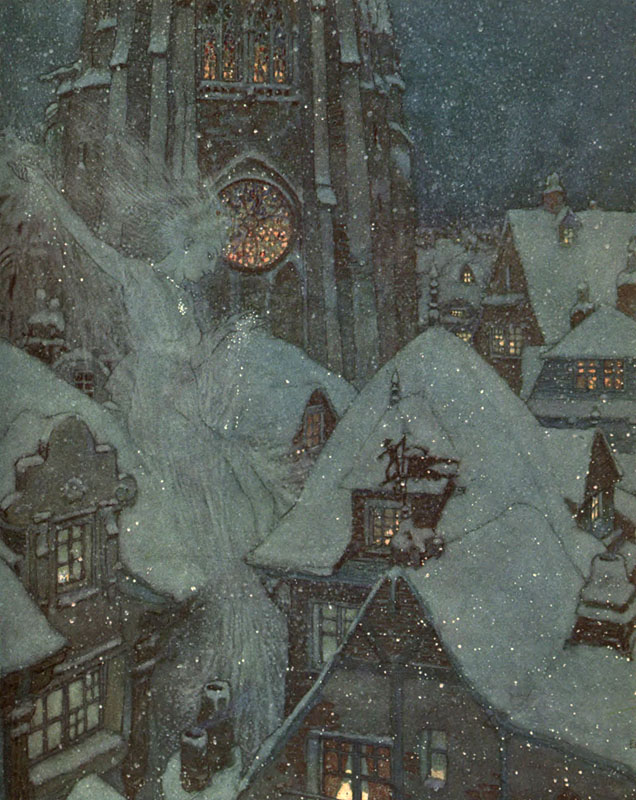
Andersen’s story has been illustrated and filmed many times with varying success. The Internet Archive has several illustrated editions, the selections here being from two of the better ones. Edmund Dulac’s Stories from Hans Andersen (1911) is one of the shorter collections and features predominantly colour pictures while Dugald Stewart Walker’s Fairy Tales from Hans Christian Andersen (1914) is one of the most heavily illustrated as well as having finer renderings of many stories. But not of the Snow Queen in her palace, Dulac beats everyone there.

walker2.jpg

Dugald Stewart Walker.

This description stood out from the second part of Andersen’s tale:

In winter all this pleasure came to an end, for the windows were sometimes quite frozen over. But then they would warm copper pennies on the stove, and hold the warm pennies against the frozen pane; there would be very soon a little round hole through which they could peep…

My sister and I had been reminiscing recently about growing up in the 1960s when central heating and double-glazing were a lot less common than they are today. This meant little or no heating in bedrooms, so very cold weather often meant the same frozen windows which Andersen describes. People in rural places will be familiar with this but it’s something I haven’t seen for years. When you’re a child it’s quite an excitement waking up to find that Jack Frost has paid a visit but these days I prefer a warm house.

As usual I’ll be away for a few days so the archive feature will be activated to summon posts from the past. Have a good one. And Gruß vom Krampus!

walker1.jpg

Dugald Stewart Walker.

Elsewhere on { feuilleton }
The illustrators archive

Previously on { feuilleton }
Dugald Stewart Walker revisited
More Arabian Nights
The art of Dugald Stewart Walker, 1883–1937

The Tale of Giulietta

hoffmann01

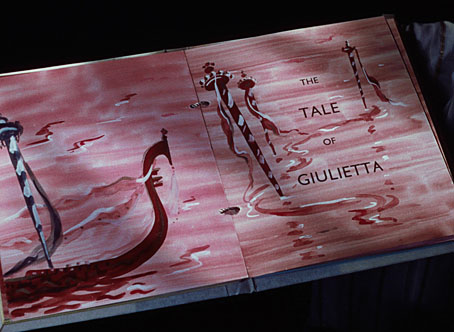
Watching Powell and Pressburger’s The Tales of Hoffmann (1951) again at the weekend it occurred to me that the second act, The Tale of Giulietta, is the closest British cinema gets to the extravagant weirdness of Fellini Satyricon. Or it was until Velvet Goldmine… Lavish costumes and artificial decor, feasts, orgies, lust, betrayal, sorcery, a duel…it’s all there, even a spot of androgyny if you count Pamela Brown’s role as Nicklaus.

• Ludmilla Tchérina as Giulietta
• Robert Helpmann as Dapertutto
• Robert Rounseville as Hoffmann
• Léonide Massine as Schlemil
• Pamela Brown as Nicklaus

If this is on YouTube I don’t want to know. Do the artists a favour, watch their work on DVD.

hoffmann02

Continue reading “The Tale of Giulietta”

Philippe Jullian, connoisseur of the exotic

jullian01

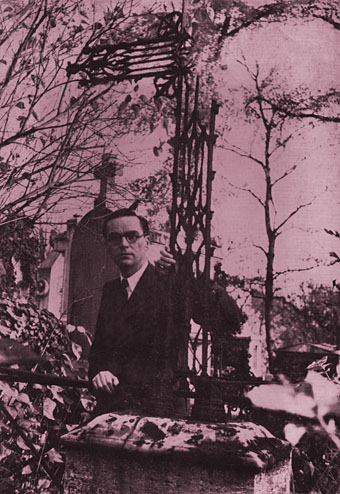
Monsieur Jullian as seen on the back cover of Dreamers of Decadence (1971).

Here at last is the long-promised (and long!) piece about the life and work of Philippe Jullian (1919–1977), a French writer and illustrator who’s become something of a cult figure of mine in recent years. Why the fascination? First and foremost because at the end of the 1960s he wrote Esthètes et Magiciens, or Dreamers of Decadence as it’s known to English readers, a book which effectively launched the Symbolist art revival and which remains the best introduction to Symbolist art and the aesthetic hothouse that was the 1890s. If I had to choose five favourite books Dreamers of Decadence would always be on the list. This point of obsession, and Philip Core’s account of the writer, made me curious about the rest of Jullian’s career.

jullian13

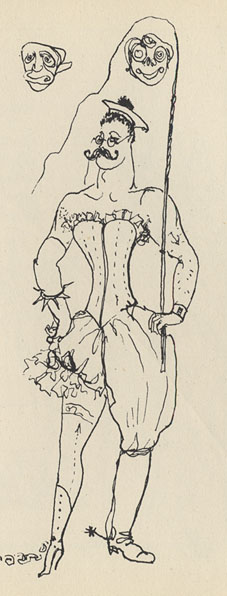
An illustration from Wilson & Jullian’s For Whom the Cloche Tolls (1953). “Tata has called these his Krafft-Ebbing (sic) pictures of his friend Kuno, whatever that means.”

Philip Core was friends with Philippe Jullian, and Core’s essential Camp: The Lie that Tells the Truth (1984) has Jullian as one of its dedicatees. It’s to Core’s appraisal that we have to turn for details of the man’s life. There is an autobiography, La Brocante (1975), but, like a number of other Jullian works, this doesn’t seem to have been translated and my French is dismally pauvre. Core’s piece begins:

Philippe Jullian, born to the intellectual family of Bordeaux Protestants which produced the well-known French historian, Camille Jullian, was a last and lasting example of pre-war camp. His career began as an artist in Paris with a reputation for drag-acts parodying English spinsters. Snobbery, a talent for sensitive daydreaming, and a consuming passion for antiques, obscure art and social history, made a very different figure out of the thin and dreamy young man. Jullian suffered terribly during the Second World War; he managed to survive by visiting some disapproving cousins dressed as a maiden aunt, whom they were happy to feed. However, he made a mark in the world of Violet Trefusis, Natalie Barney and Vita Sackville-West by illustrating their books with his wiry and delicate doodles; this led to a social connection in England, where he produced many book jackets and covers for Vogue throughout the 1950s.

Having only seen Jullian in his besuited and bespectacled guise it’s difficult to imagine him dragged up, but the cross-dressing interest is apparent in his humorous collaboration with Angus Wilson and in a later novel, Flight into Egypt. As for the wiry and delicate doodles, they’re very much of their time, in style often resembling a less-assured Ronald Searle. One early commission in 1945 was for the first of what would become a celebrated series of artist labels for Château Mouton Rothschild. Later cover illustrations included a run for Penguin Books some of which can be found at Flickr.

Philip Core continues the story:

Elegant in the austerely tweedy way the French imagine to be English, Jullian exploited his very considerable talents as a writer, producing a series of camp novels throughout the 1950s (Scraps, Milord) which deal frankly but amusingly with the vicissitudes of handsome young men and face-lifted ladies, grey-haired antique dealers and criminals. One of the first to reconsider Symbolist painting, Jullian reached an enormous public in the 1960s with his gorgeous book, Dreamers of Decadence – where an encyclopaedic knowledge of the genre and its accompanying literature helped to create the boom in fin de siècle revivalism among dealers and museums.

An acerbic wit accompanied this vast worldly success; always docile to duchesses, Jullian could easily remark to a hostess who offered him a chocolate and cream pudding called Nègre en chemise, “I prefer them without.” Less kindly, to a gay friend who objected to Jullian’s poodles accompanying them into a country food shop by saying “Think where their noses have been”, he could also retort “Yes, that’s what I think whenever I see you kiss your mother.”

Continue reading “Philippe Jullian, connoisseur of the exotic”

Ten titles and a cover

cdlcover.jpg

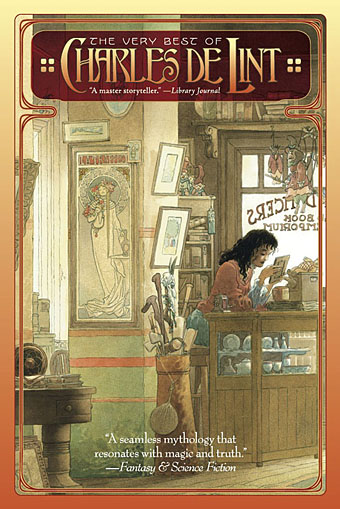
The Very Best of Charles de Lint. Art by Charles Vess.

Over the weekend I found the time to finally update the book design section of the site, adding new pages for most of the titles I’ve been working on recently. There’s still a couple of things missing but I’ll add those in due course. Many of these design jobs have been for the interiors only so what follows is a comparison of title spreads from books I’ve worked on that have been published this year. Lest it seem that I have an army of clones at my service it should be emphasised that I was working on several of these last year (and Engelbrecht was completed in 2008) but the nature of release schedules means they all carry 2010 publication dates.

sr.jpg

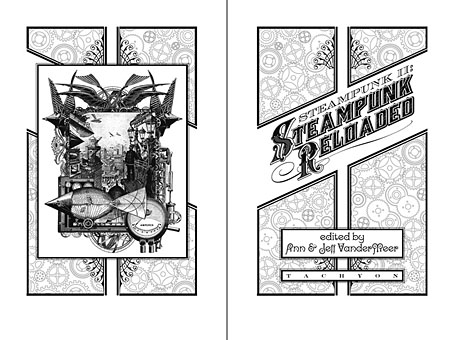
Steampunk II: Steampunk Reloaded, edited by Ann & Jeff VanderMeer.

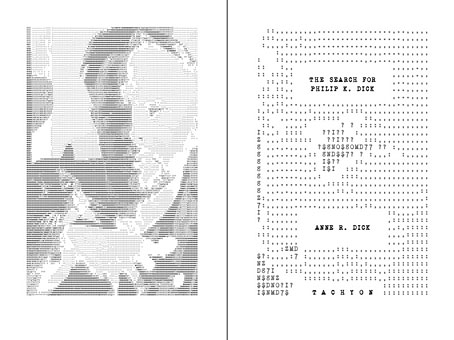
I invariably make a feature of title pages, usually creating them as a spread in order to heighten their impact. The title page is a kind of gateway to the rest of the book which gives you an opportunity to establish a mood for what follows. It’s also the area where you can be most lavish with your graphic treatment and, where necessary, add illustrative material without worrying too much about intruding on the content. With a number of these designs I was following typographic choices from pre-designed covers so the challenge was to find something that would match the cover and connect to the rest of the interior. The Charles de Lint book was a variation on this process in that the author had chosen a Charles Vess drawing for the cover art. I designed a cover to accommodate the drawing then carried the design inside. The colours were chosen to match Vess’s artwork while the general Art Nouveau style came from an Alphonse Mucha poster he’d placed on the wall. With a different cover picture the entire book would have had a very different design.

pkd.jpg

The Search for Philip K Dick by Anne R Dick.

Continue reading “Ten titles and a cover”