Weekend links 139

barnes.jpg

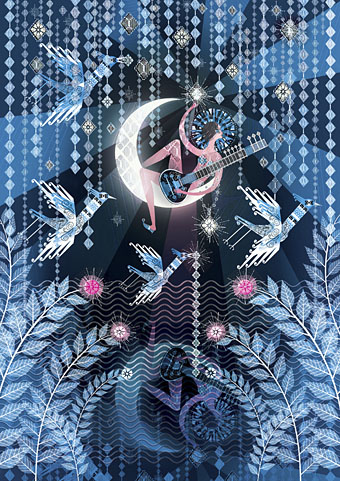
Lucy in the Sky with Diamonds (2012) by Lesley Barnes. She also has peacock wrapping paper.

Big thanks to Dennis Cooper for including this blog in his favourite music, fiction, poetry, film, art & internet lists for 2012. Lots of good company there. One benefit of end-of-year lists is the way they suggest things to look for in January.

• “…the best pictures of dicks that I’ve ever seen…” Rudy Rucker reviews Malcolm McNeill’s The Lost Art of Ah Pook Is Here and Observed While Falling, out at last from Fantagraphics. Rucker notes that William Burroughs’ text is still only available in out-of-print editions in which case you’ll need a book dealer. Elsewhere, Burroughs: The Movie has cleared 50% of its restoration Kickstarter goal but still needs supporters.

• Julia Holter has been a recurrent presence in these posts since the release in March of her acclaimed second album, Ekstasis. FACT has an alternate version of the album’s opening song, Marienbad, one of the extra tracks on the recent UK reissue.

Suttree’s saga carried me down, down, down to the bottom of a heightened surrogate reality, a nadir where the rarest jewels of clarity are found. The fourth time through the novel I arrived at a state of barometric equipoise, a balancing between my mental state and Suttree’s. Then, as he descended again, I began to rise. There was a hypnotic poetry to his fall — his life disintegrated, then the fragments disintegrated, then those fragments followed suit ad infinitum.

Jim White on the life-preserving qualities of Suttree by Cormac McCarthy.

• “An 18-year-old boy who discovers he has a fetish for the aged gets a job in a nursing home and develops an intimate relationship with one particular old man.” Gerontophilia, a proposed film by Bruce LaBruce, is looking for funding.

• Can’t wait for this: Groenland Records announces Who’s That Man?, a four-CD set of music produced and performed by Conny Plank. FACT has a track list.

• At BUTT magazine: Pink Courtesy Phone Mix by Richard Chartier, a great selection of electronica old and new.

• Another end-of-year list: Volumes 1 & 2 of The Graphic Canon are in NPR’s Indie Bookseller best of 2012 selection.

The Nightmare Paintings: art by Aleister Crowley currently touring Australia.

• Christmas with Monte: Colin Fleming on the ghost stories of MR James.

• “The war on drugs is a war on human nature” says Lewis Lapham.

Alan Moore: why I turned my back on Hollywood.

• More electronica: Chris Carter discusses synths.

Saul Bass poster sketches for The Shining.

• At Pinterest: The Pan Within.

Ah Pook Is The Mayan God Of Death (1975) by William Burroughs | Panic (1985) by Coil | Light Shining Darkly (1992) by Coil.
Weekend links 133

woods1.jpg

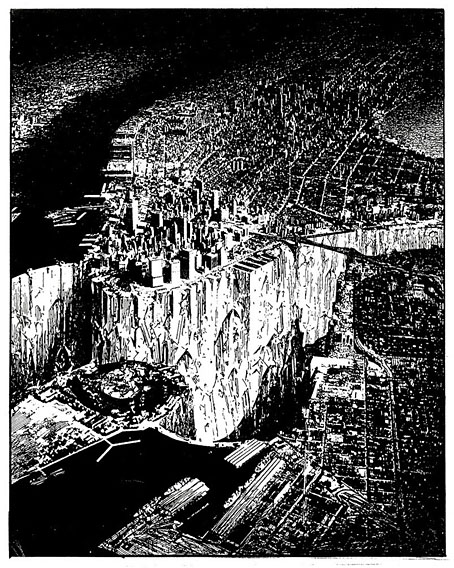
Lower Manhattan (1999) by Lebbeus Woods.

RIP Lebbeus Woods, an architect and illustrator frequently compared to Piranesi not only for his imagination and the quality of his renderings but also for the way both men built very little from a lifetime of designs. Lots of appreciations have appeared over the past few days including this lengthy piece by Geoff Manaugh at BLDGBLOG. (Geoff interviewed Woods in 2007.) Elsewhere: A slideshow at the NYT, Steven Holl remembers Lebbeus Woods and Lebbeus Woods, visionary architect of imaginary worlds. See also: Lebbeus Woods: Early Drawings and this post about Woods’ illustrations for an Arthur C Clarke story collection. Woods was at his most Piranesian with Gothic designs for an artificial planet that would have been the principal location in Vincent Ward’s unmade Alien 3.

Arkhonia draws to the end of a year of blogging about and around the Beach Boys’ errant masterwork, Smile (1967). Witty, discursive and frequently scabrous accounts of how Brian Wilson’s magnum opus was derailed and marginalised until it became convenient for commercial interests to exploit its reputation. Anyone following those posts won’t have been surprised by Wilson’s sacking from his own group by Mike Love in September.

• “We’ve been underground for 27 hours now. Everyone is caked in mud, with grit in their hair.” Will Hunt explores the catacombs and sewers of Paris.

I think the only remotely interesting drug was acid. I had a slightly peculiar attitude towards it I think. Just about everything about hippydom I hated. I liked the 60s up to about ’65 or ’66. I liked the mod clothes, I liked the look. I wasn’t a keen taker of speed because I didn’t like the comedown from it. Then everything changed and became looser, I didn’t like the clothes at all. I felt rather out of step with it. The acid thing was interesting though. I come from Salisbury and from the age of 12 I had a friend who was 30 years older than I was who I saw regularly up until when he died a couple of years ago, whose obituary I wrote in The Times. This man was called Ken James and he was deputy head at the chemical warfare unit at Porton Down [the MOD’s Defence Science and Technology Laboratory]. He then became head of the scientific civil service; he was the man who introduced computing into the civil service and he had taken acid as early as 1950. This was long before Aldous Huxley.

Sharp Suits And Sparkle: Jonathan Meades On Acid, Space And Place by John Doran. Marvellous stuff. Meades’ new book is Museum Without Walls.

• In New York later this month: A Cathode Ray Séance – The Haunted Worlds of Nigel Kneale.

• More acid: Kerri Smith talks to Oliver Sacks about his drug experiences.

• “It starts with an itch”: Alan Bennett (again) on his new play, People.

nymag.jpg

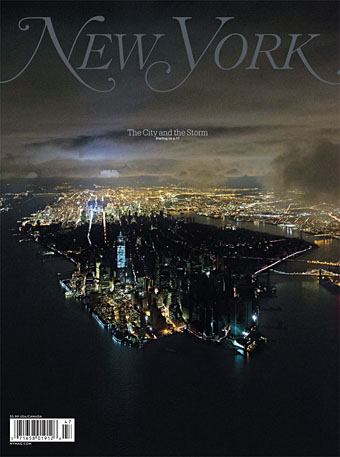
Lower Manhattan last Wednesday. Photo by Iwan Baan.

• Back issues of OMNI magazine can now be found at the Internet Archive.

• Alan Moore & Mitch Jenkins present their new film, Jimmy’s End.

• At BibliOdyssey: Atlas title pages part one & part two.

• Raw Functionality: An interview with Emptyset.

Athanasius, Underground

Vintage Caza

Stormy Weather (1979) by Elisabeth Welch.

Weekend links 131

thingposter.jpg

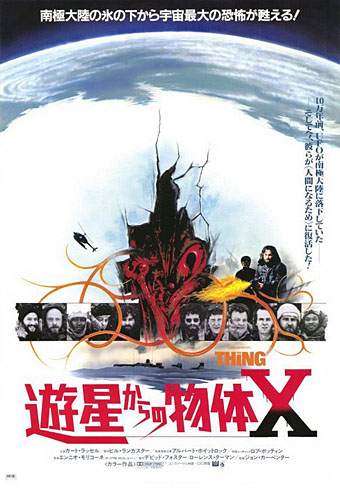
Japanese poster (1982).

At The Quietus Steve Earles looks back at John Carpenter’s visceral and uncompromising The Thing which exploded messily onto cinema screens thirty years ago. It’s always worth being reminded that this film (and Blade Runner in the same year) was considered a flop at the time following bad reviews and a poor showing at the summer box office. One reason was The Thing‘s being overshadowed by the year’s other film of human/alien encounters, something called E.T. the Extra-Terrestrial. To The Thing‘s status as the anti-E.T. you can add its reversal of the can-do heroics of Howard Hawks’ The Thing from Another World (1951), an attitude out-of-step with Reaganite America. Carpenter’s film is not only truer to the original story but from the perspective of 2012 looks like one of the last films of the long 1970s, with Hawks’ anti-Communist subtext replaced by bickering, mistrust, paranoia and an unresolved and completely pessimistic ending that most directors would have a problem getting past a studio today.

I was fortunate to see The Thing in October of 1982 knowing little about it beyond its being a John Carpenter film (whose work I’d greatly enjoyed up to that point) and a remake of the Hawks film (which I also enjoyed a great deal). One benefit of the film’s poor box office was a lack of the kind of preview overkill which made E.T. impossible to avoid, and which a couple of years earlier did much to dilute the surprise of Ridley Scott’s Alien. I went into The Thing mildly interested and came out overwhelmed and aghast. For years afterwards I was insisting that this was the closest you’d get on-screen to Lovecraft’s At the Mountains of Madness. The correspondence is more than merely Antarctica + monsters when you consider this:

Lovecraft’s story was rejected by his regular publisher Weird Tales but was accepted by Astounding Stories in 1936 >> The editor of Astounding, John W. Campbell, published his own Antarctica + monsters story (under the pen-name Don A. Stuart), “Who Goes There?”, in the same magazine two years later >> Charles Lederer wrote a loose screen adaptation of Campbell’s story which Howard Hawks and Christian Nyby filmed as The Thing from Another World.

This isn’t to say that Campbell copied Lovecraft—both stories are very different—but I’d be surprised if Lovecraft’s using Antarctica as the setting for a piece of horror-themed science fiction didn’t give Campbell the idea.

More things elsewhere: Anne Billson, author of the BFI Modern Classics study of The Thing, on the framing of Carpenter’s shots, and her piece from 2009 about the film | Mike Ploog’s storyboards | Ennio Morricone’s soundtrack music, of which only a small percentage was used in the film.

• The week in music: 22 minutes of unreleased soundtrack by Coil for Sara Dale’s Sensual Massage | Analog Ultra-Violence: Wendy Carlos and the soundtrack for A Clockwork Orange | A Halloween mixtape by The Outer Church | Herbie Hancock & The Headhunters, live in Bremen, 1974: a 66-minute set, great sound, video and performances | Giorgio Moroder’s new SoundCloud page which features rare mixes and alternate versions | A video for Collapse by Emptyset.

One of the main themes of the book, and what I found in The Arabian Nights, was this emphasis on the power of commodities. Many of the enchanted things in the book are lamps, carpets, sofas, gems, brass rings. It is a rather different landscape than the fairy tale landscape of the West. Though we have interiors and palaces, we don’t have bustling cities, and there isn’t the emphasis on the artisan making things. The ambiance from which they were written was an entirely different one. The Arabian Nights comes out of a huge world of markets and trade. Cairo, Basra, Damascus: trades and skills.

Nina Moog talks to Marina Warner

John Palatinus, “one of the last living male physique photographers of the 1950s”, is interviewed. Related: the website of Ronald Wright, British illustrator for the physique magazines.

• “A classic is a work which persists as a background noise even when a present that is totally incompatible with it holds sway.” Italo Calvino’s 14 Definitions of What Makes a Classic.

Huge Franz Kafka archive to be made public. Related: Judith Butler asks “Who owns Kafka?”

• Geoff Manaugh’s Allen Ginsberg Photos & Ephemera, 1994–Dec 1996.

Magic mushrooms and cancer: My magical mystery cure?

Clark Ashton Smith Portfolio (1976) by Curt Pardee.

Jan Toorop’s 1924 calendar.

artQueer: a Tumblr.

• All The Things You Are (1957) by Duke Ellington | Things That Go Boom In The Night (1981) by Bush Tetras | Things Happen (1991) by Coil | Dead People’s Things (2004) by Deathprod.

Weekend links 128

wrongeye.jpg

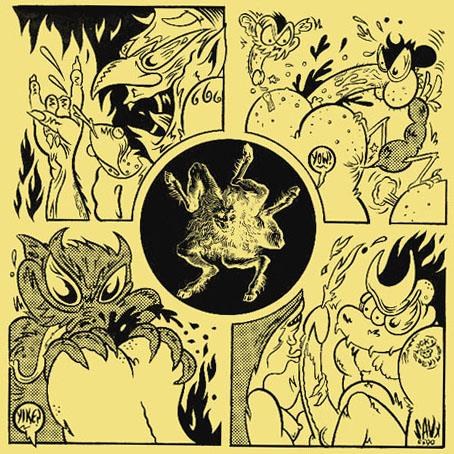
Seven-inch sleeve design by Savage Pencil for Wrong Eye (1990) by Coil.

• “Can you use sensory deprivation to explore ESP? And then make music from the process?” Drew Daniel and MC Schmidt of Matmos decided to find out for their new EP. Related: Occult Voices—Paranormal Music, Recordings of Unseen Intelligences, 1905–2007 at Ubuweb. Details of the original CD release can be found here.

Gorgeous Gallery: The Best in Gay Erotic Art is a new book by David Leddick featuring the work of contemporary gay artists. Howard G. Williams has a review at Lambda Literary.

Trip or Squeek by Savage Pencil, a book collection of the artist’s comic strips for The Wire magazine, forthcoming from Strange Attractor Press.

The novels of the middle period are Burgess’s most vital because it was in these that he forged what we might now recognize as the Burgessian – the antic puns and wordplay, the etymological digressions, the opacity, the glamorous pedantry, the tympanic repetitions, and an alliterative, assonantal musicality that makes every sentence seem vivid and extrovert: “Seafood salt with savour of seabrine thwacking throat with thriving wine-thirst”; “the lucent flawlessness of the skin, of the long fleshly languor that flowered into visibility”; “he was in a manner tricked, coney-caught, a court-dor to a cozening cotquean”. This is Burgess’s description of an Elizabethan brothel: “He entered darkness that smelled of musk and dust, the tang of sweating oxters, and, somehow, the ancient stale reek of egg after egg cracked in waste, the musty hold-smell of seamen’s garments, seamen’s semen spattered, a ghost procession of dead sailors lusting till the crack of doom”.

Ben Masters on A Clockwork Orange and its creator, fifty years on

• A streaming album for the beginning of autumn, the self-titled debut by Eraas, available in a range of formats at Bandcamp.

• “How Collecting Opium Antiques Turned Me Into an Opium Addict.”

Ted Hughes reads from Crow. Related: Raptors by Leonard Baskin.

• Janitors of Lunacy: Jonny Mugwump remembers Coil.

equus.jpg

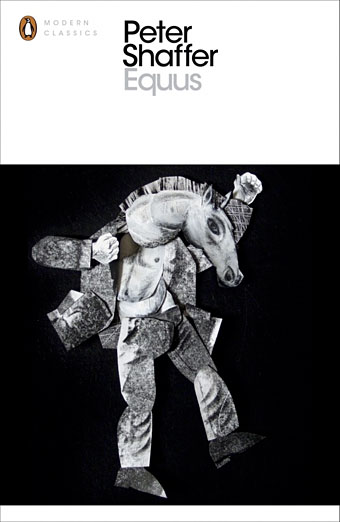
Back in June I suggested Clive Hicks-Jenkins’ paintings as potential artwork for Penguin’s Modern Classics series. Last week Clive revealed that Penguin will be using one of his painted maquettes for a new edition of Equus next year.

150 Years of Lesbians and Other Lady-Loving-Ladies

Color Sound Oblivion: a Coil/TG/related Tumblr.

Tune in, psych out: the new black psychedelia.

The Hills Are Alive (1995) by Coil | QueenS (2012) by THEESatisfaction | Goldblum (2012) by Oddience.

Weekend links 123

niceron.jpg

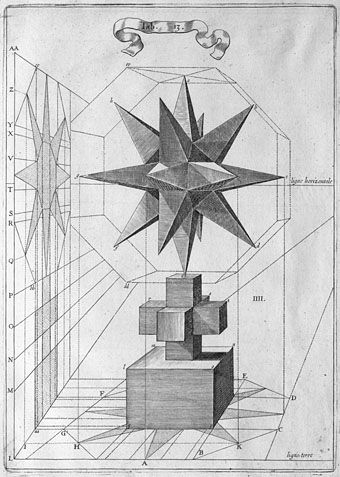
La Perspective Curieuse (1663) by Jean François Nicéron. From Curious Perspectives at BibliOdyssey.

1612 Underture is a forthcoming album by The Eccentronic Research Council and Maxine Peake which extends the electronics + occult concept to encompass Kraftwerk and the Pendle Witches. The Quietus has a review of their album, and an interview and report about a recent live performance (I missed the latter, unfortunately), while the Guardian’s interview with the splendid Ms Peake reveals that “musically, her tastes range from Japanese black metal, garage rock and folk, to techno and psychobilly.” The famous Lancashire witches also happen to be the subject of Jeanette Winterson’s latest novel, The Daylight Gate.

• Yet more Marker: The Owl’s Legacy: Chris Marker’s 13-Part Search for Western Culture’s Foundations in Ancient Greece, and J. Hoberman on The Lost Futures of Chris Marker.

Dr Oliver Sacks talks about how hallucinogenic drugs helped him empathize with his patients.

Paulo Coelho’s ill-judged Joyce-bashing has made him a butt of scorn this week, but he’s a safe target because, with books that multitask a little too openly as self-help manuals, he’s not so clubbable. Unlike, say, Ian McEwan, who not-that-differently declared against “the dead hand of modernism“, for all the world as if the dominant literary mode in post-war England was Steinian experimentation or some Albion Oulipo, against which young Turks hold out with limpidly observed interiority, decodable metaphors, strained middle-class relationships and eternal truths of the human condition(TM).

China Miéville on the always contentious future of the novel.

The Foliate Head: a new book by Marly Youmans with illustrations by Clive Hicks-Jenkins.

Hysterical Literature: Session Two: Alicia reads from Leaves of Grass by Walt Whitman.

Dreaming in Dirigibles: The Airship Postcard Albums of Lord Ventry.

The Art of the Literary Fake (with Violin) by Jeff VanderMeer.

RIP Neil Armstrong, first human on the Moon.

Macho Man: Morgan Meis on Robert Hughes.

• Book covers by Hannes Bok.

This Is Now!

Squid Moth

Lunar Rhapsody (1947) by Dr Samuel J. Hoffman | Lunar Musick Suite (1976) by Steve Hillage | Back Side Of The Moon (Steve Hillage’s Under Water Deep Space Remix) (1991) by The Orb.