More detectives

detective.jpg

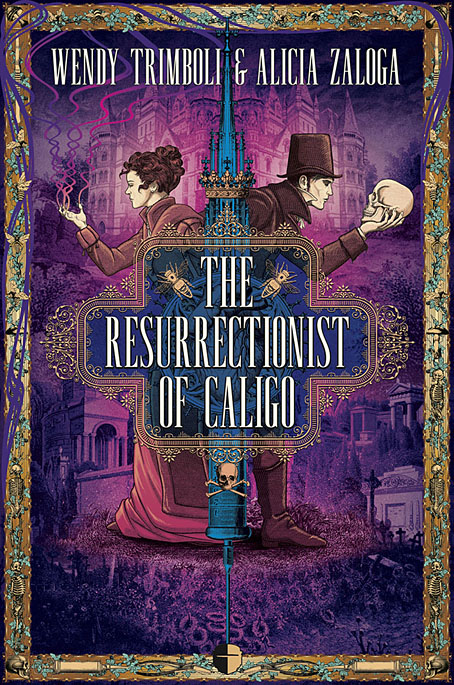
I was going to post these designs a couple of weeks ago but other things kept intervening. Gilded Age Detective Stories and Steam-Age Crime Stories follow my earlier design for the Joe Phenix Detective Series (below), with all three forming a colour-coded trilogy of books from Dark Lantern Tales reprinting late-Victorian crime fiction. My earlier post about the Joe Phenix series went into some detail about the lettering design so there’s no need to repeat that here. The new covers follow the template established by the first, the main deviation being the larger title box for Crime Stories, each title of which is by a different author. As before, the illustrations are adapted from the often crude wood engravings that ran with the original stories. The illustrations in pulp magazines of this period tend to lack the finesse of their counterparts in books and newspapers but then you could say the same about the stories; if you’re attracted to this material then the rough edges are part of the package.

crime.jpg

As before, all these books are currently available as ebooks only but plans are afoot for a series of paperback reprints. Any further news about this will be posted in due course.

joephenix.jpg

Previously on { feuilleton }
The Joe Phenix Detective Series

Born to be Posthumous: The Eccentric Life and Mysterious Genius of Edward Gorey

dery.jpg

Cover design by Jim Tierney; photo by Richard Corman.

When so many current biographies are recounting the lives of those about whom we’ve already heard a great deal (see the new biography of Oscar Wilde by Matthew Sturgis), a book exploring the career of a previously undocumented yet worthwhile figure is especially welcome. Such is the case with Born to Be Posthumous, Mark Dery’s life of the elusive Edward Gorey: artist, writer, illustrator, book designer, book creator, bibliophile, theatre designer, cat lover and balletomane.

gorey5.jpg

The Gashlycrumb Tinies (1963).

Gorey’s small books have long been one of the more curious fixtures of American culture: many of them look like children’s books but aren’t (unless the child is Wednesday Addams); others look like comic books but they aren’t comics either. The books are sometimes (but not always) Surrealist fables; or brief accounts of irreducible mystery; or sombre inexplicabilities; or camp ripostes to the pieties of Victorian morality; infrequently spiced with black humour and with lurches into outright horror. Gorey delivered his miniature tales in an idiosyncratic drawing style that combines a cartoon-like stylisation with the density of shading found in old wood engravings, a blend that would prove influential as his popularity grew. As Dery notes in his book’s introduction, without Edward Gorey’s work there would be no Lemony Snicket, while Tim Burton would be a skeletal shadow of his present self. (Given the latter’s current output, this might do him some good. But I digress.)

gorey4.jpg

The Doubtful Guest (1957).

In Britain, however, Gorey remains a cult rather than cultural figure, still overshadowed by better-known contemporaries such as Maurice Sendak and Charles Addams. Until the publication of the Amphigorey story collections Gorey’s books were produced in small editions with such a limited availability you were more likely to encounter his art on the cover of another author’s book than within the pages of his own. I became aware of Gorey’s work by gradual osmosis. The first substantial piece I read about him was his entry in Philip Core’s Camp: The Lie that Tells the Truth (1984), in which Core’s mention of an art style “recollecting Victorian engravings” marked Gorey as an artist to be investigated. Two years later he received a longer entry in The Penguin Encyclopedia of Horror and the Supernatural edited by Jack Sullivan. (Camp and horror: how many other artists sit so easily in both worlds?) But Gorey is absent from many books about 20th-century illustrators, and despite the sequential nature of his work you won’t find him in histories of comic art.

gorey6.jpg

Edward Gorey’s Dracula: A Toy Theatre (1979).

In a way it’s fitting that the work of a man who was adamant in his determination to avoid being pinned down should be so difficult to find. But it’s also a shame that the work of an ardent Anglophile should be hard to find in the country that fuelled his imagination. Among Gorey’s literary favourites Dery lists Jane Austen and Agatha Christie together with Ronald Firbank, Saki, and EF Benson’s Mapp and Lucia novels. (The latter trio are all present in Core’s book on camp, which no doubt makes Gorey camp to the core. Whether he would have approved of being labelled as such is another matter.) I wasn’t surprised by the mention of Saki when so many of Saki’s story titles (The Secret Sin of Septimus Brope) sound like Gorey books, while many of the stories themselves are like Gorey scenarios in prose. Not all Gorey’s work is camp or comic, however; the 32 drawings that comprise the wordless masterpiece of The West Wing (1963) are closer to David Lynch or the “strange stories” of Robert Aickman, the latter an author that Gorey illustrated on several occasions. Dery emphasises how Gorey’s love of silent cinema contributed to The West Wing and other pieces, especially the serials of the Surrealists’ favourite filmmaker, Louis Feuillade.

Continue reading “Born to be Posthumous: The Eccentric Life and Mysterious Genius of Edward Gorey”

Weekend links 438

awazu.jpg

Seishu Hanaoka’s Wife (1970) by Awazu Kiyoshi.

Hoodoo, Conjuration, Witchcraft & Rootwork: a colossal new addition to the Internet Archive, being a 5-volume, 4766-page collection of folkloric material gathered by Harry Middleton Hyatt in Alabama, Arkansas, Florida, Georgia, Illinois, Louisiana, Maryland, Mississippi, North Carolina, South Carolina, Tennessee, and Virginia between 1936 and 1940.

• Edward Gorey is the theme du jour, so here’s some more: Gorey’s 1977 appearance on The Dick Cavett Show is revelatory, especially if you’ve never seen him talking before. Meanwhile, Laughing Squid has a previously unpublished interview in which Gorey discusses his love for his disruptive cats.

• Jeff Nuttall’s mid-century survey of the aesthetic underground, Bomb Culture, receives a fiftieth anniversary republication by Strange Attractor. The new edition is edited by Douglas Field and Jay Jeff Jones, with a foreword by Iain Sinclair and an afterword by Maria Fusco.

I have always questioned identity politics with my work. I often have characters that engage in homosexual sex but do not identify as gay (hustlers, neo-Nazi skinheads, extreme left wing revolutionaries, gerontophiles, etc.). But my films have also always been inclusive in terms of race, class, and gender. I find that the new emphasis on identity politics has really narrowed creative expression. It demonstrates a profound ignorance about sexuality, history, and human experience.

My sexual identity is pretty much fixed—I’m a Kinsey 6, if not a 7—but I acknowledge that this means I’m sexually repressed. I believe, after Freud, that everyone has some bisexual potential, and the tendency to increasingly entrench gender identity as innate and immutable is really preposterous. It also leads to strict rules about sexual representation—how gays, lesbians and transgender people “must” be portrayed, the policing of representation, a kind of proprietary stance about who is allowed to portray these characters.

It really boils down to a naivety about sexuality, and a complete failure of the imagination. It discourages people who may have the potential for some kind of sexual fluidity to express themselves. I’ve always been a “bad gay,” but now this political correctness has made me feel even more alienated from the notion of “gay identity”—particularly since the new assimilationist model is so conservative and dull.

Filmmaker Bruce LaBruce discussing art, porn and politics with Hoçâ Cové Mbede

• “Who is Barbara Baranowska? Despite the so-called Polish Poster School’s fame, certain people were seemingly forgotten. Perhaps they even wanted it that way…” Daniel Bird on an elusive artist. Related: Selected works by Barbara Baranowska.

• “I don’t think I’m ever mean-spirited and I try to understand human behaviour even though it’s impossible,” says John Waters.

Nine Dimensional Synod Of Oblique Pleasures is a very welcome new release by The Wyrding Module.

Galerie Dennis Cooper presents…The Resplendent Illegibility of Extreme Metal Logos.

Apocalypse Burlesque — Tales of Doomsday Eros: a new book by Supervert.

Rare booksellers rallied against an Amazon-owned company and won.

B. Alexandra Szerlip on the 80-year history of the ballpoint pen.

Anjelica Huston: how we made The Addams Family.

• Mix of the week: Secret Thirteen Mix 270 by Okkre.

The Cabinet of the Quay Brothers

Hoodoo Man Blues (1965) by Junior Wells’ Chicago Blues Band | Evil Hoodoo (1966) by The Seeds | I Been Hoodood (1973) by Dr John

Weekend links 434

klint.jpg

Group X, No. 1, Altarpiece (1915) by Hilma af Klint.

“Like Kandinsky, and other pioneers of abstract art, af Klint was deeply immersed in theosophy and anthroposophy. But she seems to have taken that interest much further than her male counterparts, participating in (and later leading) séances with a group of women friends. Whatever the spirits said, af Klint did.” Nana Asfour on pioneering abstract painter, Hilma af Klint.

• Four electronic artists reflect on the influence of composer Laurie Spiegel. Spiegel’s The Expanding Universe (1980) is reissued by Unseen Worlds next month. Related: Laurie Spiegel in 1977 playing the Bell Labs Digital Synthesizer.

• At Expanding Mind: Gurdjieffean writer and DuVersity director Anthony Blake talks with Erik Davis about dialogue, synergy, mind between brains, the trouble with teachers, and the gymnasium of beliefs in higher intelligence.

• Mixes of the week: Flashing Noise Mix by Tim Gane, Secret Thirteen Mix 268 by Bérangère Maximin, and Samhain Séance Seven: A Very Dark Place – Prologue by The Ephemeral Man.

Geeta Dayal on Broken Music (1989), a book about sound art edited by Ursula Block and Michael Glasmeier which is now available in a new edition from Primary Information.

• The Sainsbury Archive showcases the graphic design of several decades of the supermarket chain’s products.

• More of the usual suspects: Michael Moorcock and Alan Moore in 2006 discussing Moorcock’s career.

• “Karloff the Uncanny”: Joe Dante talks to Stephanie Sporn about the attraction of old film posters.

Mexico City, another preview (and a psychedelic one) of Randall Dunn’s forthcoming solo album.

• At Haute Macabre: Timeless Phantom Interludes: The Photography of Jason Blake.

Mark Valentine on the current state of Britain’s secondhand book shops.

• At I Love Typography: Unicorns, Frogs and the Sausage Supper Affair.

• “I never wanted to be a cult film-maker,” says John Waters.

• Artist Arik Roper chooses some favourite album covers.

Broken Head (1978) by Eno, Moebius, Roedelius | Broken Horse (1984) by Rain Parade | Broken Aura (2000) by Coil

Weekend links 433

ginzburg.jpg

Cover art for Six Correlations, a solo album by Emptyset’s James Ginzburg which is released later this month. Photo by Clayton Welham.

• “Every single leather S&M club in London was raided by the police at least once, but they couldn’t get any convictions because juries wouldn’t convict us.” Ed Siddons on the death of London’s gay leather scene.

• I’ve been listening to a lot of Stereolab this week so this post from Dangerous Minds last year was useful: “The intriguing origins of ‘Cliff,’ the cartoon character that’s all over Stereolab’s early album art”.

• Available for pre-order: Performance – The Making of a Classic, a book by Jay Glennie celebrating the 50th anniversary of Donald Cammell & Nicolas Roeg’s cult feature film.

• Out later this month from Strange Attractor: The Haunted Writings of Lionel Johnson, the Decadent Era’s Dark Angel, edited by Nina Antonia.

• Mixes of the week: Rosemary Hill – an Autumn Autobiography by cafekaput, and Secret Thirteen Mix 267 by Drew McDowall.

The top 100 albums of The Quietus’ existence, as picked by tQ’s writers.

RC Harvey on the 50th anniversary of (American) underground comix.

• At Haute Macabre: An enigmatic baroness and her collection of skulls.

Miyu Kojima creates miniature replicas of lonely deaths.

Scratches in Kubrick’s 2001: A Space Odyssey.

Richard Thompson’s favourite albums.

Wrong Airport Ghost by Sam Slater.

Mark Valentine’s 3 Wyrd Things.

• 4/4 In Leather (1981) by Eurythmics | The Girl With The Patent Leather Face (1981) by Soft Cell | Leather Bound (1982) by Patrick Cowley