Weekend links 444

guillou.jpg

Visions Cosmiques—Improvisations Dédiées À L’équipage D’Apollo 8 (1969) by Jean Guillou. No designer credited.

• 50 years ago this weekend Apollo 8 was on its way to the Moon. Jean Guillou’s album of organ improvisations took the mission as its inspiration although his turbulent music seems more suited to the near-disaster of Apollo 13 than the weightless drift of space travel. The album has been out-of-print for decades but may be heard in full here and here. Related: the Discogs listing for the Philips’ Prospective 21e Siècle series of avant-garde music. Most of the other albums in this series remain unreissued, and are now very collectible, not least because of their metallic “Heliophore” sleeves.

• Christmas cheer be damned: the spook season extends from Halloween to the end of the year. At These Unquiet Things, Sarah Chavez offers a list of favourite seasonal vampires, witches and ghosts. For those who prefer something televisual that isn’t more MR James, The Lorelei (1990) is a feature-length supernatural drama written by Nick Dunning. And speaking of the unavoidable James, Sarah K Marr presents an annotated analysis of A Warning to the Curious embellished with her excellent photos of the area of the Norfolk coast where the story is set.

• At Bandcamp: Voltaic Liturgies: “A symbiosis of flesh, machinery and umbral cosmic mysticism” by Primitive Knot and The Wyrding Module; and In The Sunshine We Rode The Horses by Rowan : Morrison (Rowan Amber Mill with Angeline Morrison): “The album explores themes of our beautiful natural surroundings, and how the pursuit of profit guides us to learn ‘the cost of everything and the value of nothing’, paving the way for the scarring of the landscape with fracking, HS2, retail parks, and so on…”

• “Influential Manga Artist Gengoroh Tagame on Upending Traditional Japanese Culture”. Tagame is also a prolific gay porn illustrator, a part of his career the headline avoids although it is acknowledged in Anne Ishii’s interview.

• Mixes of the week: Dream Perception Mix by Moon Wiring Club, Strange Great Snow: A Conjuror’s Hexmas by Seraphic Manta, December’s Reverie by Cafekaput, and Secret Thirteen Mix 275 by CoH.

• On the Scary Thoughts podcast: Erik Davis on philosophical pessimism, cosmic horror, police procedurals, serial killers, gnostic notions, and Louisiana as featured in the first season of True Detective.

• Manuscripts, letters and other documents by HP Lovecraft are now digitised and available for browsing at Brown University Library.

• William Hope Hodgson—The Essex-born Master of Horror: a biographical essay by Peter Berresford Ellis.

• The best ambient releases of 2018 according to FACT.

• At Dennis Cooper’s: Donald Sutherland Day.

Sandspiel

Rocket USA (1977) by Suicide | Ticket To The Moon (1981) by Electric Light Orchestra | From Ape to Apollo (1994) Thomas Fehlmann

Prokofiev’s The Love for Three Oranges

lfto1.jpg

Given the time of year, and last week’s Quays-themed post, this seemed like a good follow-up. Opera North’s production of Prokofiev’s The Love for Three Oranges was broadcast by the BBC during the Christmas holiday of 1989. The opera isn’t quite as saccharine a Christmas entertainment as The Nutcracker Suite but the libretto is still light-hearted fare, being based on a Neopolitan fairy tale in which the son of the King of Clubs is afflicted by melancholy after reading too much tragic poetry. The King stages an entertainment to cheer the Prince but the only thing that makes him laugh is the witch, Fata Morgana, falling over and revealing her underclothes. This humiliation provokes the witch into cursing the Prince to fall in love with three oranges. These he immediately sets off to find, and thereby hangs the tale. Richard Jones directed the production, with the English Northern Philharmonia providing the music. The opera is also sung in English, the translation being by David Lloyd-Jones.

lfto2.jpg

The stage decor for the Opera North production was designed by the Quay Brothers, one of several operas they worked on around this time. The opera may be a comic one but the design emphasis is on gloom and decay, a feature that extends to Sue Blane’s costumes, many of which seem to have been styled with the Quays’ films in mind. In addition to a Nosferatu-like Leander (the sinister Prime Minister), a company of children appear from time to time wearing masks which make them look like the Quays’ doll-headed puppets. The chorus, meanwhile, wear antique gas-masks of a style which people would now refer to as steampunk. The most overt reference to the Quays films occurs during the King’s entertainment when a vast mutant creature is wheeled onto the stage, the creature’s head being the colossal cousin of the twitching cyclops from Rehearsals for Extinct Anatomies. The cumulative effect of the grotesquery combined with absurd comedy is of an opera equivalent of Mervyn Peake’s Gormenghast, all of which makes me wonder what the BBC’s Gormenghast might have been like if the corporation had hired the Quays and Sue Blane to work the same magic they do here. (There is a Gormenghast opera by Irmin Schmidt but I’m not keen on the music and what I’ve seen of the staging it looks a lot less like Peake than this one does.)

lfto3.jpg

Decor aside, the most notable feature of this production, and the broadcast itself, was the scratch-and-sniff card which was provided to every member of the audience, and to any viewers who bought a copy of the BBC’s Listener magazine before the screening. Each time a numbered card appeared on the stage the audience had to scratch and sniff the relevant panel. The scents—which include orange, of course—are less offensive than those for John Waters’ Polyester (1981) although the audience is still surprised into sniffing the farts of the demon, Farfarello.

card.jpg

Elsewhere on { feuilleton }
The Quay Brothers archive

Weekend links 442

buzzcocks.jpg

Orgasm Addict (1977). Design by Malcolm Garrett; collage by Linder.

• RIP Pete Shelley, Buzzcock and Homosapien. Shelley is celebrated for being in the vanguard of Britain’s punk movement, of course. (Buzzcocks’ Spiral Scratch was the UK’s first independent single.) But he also loved Can, recorded an album of electronic drones (Sky Yen), and in 1983 successfully blended home-computer graphics with his own brand of superior electronic pop music. Related: Malcolm Garrett’s Buzzcocks band logo at Fonts In Use; B’dum, B’dum: Tony Wilson in 1978 talking to Pete Shelley and Howard Devoto about Buzzcocks and Magazine.

• Winter demands ghost stories so Adam Scovell suggests 10 great winter ghost films. Related: Alexandra Heller-Nicholas presents an A–Z of Women’s Horror Filmmaking.

Carey Dunne on the rise of underground LSD guides for psychotherapy. Related: “Psychedelics change the perception of time,” says Shayla Love.

• Ex-Neu! guitarist Michael Rother receives the box-set treatment early next year when the Groenland label reissues his early solo albums.

Jodorowsky, an exhibition devoted to the writer and director, will be staged at El Museo del Barrio, New York, from February next year.

• “From Georges Méliès to Bill and Ted, movie hells remain seriously in hock to the Judeo-Christian playbook,” says Anne Billson.

The Owl’s Legacy, Chris Marker’s 13-part documentary series on Greek culture, receives its debut DVD release.

Topic II (1989), a short film by Pascal Baes of pixilated dancers in the night streets of Prague.

• Mix of the week: Secret Thirteen Mix 274 by Koray Kantarcioglu.

• We are the first humans to hear the winds of the planet Mars.

• Patrick Magee reads The Third Policeman by Flann O’Brien.

• At Dennis Cooper’s: Jean-Louis Trintignant Day.

• Mongolian biker rock: Wolf Totem by The HU.

The Quietus albums of the year.

Hell (2001) by Techno Animal ft. Dälek | Hell’s Winter (2011) by Earth | Hell A (2017) by The Bug vs. Earth

Buchschmuck und Flächenmuster by Max Benirschke

benirschke01.jpg

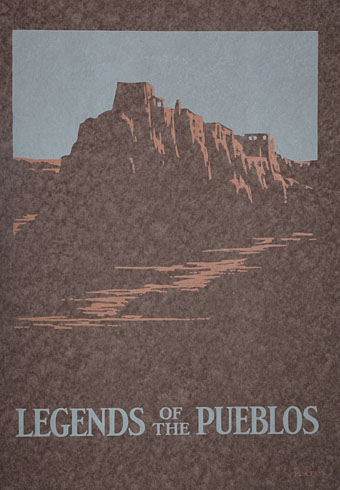
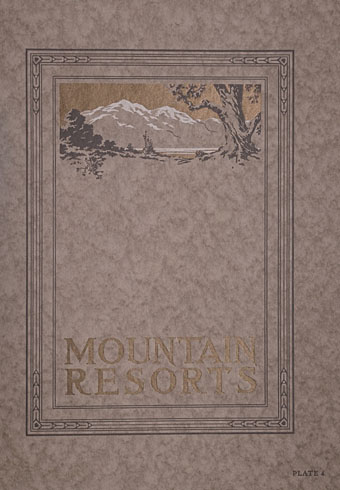
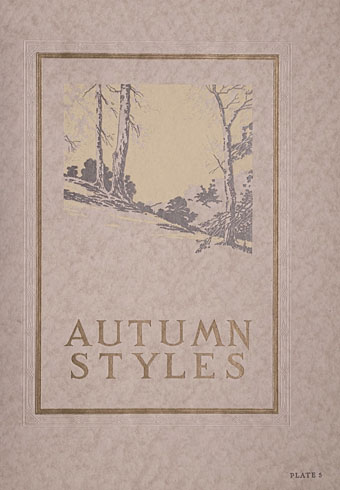
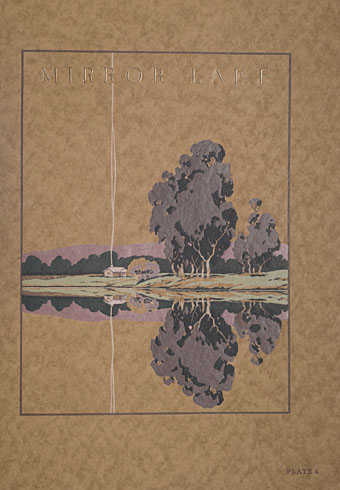
A recent arrival at the Internet Archive was this collection of Art Nouveau book decorations by Max Benirschke (1880–1961). Very welcome it is too, although I wish it had been accompanied by its companion volumes from Koloman Moser and Carl Otto Czeschka. The three books formed a series, Die Quelle (The Source), a Viennese equivalent of the design books produced by Alphonse Mucha and others in France. Both the Benirschke and Moser books have been available from Dover Publications at one time or another but the Benirschke one seems now to be out of print. There’s more about Die Quelle and its artists (plus related subjects) at the excellent Vienna Secession. Benirschke’s book may be browsed and downloaded here.

benirschke02.jpg

benirschke03.jpg

benirschke04.jpg

benirschke05.jpg

Continue reading “Buchschmuck und Flächenmuster by Max Benirschke”

Weekend links 440

roeg.jpg

The title of that film was originally different [Illusions]… I woke up one day and thought of Bad Timing which sounds exactly like the right title—for my career. Now there was a film I really thought was one to which there would be a different response. Whilst filming I felt sure that this was one for the streets, one that people would really want to see. — Nicolas Roeg

So long to the great Nicolas Roeg, always one of my favourite film-makers. Roeg’s works were naturally attractive when I was a teenager because he’d made a horror film and a science-fiction film; when these eventually turned up on TV it was evident that this was a director working on a level that had more in common with Continental Europe than Hollywood. Beyond the generic content it was his approach to directing that made his films essential: a fragmented editing style derived from Alain Resnais via Richard Lester (see below), a cosmic perspective almost entirely absent from the parochial concerns of British cinema, and a seemingly effortless ability to find visual rhymes in anything. Despite the “bad timing” comment above Roeg was fortunate to be working throughout the 1970s when having an approach that ran counter to the prevailing trends wasn’t an obstacle to maintaining a career; as with Ken Russell, you watch some of the films today and are amazed and grateful that they were made at all. When reading the forthcoming plaudits it would be worth remembering that even the films regarded now as Roeg’s best struggled for acceptance: Pauline Kael dismissed Don’t Look Now as “trash”, US screenings of The Man Who Fell To Earth provided explanatory notes for the hard-of-thinking, Bad Timing was described by its own distributors as “a sick film made by sick people for sick people”, while the distributors of Eureka hated the film so much that for a time it could only be screened in the UK if the director was also present.

• Related: Where to begin with Nicolas Roeg, and Nicolas Roeg: It’s About Time (2015), a 59-minute documentary for the BBC directed by David Thompson. Previous Roeg-related postings on this site include: The Nicolas Roeg Guardian Lecture, 1983 (Roeg discusses Eureka and other films with Philip Strick); Beyond the Fragile Geometry of Space (charting the recurrence of a book title from Don’t Look Now); Canal view (using Google Street View to find the church in Don’t Look Now); and Petulia film posters (designs for a Richard Lester film from 1968 that was photographed by Roeg, and whose fragmentary editing style prefigures the familiar Roeg technique).

• Edward Woodward’s greatest screen role wasn’t a prudish policeman or a mysterious vigilante but was David Callan, a conflicted assassin working for a division of the British Secret Service. Joseph Oldham explains.

• Mixes of the week: A mix for The Wire by Jing, FACT Mix 681 by Kelly Moran, and Crépuscules d’Automne, a seasonal mix by Stephen O’Malley.

• More Gorey: in 1978 Jeremy Brett was playing Dracula in the touring version of the Edward Gorey-designed play.

• Liberated from the LRB paywall for a brief time: George Melly writing in 1992 about René Magritte.

• Welcome to the witch capital of Norway: Chelsea G. Summers investigates.

Space colony artwork from the 1970s.

• At I Love Typography: Magic printed.

Memo From Turner (1970) by Mick Jagger | Wild Hearts (1985) by Roy Orbison | Be Kind To My Mistakes (1987) by Kate Bush