Weekend links 449

orpheus.jpg

UK poster, 1950. Cocteau’s film receives a UK blu-ray release this week.

• Into the Zone: 4 days inside Chernobyl’s secretive “stalker” subculture by Aram Balakjian. (Again. There’s an implication in Balakjian’s piece that illicit Chernobyl tourism is a new thing even though people have been doing this for a while now.) Related: Jonathan’s visit to the Chernobyl reactor control room, and photos of Soviet-era control rooms (plus a couple of stray American examples).

• “He’s a very interesting author: a disabled, gay writer during the Third Reich…who somehow survived only to be shot by a Red Army patrol days before the end of the war.” At the Edge of the Night (1933) by Friedo Lampe will receive its first English-language publication via Hesperus Press next month.

• “The tradition of the painted still life has been reinvented by contemporary photographers with pictures that pose a puzzle and slow the viewer down,” says Rick Poynor.

• Comic artist Matt Howarth has been writing short reviews of electronic music for many years. Sonic Curiosity is his archive site.

Bauhaus at 100: what it means to me by Norman Foster, Margaret Howell and others.

• RIP Jonas Mekas. Related: a conversation between Jonas Mekas and Jim Jarmusch.

• Beyond the Buzzcocks: Geeta Dayal remembers Pete Shelley‘s electronic side.

• Where to begin with Jean Cocteau: Alex Barrett goes through the mirror.

• Mix of the week: Secret Thirteen Mix 278 by Sarah Louise.

• At Dennis Cooper’s: Jud Yalkut Day.

• Undulating Terrain (1995) by Robert Rich & B. Lustmord | Darkstalker (2000) by Bohren & Der Club Of Gore | Stalker Dub (2012) by John Zorn

The Resurrectionist of Caligo by Wendy Trimboli & Alicia Zaloga

resurrectionist.jpg

My latest cover for Angry Robot Books was unveiled this week on the Barnes & Noble blog. The Resurrectionist of Caligo is an atmospheric Gothic fantasy for which the cover art veers close to the illustration work I was doing recently for Editorial Alma, Frankenstein in particular:

With a murderer on the loose, it’s up to an enlightened bodysnatcher and a rebellious princess to save the city, in this wonderfully inventive Victorian-tinged fantasy noir.

“Man of Science” Roger Weathersby scrapes out a risky living digging up corpses for medical schools. When he’s framed for the murder of one of his cadavers, he’s forced to trust in the superstitions he’s always rejected: his former friend, princess Sibylla, offers to commute Roger’s execution in a blood magic ritual which will bind him to her forever. With little choice, he finds himself indentured to Sibylla and propelled into an investigation. There’s a murderer loose in the city of Caligo, and the duo must navigate science and sorcery, palace intrigue and dank boneyards to catch the butcher before the killings tear their whole country apart.

Some covers present more difficulties than others, this one being an awkward layout in its early stages due to the multiple demands of the brief. Not only was the book title a lengthy one, there were also two author names to accommodate plus a variety of pictorial detail that required placing in a harmonious arrangement. I don’t always begin a design with the title layout but in this case this was the first priority, so the cover is designed around the title rather than the title being applied to the cover at a later stage. All of this caused me some headaches for a few days while I tried to find a type layout that would look pleasing, be readable from a distance and also not interfere too much with the background. None of the struggle is evident in the final work, of course, which is as things should be.

The Resurrectionist of Caligo will be published in September.

Weekend links 446

pca.jpg

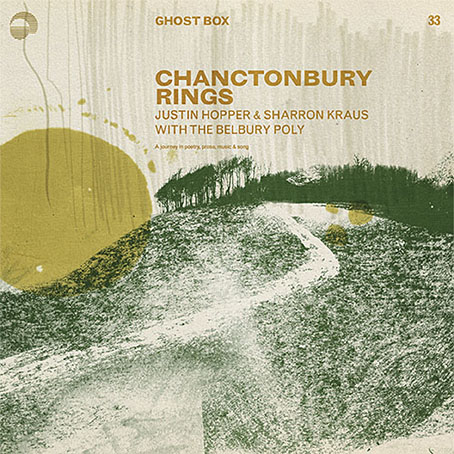
The Ghost Box label releases a new album by the excellent Pye Corner Audio in February (previews are here). The spectral design, as ever, is by Julian House.

• “In October 1966, Phyllis Willner arrived on motorcycle in San Francisco as a teenage Jewish runaway from Jamaica, Queens. She quickly fell in with the Hell’s Angels, the San Francisco Mime Troupe and, most crucially, the Diggers, who were just getting their street radical thing together in the Haight-Ashbury. The next two years would be eventful: many extraordinary highs, some really terrible lows.” Jay Babcock talks to Phyllis Willner about her involvement with “the executive branch of the hippie movement”, the Diggers.

• At Expanding Mind: Erik Davis talks with religious scholar Diana Pasulka about UFOs, scientific believers, book encounters, elite cabals, studying weirdness, and her new book American Cosmic: UFOs, Religion, Technology.

• Kenneth Anger is now 91 but he still appears hale, and looks even more magus-like than ever. This short film by Floria Sigismondi finds him reminiscing in the antiquated confines of the Chateau Marmont hotel on Sunset Boulevard.

David Wojnarowicz did not write dark fantasy. He wrote real life. In The Waterfront Journals he brilliantly captures electric tales from the mouths of strangers, those he described as “junkies, prostitutes, male hustlers, truck drivers, hobos, young outlaws, runaway kids, criminal types”, whose lives echo his own ostracized existence. He was thirteen when he was first paid for sex and sixteen when he started “turning tricks” regularly. His mother kicked him out of the house. By the time Wojnarowicz came out to friends in New York, he was in his early twenties. He was on the cusp of finding his voice as a writer and his confidence as an artist. It was the mid-1970s. AIDS was about to tear through the gay community.

Lara Pawson reviews three books by artist and writer David Wojnarowicz

John Banville reviews Kafka’s Last Trial by Benjamin Balint: “A scrupulous study of the squabble between Germany and Israel over Kafka’s papers, and the two women caught in the middle.”

• A sitting with the diva of the diode: electronic musician Suzanne Ciani in conversation with Christine Kakaire.

• Mixes of the week: Secret Thirteen Mix 076 by KK Null, and XLR8R Podcast 574 by SHXCXCHCXSH.

Cassie Packard on the colorful and clairvoyant history of aura photography.

Edward Gorey’s Children’s Books Illustrations, Revisited.

Alison Flood on the fascination of miniature books.

Magic Hollow (1967) by The Beau Brummels | Hollow Stone (1972) by Khan | Through Hollow Lands (For Harold Budd) (1977) by Brian Eno

L’Image, 1896–1897

image01.jpg

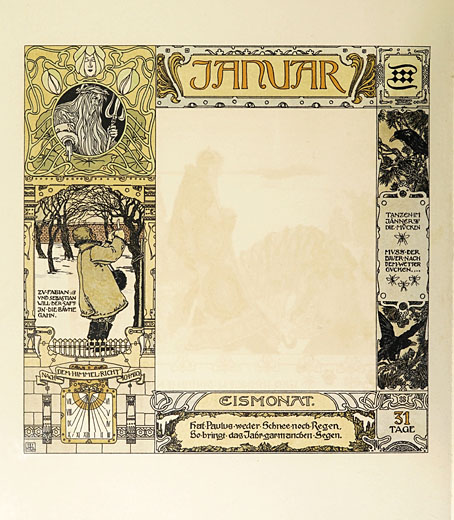
L’Image was a short-lived French publication dedicated to the art of contemporary wood engraving. Short-lived it may have been but its position at the birth of Art Nouveau means that many of its smaller graphics have been recycled ever since in studies of the period. One of these graphics, a fleuron by Jean-Jacques Drogue, was the subject of an earlier post when I was tracing the origin of a motif used for many years by my colleagues at Savoy Books. I eventually found Drogue’s fleuron in a collection of rather poor scans at Gallica, a good resource but one whose web interface (and often the materials themselves) leaves much to be desired.

image02.jpg

All the images here are from a collection of the entire run of L’Image at the Internet Archive which are much better quality and which include the early issues missing from Gallica. The most notable thing about the earlier issues is the way they combine the Art Nouveau style with Symbolist art; in addition to an engraving by Carlos Schwabe that I hadn’t seen before there’s a very Symbolist piece about nocturnal Bruges featuring art by Georges de Feure.

image03.jpg

image04.jpg

Continue reading “L’Image, 1896–1897”

Weekend links 445

fukuda.jpg

Masayo Fukuda‘s octopus is cut from a single sheet of paper.

• “But in the title track, Homosapien contains a truly great song; four and a half minutes of bubbling synth and clever wordplay, atop which Shelley puts to one side the knowing coyness he’d frequently inserted into his contributions to the Buzzcocks catalogue, loosens his tie, and, as much as he ever committed to tape, is explicit in telling the listen exactly what he desires.” James McMahon on Pete Shelley’s first proper solo album.

Kosmischer Läufer, the reissue project for East German kosmische music of the 1970s which may not be entirely authentic, has now reached its fourth volume. Authentic or not, the attention to detail is impressive.

• One of my favourite browsing places this month: NASA Image and Video Library.

• At Dangerous Minds: Eric Stanton and the History of the Bizarre Underground.

• Public domain artworks in high resolution at the Art Institute of Chicago.

• Mix of the week: FACT Mix 686 by the The Radiophonic Workshop.

• At Dennis Cooper’s: Les Blank Day.

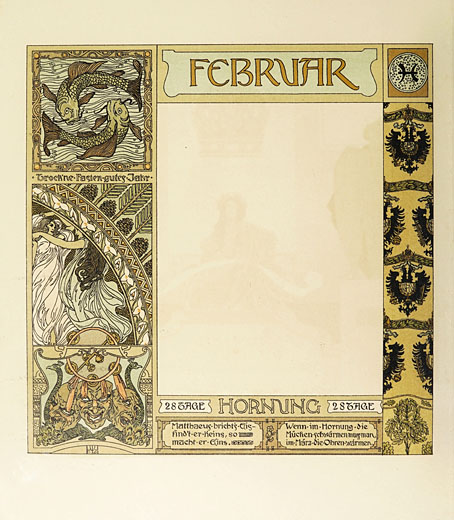
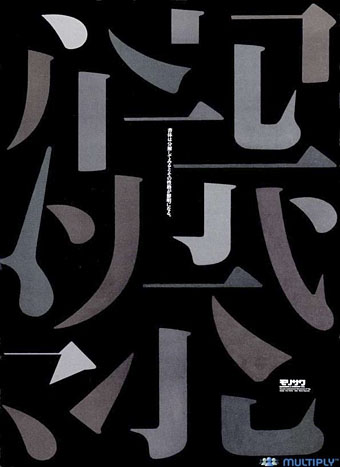
Art of the Poster 1880–1918.

cakeordeathsite

Interstellar Rock: Kosmische Musik (1974) by Cosmic Jokers | Sehr Kosmisch (1974) by Harmonia | Meine Kosmische Musik (1974) by Sternenmädchen