Dodgem Logic again

dodgem.jpg

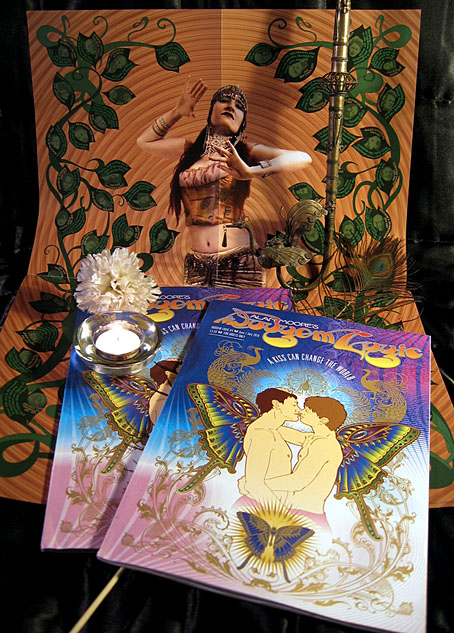
Look what the postman delivered. Well, not the peacock feather and candle, obviously… Dodgem Logic #4 is now in print and my cover design looks as splendid as I hoped, gold ink included. The bonus item for this delirious issue is the rather wonderful poster you see in the background, a Joe Brown & Alan Moore collaboration entitled Bohemia which features a burgeoning growth of Bohemians through the ages, from Sappho through to more contemporary cultural icons. Inside there’s Dick Foreman discussing psychedelia, comics from Steve Aylett, Barney Farmer, Lee Healey, Kevin O’Neill and Savage Pencil, Melinda Gebbie’s gorgeous paintings, Debbie Delano on how to be an openly gay school teacher, Steve Moore asking for no more war, and Mister Alan Moore giving us his personal history of science fiction. You can order it online here.

Previously on { feuilleton }
Dodgem Logic #4
Dodgem Logic

Weekend links 18

fini.jpg

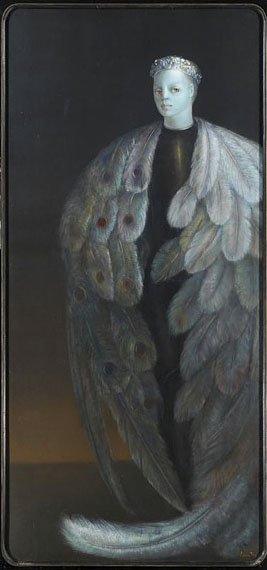
Rogomelec (1978) by Leonor Fini. Via.

Moving Through Old Daylight: A recording of Mark Fisher, Jim Jupp and Julian House of Ghost Box Recordings and Iain Sinclair in conversation at the Roundhouse, Camden, London, 5 June 2010. Topics under discussion included Nigel Kneale, TC Lethbridge, John Foxx, BBC Radiophonic Workshop, alchemies of sound, the homogenisation of culture, imagining space and the impersistence of memory.

The Surreal House, “a mysterious dwelling infused with subjectivity and desire” at the Barbican, London.

Ars Homo Erotica at the National Museum of Warsaw. Related: “(Gothenburg) Museum stops exhibition about homosexuality in religion“.

• A lot of people still arrive here looking for art by Zack aka Oliver Frey. Bike Boy, 96 pages of Frey’s exuberantly homoerotic comic strips, is published in August by Bruno Gmünder.

• “EM Forster was a virgin until the age of thirty-nine, when he had his first ‘full’ sexual experience (a ‘hurried sucking off’, Wendy Moffat informs us) with a passing soldier on a beach in Alexandria.”

• JG Ballard’s archive is accepted by the British Library, or “saved for the nation” as they rather grandiloquently describe the process. Samples from the documents to be preserved at the BBC and the Guardian.

• Shades of Ballard’s singing sculptures, Sun Boxes is a solar-powered audio installation by Craig Colorusso. There’s more at Designboom.

• Nathalie visited the MAXXI, Rome’s new museum of contemporary art designed by Zaha Hadid.

Stephen Pinker wants everyone to stop fretting over the alleged distractions of electronic media.

• “It basically comes from love”: John McLaughlin in conversation with Robert Fripp, 1982.

• More collections of print ephemera: Agence Eureka and Ephemera Magica.

The Serpent and the Sword, an Alan Moore rarity from 1999.

Gulliverovy Cesty (1968) at A Journey Round My Skull.

Within the Without: a new Thombeau Tumblr.

The Hidden Posters of Notting Hill Gate.

The Letters of Sylvia Beach reviewed.

• It’s Kubrick Season in St Albans.

Riot In Lagos (1980) by Ryuichi Sakamoto still sounds futuristic thirty years on.

Krazy Kat animations

krazy.jpg

Krazy Kat – Bugologist (1916).

Among the films at the Library of Congress YouTube channel are a number of shorts from the early days of animation including several of the first Krazy Kat films. George Herriman apparently had nothing to do with these, they were Hearst corporation spin-offs, which perhaps explains their lack of Herriman’s eccentricities. They’re necessarily crude, of course; cartoon animation had barely begun in 1916 and Walt Disney was yet to make a film. It’s curious watching a cartoon which transcribes the comic strip conventions so literally, with speech balloons growing from the characters mouths. Also at the LoC channel is one of the later Gertie the Dinosaur films and the very strange The Centaurs, both by Winsor McCay and son.

Weekend links 17

bowie.jpg

Aladdin Sane (1973). Cover photo by Brian Duffy who died this week.

• Among the obituaries this week: artist Louise Bourgeois; poet and partner of Allen Ginsberg, Peter Orlovsky; film director Joseph Strick, a man who dared to film James Joyce’s Ulysses; photographer Brian Duffy.

The dustbin of art history: “Why is so much contemporary art awful? We’re living through the death throes of the modernist project—and this isn’t the first time that greatness has collapsed into decadence.” Admirable sentiments but galleries and dealers have far too much invested in the corrupt edifice to let it collapse any time soon.

• Edinburgh film festival to screen ‘lost and forgotten’ British movies including the director’s cut of Jerry Cornelius film The Final Programme.

gogoharder.jpg

Delectable Bawdville burlesque boy Chris “Go-Go” Harder. Via EVB who have more pics.

Homobody by Rio Safari, “a scrappy diy zine about queerness”. Obliquely related: Lizzy the Lezzie, animations at the Sundance Channel.

• Richard Norris aka Time and Space Machine puts together a psychedelic mixtape for FACT. Fab stuff.

• Diamanda Galás has a message for critics: “Stick to reviewing plant life and leave the Witches alone.”

Brion Gysin: Dream Machine will be the first US survey of Gysin’s work in NYC next month.

• Geeta Dayal’s study of Another Green World by Brian Eno reviewed at Ballardian.

• For type-heads: font anatomy wallpaper by Sigurdur Armannsson.

If it was my home: visualising the BP oil disaster.

Antony Gormley’s Breathing Room III.

The Paris Review has a new blog.

• Bizarre juxtaposition of the week: John Martyn’s sublime Small Hours with, er… The Clangers.

Frank Frazetta, 1928–2010

frazetta1.jpg

Conan the Adventurer aka The Barbarian (1965).

How to appraise Frank Frazetta? In November last year I wrote about this Conan portrait for an SF Signal Mind Meld feature on favourite book covers:

The covers that launched a thousand imitators. Lancer’s series of Conan books in the 1960s were the first appearance of Howard’s barbarian in paperback and came sporting cover art by Frank Frazetta. A great example of artist and subject being perfectly matched, these are the standard by which all subsequent barbarian art must be judged. Frazetta’s painting of a brooding warrior lord (which he reworked slightly for its poster edition) is for me the definitive portrait of Howard’s hero, battle scarred and proudly malevolent, with a chauvinistic blur of trophy female clinging at his feet. Other artists can do the muscles and monsters but none capture the physical presence and brute animality of Howard’s characters the way Frazetta does.

I found Frazetta’s work through the great series of fantasy art books which Pan/Ballantine published in the 1970s. I hadn’t read any Robert E Howard at the time, I only knew the diluted version of the Conan character in the Marvel comics series but Frazetta’s work was so powerful it was a spur to search out Howard, especially when I read that the writer had been a pen-pal of HP Lovecraft. I was never as interested in Frazetta’s other staple inspiration, Edgar Rice Burroughs, probably because Tarzan was too familiar from films and TV.

larkin_frazetta1.jpg

The Fantastic Art of Frank Frazetta (1975).

Both Howard and Frazetta defined a milieu which combined an intensity of vision with a projection of their own personalities into the worlds they created. (Many of Frazetta’s protagonists resemble their creator.) Both suffered from having that intensity of vision watered-down by ham-fisted imitators or the vulgarisations of films and comics. At their best, Howard’s Conan stories are a blend of heavyweight adventure story with supernatural horror; many of them were first published in Weird Tales magazine alongside other masters of the weird like Lovecraft and Clark Ashton Smith. What impressed me about Frazetta’s paintings was the way he managed to capture a sense of eldritch weirdness as well as the more obvious barbaric adventure in a manner which eluded so many of the sword and sorcery illustrators who followed. What’s even more remarkable when you read interviews is that he seemed to do all this instinctively. He’d learned from looking at earlier artists such as J Allen St John, Howard Pyle, Frank Schoonover and Roy Krenkel, and found the means to apply their painting style to his own internal aesthetics and sense of drama.

frazetta3.jpg

Swords of Mars (1974).

Aesthetics is one of the things I always come back to with Frazetta. I used to pore over these paintings wondering how it was that all the details of weapons and decor seemed absolutely right. Nothing was ever over-worked or too elaborate. Where did this invention come from? The other obvious feature is a raw sexiness which pervades everything. I’ve had people tell me that Frazetta must have been bisexual because of the equal care he lavished on his male and female figures. I’ve always disagreed with this. The point about Frazetta’s world is that everything is sexy: the people, the decor, the architecture, the animals, even the monsters; naturally the men are going to be as sexy as the women. In addition, he wasn’t afraid of giving his men real balls (so to speak) unlike the endless parade of costumed eunuchs filling the comic books. These figures may be dealing death but they’re filled with vigour and life when they’re doing it.

frazetta2.jpg

Bran Mak Morn (1969).

I said everything is sexy; I’ll make an exception for the extraordinary painting of Bran Mak Morn and his tribal horde, a picture of feral nightmarishness that goes beyond mere illustration and makes you feel the artist has shown you an atavistic glimpse of ages past. Robert E Howard would have been thrilled to see his characters brought to life with this kind of visceral intensity. For years Howard’s fiction was dismissed as pulp, now he’s a Penguin Modern Classic. And it’s as a modern classic that I’ll continue to think of Frank Frazetta.

Unofficial gallery site

Elsewhere on { feuilleton }
The illustrators archive

Previously on { feuilleton }
Frazetta: Painting with Fire
The monstrous tome
Men with snakes
My pastiches
Fantastic art from Pan Books