Weekend links: fifth anniversary edition

demuth.jpg

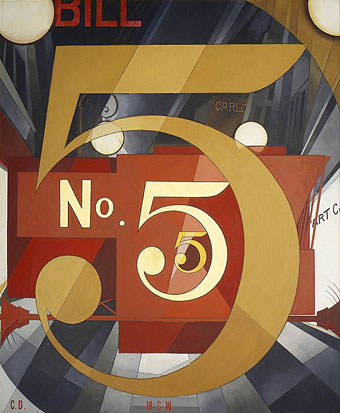
The Figure 5 in Gold (1928) by Charles Demuth.

It’s a little surprising to find I’ve been doing this for five whole years yet here we are. Having seen a number of blogs call it quits at the five-year point I should note that I don’t feel quite that exhausted although maintaining a discipline of daily posting can be a chore at times, especially when you’re pressured by work. On the whole the advantages continue to outweigh the disadvantages. Some of the discoveries here have fed back into things I’ve been working on or opened avenues for future exploration. Researching something for an audience (however slight that audience or the resulting post) encourages you to look more deeply into a given subject; sometimes you learn more as a result and occasionally make surprising discoveries. Obsessions are teased out which might otherwise have lain dormant. Yes, it’s an extra bout of work but I’ve spent much of my life saying to people “if you like that, you may like this”, and that’s all many of these posts are doing.

This year promises to be an interesting one so watch this space. And, as always, thanks for reading!

John x

On to the links…

Cathedral Scan translates the architectural plans of Gothic cathedrals into open-ended musical scores via custom software. There’s more at Blake Carrington‘s website.

Forty-three William Burroughs recordings (tape experiments and readings) at the Ubuweb archives.

• The opening scene of Deadlock (1970), an obscure German film with a theme by the mighty Can.

Strange Lands: A Field-Guide to the Celtic Otherworld, a new book by Andrew L Paciorek.

• The enduring nature of Frankenstein, currently on stage at the National Theatre, London.
shimojo.jpg

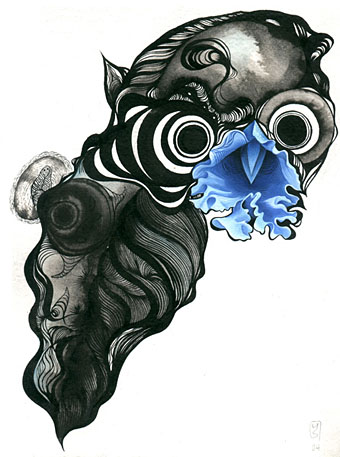
Owl One (2004) by Yuri Shimojo.

¡Activista! by Sonny Smith: Drag Queens, Borders, Rivers, Death and Transformation.

• Estonian sculptor Mati Karmin makes furniture out of Russian anti-submarine mines.

Alan Moore’s contribution to the Save Our Libraries campaign.

• Innsmouth Free Press is raising funds for their running costs.

A history of queer street art (Facebook link, unfortunately).

Illuminated book design for Heston’s Fantastical Feasts.

Physica Sacra, an engraving set at Flickr.

Egypt (1985) by Tuxedomoon | Egyptian Basses (1998) by Coil | Soleil D’Egypte (2001) by Natacha Atlas.
More Queer Noise

smiths.jpg

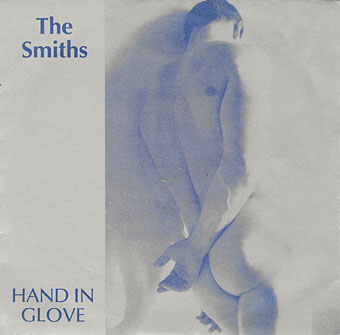
Hand In Glove (1973) by The Smiths, 7″ single.

This celebrated pair of buttocks turned up in the inbox this week, courtesy of a news mail from the Manchester District Music Archive announcing their Queer Noise website, an online exhibition exploring LGBT music and club culture in Greater Manchester. It was just over a year ago that I designed a poster for the Queer Noise music event which preceded the online collection; writer and journalist Jon Savage was the host that evening and he’s provided an intro for the site. And speaking of queer noises, I’ve been told recently that John Gill’s 1995 book of that name, Queer Noises: Male and Female Homosexuality in Twentieth-Century Music is shortly to be republished in an updated edition. No further details as yet.

french.jpg

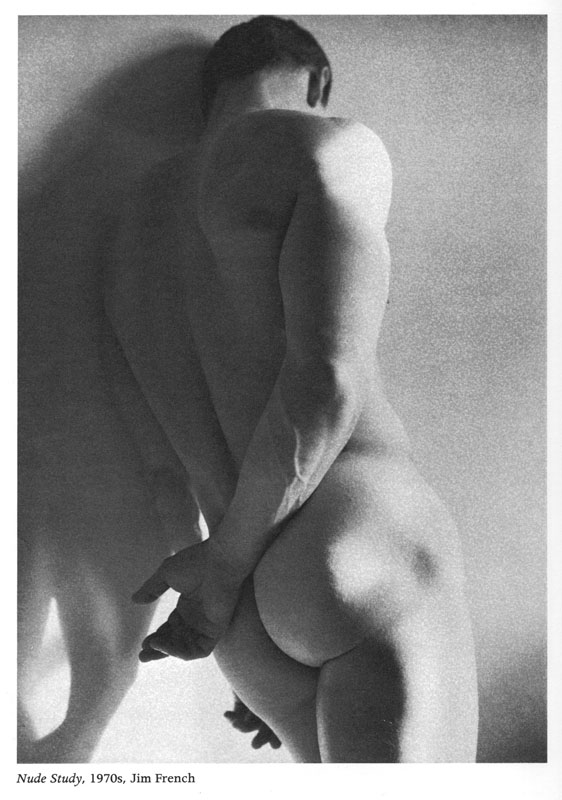
Meanwhile, back at the buttocks, it seems that Morrissey swiped his cover photo for the first Smiths single from The Nude Male (1978) by Margaret Walters. I have that very book so here is that very photo, an impressive study by beefcake photographer Jim French.

Previously on { feuilleton }
Queer Noise in Manchester
Queer Noise and the Wolf Girl
The fascinating phallus
Queer Noises

Symbolist cinema

dracula1.jpg

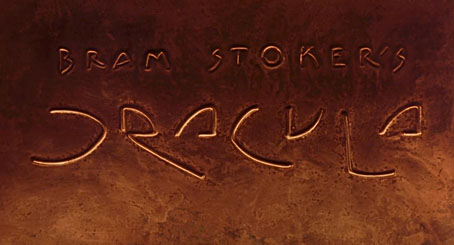
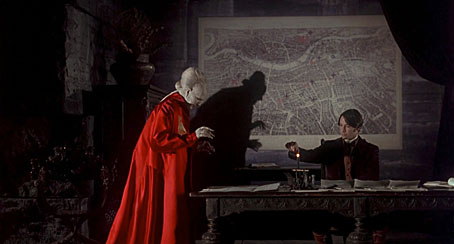
Symbolist? Arguably. Decadent? Certainly. Watching Francis Ford Coppola’s Dracula (1992) again this weekend I thought it worth making note of some of these resonances. The real age of Symbolist cinema was the Silent Era from around 1910 onwards, something I discussed in more detail here. That being so, several films made since can be taken as Symbolist (more usually Decadent) productions even if this was never their original intention. Kenneth Anger‘s Magic Lantern Cycle comes immediately to mind, so too Sergei Parajanov’s The Colour of Pomegranates.

dracula3.jpg

Bram Stoker’s novel was published in 1897 at the ebbing of the fin de siècle but vampires and vampirism were already recurrent Symbolist themes. Aesthetic magus Walter Pater wrote of the Mona Lisa in 1893, “She is older than the rocks among which she sits; like the vampire, she has been dead many times, and learned the secrets of the grave…” Dracula almost demands a Symbolist interpretation, and for now Coppola’s production is the closest we get. I’ve found this makes the film more satisfying in a way: you can ignore the shoddy performances by secondary characters and concentrate on the decor and details (and the tremendous score by Wojciech Kilar). Some of the following screen grabs argue my point.

dracula2.jpg

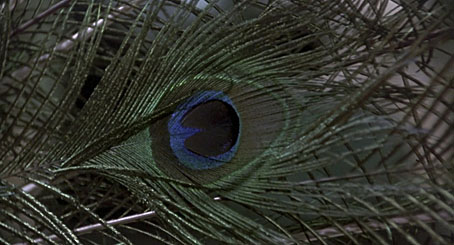
Oh look, peacock feathers. I loved the artificiality of this film, the excessive palette, the obvious models and miniatures, the layering of images. The dissolve from a peacock feather to Jonathan Harker’s infernal train journey is a great moment.

Continue reading “Symbolist cinema”

Weekend links 46

finalprogramme.jpg

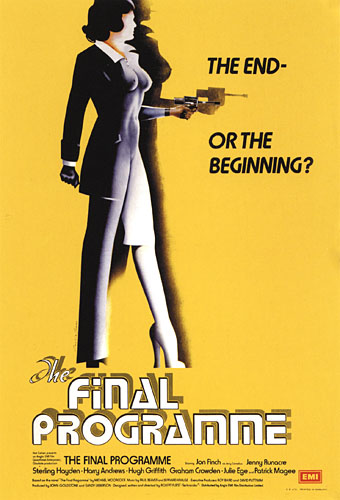
The Final Programme (1973). Philip Castle’s poster art implied the androgynous finale of Moorcock’s novel which the film itself evaded.

They were musty-smelling 10p messages from the futuristic past, complete with cover designs (and content) that were unlike anything I’d seen before. I’m fairly certain that this was how I first came across Michael Moorcock, in an early-70s Mayflower paperback, with a psychedelic cover by Bob Haberfield.

(…)

Moorcock steered New Worlds towards a set of concerns that chimed with the times; this was the period ruled by Marshal McLuhan and RD Laing, and the exploration of “inner space” seemed just as interesting as the “outer space” of satellites and moonshots. This turn was controversial, not just with die-hard pulp fans, but, surprisingly, with people such as the pop artist Richard Hamilton, another denizen of the London scene. “He thought we were turning science fiction into something namby-pamby, losing its roots,” Moorcock says. “He wanted explosions and spaceships and robots.”

When Hari Kunzru met Michael Moorcock, a major feature on a great writer and cultural catalyst. Kunzru posted the full transcript of their conversation here. Jovike’s Moorcock Flickr set has many of the lurid Mayflower covers.

• Moorcock is among the contributors to the forthcoming Thackery T. Lambshead Cabinet of Curiositities. io9 posted a list of contents (and one of my pics) while co-editor Jeff VanderMeer added some detail.

• So long to The White Stripes whose dissolution was announced earlier in the week. We know they’ll be back one day. Jay Babcock gave them their first major interview for the LA Weekly in 2000 which he’s reposted here.

Mister Blues (1962) by Lasry-Baschet aka Structures Sonores, a rare 7″ single showcasing the unique glass-and-metal sounds of the Cristal Baschet. Young Teddy Lasry on clarinet was playing in prog-jazz outfit Magma a few years later. Related: John Payne on Magma and The Mars Volta.

Here’s one thing that changed me: a close reading of Flannery O’Connor’s Mysteries and Manners. In it, she says that, “it is the business of fiction to embody mystery through manners,” manners being those concrete details — depictions of the real — in story. “Mystery through manners…” I had never heard a modern author seeking deep metaphysical mystery through realism before. Well, sure, Robert Musil, Bruno Schulz, Robert Walser, and a handful of other personal faves. By deep mystery I mean, mystery about our relationship with the planet, not anthropocentric mystery. I get sick of thinking about humans quickly, as we only constitute about 1% of what’s happening in our universe, if that much, and it was refreshing to me to hear O’Connor critiquing Henry James’ idea that modern people should aspire to know nothing of mystery, to be completely rooted in humanity. That notion makes me feel like hurling myself off a cliff. In her opinion, great literature seeks to embrace and express mystery through its mimicry of actual mannerisms. Mystery — fantasy — through the real. And with that, the borders between fantasy and realism were completely transgressed in my brain. Suddenly, I saw them as two good means to the same end. This made me excited to write real human situations again.

Trinie Dalton is interviewed here.

• And speaking of mystery through the real, there’s London Intrusion, a sequence of metropolitan adumbrations by China Miéville. Am I the only person to spot an intrusion of a different kind in the presence there of one of Eugène Atget’s Parisian views? There’s a doorway to Viriconium in that curious wedge of buildings but nobody can tell you where.

Rupert Murdoch—A Portrait of Satan. Adam Curtis on top form looking at the Dirty Digger’s career and a reminder of why some of us have always called one of his rags The Scum. A key point for me: Murdoch’s insecure railing against “elites”, a favourite term of aspersion on his Fox News network.

• Rick Poynor asks What Does JG Ballard Look Like? Related: “…only two people in Bucharest are going to read this.” Eduardo Paolozzi in conversation with JG Ballard and Frank Whitford, 1971.

How many days does Bill Murray’s character really spend reliving Groundhog Day?

• Silent Porn Star explores The Translucent Beauty of Androgyny.

Ballets Russes brought back to life on film, and also here.

Dewanatron Electronic Music Instruments.

RIP Tura Satana. Remember her this way.

Warm Leatherette (1978) by The Normal | Warm Leatherette (1982) by Grace Jones | Warm Leatherette (1998) by Chicks On Speed.

Deutsche Kunst und Dekoration #6

dkd06-01.jpg

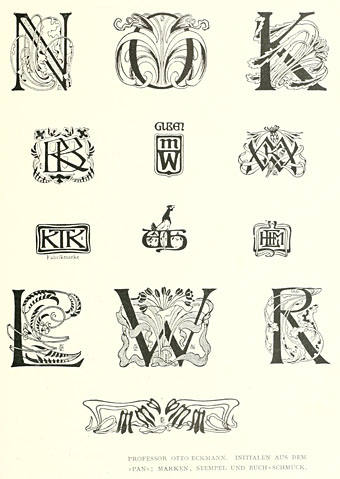
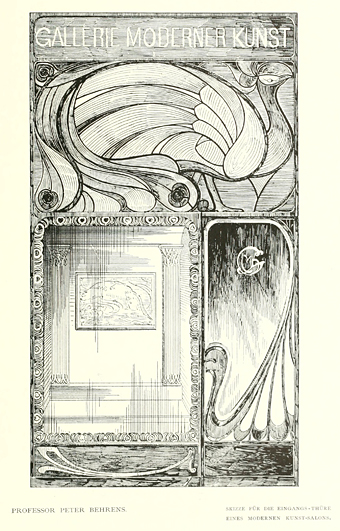
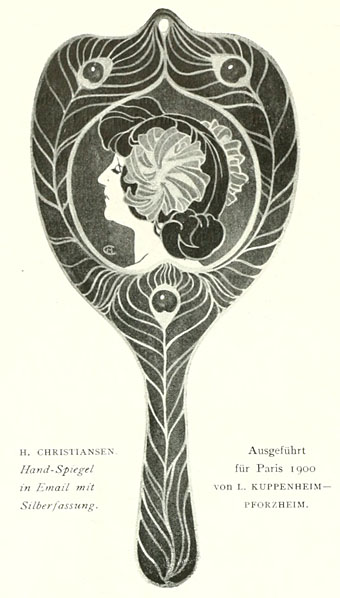
Continuing the delve into back numbers of Deutsche Kunst und Dekoration, the German periodical of art and decoration. Volume 6 covers the period from April to September 1900, and the content is still Art Nouveau all the way, with a dash of Symbolism. Among the contributors in this edition there’s Otto Eckmann and more work from Hans Christiansen, both frequent contributors to Jugend magazine There are further examples of stylish Art Nouveau interiors, and of considerable interest to this Exposition Universelle obsessive, a look at the Paris exposition of 1900 from the German side of things. As before, anyone wishing to see these samples in greater detail is advised to download the entire volume at the Internet Archive. There’ll be more DK&D next week.

dkd06-02.jpg

The ubiquitous peacocks were never far away in 1900.

dkd06-03.jpg

Continue reading “Deutsche Kunst und Dekoration #6”