Weekend links 142

bowie.jpg

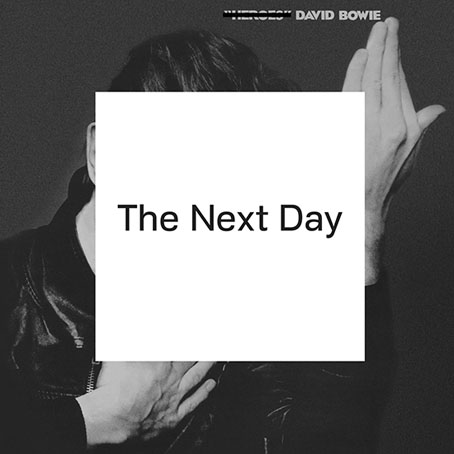
Gratifying this week to see album cover art under discussion even if the heat-to-light ratio was as unbalanced as it usually is when pop culture is the subject. Jonathan Barnbrook, who also designed the Heathen (2002) and Reality (2003) packaging for David Bowie, wrote about the thinking behind the new cover on his blog. (And for the time being let’s note that this is still only a cover design, we don’t know what else is on its way.)

For my part I’ll point out that the artist-as-cover-image is the great cliché of album design, and the bigger the name the more the rule applies; Neville Brody complains about this in the first book of his work, as does Storm Thorgerson in the Hipgnosis books. In Bowie’s case the rule has been applied almost universally since his debut album in 1967, the only variations being illustrational ones or slight dodges like having his feet appear on the front of Lodger and his back facing the viewer on Earthling. Consequently the new design is a radical gesture from an artist who could have got away with a photo of himself du jour. By way of contrast, consider that Rod Stewart is a year older than David Bowie and presented the world with this artefact in October 2012.

Related: Hard Format responds to the cover, Chris Roberts on “Picasso resurrected in a Rolf Harris era“, and Alexis Petridis on The inside story of how David Bowie made The Next Day.

The Quicksilver typeface, designed by Dean Morris when he was only 16, bought by Letraset and now an indelible feature of pop design from the 1970s. Morris describes his experience here (“they shunned rapidographs!”) and collects examples of the print history here.

When the days are short, we are closest to the medieval world. To the avoidance of mirrors where death improves our portraits every morning with a few more lines and shadows. What would once have been a sermon, a conjuring of hellfire, a phantom slide show, is now an entertainment. But before we can begin again, we have to kick free of the embrace of our inconvenient predecessors, that compost legion of the anonymous dead. They come uninvited, requiring us to sign up for what the late Derek Raymond called the general contract: a brief turn in the light, then extinction. Eternal darkness. How to live with such knowledge? William Burroughs admired the unswerving bleakness of Beckett’s gaze, the way he reduced compensatory illusions to zero. Nowhere left to crawl. And nothing to crawl on. Last breath is last breath. Stare into the abyss and the abyss will stare right back.

Iain Sinclair reviews The Undiscovered Country: Journeys Among the Dead by Carl Watkins

Broadcast’s James Cargill on Morricone, Minidiscs and Scoring Berberian Sound Studio. Related: Melmoth the Wanderer posts a new mix, The Curious Episode of the Wizard’s Skull, and more spooky sounds are on their way from The Haxan Cloak.

• A Firm Turn Toward the Objective: Joanne Meister on meeting the great Swiss designer Josef Müller-Brockmann.

duchess.jpg

Twitter user @thisnorthernboy reworked Paul Emsley’s portrait of Kate Middleton. @barnbrook approved.

• The Beatles of Comedy: David Free on the Monty Python team.

• The history of the London Underground poster.

Impossible Architecture by Filip Dujardin.

• At Pinterest: Art Dolls & Sculpture

• Grace Jones’ Nightclubbing album has been on repeat play this week: Warm Leatherette/Walking In The Rain | I’ve Seen That Face Before (Libertango) | Demolition Man
Jon Finch, 1941–2012

finch1.jpg

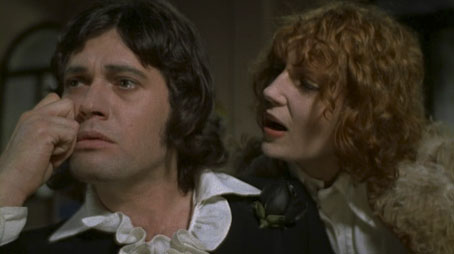
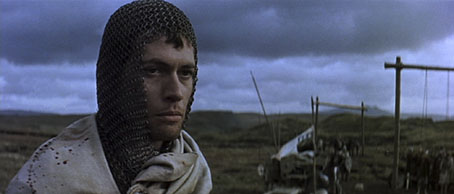
Macbeth (1971).

There are few actors I’ve ever felt sufficiently cultish about who could make me watch films or TV dramas I wouldn’t otherwise be interested in. Orson Welles would be one (up to a point, he was in a lot of crap in later years), Patrick McGoohan another and Jon Finch most definitely a third. Having watched Finch just over a week ago in Roman Polanski’s superb adaptation of Macbeth it’s been a shock to discover that he’d died shortly after Christmas, the news of his funeral only being announced this week.

finch4.jpg

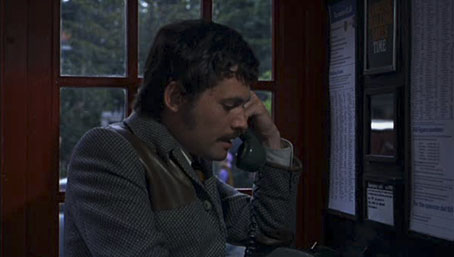
Frenzy (1972).

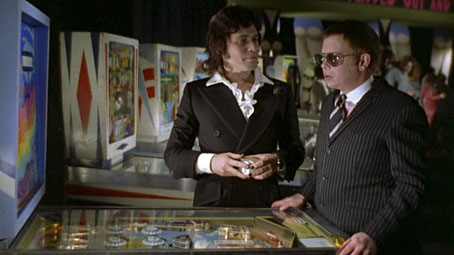
The cult status stems from the remarkable run of lead roles he was offered in the early 1970s: playing Macbeth for Polanski, the “wrong man” role in Hitchcock’s last great film, Frenzy, and a perfect Jerry Cornelius in Robert Fuest’s adaptation of Michael Moorcock’s The Final Programme. There were plenty of other roles, of course, but those three are standouts which also show something of his range: suitably brooding, weak and malevolent in Macbeth, in Frenzy a hounded man who seems disreputable enough for his friends to suspect he may be a murderer, in The Final Programme as smart and insouciant as Moorcock’s Cornelius ought to be.

finch2.jpg

The Final Programme (1973): Finch with Jenny Runacre (Miss Brunner).

I’m happier that Finch played Cornelius instead of James Bond, a role he was offered after Sean Connery quit. Jerry Cornelius, “the English Assassin”, in the first novel in Moorcock’s Cornelius quartet is a kind of anti-Bond, and there were few actors around in 1973 who would have possessed the necessary charisma and intelligence for the part. Mike Moorcock was friends with Finch around the time the film was being made so when I was visiting the Moorcocks in Paris a few years ago I asked him why Finch hadn’t done more with his career after such an impressive start. Mike says he was one of those actors who often preferred to be doing something else with his time.

finch3.jpg

Finch and Ronald Lacey (Shades) in The Final Programme.

finch5.jpg

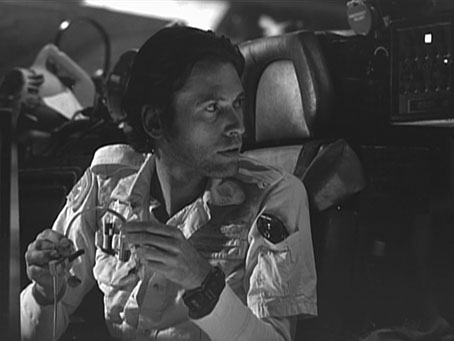
On the set of Alien (1978).

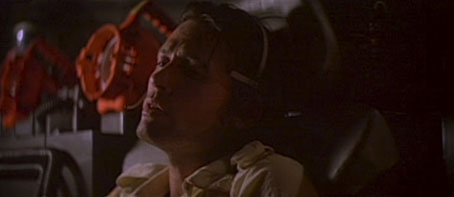
Obituaries will no doubt regard Finch’s rejection of the Bond role as a missed opportunity but I wish we could have seen him as intended in Ridley Scott’s Alien where he’d been cast as Kane but had to drop out after contracting a severe case of bronchitis once shooting was underway. The photo and screen grab below are seldom-seen images from the Alien DVD extras. I’ve nothing against John Hurt in the role but with Finch playing the part it would have made a cult film a little more special. He did get to act for Ridley Scott eventually with a small role in Kingdom of Heaven in 2005.

finch6.jpg

An outtake from Alien.

finch7.jpg

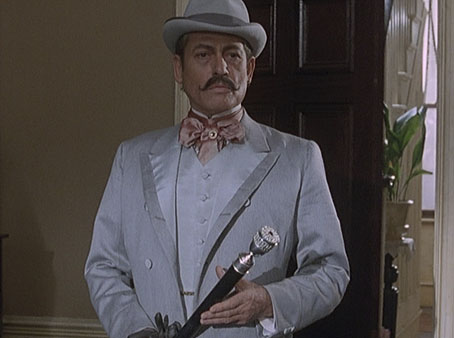
As Count Sylvius in The Memoirs of Sherlock Holmes (1994).

finch8.jpg

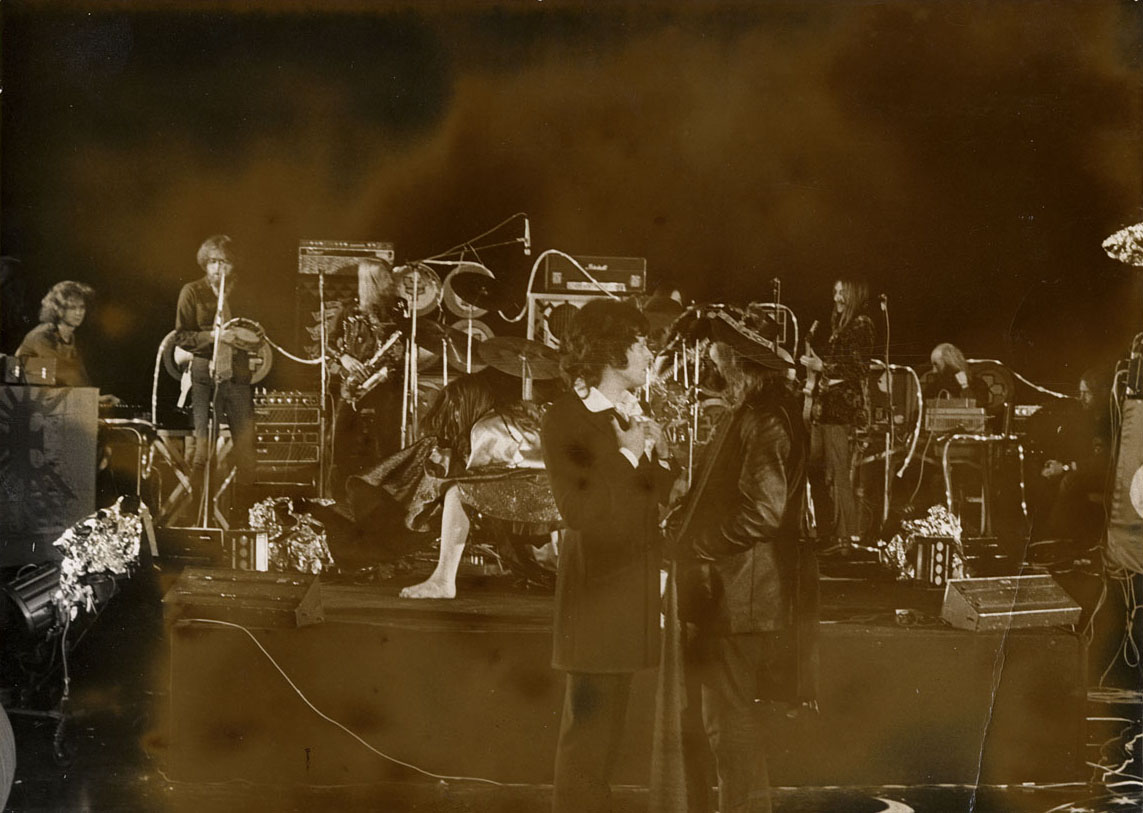
Update: Found on an archive disc, this rare photo from the set of The Final Programme showing Finch as Jerry Cornelius facing off with his creator, Michael Moorcock. (Click for a larger copy.) That’s the Space Ritual line-up of Hawkwind in the background. Band and author appear for a fraction of a second in a shot during the film’s arcade scene. Considering how common it was to have rock bands in feature films during this time it still surprises me that Fuest and co. went to all this trouble then left them on the cutting-room floor. The photo was Moorcock’s own, as I recall, something we ran in one of the Savoy books.

Guardian obituary
Independent obituary
Telegraph obituary
Macbeth trailer
Frenzy trailer
The Final Programme trailer

Previously on { feuilleton }
Dan O’Bannon, 1946–2009
Patrick McGoohan and The Prisoner

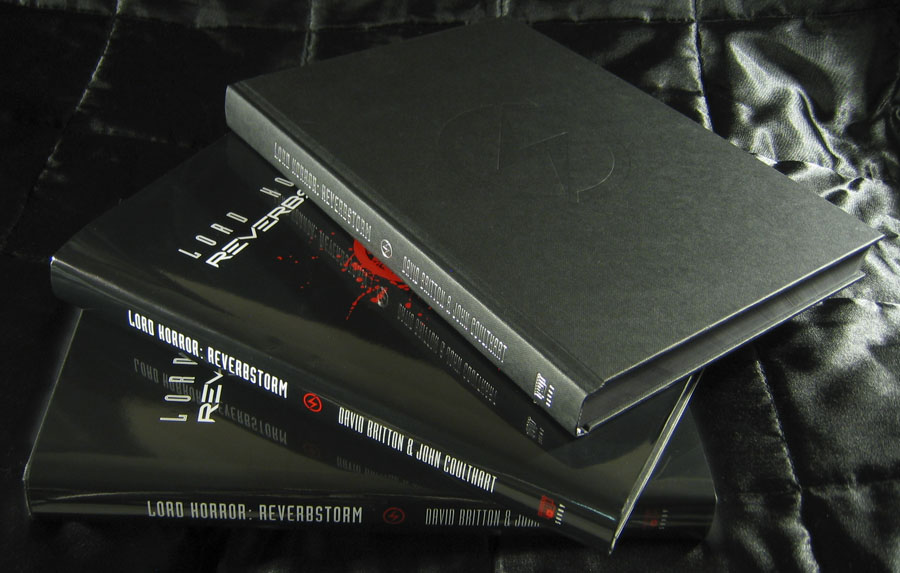
Reverbstorm on sale

reverbstorm1.jpg

At long last, the news that many people have been waiting for: the Reverbstorm book is now on sale at Savoy. From the hyperbolic press release:

“Surfin’ bird Bbbbbbbbbbrbrbrbrbrb…awawawawawawawaaaaaah! A-pa-pa-pa-pa-pa-pa-pa-pa-pa-pa-pa-pa-pa-pa-pa-pa-pa-pa-pa-pa-pa-pa-pa-pa-pa-pa-pa-pa-pa-pa-ooma-mow-mow Papa-oom-mow-mow!” The Trashmen, Surfin’ Bird

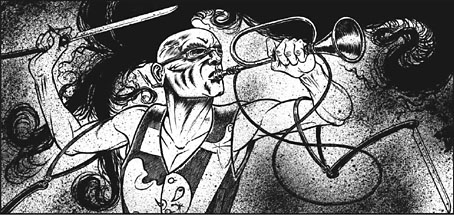
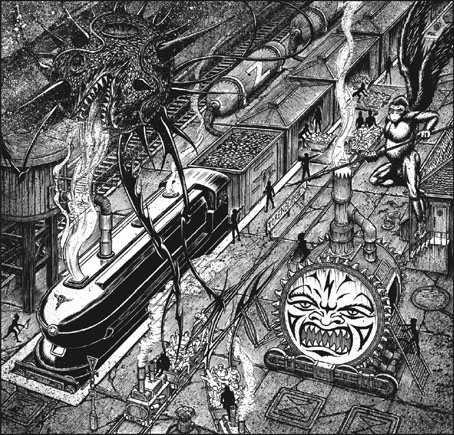
Welcome to the nightmare metropolis of Torenbürgen, where New York’s Art Deco architecture has fused with the termination machinery of Auschwitz. In this urban inferno Jessie Matthews is singing Sondheim, James Joyce is at work on a new novel and Lord Horror, ex-Nazi propaganda broadcaster and Torenbürgen’s model citizen, is stalking the streets in search of fresh victims for his razors. Murderous apes infest the alleyways, Ononoes feast on the living and the dead, while above the rooftops the Soul of the Virgin Mary drifts like a swollen Lovecraftian dirigible, picking at bodies destined for the charnel furnaces.

Lord Horror: Reverbstorm is a unique graphic collaboration between writer David Britton, the author of four Lord Horror novels, and artist John Coulthart, whose book of Lovecraft-derived comic strips and illustrations, The Haunter of the Dark, featured a collaboration with Alan Moore. Reverbstorm was originally published in serial form and is now being presented in a single volume for the very first time. Britton’s debut novel, Lord Horror (1990), was the last work of fiction to be banned in the UK; an earlier Lord Horror comic series, Hard Core Horror, was also banned by a British court in 1995. Coulthart’s death-camp artwork from the final issue in that series appears in Reverbstorm as a prelude to the main narrative.

There’s never been a comic like this surreal collision between Modernist art and pulp aesthetics, a world where Finnegans Wake is drenched in Alligator Wine and Picasso’s Guernica is invaded by Tarzan’s simian hordes. Ambitious, transgressive and meticulously rendered, Reverbstorm is one answer to the eternal question posed by those cultural philosophers, The Cramps: “How far can too far go?”

“Bababadalgharaghtakamminarronnkonnbronntonnerronn-
tuonnthunntrovarrhounawnskawntoohoohoordenenthurnuk!”
James Joyce, Finnegans Wake

reverbstorm2.jpg

rev2.jpg

Previously on { feuilleton }
Reverbstorm in print
Reverbstorm update
James Joyce in Reverbstorm
A Reverbstorm jukebox
Reverbstorm: Bauhaus Horror
Reverbstorm: an introduction and preview

Polanski details

polanski01.jpg

Roman Polanski as Alfred in Dance of the Vampires (1967).

I’ve always admired the attention to detail in Roman Polanski’s films, a quality evident not only in his careful adaptations but also in areas that lesser filmmakers might ignore. Dance of the Vampires (1967) is a good example (sorry, I refuse to call it by the title MGM used for its edited US release): the sets and decor are remarkable, and the editing and camera work so skilfully blends studio constructions with location shots that for years I was convinced the film was made in a genuine European castle. The atmosphere is so carefully sustained that I found the whole thing as terrifying on first viewing as any Hammer film, despite the broad humour. In the set-piece moments Polanski (and soundtrack composer Krzysztof Komeda) put many of the later Hammer vampire films to shame.


The Vampire Portraits

polanski02.jpg

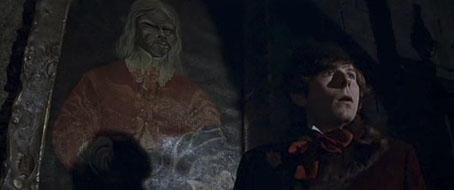
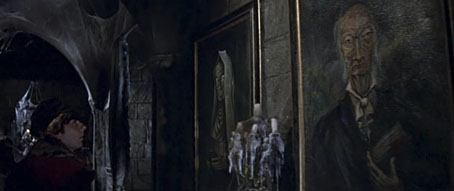
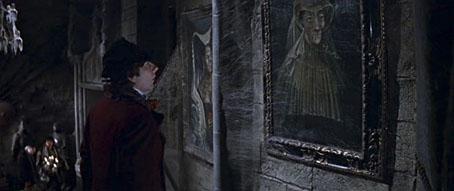
The production design and art direction for Dance of the Vampires was created by Wilfred Shingleton and Fred Carter, both of whom later worked on Polanski’s Macbeth, and who fill the rooms with mouldering furnishings and rotting decoration. One striking sequence concerns a walk through a gallery of vampire portraits that are the creepiest paintings seen on film since Ivan Albright’s portrait of a decrepit Dorian Gray. Film credits in the 1960s were sparse so there’s no indication of the artist responsible. However, one portrait glimpsed at the end of the gallery (below) is a copy of the “Ugly Duchess” painting by Quinten Matsys.

polanski03.jpg


Rosemary’s Book

polanski04.jpg

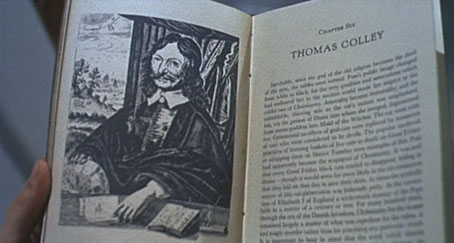
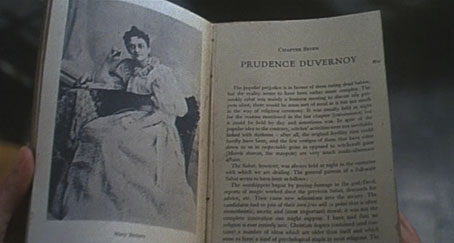
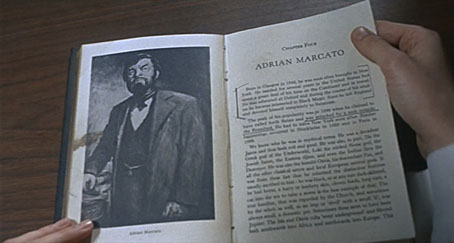
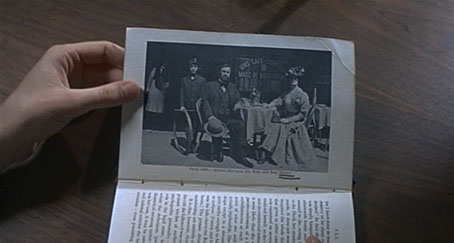
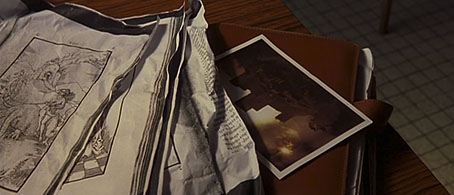
A sign that filmmakers care about detail is when they make their fictional books look like the genuine article. The history of witchcraft in Rosemary’s Baby (1968) could easily have been glimpsed very briefly but Polanski shows Rosemary leafing through its pages in a sequence of Hitchcock-like view-reaction-view shots that make it appear as convincing as possible. The shots also make the viewer examine the book through Rosemary’s eyes, something Polanski does throughout the film.

polanski05.jpg

polanski06.jpg

polanski07.jpg


Trelkovsky’s Paintings

polanski09.jpg

The Tenant (1976) is Polanski’s third study of apartment-dwelling paranoia, a superb adaptation of Roland Topor’s novel, Le Locataire chimérique (1964). The screenplay removes some of Topor’s ambiguity—and the film is spoiled by unsympathetic dubbing of the French actors—but in every other respect it’s as good as Repulsion for its portrait of an isolated individual (here portrayed by Polanski himself) surrendering to madness.

polanski10.jpg

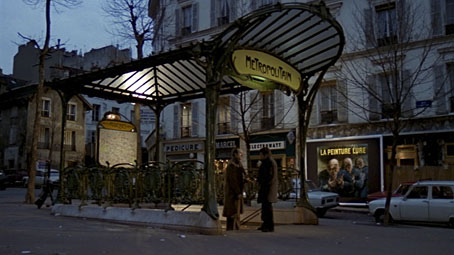
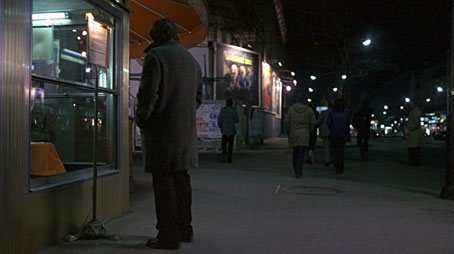
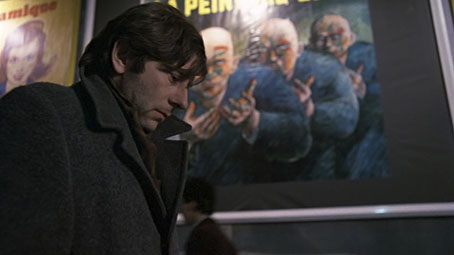
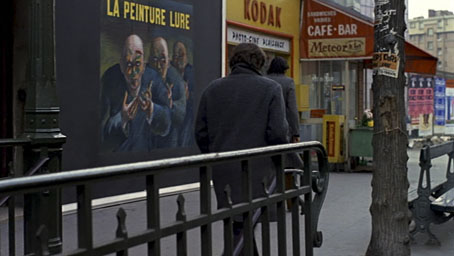
Among the many visual details which add to the unease is the appearance halfway through the film of billboards advertising…what? A painting exhibition? Or something more sinister? We never find out. The presence of these figures and their slogan—”La Peinture Lure”—remains as cryptic as many of the other unresolved questions which prey upon the beleaguered Trelkovsky.

polanski11.jpg

polanski12.jpg


Corso’s Postcard

polanski13.jpg

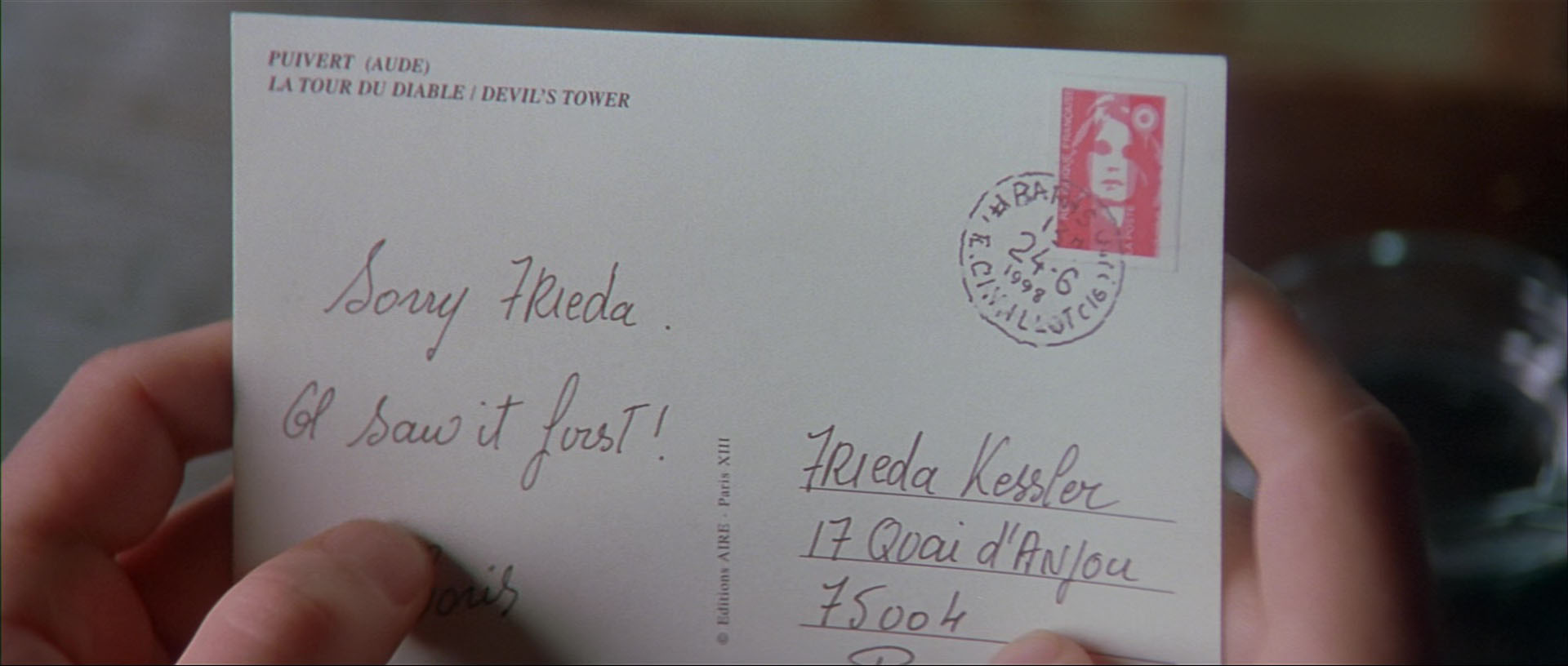
I’m in the minority of people who like The Ninth Gate (1999) a great deal even though it takes some liberties with Arturo Pérez-Reverte’s wonderful novel The Dumas Club. Once again, the bibliographic details are perfectly done, a crucial matter in a film about the antiquarian book trade. Near the end of the film Dean Corso (played by Johnny Depp) finds a postcard that leads him to the final location. On the back of the card there’s a blink-and-you-miss-it detail. Polanski’s wife, Emmanuelle Seigner, plays the mysterious and nameless woman who follows Corso throughout the film. By this point we already know she possesses occult powers so it’s not really surprising to see her face in the postage stamp, something that Corso doesn’t seem to notice.

polanski14.jpg

Previously on { feuilleton }
Repulsion posters
Atalanta Fugiens
Le Grand Macabre
Les Temps Morts by René Laloux
The writhing on the wall

Weekend links 141

nguyen.jpg

From the Beautiful Faces series (2012) by Tran Nguyen.

• “What possessed a generation of young European artists, and a few Americans, to suddenly suppress recognizable imagery in pictures and sculptures? Unthinkable at one moment, the strategy became practically compulsory in the next.” Peter Schjeldahl on the birth of abstraction.

• “A profanely mystical work of hyperpurple theory-porn, ObliviOnanisM is an auto-erotic intellectual fiction envisioning the phantastical unending odyssey of a young woman, Gemma, whom you will never know.”

Psychedelia—An Ancient Culture, A Modern Way of Life, a 520-page history of psychedelic culture by Patrick Lundborg. Related: Ken Kesey talks about the meaning of the Acid Tests.

[Hodges] made a convincing case that Turing’s teenage crush on a fellow schoolboy, Christopher Morcom, was an important catalyst for his lifelong preoccupation with the relationship between brain and mind. Morcom’s unexpected death at the age of eighteen was a shattering blow to Turing, who began to reflect on whether his friend’s consciousness might survive after death or whether it was simply a result of complex material processes and expired when life did. Hodges also linked the famous “Turing Test”, in which a computer attempts to pass as an intelligent human being, to Turing’s own dilemma as a gay man in a homophobic world. (Turing called his test the “imitation game”, and Hodges observed, “like any homosexual man, he was living an imitation game, not in the sense of conscious play acting, but by being accepted as a person that he was not”.)

Michael Saler reviews three books about computing pioneer Alan Turing

• Paul Gallagher at Dangerous Minds looks at Flowers, Lindsay Kemp’s theatrical staging of Genet’s Our Lady of the Flowers.

David Pearson designed a new edition of George Orwell’s Nineteen Eighty-Four for Penguin.

• Quadtone – Lumisonic Rotera: Mariska de Groot plays a light-to-sound instrument.

“Cash Mobs” Go Global—Battle Spreads Against Chain Store Dominance.

Cities and the Soul: a feast of Italo Calvino links at MetaFilter.

25 dessins d’un dormeur, Jean Cocteau, 1929.

Haunted Decor: a Flickr group.

Computer In Love (1966) by Perrey & Kingsley | Computer Love (1981) by Kraftwerk | Computer Love (1992) by The Balanescu Quartet