Atalanta Fugiens

teb.jpg

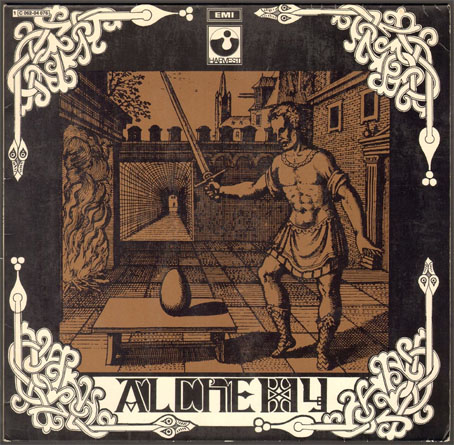
Alchemy (1969) by the Third Ear Band. Design by Dave Loxley.

For an idea of how these posts often come into being, this one is the result of the following chain of association: an article by Leo Robson about the films of Roman Polanski > A re-viewing of Polanski’s Macbeth > A re-listening to albums by the soundtrack artists for Macbeth, British folk group the Third Ear Band > A tracking down of the famous cover image from the first Third Ear Band album.

mm01.jpg

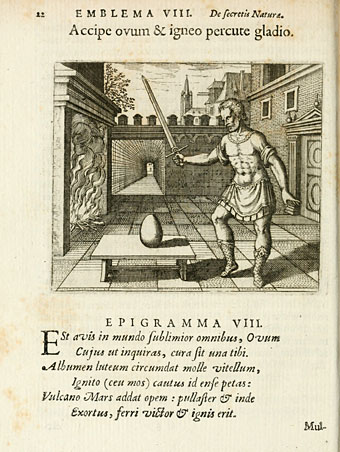
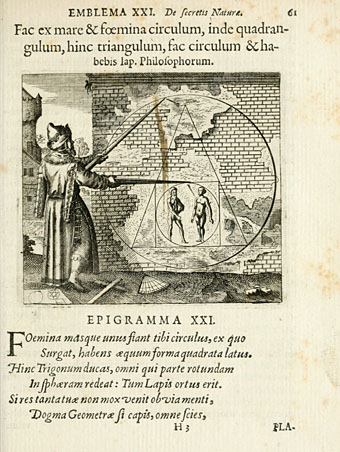
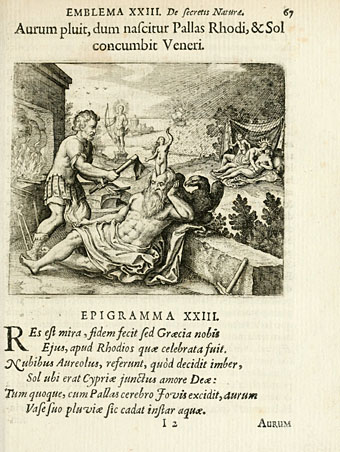
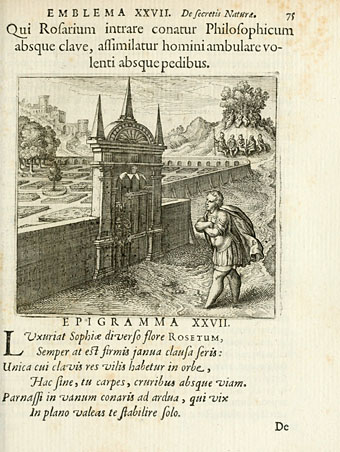
Alchemy is the dominant theme of the first two Third Ear Band albums. The engraving used on the cover of their debut album is one of the most frequently reproduced of all images associated with this branch of occultism, one of fifty emblems from Atalanta Fugiens (1618) by the German alchemist Michael Maier (1568–1622).

The plates are by Matthäus Merian, an artist whose career produced a number of notable alchemical illustrations. A detail from one of his other oft-reproduced pieces, Macrocosm and Microcosm from the Basilica Philosophica (1618), appeared on the cover of Pink Floyd’s Saucer Full of Secrets album a year before the Third Ear Band debut. Merian would no doubt be astonished that his work was so visible to future generations even though his name is seldom mentioned at all. The popularity can be accounted for by the way the best of these images seem almost archetypal whilst being resistant to any easy interpretation. Some of Merian’s plates remind me of Magritte’s paintings; they share a tension between carefully rendered yet impossible images that imply a hidden meaning. As Borges considered metaphysics to be a branch of fantastic literature it’s possible to consider this kind of alchemical illustration as a branch of fantastic art.

A 1687 edition of Maier’s Atalanta Fugiens (retitled Scrutinium Chymicum) may be browsed here or downloaded here.

mm02.jpg

mm03.jpg

mm04.jpg

Continue reading “Atalanta Fugiens”

The Time Machine

ttm01.jpg

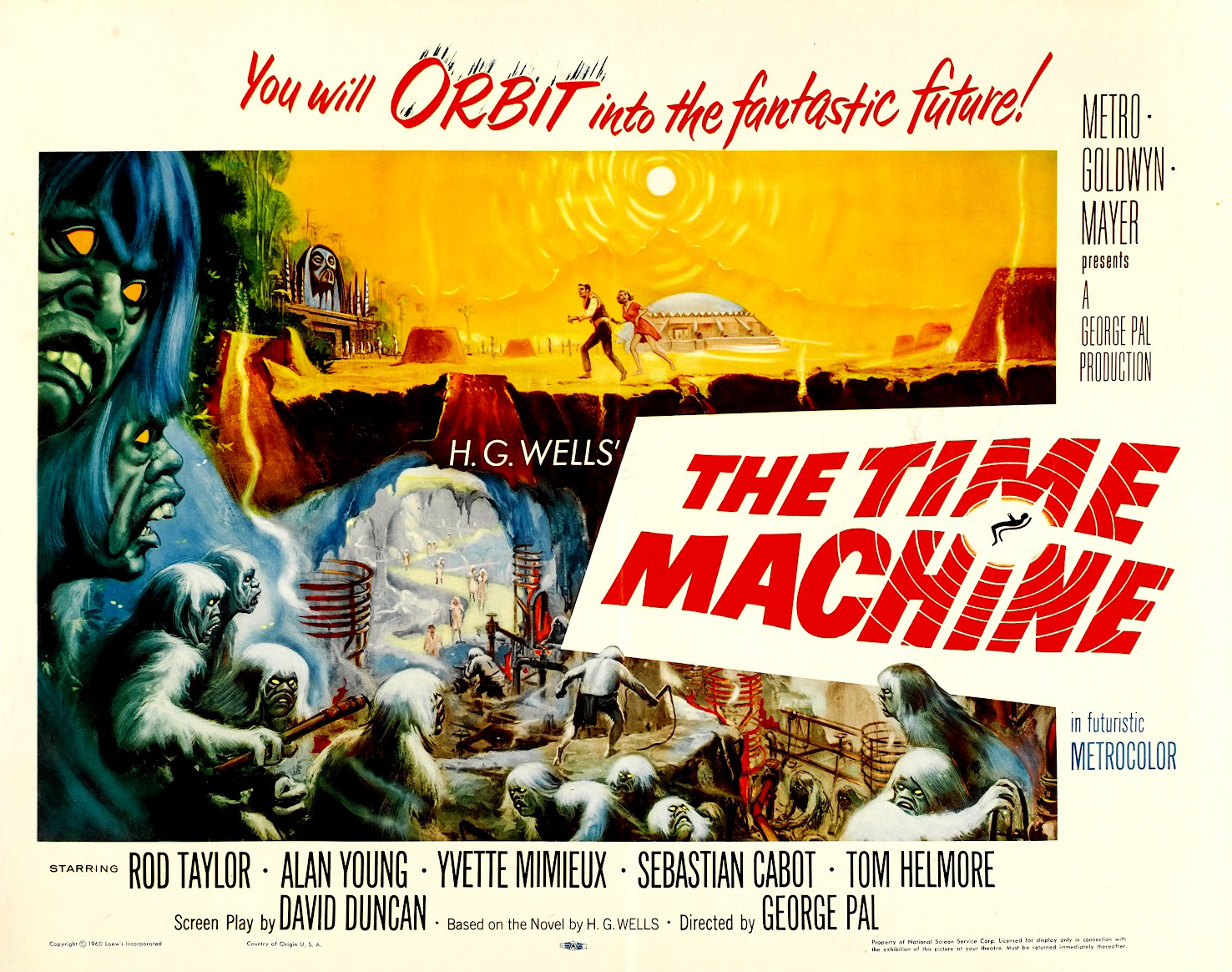
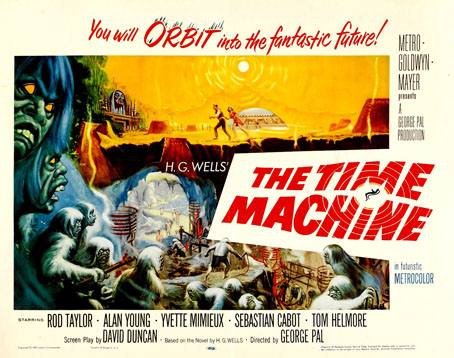
The Time Machine (1960).

The turning over of the calendar from one year to the next makes this day the ideal moment to write something about HG Wells’ celebrated story. Having re-read The Magic Shop before Christmas I decided to refresh my reading habit—lapsed these past months due to pressure of work—by revisiting more of Wells’ short stories, many of which I haven’t looked at for years.

As I said in that earlier post, it was The Time Machine that led me to Wells’ written work after being excited at an early age by George Pal’s 1960 film adaptation. Reading the story again I’m still astonished by how advanced it is compared to everything else being published in 1895. Michael Moorcock’s excellent introductory essay, The Time of ‘The Time Machine’ (1993), notes that time travel per se wasn’t a new idea for Victorian readers, there were many novels and stories using the theme, most of them merely displacing a character from one age to the next in a very simple manner. Wells’ innovation was the idea of a machine which would give the user mastery of Time itself. Moorcock also notes that Wells considered this to be his one great idea which he always felt he never exploited as fully as he wished. The need to make a living forced him to set down the story in some haste when it was accepted for serialisation in WE Henley’s New Review. (Moorcock’s introduction can be found in a recent collection London Peculiar and Other Nonfiction).
ttm11.jpg

The other notable feature this time round—and this means more to me than it would to many other readers—was being struck by the way Wells’ story prefigures so much of the fiction William Hope Hodgson would be writing a decade or so later. It’s a commonplace among Hodgson scholars that The Night Land (1912) owes something to the scenes when the Time Traveller journeys beyond the age of the Eloi and Morlocks to a period when the Earth is dead and the Sun has swollen to a baleful giant. Some of the more cosmic moments of The House on the Borderland (1908) can also be traced back to these scenes. I’d argue that the Time Traveller’s earlier battles with the Morlocks prefigure and possibly influence similar battles in The Night Land, and the attacks of the Swine-Things in Borderland. There’s even a moment near the end of Wells’ story when the Time Traveller is menaced by giant crustaceans like those which infest Hodgson’s Sargasso Sea. This may not be a fresh observation but it’s not one I’ve seen elaborated before.

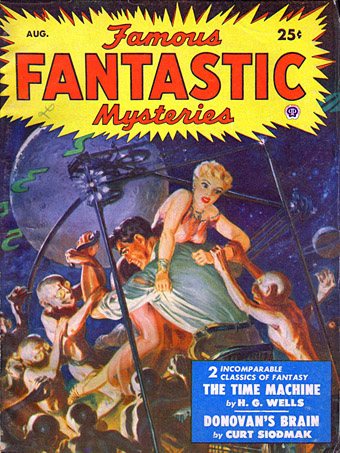
Regular readers will know it’s a habit here to seek out illustrations of favourite stories. In the case of The Time Machine there are hundreds to choose from so the following selection barely scratches the surface. Something I’d not noticed before when looking at comic strip adaptations is that none of the works derived from Wells’ story (George Pal’s film included) seem able to countenance the Time Traveller’s abandoning of Weena to the Morlocks when the pair become trapped outdoors at night; all show the Time Traveller doing his best to rescue her. William Hope Hodgson’s fiction is filled with rescues, sieges and the defence of the weak against marauding and inhuman forces; The Night Land concerns an epic and apparently suicidal rescue mission across the most inhospitable terrain imaginable. It may be stretching a point but it’s possible to see much of Hodgson’s fiction as being a riposte to this incident in Wells’ story.
ttm02.jpg

Illustration by George Saunders (August, 1950).

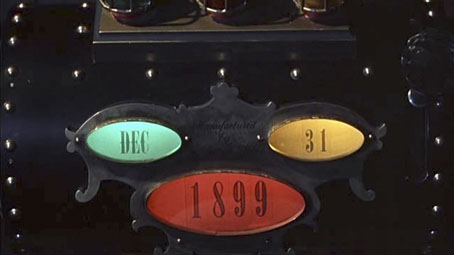
Recurrent points of interest in illustrations of Wells’ story are i) How is the Time Machine itself depicted? (The author’s descriptions are evasive), and ii) How are the Morlocks depicted? Wells describes them thus:

‘I turned with my heart in my mouth, and saw a queer little ape-like figure, its head held down in a peculiar manner, running across the sunlit space behind me. It blundered against a block of granite, staggered aside, and in a moment was hidden in a black shadow beneath another pile of ruined masonry.

‘My impression of it is, of course, imperfect; but I know it was a dull white, and had strange large greyish-red eyes; also that there was flaxen hair on its head and down its back. But, as I say, it went too fast for me to see distinctly. I cannot even say whether it ran on all-fours, or only with its forearms held very low.

George Saunders’ small Gollum-like creatures are closer to Wells’ conception than many later depictions. Saunders’ Weena, on the other hand, is far too tall for the equally diminutive Eloi.
ttm03.jpg

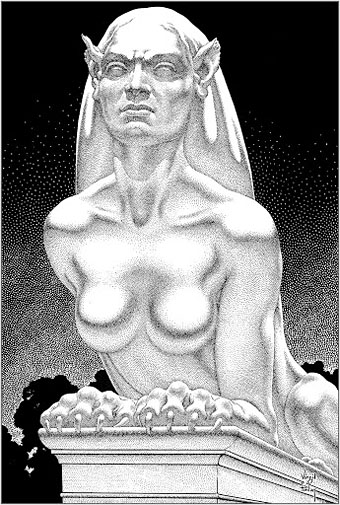
Virgil Finlay (1950).

This is still my favourite Time Machine illustration but then Finlay has a tendency to beat everyone when it comes to these assignments. His illustrations appeared inside the August, 1950 issue of Famous Fantastic Mysteries. Wells’ sphinx has wings which I imagine Finlay might have included if he wasn’t restricted by the space allowed for his illustration. He also provided the illustration of a Morlock below.

Continue reading “The Time Machine”
Weekend links 140

cards.jpg

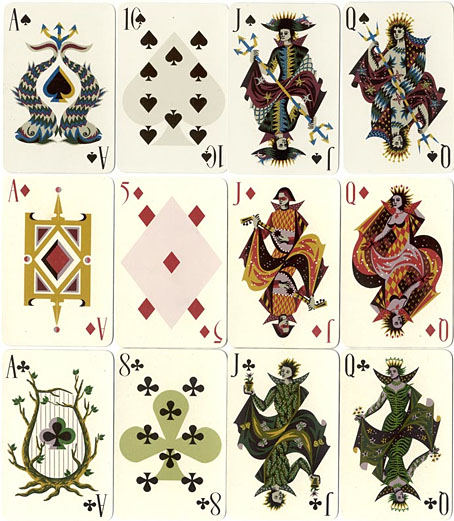
Thanks to Callum for pointing the way to a beautiful set of playing cards designed by Picart le Doux.

Of cigars and pedants by Houman Barekat, in which Vladimir Nabokov has a problem with Henry James. Tangentially related: Post-Punk’s Nabokov: Howard Devoto and Magazine, live from Berlin, 1980. (Given A Song From Under The Floorboards, and lines like “I could have been Raskolnikov / But mother nature ripped me off”, I’d say it’s more accurate to describe Devoto as Post-Punk’s Dostoyevsky.)

• “I was introduced to Kneale’s work like most kids: by a fifty-foot hologram of a psychic locust and a British colonel deliquesced by five million years of bad Martian energy.” In Keep Me in the Loop, You Dead Mechanism Dave Tompkins looks back at Nigel Kneale’s TV play The Stone Tape. I reported my own impressions at the end of October.

• At The Quietus this week, Carol Huston on Lord Horror: A History Of Savoy Publishing. Michael Butterworth is interviewed, and the piece includes some quotes from earlier interviews by yours truly.

As the Massachusetts minister Increase Mather explained in 1687, Christmas was observed on Dec. 25 not because “Christ was born in that Month, but because the Heathens Saturnalia was at that time kept in Rome, and they were willing to have those Pagan Holidays metamorphosed into Christian” ones. So naturally, official suppression of Christmas was foundational to the godly colonies in New England.

Rachel N. Schnepper on the Puritan War on Christmas.

• Maxine Peake and the Eccentronic Research Council have a seasonal song for you. Take the title, Black ChristMass, as a warning. The group recently played live on The Culture Show.

• Clive Hicks-Jenkins’ Artlog is currently hosting Alphabet Soup, an online exhibition by different artists each depicting the letters of the alphabet. Start here and click forward.

Ornate Typography from the 19th Century featuring samples from the King George Tumblr. Related: Sheaff ephemera.

saturn.jpg

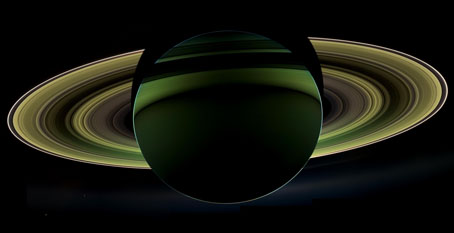
Saturn at Saturnalia. A Cassini image of the planet’s nightside.

Kenneth Anger interviewed by P. Adams Sitney. A 53-minute tape recording from 1972.

• At The Outer Church: James Ginzburg of Emptyset posts a winter music mix.

When Candy Darling met Salvador Dalí.

The psychedelic secrets of Santa Claus.

• At Pinterest: Camp as…

Saturn (1956) by Sun Ra | Permafrost (live, 1980) by Magazine | Uptown Apocalypse (1981) by B.E.F.

Walter Crane’s Household Stories

crane01.jpg

The ideal follow-up to yesterday’s post would have been David Wheatley’s 1979 film for the BBC’s Omnibus series dramatising the life and works of the Brothers Grimm. This week was the two hundredth anniversary of the publication of the Grimm’s Children’s and Household Tales; I’ve never seen Wheatley’s Grimm film which—for the moment—remains unavailable.

There are, of course, plenty of illustrated editions of the Grimm’s collections although the dark tenor of the stories means these have never been as popular as Hans Christian Andersen’s tales. The Internet Archive has editions by Arthur Rackham, Robert Anning Bell and Rie Cramer, as well as a later, more stylised edition by German illustrator Albert Weisgerber whose plates can be seen at 50 Watts. Weisgerber brings some of the darkness to the fore, as in the drawing which shows Gretel about to push the wicked old woman into the oven.

crane02.jpg

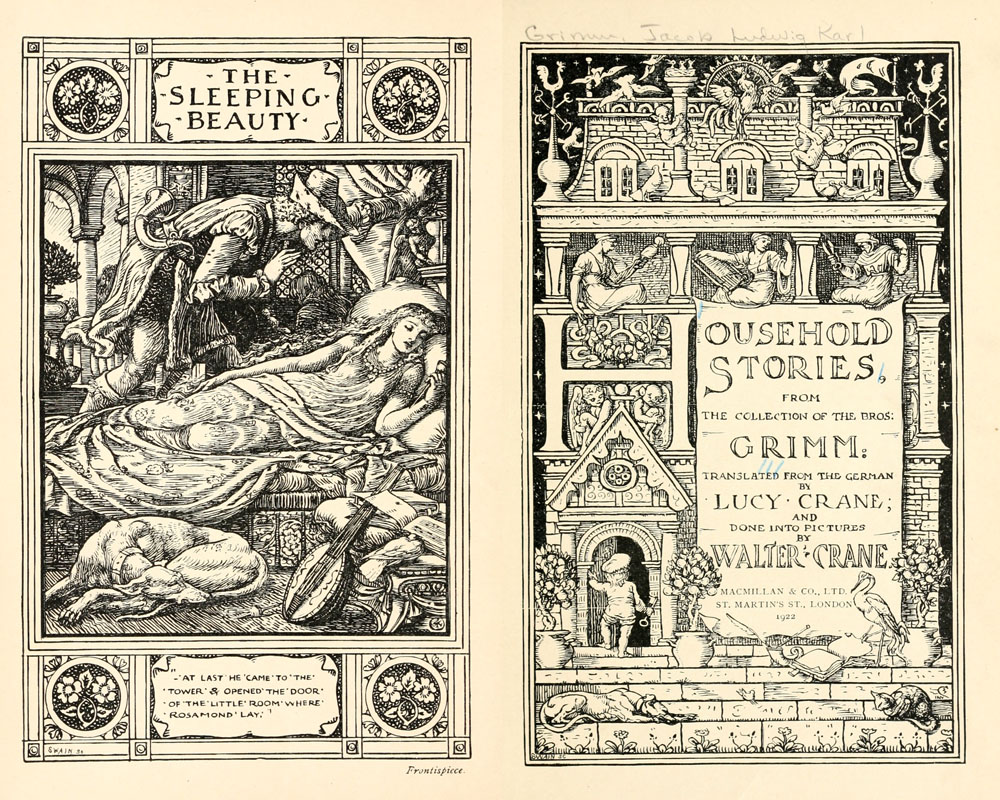
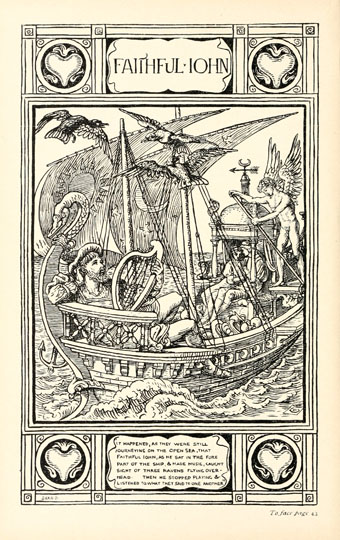
Walter Crane’s edition of Household Stories was first published in 1881. I’ve always liked the Pre-Raphaelite quality of Crane’s drawings so I favour this book over some of the other British editions. I love the house-shaped title page, and the way he embellishes the borders with details from the stories. The vignettes are as varied and inventive as you’d expect from a man who wrote a study of decorative art.

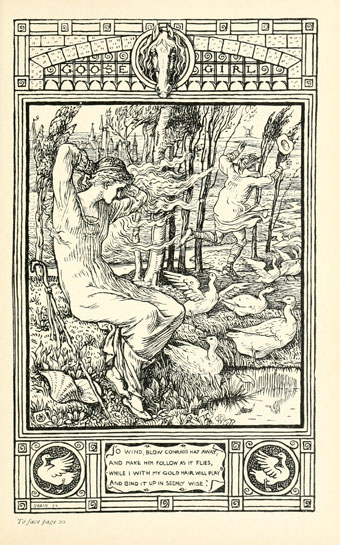
As for the stories, they can seem surprising today when the more popular Andersen fairy tales have become the versions most people know, and those mainly from anodyne film and TV adaptations. Looking at the Grimm books is like hearing older recordings of familiar folk songs (and the Perrault versions are older still): Cinderella is Aschenputtel, Little Red Riding-Hood is Little Red Cap, Snow White is Snow Drop, and so on. Walter Crane’s edition, translated by his sister, Lucy, contains 52 stories, just less than a quarter of the number in the final Grimm collection. William Morris admired Crane’s drawing of the Goose Girl enough to have it enlarged for a tapestry design. The scanned book can be browsed here or downloaded here.

crane03.jpg

Continue reading “Walter Crane’s Household Stories”

The Magic Toyshop

toyshop1.jpg

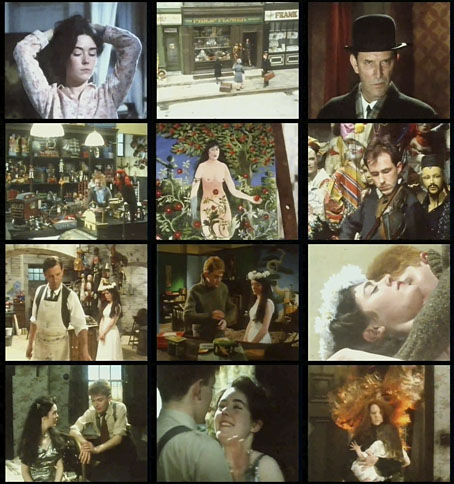
Yet more revenant TV drama. Seems like everything turns up if eventually so long as you’re prepared to wait. I’d looked for this film a couple of times after writing about TV director David Wheatley. The Magic Toyshop (1987) was a feature-length Granada Television adaptation of Angela Carter’s 1967 novel, with Wheatley directing and Carter herself supplying the screenplay. Caroline Milmoe plays Melanie, a teenage girl left in the care of her Uncle Philip after she and her younger brother and sister are orphaned. Tom Bell plays the sinister uncle who owns the toyshop of the title, a place where the toys, puppets and automata are as lively as JF Sebastian’s menagerie in Blade Runner. Melanie’s younger uncles, Finn and Francie, live in fear of the tyrannical Philip who forces them to assist with his life-size puppet shows, while Melanie’s aunt Margaret is not only cowed by her husband but also mute. The arrival of Melanie and her growing sexual awareness upsets the household’s balance of power.

toyshop2.jpg

It was good to see this film again having recently watched David Wheatley’s René Magritte film and his marvellous Borges documentary. In light of those earlier works an adaptation of Angela Carter would seem a natural progression. Aside from an overly-emphatic score, The Magic Toyshop was better than I remembered, the initial viewing no doubt suffering from an expectation that it might be a match for The Company of Wolves (1984). The Granada film had a much lower budget than Neil Jordan’s feature so it’s an unfair comparison. Wheatley and co. saved money with some careful use of the Baker Street set from Granada’s Sherlock Holmes adaptations.

Watching The Magic Toyshop now it’s surprising it was made at all, it’s an odd piece of work stippled throughout with surreal moments, and even Surrealist references, as with Finn’s Loplop-like appearance above. What drama there is refuses the familiar shapes that a TV audience would expect, and there’s also a surprising amount of incestuous desire boiling among the major characters that goes unquestioned. I’ve not read Carter’s novel so I can’t say how it compares but the film feels like a very pure delivery of the author’s landscape of entwined sexuality, fantasy and myth. The Magic Toyshop hasn’t been reissued on DVD so the YouTube version is from a tape copy. It’s also chopped into chunks (why, oh, why, etc) but it’s highly recommended to Angela Carter readers.

The Magic Toyshop: part 1 | part 2 | part 3 | part 4 | part 5 | part 6 | part 7

Previously on { feuilleton }
Borges and I
René Magritte by David Wheatley