Aubrey in LIFE

life.jpg

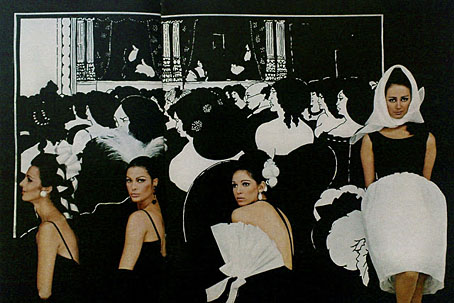
Turned out for a big night at the opera like Beardsley’s Wagnerites, girls wear bare-backed blacks by Trigère. Coiffed heads are by Hugh Harrison and Halston of Bergdorf Goodman’s; Halston also made the pouf-skirted dress. (Photo session by Milton Green & Joe Eula.)

Being determined to catalogue every last piece of Beardsley trivia from the 1960s, I’m compelled to note this post which I’d missed at Sweet Jane’s Pop Boutique a couple of years ago. An earlier post here showed one of the photos from a LIFE fashion feature using Aubrey’s drawings but the Sweet Jane post has scans of all the photos, plus accompanying text. This was published in February 1967, a few months after the summer exhibition at the V&A in London which introduced Beardsley’s work to a new generation, an exhibition which set in motion a wave of popular interest in his work.

I’m intrigued by the way the colour of the women’s bodies emerges from the drawings given the date when the magazine appeared. I’ve long seen 1966 as a very black-and-white year in graphic and aesthetic terms, whereas 1967 is obviously full-colour; the difference between the sleeves of the Beatles’ (Beardsley-derived) Revolver and Sgt Pepper albums are only two of the more prominent examples. These fashion photos could be regarded as being caught mid-way between the shift from one state to another. There are more shots of the Wagnerites above on this page. Thanks to Ian for drawing my attention to the Sweet Jane post.

Elsewhere on { feuilleton }
The Aubrey Beardsley archive

Weekend links 204

somnium.jpg

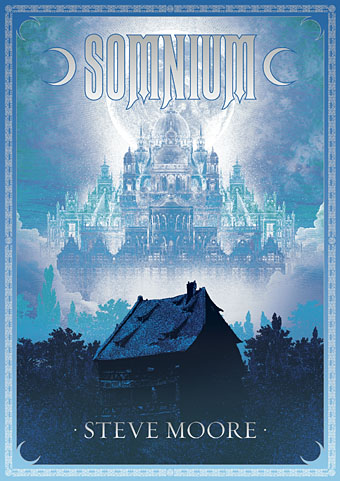
RIP Steve Moore. We never met, unfortunately, but I was very pleased he asked me to create a cover for his unique occult novel, Somnium, in 2011. Prior to this we’d been connected by shared acquaintances, colleagues, and membership in the informal cabal that was (and maybe still is) The Moon & Serpent Grand Egyptian Theatre of Marvels. Steve’s long friendship with Alan Moore (no relation) is well-documented, not least by Alan himself who made Steve the subject of his Unearthing project. One surprising connection for me was that Steve also had a link to Savoy Books. In the late 1960s he was working for comics publisher Odhams where he was able to copy for David Britton some Ken Reid comic art which Odhams had refused to print. Dave published the forbidden pages in his first magazine, Weird Fantasy, in 1969. In 2011 Steve talked to Pádraig Ó Méalóid about Somnium, and also to Aug Stone at The Quietus. Aug Stone penned a few memorial words here.

• “People love using the word ‘porn’ as long as there’s a partner for it. Pair ‘porn’ with something else and it’s usually a good thing. A celebration of style and culture. But that word on its own? Well.” Porn star Conner Habib asks why people have such a problem with porn actors.

Dave Maier‘s Russian cinema recommendations. Several favourites there including the magical and remarkable Shadows of Our Forgotten Ancestors (1964) which, as Maier notes, isn’t really Russian but should be seen in any case.

Shakespeare uses verbal magic, cantrips and ditties, nonsense songs and verses throughout the plays, but in Othello he gives a glimpse of how powerful a spell becomes when it’s no longer oral, but fixed in material form. The fatal handkerchief is no ordinary hanky; it’s a love spell, and it was made with gruesome and potent ingredients (mummified “maiden’s hearts”) by a two-hundred-year-old sibyl in Egypt—Egypt being the birthplace and pinnacle of magic knowledge.

Marina Warner on magic.

• Mixes of the week: an hour of electro-acoustics and contemporary classical recordings sequenced by Laurel Halo, and (from 2010) 36-minutes of “umbral electronic hypnagogia” by The Wyrding Module.

• “This is the book that, 10 years later, inspired Richard Hollis’s landmark design for John Berger’s Ways of Seeing.” Rick Poynor on Chris Marker’s Commentaires.

• Is the Linweave Tarot the grooviest deck ever made? Dangerous Minds thinks so.

• Bobby Barry talks to Holger Czukay about his 1969 audio collage, Canaxis 5.

• “What Happened to Experimental Writing?” asks Susan Steinberg.

Aldous Huxley‘s lectures on visionary experience at MIT, 1962.

Laura Palmer will see Agent Cooper again in just a few hours.

Callum found a copy of The Gay Coloring Book (1964).

Metal Cats

Moonshake (1973) by Can | Lunar Musick Suite (1976) by Steve Hillage | Dark Moon (1993) by Holger Czukay | Boy In The Moon (2012) by Julia Holter

The art of Robert W. Richards

richards1.jpg

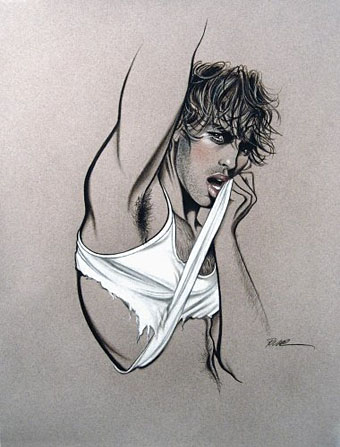
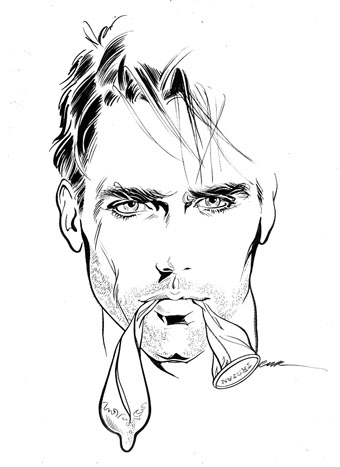
The latest interview at the essential BUTT magazine is Danny Calvi talking to ex-fashion illustrator and erotica artist Robert W. Richards about his life and work. I’d seen some of Richards’ drawings before but this is the first time I’ve seen him interviewed; one of the many commendable things about BUTT is the way they seek out people such as this to talk to, people who’ve been producing gay art for years but who the glossy, celebrity-obsessed mags will seldom mention. My only complaint is that some of their interviews aren’t longer.

richards2.jpg

As can be seen from the examples here, Richards’ career in the fashion world helped hone a technique and a command of line that’s very accomplished. When you’re this good it’s easy to stick to doing strictly commercial work, and avoid anything overtly explicit, gay or straight. Richards doesn’t seem to have been too worried about maintaining a sex-free reputation. BUTT has more examples of his drawings, as does Juxtapoz. There’s also a book, Allure, published by Bruno Gmünder. Stroke: From Under the Mattress to the Museum Wall, an exhibition of Richards’ art at the Leslie + Lohman Museum, New York, runs from March 28 to May 25, 2014.

Elsewhere on { feuilleton }
The gay artists archive

Weekend links 203

budich.jpg

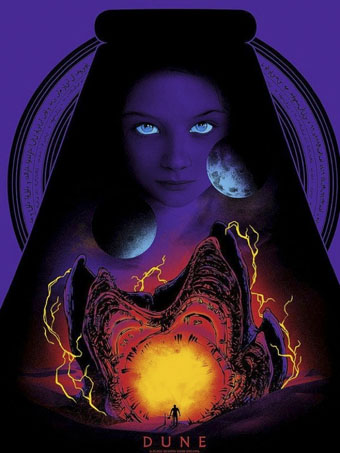
A Dune-inspired piece by Joshua Budich for In Dreams: an art show tribute to David Lynch at Spoke Art.

• “[Montague] Summers was a friend of Aleister Crowley and, like [Jacques d’Adelswärd] Fersen, conducted homoerotic black masses; whatever eldritch divinity received their entreaties was evidently propitiated by nude youths.” Strange Flowers goes in search of the Reverend Summers.

• More Jarmania: Veronica Horwell on the theatrical life of Derek Jarman, Paul Gallagher on When Derek Jarman met William Burroughs, and Scott Treleaven on Derek Jarman’s Advice to a Young Queer Artist.

Robert Henke of Monolake talks to Secret Thirteen about his electronic music. More electronica: analogue-synth group Node have recorded a new album, their first since their debut in 1995.

This hypertrophied response to decay and dilapidation is what drives the “ruin gaze”, a kind of steroidal sublime that enables us to enlarge the past because we cannot enlarge the present. When ruin-meister Giovanni Piranesi introduced human figures into his “Views of Rome”, they were always disproportionately small in relation to his colossal (and colossally inaccurate) wrecks of empire. It’s not that Piranesi, an architect, couldn’t do the maths: he wasn’t trying to document the remains so much as translate them into a grand melancholic view. As Marguerite Yourcenar put it, Piranesi was not only the interpreter but “virtually the inventor of Rome’s tragic beauty”. His “sublime dreams”, Horace Walpole said, had conjured “visions of Rome beyond what it boasted even in the meridian of its splendour”.

Frances Stonor Saunders on How ruins reveal our deepest fears and desires.

Gustave Doré. L’imaginaire au pouvoir: Four short films from the Musée d’Orsay to accompany their current exhibition, Gustave Doré (1832–1883): Master of Imagination.

• At Dangerous Minds: Remembering Cathy Berberian, the hippest—and funniest—lady of avant-garde classical music.

• “Merely a Man of Letters”: Jorge Luis Borges interviewed in 1977 by Denis Dutton & Michael Palencia-Roth.

Luke Epplin on Big as Life (1966), a science-fiction novel by EL Doctorow which the author has since disowned.

The Psychomagical Realism of Alejandro Jodorowsky: Eric Benson talks to the tireless polymath.

• A video essay by Matt Zoller Seitz for the 10th anniversary of David Milch’s Deadwood.

Eugene Brennan on Scott Walker’s The Climate of Hunter (1984).

Dune at Pinterest.

• Prophecy Theme from Dune (1984) by Brian Eno | Olivine (1995) by Node | Gobi 110 35′ south 45 58′ (1999) by Monolake

March

march08.jpg

A Study, in March (1855) by John William Inchbold.

The windy, vernal, and ill-omened month in paintings. February by contrast was very under-represented; the approach of spring evidently gives artists a creative lift.

march10.jpg

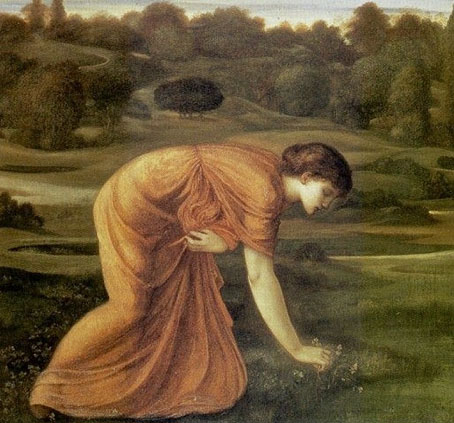
The March Marigold (1870) by Edward Burne-Jones.

march03.jpg

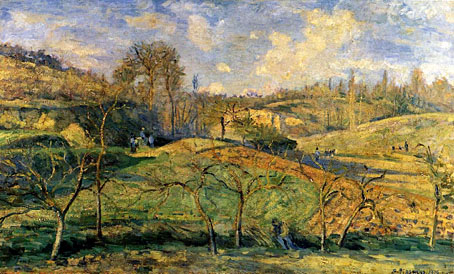
March Sun, Pontoise (1875) by Camille Pissaro.

march06.jpg

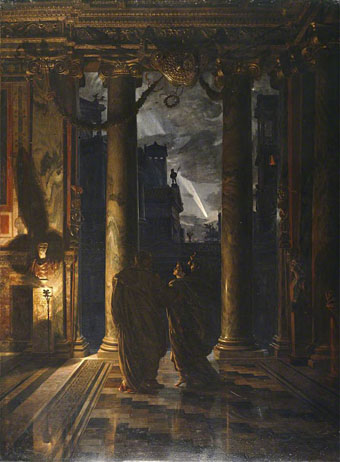
The Ides of March (1883) by Edward John Poynter.

Continue reading “March”