Weekend links 391

mueck.jpg

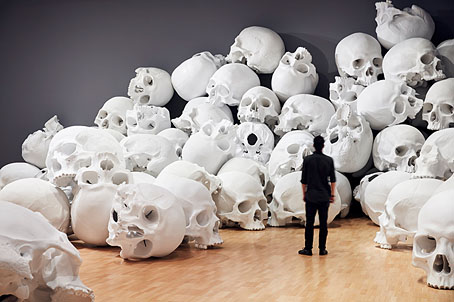
Mass by Ron Mueck at the National Gallery of Victoria Triennial. Photo by Tom Ross.

• Thanks of the week: to In Wild Air for asking me to fill their list of six favourite things; to Hodderscape for including my cover for Jeannette Ng’s Under the Pendulum Sun among their choice of best book covers of the year; and to Dennis Cooper for listing this blog among his own end-of-year favourites. Ta, all!

• New/old music: The Quietus reissues, etc, of the year, new Pye Corner Audio, Soul Jazz presents Deutsche Elektronische Musik 3, and The Cleansing is a new album by Annabel (lee).

• Mixes of the week: Seeing The Forest For The Trees by Gregg Hermetech, FACT mix 631 by Zola Jesus, and Secret Thirteen Mix 240 by Restive Plaggona.

Were a normally sexed person to enter such an establishment, he might be puzzled to see so many finely dressed men sitting there with soldiers, though he would find nothing particularly offensive. The friendships between homosexuals and soldiers forged here over sausage, salad and beer frequently endure for the full term of service, and often longer. The soldier returns home, living as a married farmer far from his beloved Berlin garrison, but many a uranian still receives freshly killed quarry as a token of friendship. Sometimes these relationships are even passed on to younger brothers; I know one case where a homosexual had relations with three brothers one after the other, all of whom were with the Cuirassiers.

An extract from Berlin’s Third Sex by Magnus Hirschfeld, one of the new titles from Rixdorf Editions. Ostensibly straight soldiers supplementing their income by having sex with “uranians” was still a common thing decades later, as detailed in John Lehmann’s In The Purely Pagan Sense.

The Cremator (1968) a film by Juraj Herz, was reviewed on these pages a while ago. It’s now out on region-free blu-ray. Highly recommended.

• At Wormwoodiana: Mark Valentine on a map of old Dunwich, and Egypt in England.

Clive Hicks Jenkins on Mapping the Tale: image making and the narrative tradition.

Wyrd Daze returns with a free pdf, and a mix by The Ephemeral Man to download.

• At the BFI: Chris Gallant on where to begin with giallo cinema.

The Parisian Cabinet of Curiosities Loved by Wes Anderson.

Mass Production (1977) by Iggy Pop | Mass (1981) by Yellow Magic Orchestra | Mass Transit Railway (1997) by Monolake
Weekend links 294

napoleon.jpg

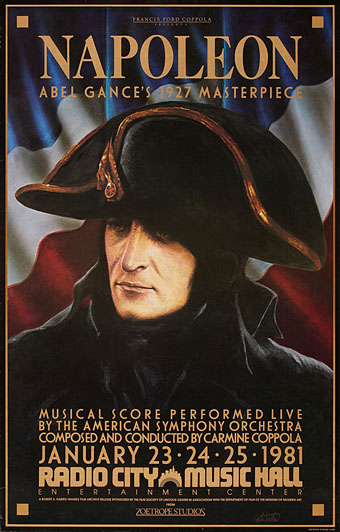
Painting by Alex Tavoularis.

• There are silent films, and then there is Abel Gance’s Napoleon (1927), a five-and-a-half hour historical drama following the emperor’s life from boyhood to the invasion of Italy. The word “epic” is overused but Gance’s film demands the description: in addition to the recreation of huge battles and scenes from the French Revolution, cinema screening required three projectors for sequences which are either multi-screen or three times the width of the Academy ratio. The film was revived in the early 1980s after an extensive restoration by Kevin Brownlow, but Napoleon is still more talked about than seen so news of a forthcoming digital release by the BFI is very welcome indeed. The poster above is from this collection which includes more information about the film and its troubled history. Related: a trailer for a 2012 screening at the San Francisco Silent Film Festival.

• “His films broke with traditional production methods, having virtually no shooting script and capturing the freshness of their genesis.” RIP Jacques Rivette. In 1998 Frédéric Bonnaud talked to Rivette about the director’s cinematic likes and dislikes. Elsewhere, Jonathan Romney speculates that Rivette’s Céline and Julie Go Boating (1974) “might be the only film in which the story is dreamed by a passing cat”.

Strange Flowers‘ selects 16 books for (what’s left of) 2016. Stand-out for me is Aubrey Beardsley: A Catalogue Raisonné by Linda Gertner Zatlin which will be published in May. Two cased volumes, a total of 1104 pages, and a price tag of $300.

It’s a powerful trope, but it also risks trading one stigma for another: ‘‘Phobia’’ is now so embedded in our language that it’s easy to forget that it is a metaphor comparing bigots to the mentally ill. The comparison also has the effect of excusing those Americans—like certain presidential candidates in the 2016 race—who wield prejudices strategically. It’s not your fault if you get sick. But hating people is a choice.

Amanda Hess on how “-phobic” became a weapon in the identity wars

• Delving into the shadowy world of occult art: Priscilla Frank talks to Pam Grossman about her Language of the Birds exhibition. Related: “The occult never quite goes away,” says Kenneth Anger.

• “It was a magic day in our happy, young lives.” A proposal for a monument in Baltimore celebrating the final scene of John Waters’ Pink Flamingos.

• Mixes of the week: Wrap Up Warm Mix by Moon Wiring Club, Secret Thirteen Mix 175 by Inner8, and FACT mix 533 by Roly Porter.

• “He was less an architect than a Busby Berkeley with a penchant for Black Masses.” Jonathan Meades on Albert Speer.

• More film posters: Benjamin Lee on the compromises that have made contemporary posters “drab and uninspiring”.

• The vast and ghostly landscape of “Britain’s only desert”: photographs by Robert Walker.

Wyrd Daze, Lvl2 Issue 5, is free and brimming with the weird.

• The films of Michael Mann in 44 shots.

Laurie Anderson‘s favourite films.

Flamingo (1959) by Henry Mancini | Moon Occults The Sun (2006) by Espers | The Moon Occults Saturn at Dawn (2015) by Steve Moore

Weekend links 278

sanmartin.jpg

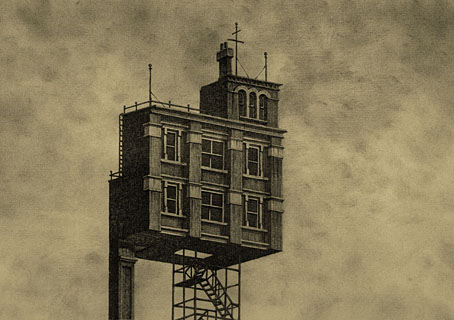
El Hotel Satina (2006) by Oscar Sanmartin.

Andrew Kötting’s By Our Selves is “a melancholy, maverick film” says David Jays. With Toby Jones following in the footsteps of poet John Clare, Iain Sinclair in a goat mask, and Alan Moore warning about the “vision sump” of Northampton.

• “Shunga means ‘spring pictures’. They depict sometimes spectacular sexual contortions and come imbued with the power of taboo. For years they have largely been out of sight—until now.” Related: shunga prints at Ukiyoe Gallery.

• “Who else could link Smokey Robinson and JG Ballard, Iggy Pop and Josephine Baker, James Bond and Stephen Sondheim, Gary Numan and Johnny Cash, Tricky and Tom Moulton…” Grace Jones is the best, says Joe Muggs.

Ballardian space – what he called “inner space” to differentiate it from the science fiction that concerned itself with distant planets and space rockets – is in fact a fusion of inner and outer space. There is no “out there” totally separate from his characters; just as there is no exclusively private, isolated inner life. His most psychologically fulfilled characters look to transcend their physical surroundings, however hostile, by embracing them.

Chris Hall on High-Rise by JG Ballard

• “In March 1984, Jorge Luis Borges began a series of radio ‘dialogues’ with the Argentinian poet and essayist Osvaldo Ferrari, which have now been translated into English for the first time.”

• “I came up with a couple of tunes, literally in my bedroom. People think of bedroom recordings as a modern, laptop invention. It wasn’t.” Daniel Miller on the accidental success of Mute Records.

• “It was in Prague that I first awoke.” Strange Flowers on Gustav Meyrink’s life in Prague.

• At 50 Watts: Stencilled ornament and illustration by William Addison Dwiggins.

• Mix of the week: The Ivy-Strangled Path Vol. X by David Colohan.

Wyrd Daze, Lvl2 Issue 4, is free and brimming with the weird.

Mythology, a new series of drawings by Howard Hardiman.

Spike Jones is the best, says MetaFilter.

Peacocks at National Geographic.

Warm Leatherette (1980) by Grace Jones | Warm Leatherette (1998) by Chicks On Speed | Warm Leatherette (2013) by Foetus

Weekend links 266

dune.jpg

Spine and cover art by John Schoenherr for the first American edition of Dune, 1965.

• “[Herbert] had also taken peyote and read Jung. In 1960, a sailing buddy introduced him to the Zen thinker Alan Watts, who was living on a houseboat in Sausalito. Long conversations with Watts, the main conduit by which Zen was permeating the west-coast counterculture, helped turn Herbert’s pacy adventure story into an exploration of temporality, the limits of personal identity and the mind’s relationship to the body.” Hari Kunzru on Frank Herbert and Dune, 50 years on. Related: “To save California, read Dune,” says Andrew Leonard. There’s a lot more Dune cover art at ISFDB.

• “Embedded in Adam’s footage were several dark forms, human-ish in outline, unidentifiable but unmistakable, visible within the leaves or the shadows.” Holloway is a short film by Adam Scovell based on the book by Robert Macfarlane, Dan Richards and Stanley Donwood.

The Library of the Lost: In Search of Forgotten Authors by Roger Dobson; edited and with an introduction by Mark Valentine. Roger and Mark were my first publishers in 1988 when their Caermaen Books imprint produced the large-format edition of The Haunter of the Dark.

• “…over the years he created a series of ‘Pharmacies’: rows of glass bottles filled not with medicines to cure the body…but objects to stimulate the mind.” Clare Walters reviews Joseph Cornell: Wanderlust, an exhibition at the Royal Academy, London.

• “The sound machines we build today are invariably one-offs, made from salvaged parts, with all the precariousness of a prototype.” Sarah Angliss on the art of making music machines.

Mission Desire is a new single by Jane Weaver whose video is “set to scenes from Marie Mathématique – the French 1960s mini-series about Barbarella’s younger sister”.

• Ghost signs, ginnels and hidden details: an alternative guide to Manchester by Hayley Flynn aka Skyliner.

• “I want to be despised,” says John Waters who has a new art exhibition at Sprüth Magers, London.

Sonic Praise, an album of “Krautprogbikermetal” by Ecstatic Vision.

• The Evolution of the Great Gay Novel: an overview by Rebecca Brill.

• At Bibliothèque Gay: more homoerotic drawings by Jean Cocteau.

Wyrd Daze Lvl2 Issue 3 is a free download.

Nicolas Winding Refn: vinyl collector.

Art With Naked Guys In It

Caladan (2011) by Roly Porter | Giedi Prime (2011) by Roly Porter | Arrakis (2011) by Roly Porter

Weekend links 239

crystal.jpg

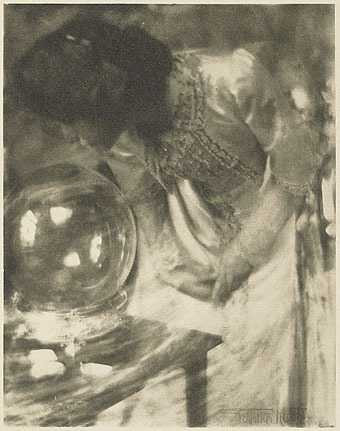
The Crystal Gazer (or The Magic Crystal, 1904) by Gertrude Käsebier.

• “I had to resort to extreme violence”: how Hipgnosis revolutionised the album sleeve. Aubrey Powell, last surviving member of the design team, talks to Joe Muggs.

• Mixes of the week: Radio Belbury: Programme 14; The Conjurer’s Hexmas by SeraphicManta; Secret Mix 139 by A Closer Listen.

• Social progress, high-speed transport and electricity everywhere: Iwan Rhys Morus on how the Victorians invented the future.

• At Cinephilia & Beyond: “The most complete investigation into the origins and making of Citizen Kane.”

Poor Souls’ Light: seven curious tales for the end of the year, and a dedication to Robert Aickman.

• Music and the Occult: Stuart Maconie and Rob Young spend an hour in the magick circle.

Alejandro Jodorowsky and Iain Sinclair in conversation at the British Library, July 2014.

• From 1972: An unpublished Victor Moscoso interview by Patrick Rosenkranz.

The Spooky Story Behind Hollywood’s Favourite Mansion.

The Lost World of British Tape Recording Clubs.

• 2014 was a year of outrage.

Wyrd Daze issue 11

Inspirograph

• Pepper-Tree (1984) by Cocteau Twins | Otterley (1984) by Cocteau Twins | Aikea-Guinea (1985) by Cocteau Twins