Weekend links 277

elledge.jpg

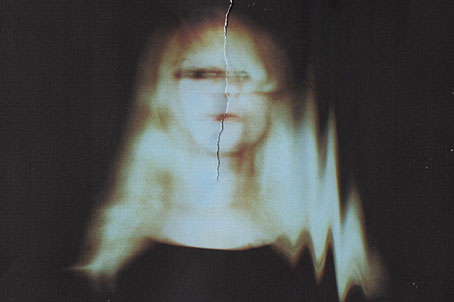
Sunday by Amanda Elledge.

• Coming from Strange Attractor this November: The Moons at Your Door, an anthology of strange tales selected by David Tibet. “The Moons At Your Door collects over 30 tales, both familiar and unknown from: Robert Aickman, Algernon Blackwood,  DK Broster, AM Burrage, RW Chambers,  Aleister Crowley, Sheridan Le Fanu, Elizabeth Gaskell, WW Jacobs, MR James, Vernon Lee, LA Lewis, Thomas Ligotti, Arthur Machen, Guy de Maupassant, Perrault, Thomas De Quincey, Saki, Count Stenbock, Montague Summers, HR Wakefield and Edith Wharton. The volume also includes extracts and translations by the author from Babylonian, Coptic and Biblical texts alongside poems and fairy tales.”

Gay-rights activists give their verdict on Stonewall: “This film is no credit to the history it purports to portray”. The only surprise about this episode is that anyone expected Roland Emmerich to make a historically accurate film in the first place. Related: Edmund White’s first-hand report written a few days after the riots.

• “If you hate [Boom!], I hate you, and I could never be your friend or your boyfriend. Divine and I had seen Boom! right before we made Pink Flamingos, and it’s about Elizabeth Taylor, retired, writing her memoirs, which is what Pink Flamingos was too, in a way.” John Waters (again) gives Hayley Campbell some dating tips.

• “We moderns may too-often suffer from a mixing up of historical sequences, but better that, surely, than risk raising a population that is entirely not-arsed about its past.” Julian Cope explores the Celts: Art and Identity exhibition at the British Museum, London.

• “But I am talking about psychedelic music, and obviously some of that comes from early psychedelic rituals, which are all about losing yourself…and I did come back into the world in a different way.” Natasha Khan on her new musical project, SEXWITCH.

• At Dangerous Minds: Vincent Price teaches the dark arts on his 1969 album An Adventure in Demonology.

• A trailer for Salthouse Marshes, “a short, landscape obsessed ghost story” by Adam Scovell.

• Rare video of Young Marble Giants playing for 45 minutes in Vancouver, 1980.

• A collection of Ghost Box posters and flyers designed by Julian House.

• Mix of the week: Secret Thirteen Mix 163 by Ssleeping desiresS.

Ministry, a new photo series by Ellen Rogers.

Julia Holter‘s favourite albums.

Boom Stix (1962) by Curley & the Jades | Things That Go Boom In The Night (1981) by Bush Tetras | Boom! (1991) by The Grid
Weekend links 274

merchant.jpg

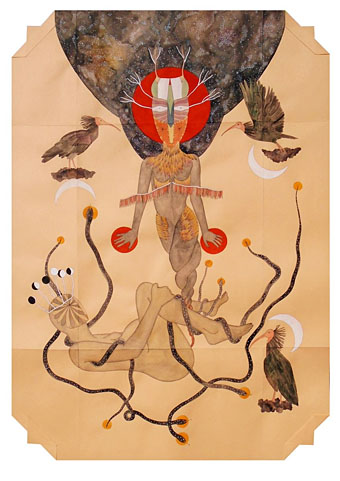
Lilith Births the Djinn (2015) by Rithika Merchant. Via Phantasmaphile.

Lord of Strange Deaths: The Fiendish World of Sax Rohmer, edited by Phil Baker & Antony Clayton, is a new publication from Strange Attractor. “This is the first extended attempt to do justice to Rohmer, and it ranges across the spectrum of his output from music-hall writing to Theosophy. Contributors focus on subjects including Egyptology, 1890s decadence, Edwardian super-villains, graphic novels, cinema, the French Situationists, Chinese dragon ladies, and the Arabian Nights. The result is a testimony to the enduring fascination and relevance of Rohmer’s absurd, sinister and immensely atmospheric world.”

• More weird fiction: Twisted Tales of the Weird promises “an evening of readings by some of the finest writers in the contemporary scene, a panel discussion about the mode, and a Q&A with the audience” at the John Rylands Library, Manchester, on 23rd October. Writers M. John Harrison, Helen Marshall and Timothy J. Jarvis will be reading from their works. The event is free but space is limited so tickets are required.

• More Lovecraft: “Lovecraft never said his entities were evil,” says Alan Moore discussing his new Lovecraftian comic series, Providence, with Hannah Means Shannon. At the University of Sterling, Chloe Buckley reviews the Ellen Datlow-edited anthology Lovecraft’s Monsters for The Gothic Imagination (with passing reference to my illustrations but no credit for the artist).

• One for completists or those who were there on the night: Earth playing There Is A Serpent Coming at the Columbus Theatre, Providence on 22nd August. I’d almost given up hope that someone might have recorded anything from this event so thanks to Mr Beast Rebel of the Hellscape for the upload. There’s also a song by Elder from earlier in the evening.

A Rose Veiled in Black: Art and Arcana of Our Lady Babalon edited by Robert Fitzgerald and Daniel A. Schulke.

Robin the Fog on Spectral Spools, Amplified Olympia and XPylons.

• Mix of the week: BerlinSchool Mix-A [Beginnings] by Headnoaks.

• At AnOther: Leonor Fini: Female Libertine

The lost tunnels of Liverpool

The Zymoglyphic Museum

Folk Horror Revival

Some Weird Sin (1977) by Iggy Pop | It’s So Weird (1983) by Bush Tetras | The Smallest Weird Number (2002) by Boards of Canada

More Spare things

spare.jpg

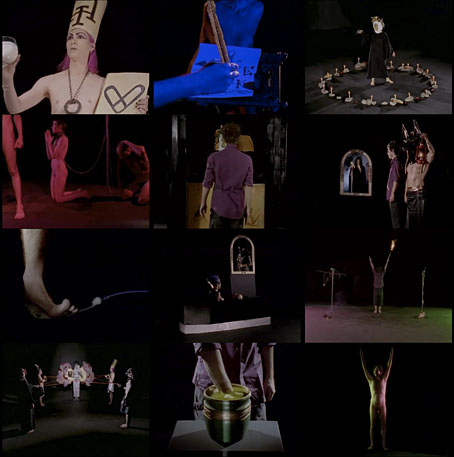
A couple of Austin Spare-related news items arrive in the same week so it’s worth linking again to Earth: Inferno (2003), a short film by Mor Navón & Julián Moguillansky based on the book by Austin Osman Spare. This is a production I have to damn with faint praise by being pleased that Spare is the focus of the work while being disappointed in the film as a whole. Despite the elaborate costumes, careful tableaux and copious nudity, Earth: Inferno confirms that an occult film needs to be more than a record of people dressing up and gesturing hieratically. If nothing else, occult rituals transform the perceptions of those involved, and this quality should be represented or implied in any film dealing with magical operations. The films of Kenneth Anger and Derek Jarman show different approaches, with the raw image transformed by superimposition, exaggerated grain, accelerated/decelerated motion, and so on. Inauguration of the Pleasure Dome and In the Shadow of the Sun are examples to follow. And now the news:

Lost Envoy: The Tarot Deck of Austin Osman Spare, edited by Jonathan Allen & Mark Pilkington. Out later this year from the fabulous Strange Attractor.

Surrealism, Austin Osman Spare and the Occult Underground of 1890s and 1990s London:

Nadia Choucha discusses the context and evolution of her ground-breaking book, Surrealism and the Occult, first published in 1991. The book traces the evolution of Surrealist ideas and situates them within the occult currents of fin-de-siècle European culture, revealing how these currents infused the work of various thinkers and artists in their quest for the ‘marvellous’. The work of Austin Osman Spare is also discussed as a way of comparing and contrasting his methods and techniques with those of the Surrealists. With the 25th anniversary of the publication of the book approaching, this evening will also present an analysis of the work as occurring within a unique historical and cultural moment.

Jun 23rd, 6:30 pm–8:00 pm at the Last Tuesday Society, London.

Previously on { feuilleton }
A Book of Satyrs by Austin Osman Spare
Spare things
Dreaming Out of Space: Kenneth Grant on HP Lovecraft
MMM in IT
Abrahadabra
Murmur Become Ceaseless and Myriad
New Austin Spare grimoires
Austin Spare absinthe
Austin Spare’s Behind the Veil
Austin Osman Spare

Hinton’s hypercubes

hinton.jpg

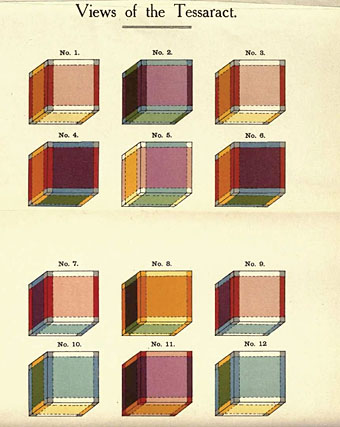
Illustration from The Fourth Dimension (1906) by Charles Howard Hinton.

A slight return to the worlds of Borges. I happened to be re-reading some of the stories in The Book of Sand (1975), one of the later collections which includes the story Borges dedicated to HP Lovecraft, There are more things. Borges’ writings are nothing if not filled with references to other works of literature, philosophies, religions, and ideas in general; following up the less-familiar references would preoccupy a reader to the detriment of the writing so there’s a tendency when reading a Borges piece to take for granted many of those nuggets of esoteric information. I’ve read There are more things many times—it’s a favourite in part for having the additional thrill of Borges going Lovecraftian—but only realised with this reading that I can now fully appreciate the following:

Years later, he was to lend me Hinton’s treatises which attempt to demonstrate the reality of four-dimensional space by means of complicated exercises with multicoloured cubes. I shall never forget the prisms and pyramids that we erected on the floor of his study.

Prior to reading this I did know that Hinton was Charles Howard Hinton (1853–1907), the British mathematician and dimensional theorist. Hinton’s name tends to turn up in discussions of the work of his mystical contemporaries, notably the Theosophists who were more taken with his theories than those in the scientific fields. (A conviction for bigamy didn’t help his reputation.) But those multicoloured cubes were a mystery until the publication of (fittingly) the fourth number of Strange Attractor Journal. Among the usual selection of fascinating articles the book contains a piece by Mark Blacklock about Hinton’s ideas including those mysterious cubes. Drawings of the cubes first appeared in A New Era of Thought (1888) where Hinton proposes using them as aids to a series of mental exercises with which the reader may visualise the higher dimensions of space. Hinton invented the word “tesseract” to describe the four-dimensional structure projected from the faces of his three-dimensional cubes.

dali.jpg

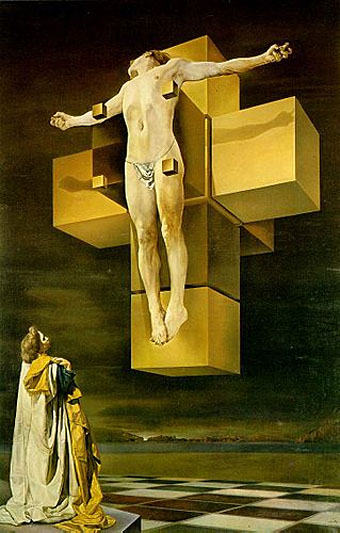
Crucifixion (Corpus Hypercubus, 1954) by Salvador Dalí.

Hinton may not have impressed his mathematical colleagues as much as he hoped but his ideas have an understandable attraction, as the Borges story demonstrates. The story concerns the refashioning of a Buenos Aires house for an unusual resident; thirty years earlier Robert Heinlein wrote “—And He Built a Crooked House—” in which an architect builds a house in the form of a four-dimensional hypercube: only the lowest cube attached to the ground is visible from the exterior. I read that story when I was a teenager, and was already acquainted with tesseracts thanks to school-friends who were maths whizzes; I was the arts whizz, and I think I was probably the first of us Dalí enthusiasts to discover the artist’s own take on the hypercube, Crucifixion (Corpus Hypercubus) from 1954. Borges and Heinlein in those stories were both writing their own forms of science fiction, and Dalí’s painting finds itself co-opted into another story with sf connections, The University of Death (1968) by JG Ballard, one of the chapters in The Atrocity Exhibition (1970):

He lit a gold-tipped cigarette, noticing that a photograph of Talbot had been cleverly montaged over a reproduction of Dalí’s ‘Hypercubic Christ’. Even the film festival had been devised as part of the scenario’s calculated psychodrama.

If we seem to have strayed a little then it’s worth noting that Borges was familiar with Ballard’s work: he included The Drowned Giant in the later editions of The Book of Fantasy, the anthology he edited with Adolfo Bioy Casares and Silvina Ocampo. The two writers also met on at least one occasion.

jlb-jgb.jpg

JLB and JGB, circa 1970. Photo by Sophie Baker.

Charles Hinton’s coloured cubes and tesseracts are described in detail in The Fourth Dimension (1906), a reworking of the ideas from A New Era of Thought, and also the source of the colour illustration that everyone reproduces. Mark Blacklock has his own multi-dimensional website where you can read about his construction of a set of three-dimensional Hinton cubes. As for the mental exercises, Blacklock’s piece in Strange Attractor contains an anecdotal warning that the auto-hypnotic system required to fully visualise Hinton’s dimensions can result in a degree of obsession dangerous to the balance of mind. Proceed with caution.

Previously on { feuilleton }
Borges and the cats
Invasion, a film by Hugo Santiago
Spiderweb, a film by Paul Miller
Books Borges never wrote
Borges and I
Borges documentary
Borges in Performance

Le Tarot de Philippe Lemaire

lemaire1.jpg

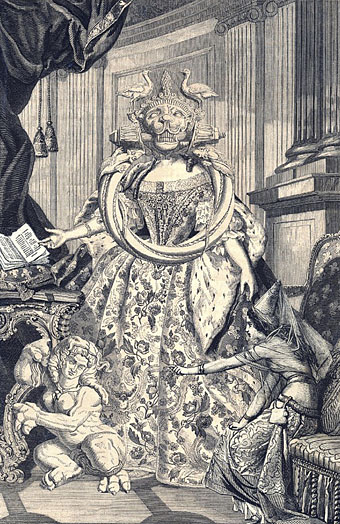
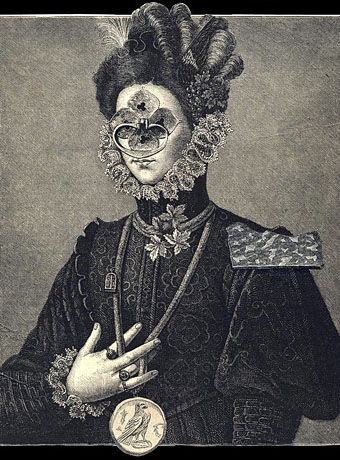
Philippe Lemaire is French, and another engraving collage artist who I’d have to include in the list of post-Ernst practitioners if I ever get round to updating my Strange Attractor essay about Wilfried Sätty. Like Ernst and Sätty, Lemaire seems to use paper-and-scissors techniques, although Sätty also made use of print processes in order to duplicate the images he cut from old books, and also resize, flip or invert them. In this he’s the bridge between the original method of engraving collage and digital techniques.

lemaire2.jpg

The examples here are from a small series of Tarot images on the artist’s website, none of which are labelled so we’re left to guess the identity of what I presume are figures from the Major Arcana. The one above may be The Empress but the other two resist easy interpretation. Judge the others for yourself here.

lemaire3.jpg

Previously on { feuilleton }
Tarotism and Fergus Hall
Giger’s Tarot
The Occult Explosion
Wilfried Sätty album covers
Nature Boy: Jesper Ryom and Wilfried Sätty
Wilfried Sätty: Artist of the occult
Illustrating Poe #4: Wilfried Sätty
The Major Arcana by Jak Flash
The art of Pamela Colman Smith, 1878–1951
The Major Arcana