Weekend links 218

white.jpg

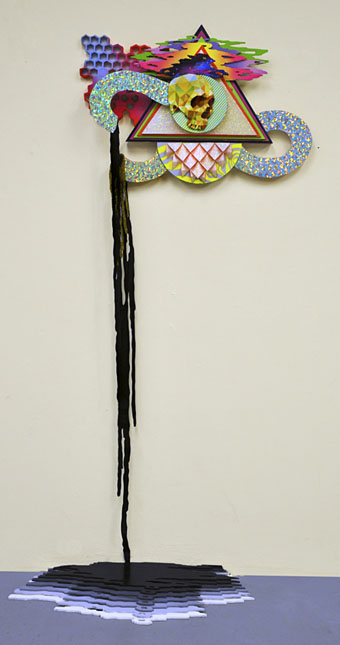
The End of a Thousand Years (2014) by Hilary White. Via Phantasmaphile.

• It’s taken a while to shamble into the world but A Mountain Walked, an anthology of Cthulhu Mythos stories edited by leading Lovecraft scholar ST Joshi, will be published by Centipede Press next month. The publisher’s page for the book shows that my contribution will be facing Joshi’s introduction which is something I wasn’t aware of until this week. It also says the 692-page limited edition is sold out, although book dealers often buy collectible volumes such as this to sell on after adding their own markup. Be warned that it was listed on Amazon at $160 so if there are copies available anywhere they won’t be cheap.

• It’s not such a surprise to hear that magic mushrooms were an inspiration for Frank Herbert’s Dune. David Lynch’s film of Dune receives passing mention in this profile by Jeremy Kay of Lynch and the Twin Peaks film/TV series.

• “Whitechapel station is one of Giambattista Piranesi’s imaginary prisons, colonised by frantic electrical engineers and watched over by CCTV.” Will Wiles on the chaos and tangled energy of modern cities.

The word perfume comes from the French root “fume”—smoke—and where there’s smoke, there’s fire! I think most people are turned on sexually by scents and smells. Certain body odours can be very sexually stimulating. We purposefully chose certain ingredients for my Obscenity perfume that are associated with occult or religious rituals, including vetiver, labdanum, and oud, and others that are considered aphrodisiacal, including patchouli and sandalwood. The point of Obscenity is that there is no conflict between the religious and the sexual, and in fact they should be completely complimentary. The fragrance is meant to stimulate you sexually, but it also literally contains water from Lourdes, so it also has religious notes and perhaps even healing properties!

Bruce LaBruce talks to Kathy Grayson about his new fragrance, Obscenity

The Baffler, “a journal of iconoclastic wit and cultural analysis” relaunches with full access to its archives from 1988 to the present.

Pineal, the new album by Othon, is dark and “properly, brilliantly queer,” says David Peschek.

• At Core77: How to improve the audio quality of vinyl records with wood glue.

• P. Adams Sitney interviews Kenneth Anger on WNYC’s Arts Forum (1972).

• At BibliOdyssey: Le Bestiaire Fabuleux by Jean Lurçat.

• Mix of the week: Secret Thirteen mix 123 by Evol.

Meawbin the Creepy Cat

Perfumed Metal (1981) by Chrome | Fragrance (Ode To Perfume) (1982) by Holger Czukay | The Perfume (2006) by Johnny Klimek, Reinhold Heil, Tom Tykwer
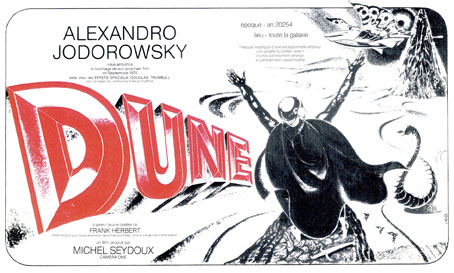
Dune: some French connections

landi.jpg

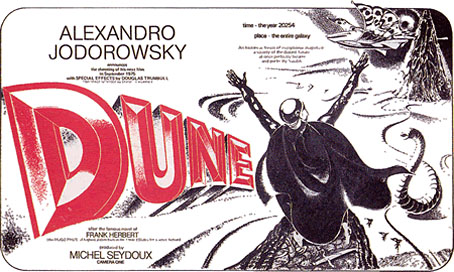
French poster by Michel Landi for the ill-fated Jodorowsky film.

There’s more to French music than Air and Daft Punk, and there’s more to cosmic French music than Magma, although you wouldn’t always know it to read Anglophone music journalists. I’ve been championing the electronica recorded by Bernard Szajner for a long time, and even tried without success to get one of his albums reissued a few years ago. (Which reminds me: Gav, you’ve still got my Szajner albums!) That album (credited to “Zed”), Visions Of Dune (1979), has been out-of-print since 1999 so it’s good to know it’s being reissued on vinyl and CD next month by Finders Keepers’ Andy Votel. FACT has a mix of extracts to give the curious some idea of its buzzing analogue soundscapes.

szajner.jpg

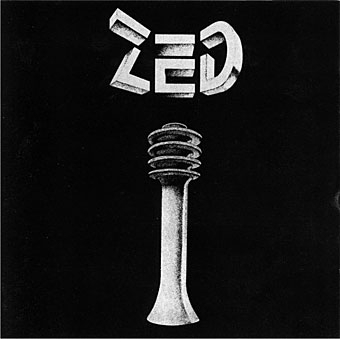
Visions Of Dune (1979) by Zed (Bernard Szajner). Artwork by Klaus Blasquiz.

Visions Of Dune attempts to illustrate Frank Herbert’s novel in musical form; you wouldn’t really know this without the track titles but that’s the way it often is with instrumental music. The album has gained a surprising cult reputation in recent years although it’s difficult to tell whether this is merely a consequence of its rarity or whether it’s because people like Carl Craig have taken to listing it as a favourite electronic record. It’s a decent enough album but I’ve always preferred Szjaner’s follow-up, Some Deaths Take Forever (1980), a conceptual polemic against the death penalty which is ferocious enough in places to be classed among the post-punk electronica being produced in the same year by Throbbing Gristle and Cabaret Voltaire. Szajner later recorded an album with Howard Devoto, Brute Reason (1983), which puts him even more firmly in the post-punk camp. I suspect Some Deaths… offends the hardcore synth-heads with its squalls of electric guitar and other traces of the rock milieu. More amenable is another Szajner album, Superficial Music (1981), which remixes the Visions Of Dune tracks into seven chunks of doom-laden ambience. I’ve never thought of the resulting sound as very superficial, “unsettling” is closer to the mark which is why I included an extract in my Halloween mix last year.

pinhas.jpg

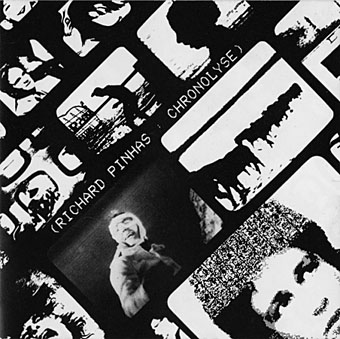
Chronolyse (1978) by Richard Pinhas. Artwork by Patrick Jelin.

Visions Of Dune isn’t the only Dune-related synth album from France. Chronolyse (1978) is the second solo album by Richard Pinhas, another musician you won’t find many Brit writers discussing even though he’s been recording since 1974. Pinhas’s inspirations are an unusual amalgam of science fiction and contemporary French philosophy, a subject he studied at the Sorbonne; prior to going solo he was performing with Heldon, a French prog band whose name is taken from Norman Spinrad’s The Iron Dream. Heldon may be classed as a prog group but their first album, Electronique Guerilla (1974), has one side dedicated to William Burroughs, features a track with “lyrics by Nietzsche”, and also contains an appearance by Gilles Deleuze. Deleuze and Norman Spinrad appeared on later Pinhas solo albums although neither of them are on Chronolyse which, like Visions of Dune, is a wordless (and often tuneless) meander through synthesised soundscapes named after Dune characters. The music on the first side is much more sparse than Szajner’s, and less satisfying as a result; the second side improves with the 29-minute Paul Atreïdes, a typical Pinhas guitar-and-synth jam with extended Fripp-like soloing. As with Szajner, all the Heldon/Pinhas output tends towards the abrasive, and looking at the recent Pinhas discography the man is showing no sign of growing soft, having played shows recently with notorious noise merchants Merzbow and Wolf Eyes.

dune.jpg

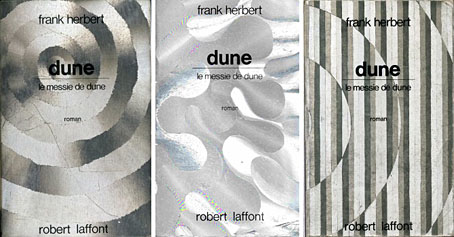
Dune paperbacks from Robert Laffont (1975–1983). Designer unknown.

Has there been any other Dune-related music from France? Given the French enthusiasm for science fiction I wouldn’t be surprised. A search for French covers of Frank Herbert’s novels turned up these strikingly abstract examples from Robert Laffont which I’d not seen before. That combination of foil backing and lower-case Helvetica is clearly derived from the celebrated Prospective 21e Siècle series of new music albums released by Philips in the late 1960s. Many of those albums featured exclusive recordings of musique concrète or electro-acoustic compositions (and many of them featured French composers) so there’s another electronica connection. Incidentally, if you ever find one of those Philips albums going cheap in a shop, buy it! The series is very collectible and some of them command high prices. Even if you don’t like the music, they’re worth having for the shiny sleeves.

Update: Further investigation reveals another French album with Dune connections, Eros (1981) by Dün, a Magma-like band whose name is taken from Herbert’s novel. So too are some of the track titles on their sole release: L’Epice and Arrakis.

Previously on { feuilleton }
Alejandro Jodorowsky’s Dune

Weekend links 76

aftertime.jpg

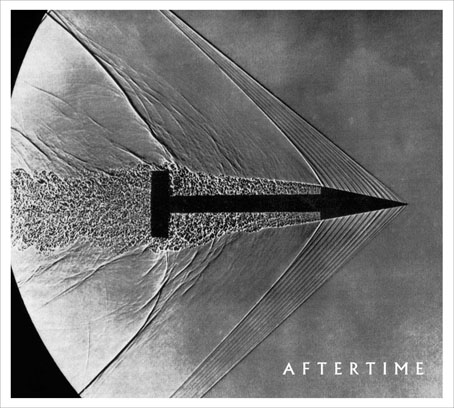
Despite appearances I’m still doing bits of design and layout work for various musicians. In the past week I’ve been trying to reorganise this sprawling website a little so it’s easier to add new work quickly and easily. One recent job was more layout than design, a CD and vinyl package for a Roly Porter collection of instrumentals entitled Aftertime. Each track on the album is named after a different planet from Frank Herbert’s Dune books although the music isn’t as illustrative as that implies. Porter’s use of an Ondes Martenot and various acoustic instruments which he subjects to degrees of distortion is just the kind of thing I like hearing. One track can be heard at FACT where Porter is interviewed about his work. Aftertime is released this month on the Subtext label.

It is a rollicking saga that involves all sorts of things not normally associated with think tanks – chickens, pirate radio, retired colonels, Jean-Paul Sartre, Screaming Lord Sutch, and at its heart is a dramatic and brutal killing committed by one of the very men who helped bring about the resurgence of the free market in Britain.

Adam Curtis on the strange history of Britain’s think tanks and their hidden agendas.

• Other assorted music business: Getting down to the Cabinessence: “This is the first of what may become an intermittent series of observations about Smile, and how Brian Wilson tried to put his dream on this planet.” | After The Flood: Talk Talk’s Laughing Stock 20-Years On: a lengthy and detailed Quietus piece on one of the best albums of the 1990s. | Jonathan Barnbrook uses an old analogue video synth to create a visual accompaniment for Interplay by John Foxx & The Maths. The HD version is an eye-searing delight.

Meredith Yayanos favours the sister instrument of the Ondes Martenot, the theremin, which she uses to provide a spooky score for a new film, Empty Rooms. There’s more spectral ambience at her SoundCloud page.

giovani.jpg

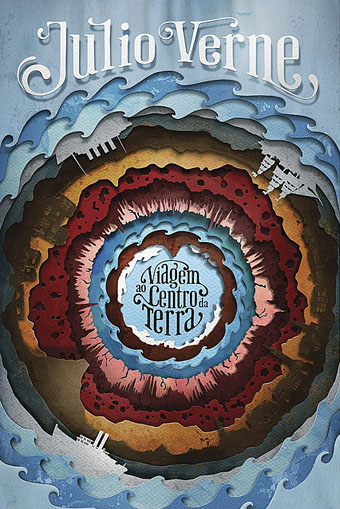
A Jules Verne cover by Carlo Giovani for Editora Ática.

• Sculptor and writer Josiah McElheny transforms the Whitechapel Gallery into a hall of mirrors.

Jacob’s Lament, an animated collaboration between illustrator Ian Miller and Stijn Windig.

Pornographic Poem (1967) by John Giorno.

Oscar Wilde grandson scorns “new” play.

• Manhattan in marble by Yutaka Sone.

Paul Atreides pt. 1 (1978) by Richard Pinhas | Harkonnen (1979) by Zed (Bernard Szajner) | Prophecy Theme (1984) by Brian Eno.

Salammbô illustrated

salammbo1.jpg

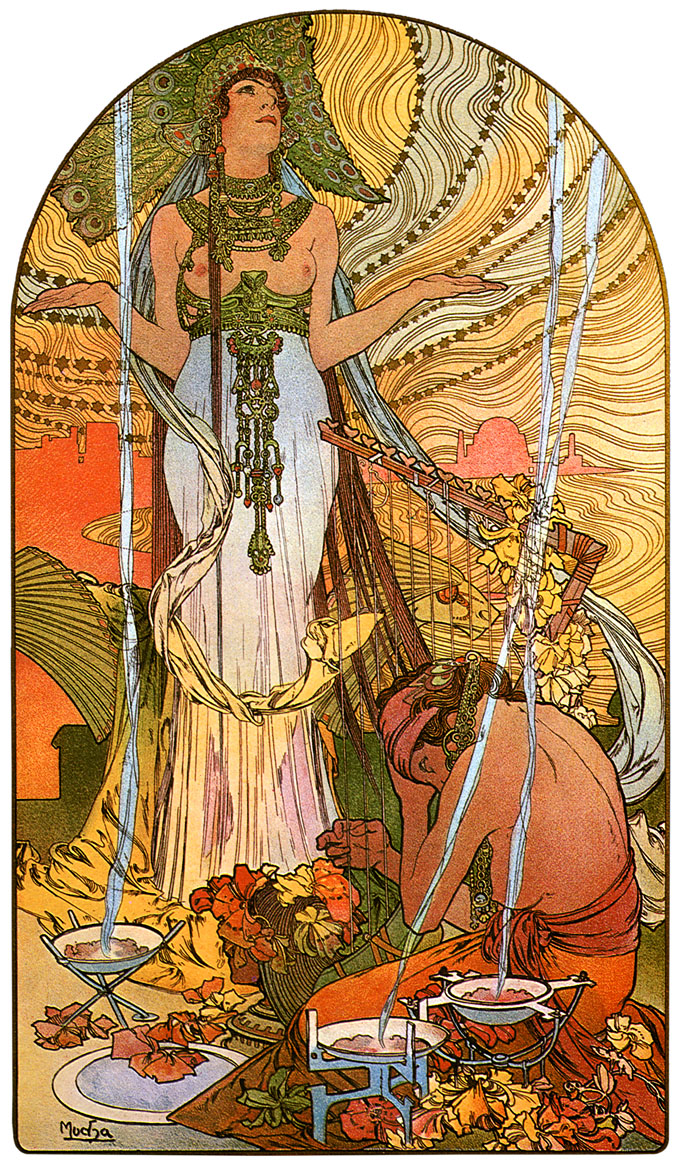
Salammbô by Alphonse Mucha (1897).

Alphonse Mucha’s gorgeous rendering of Flaubert’s Carthaginian heroine isn’t included in the many illustrated editions at this Salammbô site but plenty of other adaptations are. Examples range from faithful renderings by George Rochegrosse and Mahlon Blaine to drawings which are less successful or even downright bad. Also included are panels from Philippe Druillet‘s bizarre science fiction adaptation from the 1980s, a version which is often closer to Frank Herbert than Gustave Flaubert although many of the compositions are striking. One of these was used for a sleeve illustration by Richard Pinhas on his excellent East West album in 1980. And by coincidence, Druillet’s site mentions a forthcoming exhibition of his Salammbô nudes at the Galerie Pascal Gabert on May 20th.

salammbo2.jpg

Elsewhere on { feuilleton }
The album covers archive
The illustrators archive

Previously on { feuilleton }
The art of Mahlon Blaine, 1894–1969
Druillet meets Hodgson
The music of Igor Wakhévitch

Alejandro Jodorowsky’s Dune

dune1.jpg

Fortunate Londoners can get to see a new exhibition, Alejandro Jodorowsky’s ‘Dune’: An exhibition of a film of a book that never was, which runs at The Drawing Room until October 25, 2009. As well as production designs from concept artists Moebius, HR Giger and Chris Foss, there’s newly commissioned work by artists Steven Claydon, Matthew Day Jackson and Vidya Gastaldon.

Jodorowsky’s proposed 1976 adaptation of the Frank Herbert novel is now the stuff of legend, and it’s possible that his outrageously ambitious plans are more fun to dream about than they would have been on the screen. But it remains a tantalising prospect that Jodorowsky might well have pulled off a science fiction equivalent of Fellini’s Satyricon. Either way, along with Stanley Kubrick’s unmade Napoleon, it’s one of the great lost films of the 1970s.

Among Jodorowsky’s proposed cast were Orson Welles, Mick Jagger and Salvador Dali, the last of whom was to play the Emperor of the Universe, who ruled from a golden toilet-cum-throne in the shape of two intertwined dolphins. Unable to secure the money from Hollywood to create the ‘Dune’ of his imagination, Jodorowsky abandoned the film before a single frame was shot. All that survives of this project is Jodorowsky’s extensive notes, and the production drawings of Moebius, Giger and Foss. These reveal a potential future for sci-fi movie making that eschewed the conservative, technology-based approach of American filmmakers in favour of something closer to a metaphysical fever-dream.

dune2.jpg

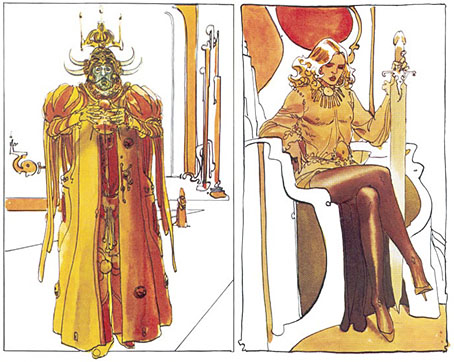
left: Emperor Shaddam IV; right: Feyd Rautha.

Moebius’s designs are wildly different from those used in David Lynch’s 1984 adaptation (which I like nonetheless). His sketch of the Emperor on the left gives some idea of how Salvador Dalí might have appeared in the film, while the figure on the right is Baron Harkonnen’s effete nephew, Feyd, a far more radical conception than the grinning fool played by Sting in the Lynch version. There’s a lot more of Moebius’s sketches at the excellent Dune.info site.

Previously on { feuilleton }
Dalí and Film
Jodorowsky on DVD