Weekend links 41

2001.jpg

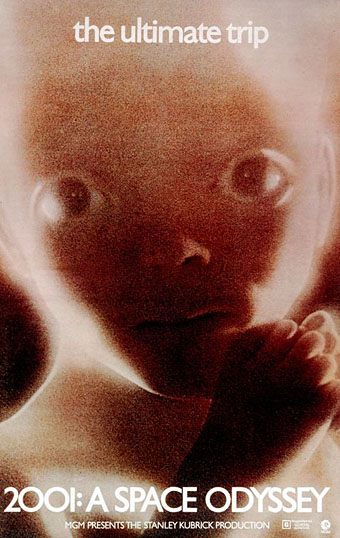
Being an inveterate Kubrickphile I was naturally pleased to hear that some of the excised scenes from 2001: A Space Odyssey have survived in a watchable form, even though I’m often ambivalent about the restoration of such material. While it was good to see at last the missing French compound sequence of Apocalypse Now, for example, that sequence added nothing to the film as a whole and its inclusion was spoiled by music which Coppola used for sentimental reasons. In Kubrick’s case, there’s a longer version of The Shining which the director allowed to be screened on UK TV in the 1980s but, again, most of the unseen material was incidental and added nothing to the film.

• Related: Roger Ebert’s review of 2001 from 1968; Olivier Mourgue, designer of the Djinn chairs seen in the film’s space Hilton scenes; Magnificent obsession, a Vanity Fair piece from 2002 about the search for the missing scenes from The Magnificent Ambersons. Meanwhile, the trailer for Terrence Malick’s new film, The Tree of Life, features some surprising cosmic moments among its scenes of family life.

The separate history [of gay and lesbian artists] has been kind of edited out of art history but in fact art history is very much interwoven with gay or queer history. In a way the two can’t be separated. America doesn’t like anything uncomfortable. I find in my dealings with museums that if I ask a question and the answer is ‘no,’ they don’t answer. If the answer is ‘yes,’ I get these amazingly enthusiastic responses. I find it sort of strange sometimes, not being American myself. In a way what they’re doing is editing out the uncomfortable. David Wojnarowicz’s work can make you uncomfortable — and they’ve edited out that possibility in the show.

Canadian artist AA Bronson (see below).

• More on the Smithsonian versus David Wojnarowicz affair: Frank Rich examined the train of events in a comment piece, Gay Bashing at the Smithsonian, for the NYT; the Andy Warhol Foundation threatened to withdraw their funding for future Smithsonian events unless the work is reinstated, the Robert Mapplethorpe Foundation will be doing the same; another artist featured in the National Portrait Gallery exhibition, AA Bronson, requested that the gallery withdraw his work from the show in protest; the NPG refused, citing a contractual arrangement; among the increasing number of galleries showing support for Wojnarowicz, Tate Modern, London, will host an event in January which will feature a screening of the contentious video; lastly, there’s a protest event in New York City today (Sunday, December 19th) at 1.00pm, details here.

• More censorship in America: Jeffrey Deitch Censors Blu’s Political Street Art Mural. In the book world, writer Selena Kitt finds her erotic incest stories removed from Amazon’s Kindle store. Other authors, Jess C Scott and Esmerelda Green, have had their erotic titles removed from the store. Selena Kitt says:

When some of my readers began checking their Kindle archives for books of mine they’d purchased on Amazon, they found them missing from their archives. When one reader called to get a refund for the book she no longer had access to, she was chastised by the Amazon customer service representative about the “severity” of the book she’d chosen to purchase.

Can you imagine buying a paper book and the bookstore then paying you a visit to forcibly reclaim it? To date no adequate explanation from Amazon has been forthcoming but they’ll be happy to sell you a Kindle edition of the Marquis de Sade’s The 120 Days of Sodom.
m51.jpg

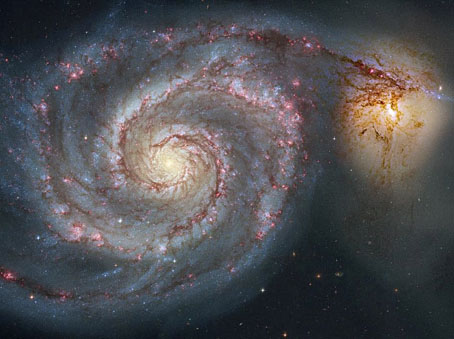
Galaxy M51 aka The Whirlpool. One of the Top Astronomy Pictures of the Year from a selection by Bad Astronomy. Photo by the Hubble Heritage Team & Robert Gendler.

• More cosmic events: there’ll be a total lunar eclipse this coming Monday, visible in much of the Northern Hemisphere.

• “Heterosexuality is the opiate of the masses!” The Raspberry Reich (2004), a film by Bruce LaBruce.

New editions of Borges poetry. Fine so long as you accept that the translations can never truly satisfy.

• Just the thing for the winter weather, illustrations for Pushkin’s Queen of Spades from 1966.

• Another Ghost Box download: Radio Belbury Programme 1: “Holidays & Hintermass”.

Monsters, Inc: Arcimboldo and the Wunderkammer of Rudolf II.

• Silent Porn Star found some burlesque lamps.

Giant airship powered by algae.

Space Oddity (1969) by David Bowie.
Weekend links 34

austin.jpg

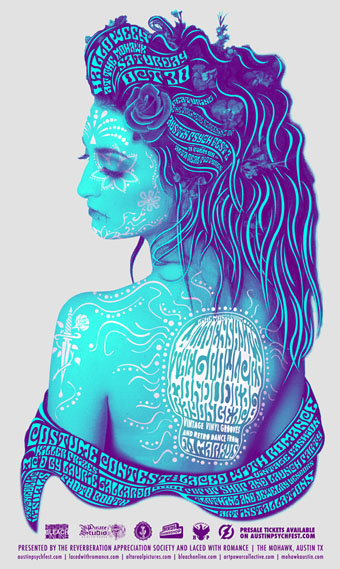
Halloween in Austin, Texas this year will look and sound like this.

• “Blade Runner will prove invincible“: Philip K Dick’s letter of praise to the film’s producers. Related: one of the Blade Runner designers, Syd Mead, has recently styled New York’s Bar Basque and Foodparc.

• “I decided to go into fields where mathematicians would never go because the problems were badly stated…I have played a strange role that none of my students dare to take.” RIP Benoît Mandelbrot.

Science and poetry: “a richly vexed topic badly in need of rethinking”. Related: Why the Singularity isn’t going to happen.

• In case you missed this week’s earlier announcement, a reminder that I was interviewed at Coilhouse. My vanity: it knows no bounds.

• Franklin Booth’s illustrations for The Flying Islands of the Night (1913) by James Whitcomb Riley.

On the Verge (1950) by Maurice Sandoz, illustrated by Salvador Dalí. Also this and this.

bowie.jpg

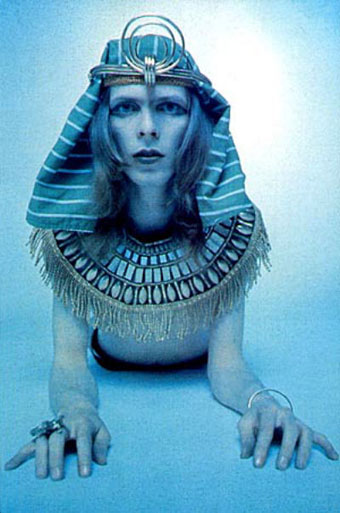
Bowie Sphinx, 1969. Photo by Brian Ward.

The Laughing Gnostic: David Bowie and the Occult.

• “Moonlighting as a Conjurer of Chemicals“: Isaac Newton’s alchemical interests.

• “A sense of otherness that goes right back“: Alan Garner at Alderley Edge.

Jimmy’s End—Alan Moore’s new feature film and spin-off TV series.

A Guide to the New Ruins of Great Britain by Owen Hatherley.

• The It Gets Better Project now has a dedicated website.

Quicksand (1971) by David Bowie.

Weekend links 17

bowie.jpg

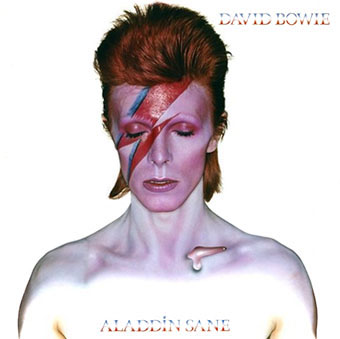
Aladdin Sane (1973). Cover photo by Brian Duffy who died this week.

• Among the obituaries this week: artist Louise Bourgeois; poet and partner of Allen Ginsberg, Peter Orlovsky; film director Joseph Strick, a man who dared to film James Joyce’s Ulysses; photographer Brian Duffy.

The dustbin of art history: “Why is so much contemporary art awful? We’re living through the death throes of the modernist project—and this isn’t the first time that greatness has collapsed into decadence.” Admirable sentiments but galleries and dealers have far too much invested in the corrupt edifice to let it collapse any time soon.

• Edinburgh film festival to screen ‘lost and forgotten’ British movies including the director’s cut of Jerry Cornelius film The Final Programme.

gogoharder.jpg

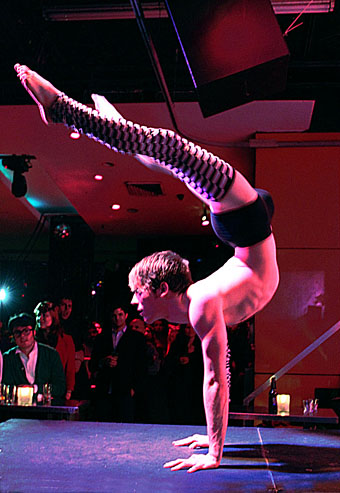
Delectable Bawdville burlesque boy Chris “Go-Go” Harder. Via EVB who have more pics.

Homobody by Rio Safari, “a scrappy diy zine about queerness”. Obliquely related: Lizzy the Lezzie, animations at the Sundance Channel.

• Richard Norris aka Time and Space Machine puts together a psychedelic mixtape for FACT. Fab stuff.

• Diamanda Galás has a message for critics: “Stick to reviewing plant life and leave the Witches alone.”

Brion Gysin: Dream Machine will be the first US survey of Gysin’s work in NYC next month.

• Geeta Dayal’s study of Another Green World by Brian Eno reviewed at Ballardian.

• For type-heads: font anatomy wallpaper by Sigurdur Armannsson.

If it was my home: visualising the BP oil disaster.

Antony Gormley’s Breathing Room III.

The Paris Review has a new blog.

• Bizarre juxtaposition of the week: John Martyn’s sublime Small Hours with, er… The Clangers.

Weekend links 14

fraser.jpg

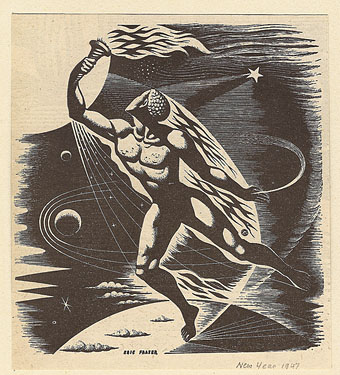
A drawing by Eric Fraser from the Radio Times, 1947. From this Flickr set.

• I helped put together the design for the Pursuit Grooves album recently. FACT magazine interviewed Vanese Smith about her work.

• One of the books whose interiors I designed last year for Tachyon was The Secret History of Science Fiction, a story collection edited by James Patrick Kelly and John Kessel. (And a book which I’ve yet to add to my web pages, I’m still behind with updates.) The LA Times has a piece about the anthology here, focusing on the Don DeLillo contribution, Human Moments in World War III.

• It’s been another week of Facebook hate; being a self-satisfied refusenik I can’t help but find this amusing. Too many good pieces to list but Gizmodo had more reasons why you should still quit Facebook, Jason Calacanis gathered lots of links to other stories on his blog while social media expert Danah Boyd got to the heart of the matter with a very cogent polemic.

• If you want an alternative to Facebook, Diaspora is “the privacy aware, personally controlled, do-it-all distributed open source social network”.

• David Toop has a new book out next month. “Sinister Resonance begins with the premise that sound is a haunting, a ghost, a presence whose location is ambiguous and whose existence is transitory. The intangibility of sound is uncanny – a phenomenal presence in the head, at its point of source and all around. The close listener is like a medium who draws out substance from that which is not entirely there.”

• Coilhouse looks at the late Decadent artist and designer Hans Henning Voigt (1887–1969), better known as Alastair.

mclark.jpg

come, been and gone.

• “After a sold out season at the Barbican in 2009 Michael Clark Company returns with the next instalment of his critically acclaimed production made primarily to the music of David Bowie. come, been and gone also embraces the work of Bowie’s key collaborators: Lou Reed , Iggy Pop , Brian Eno and touches on some of his influences; The Velvet Underground , Kraftwerk and Nina Simone……This production contains loud music and graphic images.” I should hope so.

• “Why should boys always be boys, and girls always be girls?” Brutal/Beautiful, photography by Austin Green.

• John Foxx, Iain Sinclair and others appear at Short Circuit 2010 next month.

Black, Brown, and Beige: Duke Ellington’s music and race in America.

Jane Siberry has made all her albums available as free downloads.

Ruth Bayer photographs people after they’ve inhaled poppers.

Swiss artist catalogues mutant insects around nuclear plants.

Pompeii’s X-rated art will titillate a new generation.

The Happy, Haunted Island of Poveglia, Venice.

The Art of American Book Covers, a blog.

Kanellos, the Greek protest dog.

• Song of the week: Twiggy Twiggy (1994) by Pizzicato Five.

Album cover postage stamps

albums1.jpg

top row: The Division Bell by Pink Floyd; A Rush of Blood to the Head by Coldplay.
bottom row: London Calling by The Clash; Tubular Bells by Mike Oldfield.

The Royal Mail follows its series of British Design Classics postage stamps with a series dedicated to what they call “classic” album covers. The design classics in the earlier series deserved the term—a  Mini motor car, a Penguin book cover, the London Underground map, etc—whereas here we have the word “classic” being used in its lazy journalist sense where it becomes a synonym for “popular” and “familiar”, two attributes which often diminish with time.

albums2.jpg

top row: Parklife by Blur; Power, Corruption and Lies by New Order.
bottom row: IV by Led Zeppelin; Screamadelica by Primal Scream.

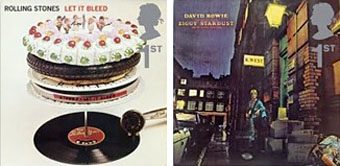
It should be noted that the choice of cover art was limited to releases by UK artists, and the designs had to be readable at the very small size of a postage stamp. Even so, I can’t help but regard this as a missed opportunity. There was no need to feature the Beatles since they’d been given their own set of stamps in 2006, but I’ve never thought of the cover of Let It Bleed (below) as a classic, even though musically it’s one of the best Stones albums. I’d rather choose Andy Warhol’s cover for Sticky Fingers but you can imagine the upset at stamp users being forced to lick a picture of a bulging pair of jeans. As for Pink Floyd’s Division Bell, it’s a typically striking design from Storm Thorgerson but does anyone really think it’s more classic than earlier Floyd covers, not least the Dark Side of the Moon prism which even people who hate the band can instantly recognise? Nearly all these choices seem confused or compromised; the Clash cover is the token punk offering—Royal Mail wouldn’t dare choose Never Mind the Bollocks—but Ray Lowry’s design was copied from an Elvis Presley sleeve; Led Zeppelin’s IV is a great album but other releases had far better covers; Primal Scream, another great album but the whole sleeve design is perfunctory; the Blur choice is merely bewildering.

albums3.jpg

left: Let It Bleed by The Rolling Stones; right: The Rise and Fall of Ziggy Stardust and the Spiders from Mars by David Bowie.

As far as designers go, Hipgnosis (via Storm T), Peter Saville (New Order), and Stylorouge (Blur) are included here but there’s nothing from Barney Bubbles, Malcolm Garrett, 23 Envelope, Neville Brody, Designer’s Republic or any of the other pioneering British designers of the past 30 years. The trouble with those names, of course, is that many of the artists they worked for aren’t popular or familiar enough to the average British stamp purchaser so their work can’t be deemed “classic”. A best of British, then, which could have been a lot better.

Classic Album Covers will be issued on January 10th, 2010.

Elsewhere on { feuilleton }
The album covers archive

Previously on { feuilleton }
British Design Classics
Stamps of horror
Endangered insects postage stamps
James Bond postage stamps
Please Mr. Postman