Weekend links 801

waterhouse.jpg

The Magic Circle (1886) by John William Waterhouse.

The Moon and Serpent Bumper Book of Magic has just been published in France by Editions Delcourt. A preview here shows how carefully they’ve managed to translate and reletter my page designs.

• Among the new titles at Standard Ebooks, the home of free, high-quality, public-domain texts: Algernon Blackwood’s stories of John Silence, occult detective.

• Relevant to some of my recent reading: The Necronomicon Wars, an examination of the many attempts to give life to HP Lovecraft’s fictional grimoire.

Altered States is tremendously exciting to watch—and not only during its psychedelic interludes when goat Jesus is being crucified and writhing red figures are toppling, Hieronymus Bosch–like, into hell and abstract splotches give the impression of cells endlessly dividing or murky membranes dissolving and beautiful women stare into Magritte skies and waves of lava crash as though the molten core of humanity itself were erupting. Even in its quieter moments, it is a beautiful film, with Hurt’s every appearance shot by cinematographer Jordan Cronenweth to emphasize his character’s alien otherworldliness.

Jessica Kiang explores the creation of Ken Russell’s flawed but fascinating psychedelic feature, Altered States

• A new catalogue of lots at another After Dark: Gay Art and Culture online auction. Homoerotic art, photos, historic porn. etc.

Tarot decks through the ages: a video showing some of the cards from Victoria and Albert Museum’s collection.

• More psychedelia: Neuroscientist Grigori Guitchounts asks “What is your brain doing on psychedelics?”

• At the Daily Heller: Ryan Hughes has published a weighty collection of his typeface designs.

• Old music: Caged (25th Anniversary Edition) by Ian Boddy & Chris Carter.

• At the BFI: Rory Doherty selects 10 great Technicolor melodramas.

• At Dennis Cooper’s: The Old School Horrors of Terence Fisher.

Photographs from the 2025 Wildlife Photographer of the Year.

Ambientblog celebrates 20 years of existence.

• RIP Dave Ball.

Necronomicon (1970) by Les Baxter | Liriïk Necronomicus Kahnt (1975) by Magma | Necronomicon–The Magus (2004) by John Zorn
Weekend links 567

dean-osibisa.jpg

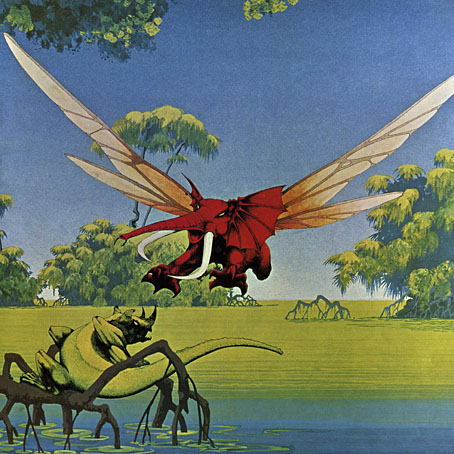
Cover art by Roger Dean for Woyaya (1971), the second album by Osibisa. Dean’s flying elephants made their first appearance on the group’s debut album, and have been an Osibisa emblem ever since.

• Many of Roger Dean’s early album covers are better creations than the music on the albums they decorate. This isn’t the case with Osibisa, however, a Ghanaian group based in London whose discography includes (uniquely, I think) two covers by Dean together with one by Mati Klarwein. The group’s first two albums, Osibisa and Woyaya, are exceptional blends of Ghanaian music with rock, funk and jazz whose omission from the generally reliable Kozmigroov list is a serious error. Garth Cartwright talked to Teddy Osei and Lord Eric Sugumugu about Osibisa past and present.

• “The antiheroes of Angry Young Men cinema railed against the limited life opportunities available to them. Wired and frustrated, they especially chafed against girlfriends, wives, domesticity. Yet they never questioned heterosexuality itself. Not, at least, until The Leather Boys (1964), a relatively little-known film directed by Canadian expatriate Sidney J. Furie.” Sukhdev Sandhu on a film about gay life in pre-decriminalisation Britain that offered a slightly more positive view of its subject than the justifiably angst-ridden Victim (1961).

• “Brian Aldiss once confided to me that the big problem with American science fiction writers was that they loved to write about Mars but knew nothing about Indonesia.” Bruce Sterling on the attractions of being an expatriate writer who adopts a foreign persona, as he did for the stories collected in Robot Artists and Black Swans.

• New music: Fire Tower by The Grid / Fripp. Dave Ball, Richard Norris and Robert Fripp have been collaborating on and off since The Grid’s 456 album in 1992. Fire Tower is a preview of Leviathan, a new album out in June on CD/DVD and double vinyl.

• RIP Michael Collins, the astronaut who orbited the Moon alone, listening to Symphonie Fantastique by Berlioz in the Command Module of Apollo 11 while Neil Armstrong and Buzz Aldrin were walking on the satellite’s surface.

• “‘Walking with a thesis’ could easily function as the subtitle for a significant number of Iain Sinclair’s books.” Tobias Carroll on Iain Sinclair and the radical act of walking through a city.

• “‘Plain speaking, like plain food, is a puritan virtue and thus no virtue at all,’ Meades pronounces.” Steven Poole reviews Pedro and Ricky Come Again by Jonathan Meades.

• Building a panorama: Clive Hicks-Jenkins‘ latest progress report on his Cocteau-inspired illustrated edition of Beauty and the Beast.

• At Unquiet Things: Groovy Goddesses From Dimension X: Gene Szafrans’ Kaleidoscopic Book Covers.

• From leather boys to leather men: Miss Rosen on the little-known photography of Tom of Finland.

Alexis Petridis attempts the impossible again, with a list of Grace Jones’ best songs.

• At Dennis Cooper‘s: Cars.

I’m A Leather Boy (1967) by The Leather Boy | Warm Leatherette (1980) by Grace Jones | Leather Bound (2017) by Patrick Cowley

Weekend links 523

miller.jpg

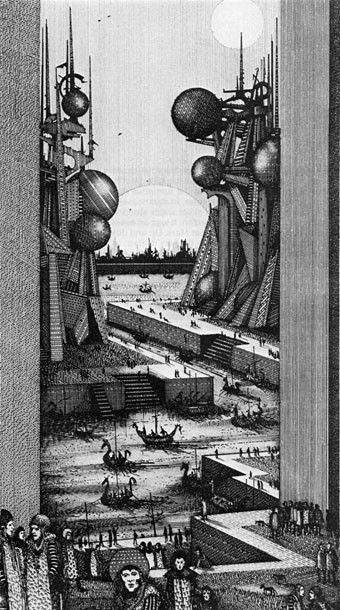
One of Ian Miller‘s drawings from the illustrated edition of Ray Bradbury’s The Martian Chronicles, 1979.

• “I always said we were kind of an electronic punk band, really. We were never New Romantics, I don’t like it when we get lumped in with that.” Dave Ball of Soft Cell and The Grid talking to Duncan Seaman about his autobiography, Electronic Boy: My Life In and Out of Soft Cell. I’ll now be waiting impatiently for the unreleased Robert Fripp/Grid album to appear.

• “[Patricia] Highsmith’s writing—often eviscerating, always uncomfortable—has never been more relevant,” says Sarah Hilary.

• Ron Peck’s debut feature, Nighthawks (1978), is “a nuanced look at gay life in London,” says Melissa Anderson.

And then there are those figures who seem to flit around the edges of movements without ever being fully involved in any of them, who pursue their own eccentric paths no matter what is going on around them. These are the writers who make up the secret history of literature, the hidden history that’s not easily reduced to movements or trends, and who always waver on the verge of invisibility until you stumble by accident onto one of their books and realize how good they actually are, and wonder, Why wasn’t I told to read this before? But of course you already know the answer: You were not told because it doesn’t fit smoothly into the story those in authority made up about what literature is—it disrupts, it can’t be reduced to the literary equivalent of a meme.

That’s the kind of writer Pierre Klossowski (1905–2001) is. He is not a joiner. He has his own particular and often peculiar concerns, and pursues them. He does not particularly welcome you in. The content of his writing, too, has the feel of a gnostic text, as if you are reading something that, if only you were properly initiated, you would understand in a different way. In that sense his work has an esoteric or occult quality to it—and likewise in the sense that it returns again and again to the intersection of religion and pornography, the sacred and the profane.

Brian Evenson on The Suspended Vocation by Pierre Klossowski

• Chad Van Gaalen creates a psychedelic animation for Seductive Fantasy by the Sun Ra Arkestra.

• More sneak peeks from the forthcoming The Art Of The Occult by S. Elizabeth.

• More Robert Fripp: Richard Metzger on Fripp’s sui generis solo album, Exposure.

Pamela Hutchinson on the pleasures of David Lynch’s YouTube channel.

• Mix of the week: a second Jon Hassell tribute mix by Dave Maier.

• At Dennis Cooper’s: Ferdinand presents…Dark Entries Day.

15 fascinating art documentaries to watch now.

Soft Power by Patten.

• RIP Milton Glaser.

hauntología

Aquarium (1992) by The Grid (with Robert Fripp) | Soft Power (2005) by Ladytron | The Martian Chronicles (2007) by Dimension X

Weekend links 456

tanning.jpg

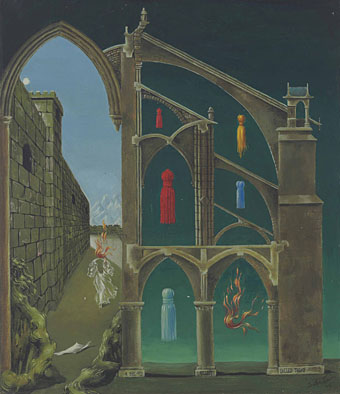
A Mrs Radcliffe Called Today (1944) by Dorothea Tanning.

Darran Anderson on how the Bauhaus kept things weird. “Many imitators of the famous art school’s output have missed the surreal, sensual, irrational, and instinctual spirit that drove its creativity.”

• Notes on the Fourth Dimension: Hyperspace, ghosts, and colourful cubes—Jon Crabb on the work of Charles Howard Hinton and the cultural history of higher dimensions.

• “[Edward] Gorey is slowly emerging as one of the more unclubbable American greats, like Lovecraft or Joseph Cornell,” says Phil Baker.

The label “homosexual writer” stuck for the rest of his career, with Purdy confined to what Gore Vidal called “the large cemetery of gay literature…where unalike writers are thrown together in a lot, well off the beaten track of family values”. In later years, Purdy moved further off the beaten track, as much by intention as circumstance. “I’m not a gay writer,” he would tell interviewers. “I’m a monster. Gay writers are too conservative.”

Speaking to Penthouse magazine in 1978, Purdy said being published was like “throwing a party for friends and all these coarse wicked people come instead, and break the furniture and vomit all over the house”. He added that, in order to protect oneself, “a writer needs to be completely unavailable”.

Andrew Male on writer James Purdy

• The Necessity of Being Judgmental: Roger Luckhurst on k-punk: The Collected and Unpublished Writings of Mark Fisher.

Faunus: The Decorative Imagination of Arthur Machen, edited by James Machin with an introduction by Stewart Lee.

• More James Purdy: “His poetry displays a softness that readers of his fiction might not expect,” says Daniel Green.

Drag Star! is a 150,000-word interactive novel/text adventure by Evan J. Peterson.

• At Dangerous Minds: Dave Ball discusses his years as the other half of Soft Cell.

Daisy Woodward on the story of radical female Surrealist Dorothea Tanning.

• Inside the bascule chamber: photos of Tower Bridge, inside and out.

Tim Smith-Laing on the meaning of Miró’s doodles.

• Galerie Dennis Cooper presents…Emma Kunz.

rarecinema: a shop at Redbubble.

Apollo Press Kits

The Fourth Dimension (1964) by The Ventures | Dimension Soleils (1983) by Gilles Tremblay | Into The Fourth Dimension (1991) by The Orb

Decoder, a film by Jürgen Muschalek

decoder1.jpg

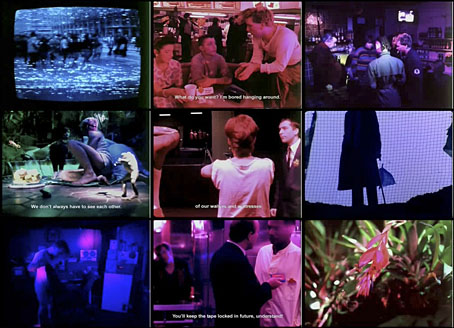
The Burroughs Centenary approaches, and this month sees the 30th anniversary of this Burroughs-related item. Decoder is a low-budget feature film from 1984 written by Klaus Maeck, and directed by Jürgen Muschalek (aka Muscha). Despite the constraints of budget and casting—many of the actors are amateurs—Decoder is truer to the techno-anarchist strand of Burroughs’ fiction than anything attempted before or since, and it’s arguably truer to the spirit of his works as a whole than David Cronenberg’s Naked Lunch.

decoder2.jpg

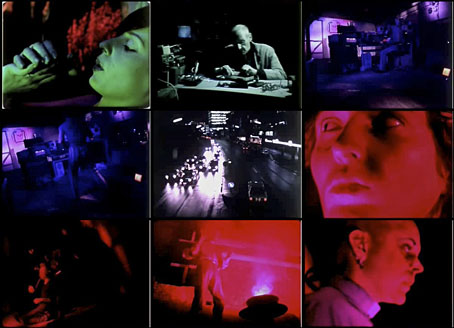
Decoder was shot in Hamburg in the early 1980s although the city is never properly identified in order to maximise the film’s near-future qualities. The narrative concerns attempts by FM (played by FM Einheit from Einstürzende Neubauten) to combat the insidious effects of muzak in burger restaurants using tapes created with his home-made electronics. William Burroughs makes a couple of brief appearances as the “Old Man” with a shop full of electronic components. Among the rest of the cast there’s Christiane Felscherinow, dividing her time between peep-show sex-work and languishing in a room filled with her pet frogs; and Genesis P-Orridge in his Psychic TV gear as the head of an underground pirate cult who encourage FM to launch an offensive against the muzak signals. Original music is provided by Dave Ball (from Soft Cell) and FM Einheit. The complete score is very good, featuring additional tracks by Soft Cell, Einstürzende Neubauten and Matt Johnson. Watched today, the narrative seems very much a product of its time, and somewhat outmoded. In 1984 home computing was increasingly prevalent, and cheap sound-sampling was just around the corner; Decoder is the last hurrah of an analogue struggle against the agents of the Control Virus.

decoder3.jpg

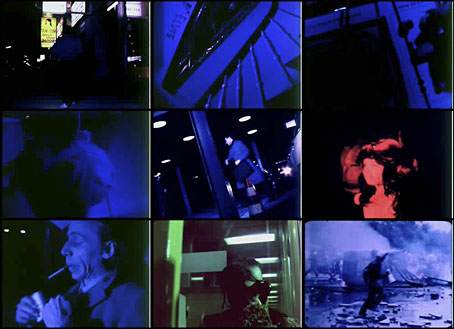
It’s a shame Jürgen Muschalek didn’t get to make anything else when he was obviously trying for some kind of cross between Burroughs’s The Electronic Revolution (1970) and Godard’s Alphaville (1965). Low-budget films often suffer visually but this one makes impressive use of vivid lighting and plenty of shadow which helps alleviate some of the weaknesses elsewhere. David Cronenberg has often acknowledged the influence of avant-garde types such as Burroughs and Warhol but his own films tend to be very conservative in their presentation. Muschalek at least tries to parallel some of Burroughs’ fragmented narrative techniques with an abrupt and disjunctive editing style. The film as a whole is much more in tune with the early Industrial Culture ethos than Peter Care’s noir pastiche, Johnny YesNo, but suffered from being more read about than seen in the 1980s. A few copies can be found online. In 2010 it finally appeared on DVD with extra material and a soundtrack disc.

Elsewhere on { feuilleton }
The William Burroughs archive