Hodgsonian vibrations

utpatel.jpg

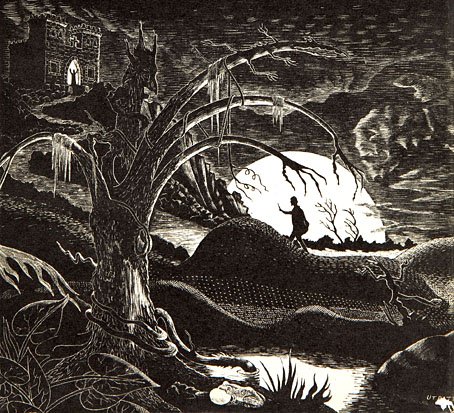
Illustration by Frank Utpatel from the 1947 Arkham House edition of Carnacki, the Ghost-Finder.

“Presently I got hold of myself a bit, and marked out a pentacle hurriedly with chalk on the polished floor; and there I sat in it almost until dawn. And all the time, away up the corridor, the door of the Grey Room thudded at solemn and horrid intervals. It was a miserable, brutal night.”

The Gateway of the Monster (1913) by William Hope Hodgson

“Word falling – Photo falling – Time falling – Break through in Grey Room”

The Ticket That Exploded (1962) by William S. Burroughs

Among other things, 2013 is the centenary of the first book publication of William Hope Hodgson’s collection of weird tales, Carnacki, the Ghost-Finder, and while I don’t believe that William Burroughs was referring to the supernatural eruption that occurs in Hodgson’s Grey Room it would be remiss of me to ignore the connection. Listening this week to Music for Thomas Carnacki by Jon Brooks (he of The Advisory Circle) had me wondering whether there’s any other Hodgson-derived music of note. Lovecraft has inspired hours of musical endeavour while Hodgson’s weird contemporaries, Algernon Blackwood and Arthur Machen, are referenced on some of the Ghost Box releases. Hodgson is the poor relation in these celebrations, often passed over despite the sonic potential of Carnacki stories such as The Whistling Room, The Horse of the Invisible, and especially The Hog, a tale whose manifestations are almost wholly perceived through the medium of sound. Searching around turned up the following examples.
tactile.jpg

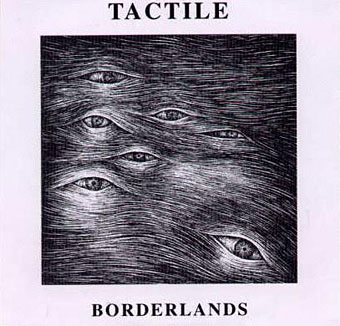
Borderlands (1999) by Tactile.

The House on the Borderland is the big favourite in this list, this album being a series of tracks by John Everall based on Hodgson’s novel. John Balance of Coil appears on the first track, Grief, reading the poem which opens the book.
Continue reading “Hodgsonian vibrations”

Abrahadabra

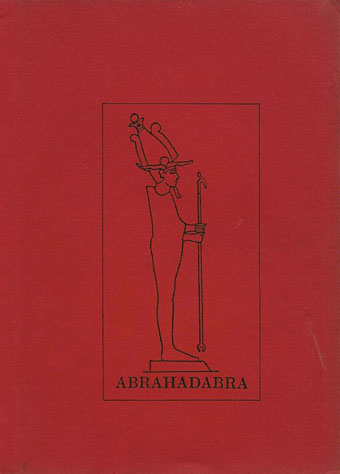
abrahadabra01.jpg

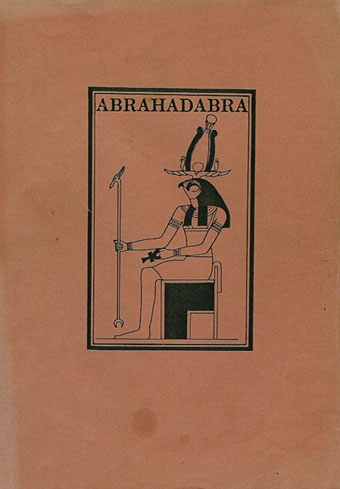
01 First (1985).

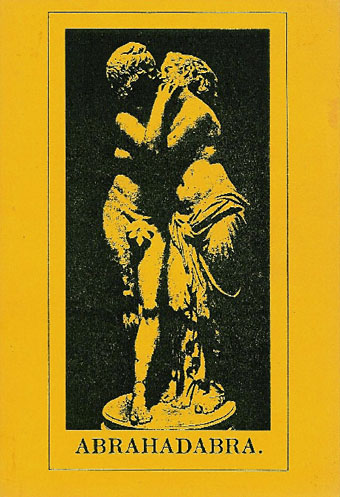
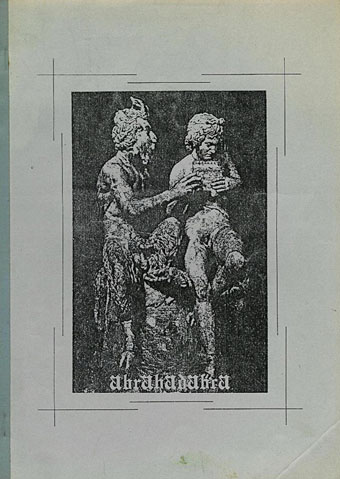
I’ve linked to so many publications at the Internet Archive I’m a little surprised it’s taken me this long to find something featuring my own work. Abrahadabra was a Dutch periodical covering subjects familiar to readers of the esoteric magazines of the 1980s (RE/Search, Rapid Eye, etc): Industrial music of the TG/Psychic TV/Coil variety, transgressive writers such as Burroughs, Ballard and Bataille, weird fiction of the Lovecraft/Machen school, and a heavy emphasis on occultism. My friend Ed was one of the contributors which is how my Pan drawing ended up in the Witches issue in 1987.

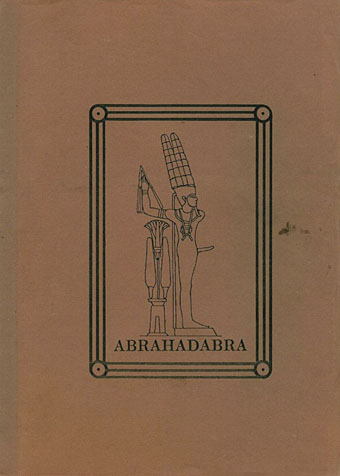
For a publication with minimal resources the production was often impressive, the drawing on the cover of the Austin Spare issue, for instance, being printed in silver ink on black paper. The contents were mostly in Dutch but each issue featured interesting and often original graphics. I also drew a small Horus head for issue 11 (which I’d forgotten about until I saw it again), whose title design was used on the cover of issue 12. Some of the other issues I hadn’t seen before so it’s good to find them scanned and easily available. The 1980s was the last time print was used as the primary medium for underground culture to talk to and disseminate itself. By the end of the decade many of the small magazines had either evolved—both RE/Search and Rapid Eye turned into books—or expired. The final Abrahadabra is dated 1990.

abrahadabra02.jpg

02 Second (1985).

abrahadabra03.jpg

03 Third (1985).

abrahadabra04.jpg

04 Sex (1985).

abrahadabra05.jpg

05 Derangement (1985).

Continue reading “Abrahadabra”

Weekend links 139

barnes.jpg

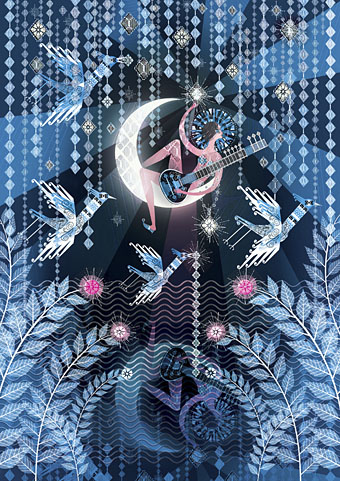
Lucy in the Sky with Diamonds (2012) by Lesley Barnes. She also has peacock wrapping paper.

Big thanks to Dennis Cooper for including this blog in his favourite music, fiction, poetry, film, art & internet lists for 2012. Lots of good company there. One benefit of end-of-year lists is the way they suggest things to look for in January.

• “…the best pictures of dicks that I’ve ever seen…” Rudy Rucker reviews Malcolm McNeill’s The Lost Art of Ah Pook Is Here and Observed While Falling, out at last from Fantagraphics. Rucker notes that William Burroughs’ text is still only available in out-of-print editions in which case you’ll need a book dealer. Elsewhere, Burroughs: The Movie has cleared 50% of its restoration Kickstarter goal but still needs supporters.

• Julia Holter has been a recurrent presence in these posts since the release in March of her acclaimed second album, Ekstasis. FACT has an alternate version of the album’s opening song, Marienbad, one of the extra tracks on the recent UK reissue.

Suttree’s saga carried me down, down, down to the bottom of a heightened surrogate reality, a nadir where the rarest jewels of clarity are found. The fourth time through the novel I arrived at a state of barometric equipoise, a balancing between my mental state and Suttree’s. Then, as he descended again, I began to rise. There was a hypnotic poetry to his fall — his life disintegrated, then the fragments disintegrated, then those fragments followed suit ad infinitum.

Jim White on the life-preserving qualities of Suttree by Cormac McCarthy.

• “An 18-year-old boy who discovers he has a fetish for the aged gets a job in a nursing home and develops an intimate relationship with one particular old man.” Gerontophilia, a proposed film by Bruce LaBruce, is looking for funding.

• Can’t wait for this: Groenland Records announces Who’s That Man?, a four-CD set of music produced and performed by Conny Plank. FACT has a track list.

• At BUTT magazine: Pink Courtesy Phone Mix by Richard Chartier, a great selection of electronica old and new.

• Another end-of-year list: Volumes 1 & 2 of The Graphic Canon are in NPR’s Indie Bookseller best of 2012 selection.

The Nightmare Paintings: art by Aleister Crowley currently touring Australia.

• Christmas with Monte: Colin Fleming on the ghost stories of MR James.

• “The war on drugs is a war on human nature” says Lewis Lapham.

Alan Moore: why I turned my back on Hollywood.

• More electronica: Chris Carter discusses synths.

Saul Bass poster sketches for The Shining.

• At Pinterest: The Pan Within.

Ah Pook Is The Mayan God Of Death (1975) by William Burroughs | Panic (1985) by Coil | Light Shining Darkly (1992) by Coil.

Witkinesque

supervert.jpg

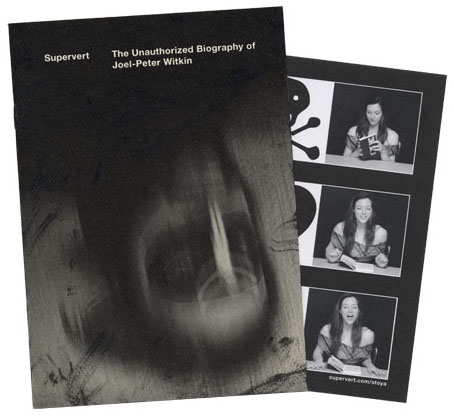
Arriving in the post this week, a Christmas gift from Supervert, a chapbook featuring a new piece of writing that purports to be the unauthorised biography of American artist/photographer Joel-Peter Witkin. The premise is that the facts of the real Witkin’s life are far too mundane to account for his extraordinary photo tableaux so Supervert supplies details such as “Mary Witkin [his mother] worked as a bookkeeper in a DDT plant, slowly saving to enrich the unfathomable reservoirs of the absurd.” A metaphysical portrait of the artist, then, with echoes of David Lynch or Bruno Schulz. Inside the chapbook was a promo postcard bearing pictures of the delightful Ms. Stoya whose reading of Necrophilia Variations has now gained over four million YouTube views.

The Witkin book isn’t for sale but copies are available to those who enter the Supervert contest which is running throughout December. All you need do is enter an email address here then keep your fingers crossed.

witkin.jpg

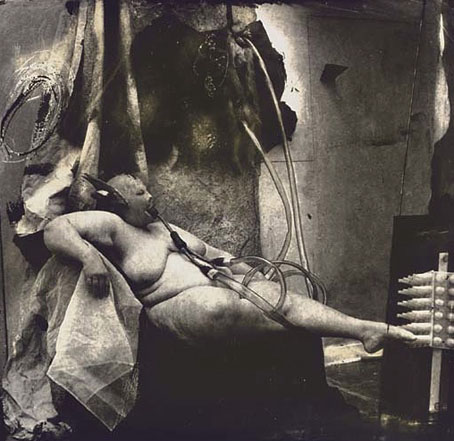
Sanitarium, New Mexico (1983) by Joel-Peter Witkin.

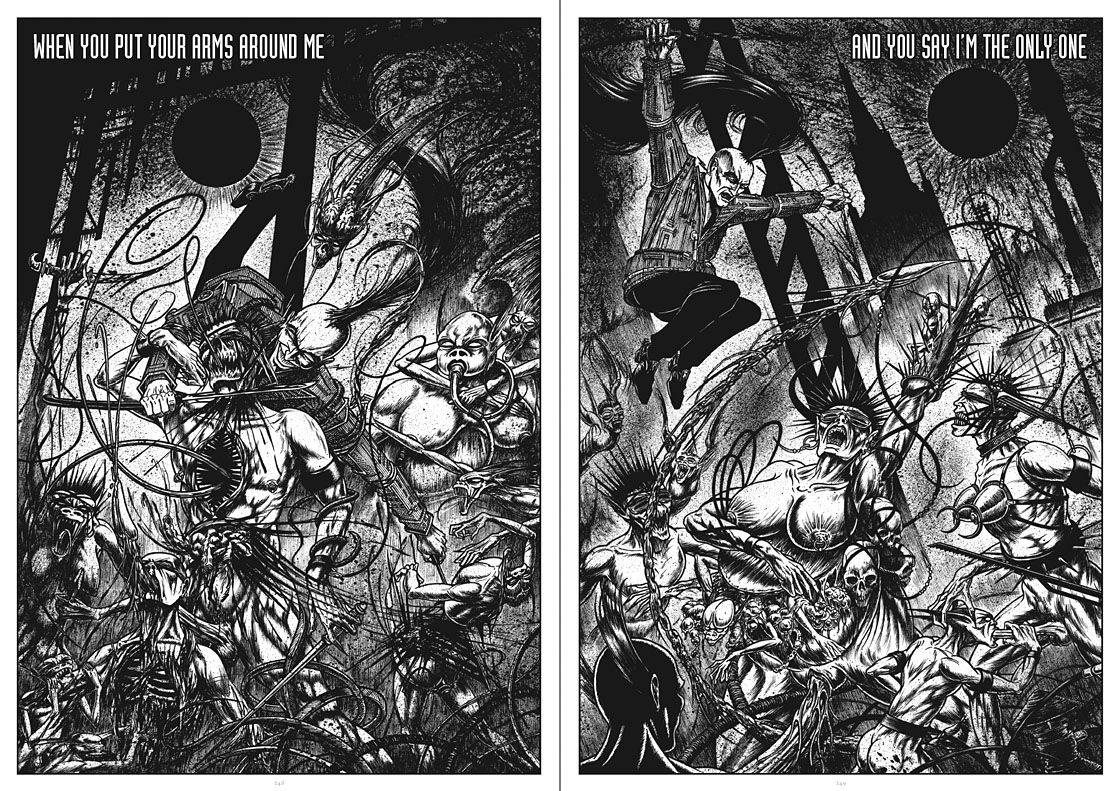
Witkin’s tableaux made an immediate impression circa 1993 when I bought a copy of PhotoVision, a Spanish photography journal which had devoted an entire issue to his work. This arrived at a point when I was halfway through drawing the Reverbstorm comic series, and Witkin’s parade of unorthodox humanity, crucified apes and sundry body parts seemed an ideal complement for the parade of similar grotesqueries (and sundry body parts) we were putting into the comic pages. I also liked the way Witkin worked his own variation on familiar scenes from art history, something we were doing throughout Reverbstorm (Witkin’s Vase: Study For the Base of the Crucifix just happens to combine a partly dissected human skull with Picasso’s Guernica, a recurrent motif throughout the series).

reverbstorm1.jpg

Above and below, some of the more Witkinesque details from part seven of Reverbstorm. The main figure above was a direct reference to Witkin’s Sanitarium, New Mexico. Many figures in other drawings are given Witkin-like blindfolds.

Continue reading “Witkinesque”

A Journey to Avebury by Derek Jarman

jarman2.jpg

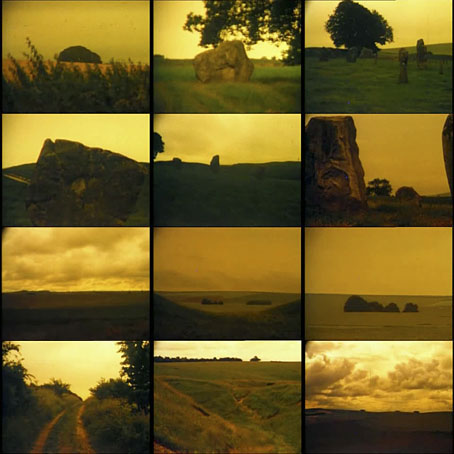
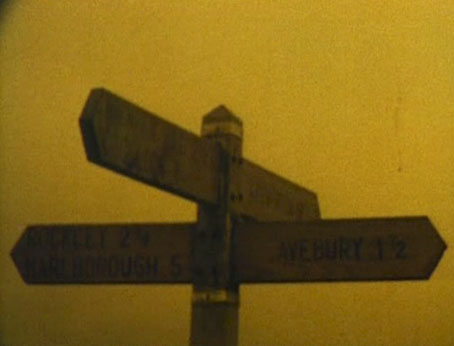
Among the Doublevision video releases I was writing about earlier this month there’s a notable omission from those which have been reissued on DVD: Derek Jarman’s In the Shadow of the Sun was the seventh release on the label, the 1980 version of a film which was compiled in 1974 using footage from his earlier Super-8 shorts, one of which was A Journey to Avebury (1971). Several of the short films have appeared as extras on recent DVDs but the gorgeously oneiric In the Shadow of the Sun remains stubbornly unavailable.

jarman1.jpg

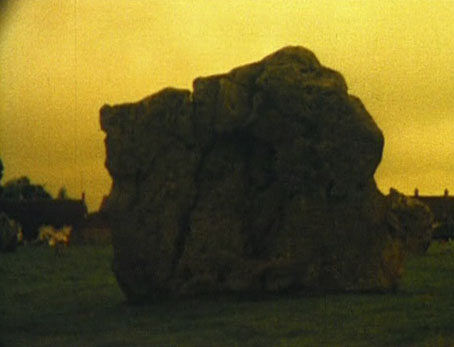
A Journey to Avebury lasts for ten minutes, and in its original state was nothing more than silent, static shots of fields, pathways (putative ley lines, perhaps), silhouetted trees, and finally the Avebury stones. I still find it one of the most fascinating of his short films. The yellow filter gives all the shots an oppressive, sulphurous cast which turns the otherwise bucolic landscape into a place of imminent (or even post-) apocalypse. I’m reminded of the yellow skies in Charles Platt’s erotic nightmare The Gas (1970), or some of the outdoor shots in Penda’s Fen (1974) which are equally suffused with menace.

jarman3.jpg

The copy of A Journey to Avebury that’s currently on YouTube is a recent version with an uncredited electronic score. I still don’t know who did the music; it doesn’t sound like Coil. Cyclobe? (It’s Coil.) The YouTube version can be found in far better quality on the Second Sight DVD of Jarman’s The Last of England.

cots6.jpg

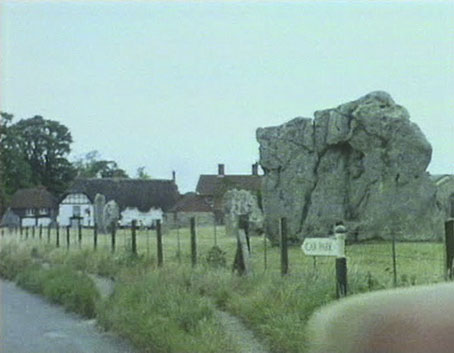
And just to show how everything here is connected to everything else, that brooding megalith above (known locally as “The Devil’s Seat”) can be seen in at least one shot in Children of the Stones. No surprise there but the shot also reveals the place where Jarman and co. would have been standing five years earlier.

Previously on { feuilleton }
Children of the Stones
Avebury panoramas
Derek Jarman’s music videos
Derek Jarman’s Neutron
Mister Jarman, Mister Moore and Doctor Dee
The Tempest illustrated
Penda’s Fen by David Rudkin
In the Shadow of the Sun by Derek Jarman
Derek Jarman at the Serpentine
The Angelic Conversation
The life and work of Derek Jarman