Weekend links 401

time.jpg

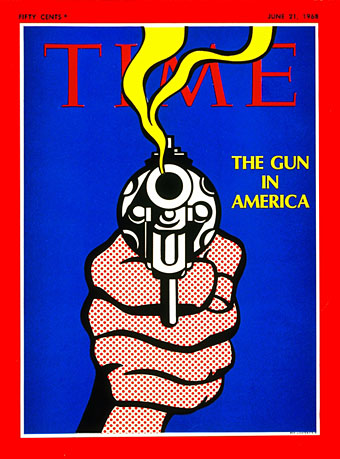
TIME, June 21st 1968. Cover by Roy Lichtenstein.

• “Forget the democratic processes, the judicial system and the talent for organization that have long been the distinctive marks of the US. Forget, too, the affluence (vast, if still not general enough) and the fundamental respect for law by most Americans. Remember, instead, the Gun. That is how much of the world beyond its borders feels about the US today. All too widely, the country is regarded as a blood-drenched, continent-wide shooting range where toddlers blast off with real rifles, housewives pack pearl-handled revolvers, and political assassins stalk their victims at will.” The TIME magazine feature with the famous Roy Lichtenstein cover (prompted by the assassination of Robert Kennedy) will be fifty years old in June.

• “Where do we feel at home? What do our cities look like? How do we see? In 1908, architect and theorist August Endell set out to answer these deceptively simple questions.” Endell’s The Beauty of the Metropolis is coming from Rixdorf Editions in May.

Beardsley 120: The Death of Pierrot is a series of events in Aubrey Beardsley’s birthplace, Brighton, taking place throughout the month of March.

Like the Bloomsbury Group and the Beats, the Surrealists could be incestuous, choosing lovers from inside the circle and often remaining close to their exes. When [Max] Ernst and [Leonora] Carrington reached Paris, he introduced her to Leonor Fini, his friend and former lover. Tall, dazzling, and bejeweled, Fini cultivated a baroque theatricality; every day with her was a masked ball. Recognizing Carrington as “a revolutionary,” she claimed her as an astrological twin—a feat possible only because Fini lied about her age. “This chronological charade, combined with later cosmetic surgeries, sustained the image of youth and beauty that remained vital to Leonor’s self-image, the sexuality and her sense of her place in the world,” writes Chadwick:

Imperious and mercurial, she was also generous, loving and happy to share her rich intellectual life with the younger woman she considered her double. Like Leonora, she believed that cats possessed highly developed psychic powers, that horses had mythological powers that identified them with the feminine, and that painting was an alchemical process.

Regina Marler reviewing three new books about Leonora Carrington and the women artists of the Surrealist movement

As Serious As Your Life: Black Music and the Free Jazz Revolution, 1957–1977 by Val Wilmer receives a welcome republication next month.

• At Dangerous Minds: Occultism, cinema and architecture: How a ouija board built the Bradbury Building.

• When Books Read You, a Defence of Bibliomancy by Ed Simon.

• Ä Brïëf Hïstöry Öf Mëtäl Umläüts by Mike Rampton.

Joey Zone Illustration – Art from The joey Zone.

• At Dennis Cooper’s: Brad Dourif Day.

Alva Noto‘s favourite albums.

Eddie Campbell, Dammit!

• Metropolis (1978) by Edgar Froese | Metropolis (1979) by Motörhead | Under The Gun (Metropolis Mix) (1993) by The Sisters Of Mercy
Weekend links 353

tuke.jpg

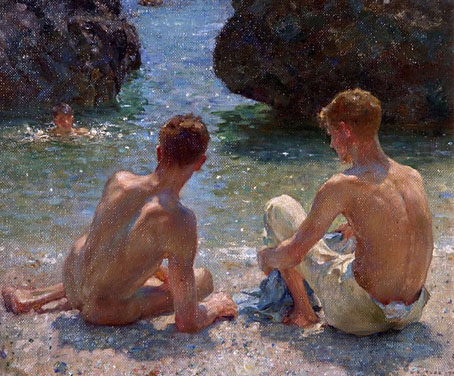
The Critics (1927) by Henry Scott Tuke.

• Geeta Dayal talks to ambient musician Midori Takada about Through The Looking-Glass (1983), an album being reissued this month by Palto Flats/We Release Whatever The Fuck We Want Records.

Jacob Brogan reviews The Abominable Mr. Seabrook by Joe Ollmann, a graphic biography of writer, occultist, explorer and determined cannibal, William Seabrook.

• More from the usual suspects (on these pages at least): Jonathan Meades on his new cookbook and a recent bout of heart surgery; and Iain Sinclair on The Last London.

The law only applied to men, but that didn’t mean same-sex relationships between women were immune to opprobrium. Dorothy Todd was hired as the editor of British Vogue in 1922. Under her visionary stewardship, the magazine became a bastion of high modernist style, swapping petticoats and corsets for Picasso, Cocteau, Man Ray and Woolf. Todd lived with her lover, the fashion editor Madge Garland. Sacked in 1926 because of declining circulation, she planned to sue the magazine, but was silenced when the publisher Condé Nast threatened to publicly expose her “morals”.

In such an inimical climate, it’s not surprising that art became a zone of enchantment as well as resistance. The plenitude of camp aesthetics, the lush excess, the cross-pollination of high and low forms might be conceived as a direct response to the paucity and hostility of the culture at large. From the mannered decadence of Aubrey Beardsley’s naughty woodcuts, to Cecil Beaton’s portraits of Stephen Tennant as a radiant boy prince, to the cabaret high jinks of Danny La Rue, to the wickedly doctored library book covers made by the playwright Joe Orton (a crime for which he received a jail sentence), camp offered a way of remaking the world, cutting it down to size and reassembling it in richly strange and strangely rich new forms.

Olivia Lang on the British artists working in defiance of iniquitous laws prior to the (partial) decriminalisation of homosexual acts in 1967.

• Due for publication later this year, You Should Come With Me Now, a new collection of short fiction by M. John Harrison.

Daniel Marner reviews Scarred For Life Volume One: The 70s, a book about the dark side of British pop culture.

Jay Babcock talks to Erik Davis about the end of Arthur magazine and his new life in the Californian desert.

• The nature photography of Nobuyuki Kobayashi and the ruin photography of Gina Soden.

Jon Forss of design team Non-Format on his time designing The Wire magazine.

Mac McClelland on how doctors treat mental illness with psychedelic drugs.

• Mix of the week: Secret Thirteen Mix 216 by WSR.

Hisham Matar on Jorge Luis Borges.

London Boys (1976) by T. Rex | Last Train To London (1979) by Electric Light Orchestra | London (2004) by Patrick Wolf

Form and Austin Osman Spare

form01.jpg

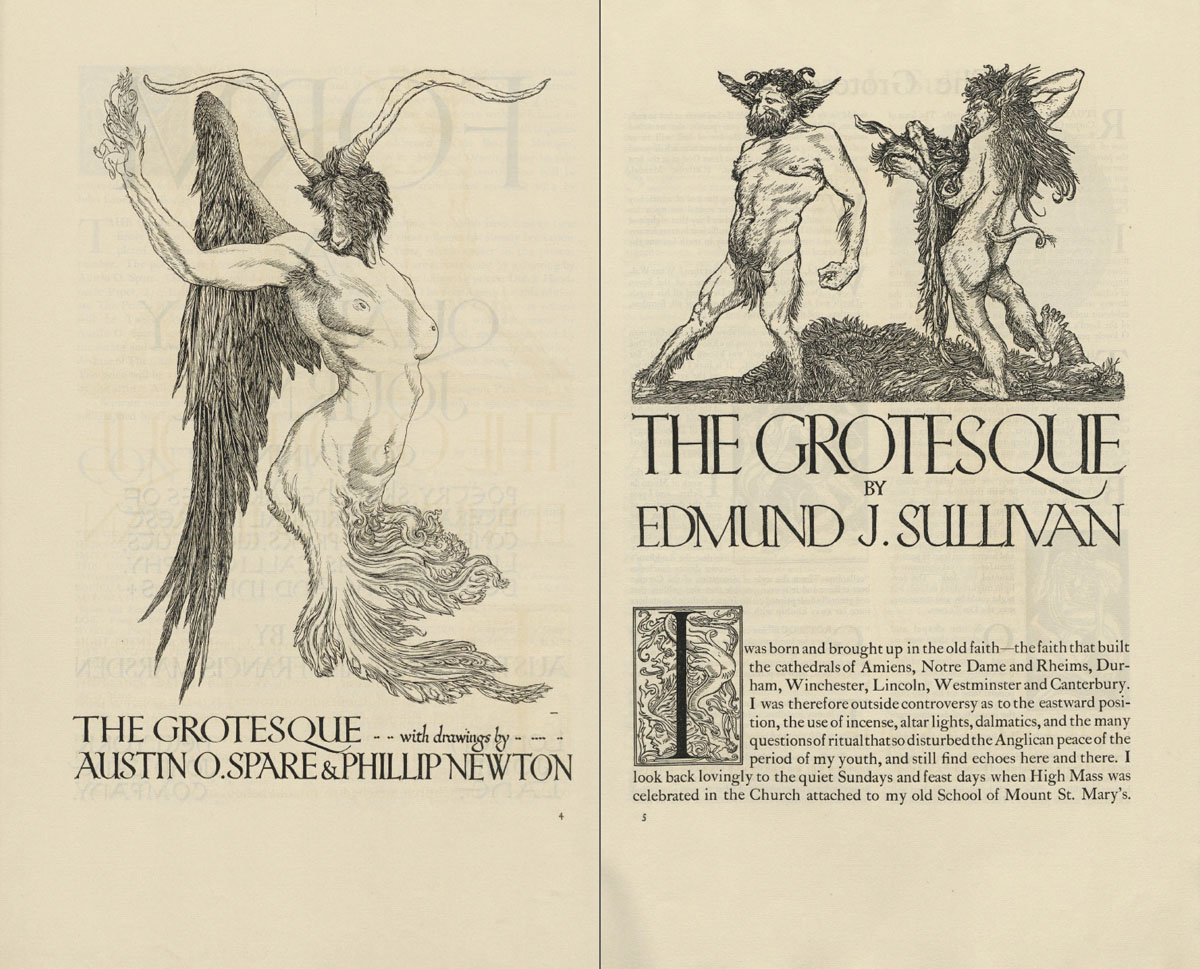
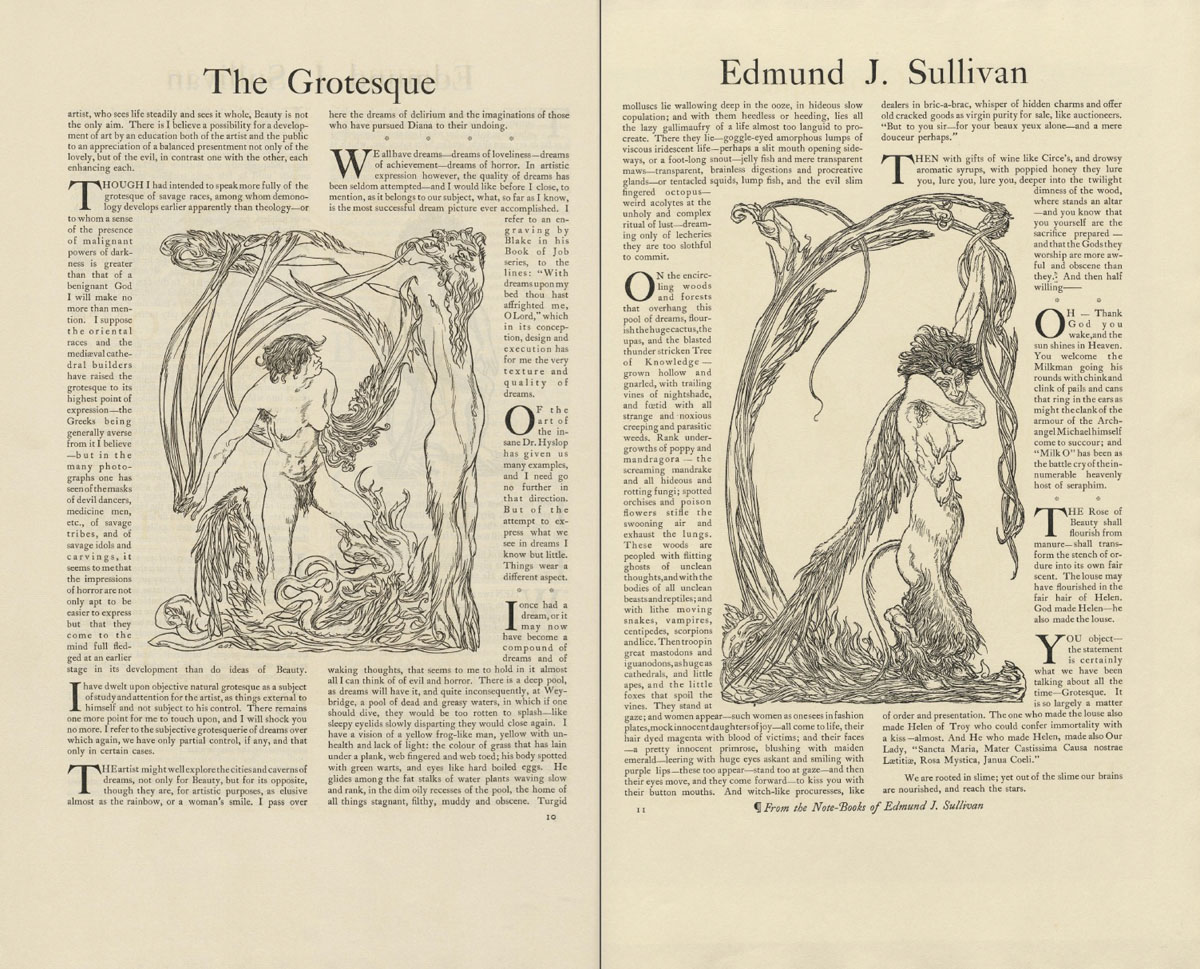
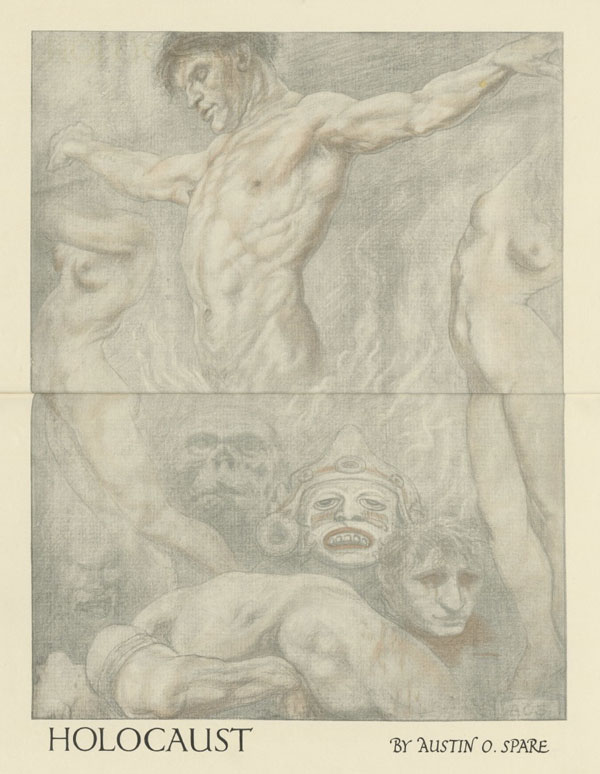
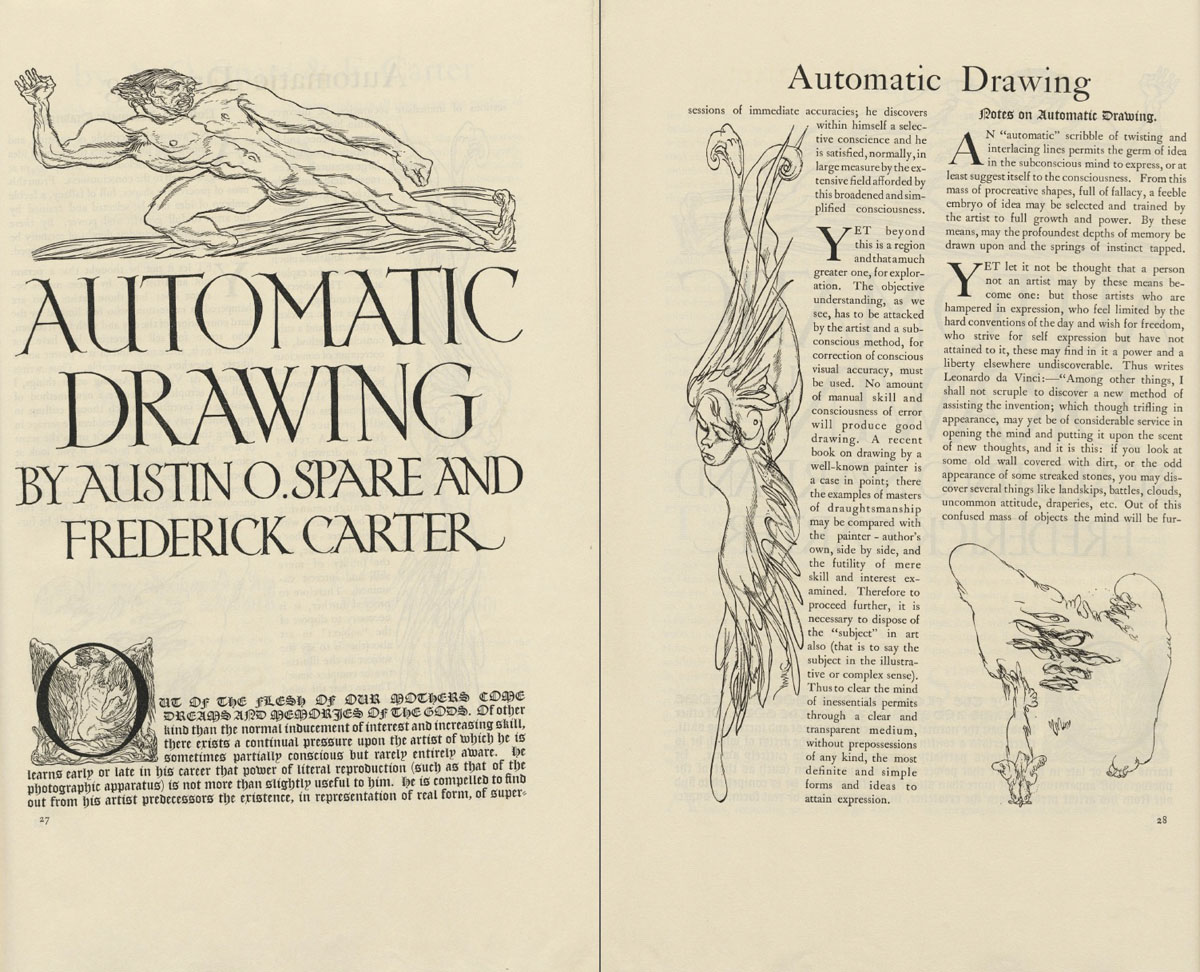
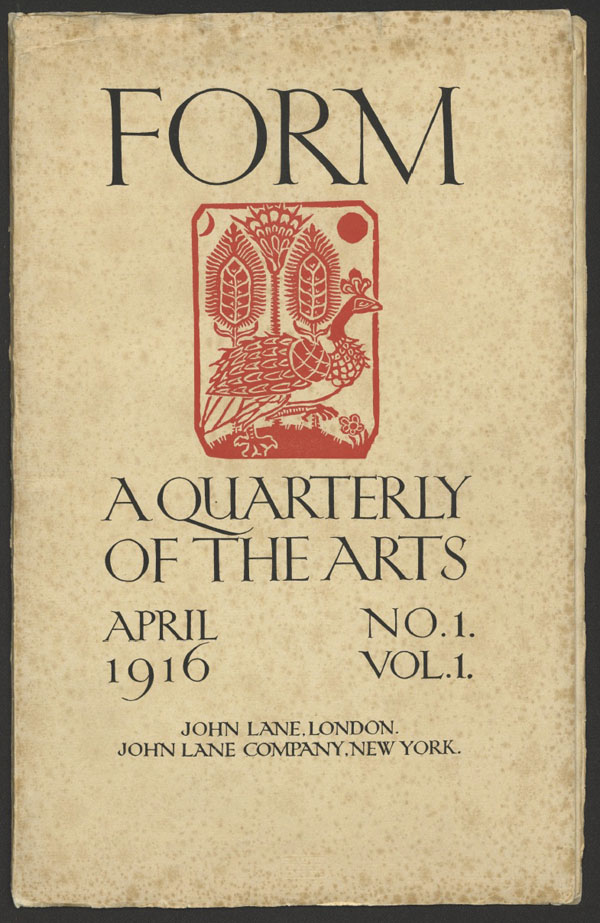
The University of Heidelberg‘s scanning programme continues to be a source of delight for those of us without professional or financial access to rare book collections. Having recently made the entire run of Der Ochideengarten available, they’ve added scans of another journal that was on my list of magazines I’d been hoping would eventually turn up online. Form was the first of two short-lived publications edited by Austin Osman Spare from 1916 to 1924, the second being The Golden Hind. Spare and co-editor “Francis Marsden” (Frederick Carter) published two issues of Form before Spare was conscripted in 1917. After the war, publication resumed with two further issues. Spare aficionados have long been familiar with the drawings in these publications, many of which have been reprinted over and over in collections of Spare’s art but often with no indication of their original context.

form02.jpg

Seeing the drawings in situ like this not only restores the context but also sets them beside the accompanying work by Spare’s fellow writers and artists. Some of the other contributors need no introduction—WB Yeats, Robert Graves—while others have been neglected or even forgotten. Most descriptions of Form mention its following in the lineage of The Yellow Book, publisher John Lane having been responsible for both publications. But looking through the first two issues I’d say the model is as much The Savoy, the magazine that Aubrey Beardsley and Arthur Symons put together after The Yellow Book kicked out Beardsley in the wake of the Oscar Wilde trial. Yeats was a contributor to The Savoy, and two other artists present in Form—Charles Ricketts and Charles Shannon—were friends and publishers of Wilde.

form03.jpg

The samples here are mostly Spare’s work, and only a small selection at that. Enthusiasts are encouraged to download the PDFs for themselves. I had seen one of these issues before (Alan Moore has an enviable collection of Spare publications) but the rest were magazines I’d been waiting decades to see in full. I’m hoping now that the excellent staff at Heidelberg may have copies of The Golden Hind waiting for similar treatment.

form04.jpg

form05.jpg

Continue reading “Form and Austin Osman Spare”

Weekend links 329

vyletal.jpg

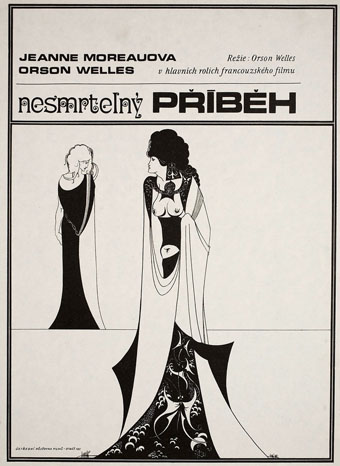
Josef Vyletal borrows figures from Aubrey Beardsley’s Salomé for a Czech poster promoting The Immortal Story (1969) by Orson Welles. Vyletal’s own paintings were often strange and surreal.

Pale Fire is Nabokov’s “great gay comic novel,” says Edmund White. A surprising but not inappropriate reappraisal. White has noted in the past that Nabokov “hated homosexuality” despite having a gay brother and uncle. The portrayal of Charles Kinbote in Pale Fire isn’t unsympathetic if you overlook his being delusional, and possibly insane…

• At Folk Horror Revival: details of the charity donations raised by sales of the Folk Horror Revival books, the first of which featured my David Rudkin essay. A one-day Folk Horror Revival event takes place later this month at the British Museum, London.

• Mixes of the week: The Bug presents Killing Sound Chapter 2: Inner Space, a 2-hour blend of “sci-fi scores, expansive atmospheres and synthesized psychedelia”; Decoded Sundays presents Scanner; Secret Thirteen Mix 197 is by LXV.

Stars Of The Lid unveil a James Plotkin remix of their Music For Twin Peaks Episode #30 Pt. 1. Related: the hype for the new Twin Peaks series gets into gear with a teaser.

• Robert Aickman’s only novel, The Late Breakfasters (1964), is being given its first US publication by Valancourt Books.

• “Don’t dream it, bet it.” Evan J. Peterson on 40 years of The Rocky Horror Picture Show.

• Anna von Hausswolff’s sister, Maria, directs a video for Come Wander With Me / Deliverance.

• RIP Michael O’Pray, film writer and curator of many festivals of experimental cinema.

• Oli Warwick talks to electronic musicians about the influence of the late Don Buchla.

Breakfast In Bed (1969) by Dusty Springfield | Alan’s Psychedelic Breakfast (1970) by Pink Floyd | Another Breakfast With You (2001) by Ladytron

Weekend links 322

quays.jpg

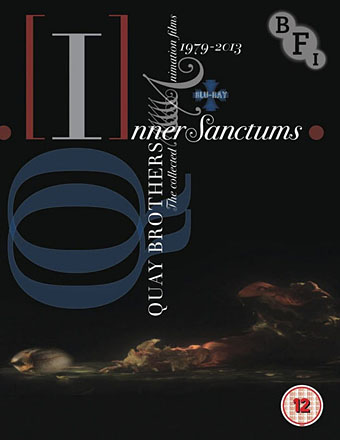
• Cover art by the Quays for Inner Sanctums—Quay Brothers: The Collected Animated Films 1979–2013, a Blu-ray collection which will be released by the BFI next month. Being something of an obsessive where the Quays are concerned I have a lot of this material already (some of the films in multiple copies), but I’ve been hankering for a BR collection for some time. The new set will include everything that’s on the BFI’s DVD collection plus more recent films, some of which have been the subject of previous { feuilleton } posts.

• Aubrey Beardsley: “The subjects were quite mad and a little indecent. Strange hermaphroditic creatures wandering about in Pierrot costumes or modern dress; quite a new world of my own creation.” Alan Hollinghurst reviews the catalogue raisonné of Beardsley’s work.

• How to find the spirit of HP Lovecraft in Providence. Related: there’s now a funding page for the statue of Lovecraft by Gage Prentiss being proposed for downtown Providence. Read about it here.

• At The Quietus: Robert Barry on KPM and the history of library music, and James De Carteret on Mike Hodges’ underrated The Terminal Man (1974).

Michael Newton reviews Erica Wagner’s First Light, “a festschrift of essays, reminiscences, poems and stories dedicated to Alan Garner and his work”.

Cosey Fanni Tutti‘s forthcoming memoir Art Sex Music should prove more interesting than some of the recent music business autobiographies.

• Mixes of the week: A New Age mix by Matthewdavid, FACT mix 563 by Deerhoof, and Secret Thirteen Mix 193 by Nite Fields.

Underground music, echoes of war: using the vast Inchindown storage chamber for its resonant properties.

Totally Lost: a photographic and video exploration of abandoned European totalitarian architecture.

• More animation: Nonsense, Cartoons, and My Post-Soviet Adolescence by Naré Navasardyan.

Annie Rose on the allure of the predatory lesbian vampire in film.

• “Let’s write an encyclopedia of things blue,” says Bernd Brunner.

• Ferrets can be gods: Katherine Rundell on the inimitable Saki.

• The Mystery of Hieronymus Bosch by Ingrid D. Rowland.

iO-808: A TR-808 drum machine for browsers.

A Good Book

Terminal Hotel (1981) by Synergy | Sataan Is Real (1992) by Terminal Cheesecake | Terminal (1999) by Monolake