Weekend links 347

kubin.jpg

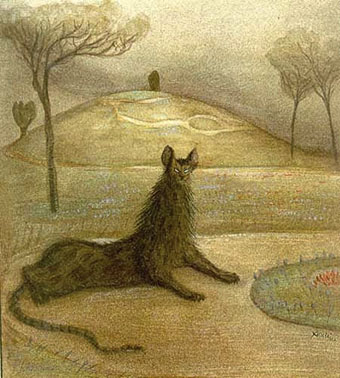
Dream Animal (1903) by Alfred Kubin.

• The week in Finland: A set of Finnish emojis includes icons for notable cultural exports such as Tom of Finland and Moominmamma. Tove Jansson’s creations have received fresh attention this month with the debut release of the electronic soundtrack music for The Moomins, an animated TV series made in Poland in 1977, and first broadcast in the UK in 1983. Andrew Male talked to Graeme Miller and Steve Shill about creating Moomins music with rudimentary instrumentation.

• Russian company Mosfilm has made a new copy of Andrei Tarkovsky’s science-fiction masterpiece, Stalker (1979), available on their YouTube channel. Tarkovsky’s films have been blighted by inexplicable flaws in their home releases, as Stalker was when reissued on a Region B Blu-ray last year. The new Mosfilm upload looks better than my old DVD so for the moment this is the one I’ll be watching.

• Before straight and gay: the discreet, disorienting passions of the Victorian era. Deborah Cohen reviews A Very Queer Family Indeed by Simon Goldhill. Related: Kevin Killian reviews Murder in the Closet: Essays in Queer Clues in Crime Fiction Before Stonewall, edited by Curtis Evans.

• “How many graphic designers owe their introduction to typography to a teenage encounter with the typefaces and lettering found on album covers?” asks Adrian Shaughnessy.

• Mixes of the week: Secret Thirteen Mix 210 by Ascion, FACT Mix 587 by Seekersinternational, and The Séance, 4th February 2017.

Pankaj Mishra on Václav Havel’s lessons on how to create a “parallel polis”. Related: The Power of the Powerless by Václav Havel.

Hans Corneel de Roos on Dracula‘s lost Icelandic sister text: How a supposed translation proved to be much more.

• “I live outside the world in a universe I myself have created, like a madman or a holy visionary.” — Michel de Ghelderode.

• The Metropolitan Museum of Art makes 375,000 images of public art freely available under Creative Commons Zero.

Richard H. Kirk on Thatcherite pop and why Cabaret Voltaire were like The Velvet Underground.

Emily Gosling on what David Lynch’s use of typography reveals (or doesn’t).

White Noise Sounds of Frozen Arctic Ocean with Polar Icebreaker Idling.

John Gray on what cats can teach us about how to live.

• At Dennis Cooper’s: Day of the Mellotron (Restored).

The Warburg Institute Iconographic Database.

Sastanàqqàm by Tinariwen.

Tanz Der Vampire (1969) by The Vampires of Dartmoore | Dracula (1983) by Dilemma | Vampires At Large (2012) by John Zorn
Weekend links 340

zagorski.jpg

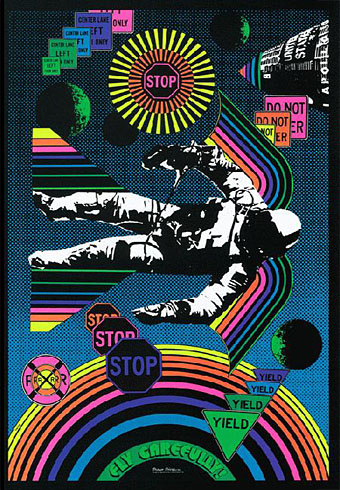
Fly Carefully (1969) by Stanisław Zagorski.

• Video of Tuxedomoon live in San Francisco, Rotterdam and Paris, 1983 (or try this copy), and a late-night German TV broadcast from 1985. The first Tuxedomoon album, Half-Mute, has been reissued by Crammed Discs with an accompanying album, Give Me New Noise: Half-Mute Reflected, featuring cover versions of the songs by various artists.

• More end-of-year reviews: Dennis Cooper’s recommendations are always eclectic (and thanks again for the blog shout!); not necessarily the best ambient and space music of 2016 by Dave Maier; a review of the year by graphic designer Jonathan Barnbrook; the 15 finalists of the 2016 Art of Building architectural photography competition.

The Complete Stories of Leonora Carrington will be published in April 2017 by Dorothy. Related: Letters, Dreams, and Other Texts by Remedios Varo will be published next year by Wakefield Press. Also of interest on that page is a new edition of Haschisch by Oscar AH Schmitz illustrated by Alfred Kubin.

• The week in Things (see this post): John Carpenter’s The Thing: The Story of an SF Horror Game-Changer. Ennio Morricone’s score will be infecting the vinyl world next year. Meanwhile, Matthew Thrift recommends “10 great films set in the Arctic and Antarctica”.

• Mixes of the week: FACT mix 581 by Pan Daijing, XLR8R podcast 468 by Jan Jelinek, and Secret Thirteen Mix 203 by Blood Sport.

A Year In The Country on Monumental Follies (1972), a book about architectural eccentricity by Stuart Barton.

• William Burroughs reads 23 random paragraphs from Naked Lunch each time you load this page.

• “The world is terrifying and destructive and dehumanising and tragic,” says Charlie Kaufman.

• Scents and sensuality: William Dalrymple on the perfumes of India, past and present.

• Brenda S G Walter on Hill House: The haunted soul of Shirley Jackson.

• A trailer for Dome Karukoski’s Tom of Finland. There’s more here.

Illustrating the Sixties: Paintings by Italian artists in London.

Michael Rother and Cavern Of Anti-Matter live in Berlin.

Cinemetal

Network 23 (1981) by Tangerine Dream | Exit 23 (1989) by Psychick Warriors Ov Gaia | Studio 23 (2012) by The Time And Space Machine

Inferni

inferno06.jpg

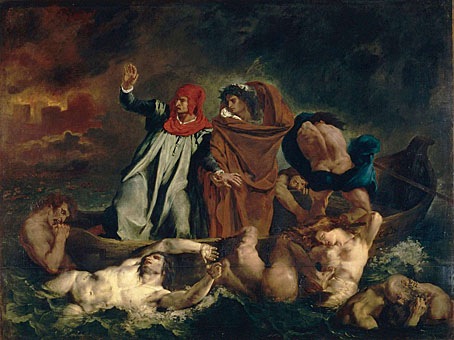
The Barque of Dante (1822) by Eugène Delacroix.

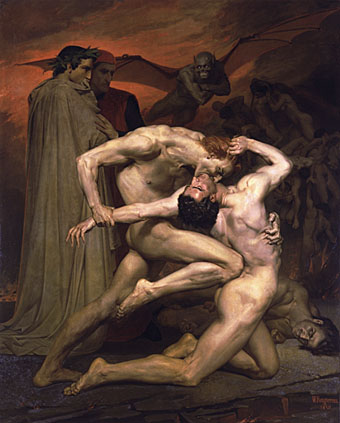
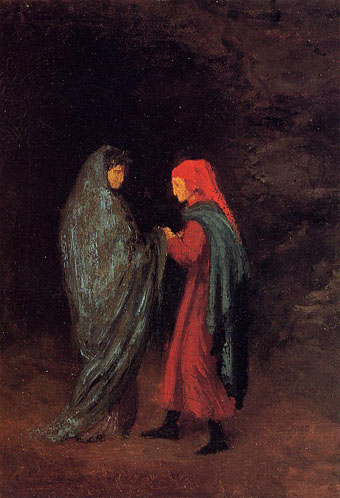
More infernal visions. Depictions of Hell aren’t exactly recent but the 19th century saw an increase in Dantean themes, helped, no doubt, by the Romantic taste for violent drama. There are many more such paintings, especially of the doomed lovers Paolo and Francesca whose plight is almost an artistic sub-genre. I’ve avoided the popular depictions by William Blake and Gustave Doré although the latter is represented below by a painting you don’t often see.

inferno03.jpg

Dante and Virgil in Hell (1850) by William-Adolphe Bouguereau.

inferno04.jpg

Dante and Virgil at the Entrance to Hell (1857) by Edgar Degas.

Continue reading “Inferni”

Weekend links 259

bennett.jpg

The Endlessness (2012) by Emma Bennett.

• “Clearly if you’re familiar with The Arcades Project by Walter Benjamin you’ve got a leg up on what Rivette and company are up to. […] Like all Rivette works, it’s obsessed with the interrelationship between theater and life—reality and fantasy.” David Ehrenstein makes Jacques Rivette’s Out 1 sound even more intriguing. The 729-minute film is being reissued later this year.

• “It’s all your artistic friends. They frighten me…they seem evil, somehow—somehow unhealthy. And when you’re with them, dear, you change…” Steven Cordova reviews To the Dark Tower (1946), the debut novel by gay writer Francis King.

• “Sex isn’t a subtext in The Bloody Chamber, but the text itself. (Carter would explain that she was only making explicit a ‘latent content’ that is ‘violently sexual.’)” Laura Miller on Angela Carter’s re-told fairy tales.

Yet, as a citizen, and especially as an artist, [Chimamanda Ngozi] Adichie refuses to censor herself. “There is already enough silencing in public discourse,” says Adichie, and this is certainly true when the topic is race, and especially when the conversation is in America. It is our addiction to comfort that demands our silence regarding certain truths. Too often in America, Adichie claimed, “the goal of public discourse is comfort, not truth.” Comfort, Adichie said, also demands “international digestibility,” a reduction of complicated stories to a simple narrative. In the lecture, Adichie also warned of the silencing that is sometimes a product of social media outrage.

Kay Iguh on Chimamanda Ngozi Adichie’s Arthur Miller Freedom to Write Lecture at the PEN World Voices Festival

• New books: The Strangers and Other Writings by Robert Aickman, and Murderous Passions: The Delirious Cinema of Jesús Franco by Stephen Thrower & Julian Grainger.

• The world is rediscovering Mad Max and George Miller’s prowess for action cinema so Anne Billson posted a transcript of her 1985 interview with the director.

• Mixes of the week: Dmytro Fedorenko presents artists from Ukrainian record label Kvitnu, and The Ivy-Strangled Path Vol. VII by David Colohan.

Assault on Precinct 13 goes disco: The End (John Anthony’s New Scratch Mix) (1983) by “John Carpenter” (The Splash Band).

John Coltrane talked to Frank Kofsky for an hour in November 1966.

• Sleazy Cinema: A guide to Peter Christopherson‘s music videos.

Six hours of women in electronic music.

The weird world of Alfred Kubin.

Giallo Magic Orchestra

Blood (1972) by Annette Peacock | Blood On The Moon (1981) by Chrome | Blood From The Air (1986) by Coil

Weekend links 207

barker.jpg

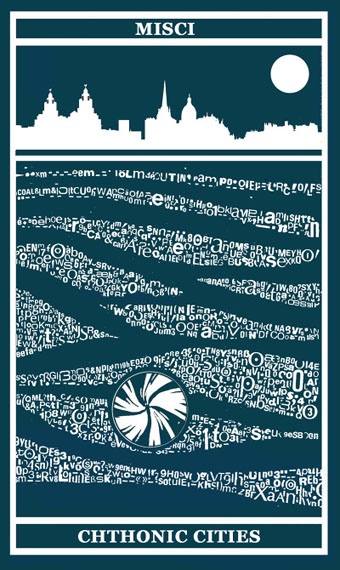
Chthonic Cities by David Chatton Barker. One of a series of Folklore Tapes screenprints available from Bleep.

• The original version of Kenneth Anger’s Lucifer Rising, the one with the Jimmy Page soundtrack that was completed in 1973, has always been described as lost/stolen/buried or otherwise gone forever. So you’d think the news that a print had been discovered recently by Brian Butler would have received greater attention. There’s a screening in Los Angeles this Thursday. When do the rest of us get to see it?

Chris Marker: A Grin Without a Cat, an exhibition and series of Marker-related events at the Whitechapel Gallery, London. Related: The Encounter of M. Chat & Chris Marker as Told By Louise Traon.

• The trailer for The Gospel According to St Derek, a forthcoming documentary about Derek Jarman. Related: Carl Swanson on why Tilda Swinton is not quite of this world.

Maybe there’s just something conservative at the bedrock of American fiction. […] Or maybe it’s just another symptom of the creeping conservatism that’s infected so many aspects of the culture.

Eric Obenauf talks to author Jeff Jackson whose comments about cultural conservatism could equally be applied to the UK.

• Primitive graphics, inventive graphics, budget Surrealism, and some great theme tunes; it’s Trunk TV, Episode 1: Title Sequences.

• Mixes of the week: Secret Thirteen Mix 110 by Black To Comm, and Intro To Drone For Debcon 1, almost 7 hours of music!

Joseph Burnett reviews Ett, an album of electronic music by Klara Lewis.

The Delian Mode (2009), a film about Delia Derbyshire by Kara Blake.

• Extracts from Tokyo Reverse by Simon Bouisson and Ludovic Zuili.

Dan Piepenbring on The Haunting Illustrations of Alfred Kubin.

• At Strange Flowers: Photos of arcades by Germaine Krull.

• Fish, Fiends, and Fantasy: The Gothic Art of Ian Miller.

• At 50 Watts: Richard Teschner and His Puppets.

• Sonic Foam: Ian Penman on Kate Bush and Coil.

Bits and Pieces

Lucifer (1968) by The Salt | Experiment IV (1986) by Kate Bush | Methoxy-N, N-Dimethyl (5-MeO-DMT) (1998) by Coil