Weekend links 370

lai.jpg

The Conjure (2016) by Jolene Lai. Via Dangerous Minds.

• RIP George Romero, a proudly independent filmmaker who succeeded on his own terms. Kim Newman remembers the man who remade horror cinema. Romero always referred to Powell & Pressburger’s Tales of Hoffmann (1951) as a key cinematic influence, something he discussed with Marc Lee in 2005.

Man Alive (BBC TV, 1967): Consenting Adults: 1. The Men | Consenting Adults: 2. The Women. Two documentaries about the British homosexual experience screened shortly before the House of Commons vote that decriminalised sex between men in England and Wales.

Dolente…Dolore: The Inferno of Malcolm Lowry is the latest musical release from Larkfall: “a trembling, drunken dream with flashes of heaven and hell…”

Tom Harper on The Klenke Atlas (1660), one of the largest atlases in the world which is now available for viewing at the British Library.

Martin Jenkins of Pye Corner Audio, The House In The Woods et al talks to Bandcamp about his own brand of sinister electronica.

• RIP Peter Principle, a musician whose up-front bass playing was always a key feature of the Tuxedomoon sound.

• And RIP actor John Heard talking to Will Harris in 2015 about some of his many roles in film and TV.

• 355 free copies of Galaxy Magazine at the Internet Archive.

• Google Maps goes inside the International Space Station.

• Good with a knife: The papercut art of Ivonne Carley.

• Mix of the week: FACT Mix 610 by Karen Gwyer.

• At Dennis Cooper’s: Yasujiro Ozu Day.

• L’alba Dei Morti Viventi (1978) by Goblin | East/Jinx/•••/Music #1 (1981) by Tuxedomoon | Martin (1983) by Soft Cell

Weekend links 369

popovic.jpg

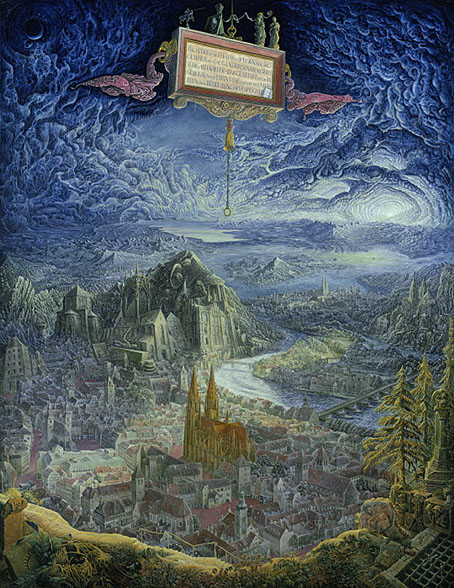
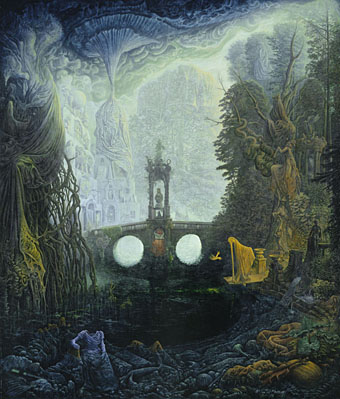
Untitled painting by Serbian Surrealist Ljuba Popovic (1934–2016). I missed the announcement of Popovic’s death last year.

Bryan Washington on the radical grace of Gengoroh Tagame: My Brother’s Husband and the tradition of gay manga. Where bara artists are concerned, I favour the work of Mentaiko Itto. Bruno Gmünder recently published a collection in English.

• At madrotter-treasure-hunt: Post punk from old tapes; “Some live recordings from concerts in Holland from Charles Hayward and from This Heat, Metabolist, Pere Ubu, Holger Hiller…”

Dennis Cooper‘s favourite fiction, poetry, non-fiction, film, music, art & internet of 2017 so far. (Thanks again for the nod to this blog!)

The Weird and the Eerie is an evocative and carefully-written short study in cultural aesthetics. Far from the familiar line-up of vampires, zombies, and demons, Fisher’s eclectic examples speak directly to one of the central themes of the horror genre: the limits of human knowledge, the metamorphic shapes of fear, and the blurriness of boundaries of all types. His simple conceptual distinction quickly gives way to reversals, permutations, and complications, ultimately refusing any notion of a monstrous or alien unhumanness “out there”; with Fisher, the unhuman is more likely to reside within the human itself (or as Lovecraft might write it, “the unhuman is discovered to reside within the human itself”).

Many books on the horror genre are concerned with providing answers, using varieties of taxonomy and psychology to provide a therapeutic application to “our” lives, helping us to cathartically purge collective anxieties and fears. For Fisher, the emphasis is more on questions, questions that target the vanity and presumptuousness of human culture, questions regarding human consciousness elevating itself above all else, questions concerning the presumed sovereignty of the species at whatever cost – perhaps questions it’s better not to pose, at the risk of undermining the entire endeavour to begin with.

Eugene Thacker reviewing The Weird and the Eerie by Mark Fisher. I’ve not read Fisher’s book yet (I’m intending to) but I was pleased to see one of my illustrations of R’lyeh accompanying the piece.

• At Dirge Magazine: Gwendolyn Nix on Twisted Labyrinths, Dark Mazes, and Ancient Methods of Reflection.

• Mixes of the week: XLR8R podcast 498 by Nicola Kazimir, and Secret Thirteen Mix 227 by Sculpture.

AO Scott reviews Endless Poetry, Alejandro Jodorowsky’s surreal self-portrait.

Maze Of Love (1968) by The Dave Clark Five | Audiomaze (2000) by Tabla Beat Science | Into The Maze (2012) by Pye Corner Audio

Weekend links 367

sarto.jpg

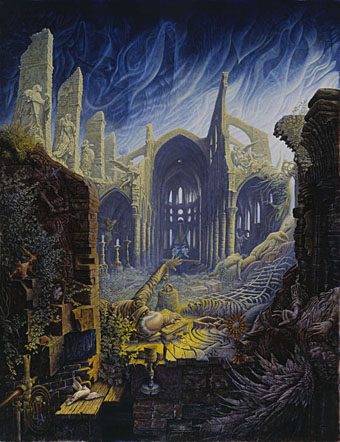
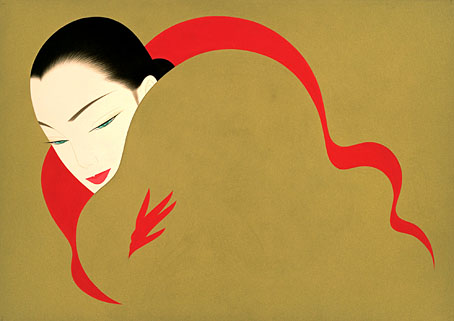
Human Nature by Esther Sarto.

I Feel Love: “Donna Summer and Giorgio Moroder created the template for dance music as we know it”. Bill Brewster on the creation of one of the greatest songs ever recorded.

The Tearoom by Robert Yang “is a (free) historical public bathroom simulator about anxiety, police surveillance, and sucking off another dude’s gun”.

Tim Walker’s Leonora Carrington-themed fashion shoot with Tilda Swinton reaches i-D‘s website at last. More pictures and in better quality.

Joe Dante on the legacy of Nigel Kneale. Related: We Are The Martians: The Legacy of Nigel Kneale, edited by Neil Snowdon.

Beth Comery‘s report on the progress of Gage Prentiss’s planned statue of HP Lovecraft for Providence, RI.

• The Plagiarist in the Kitchen: Jonathan Meades talks food and cooking with John Mitchinson.

• At Dangerous Minds: “Forget Louis Wain’s psychedelic cats, here are his crazy Cubist ceramics”.

• “Court orders Salvador Dalí‘s body be exhumed for paternity test.”

Flash the flesh: Manchester’s gay club heroes – in pictures.

Rick Poynor on the joy and sadness of dust.

MostlyCatsMostly

From The Tea-Rooms Of Mars…To The Hell-Holes Of Uranus: “Beguine”, “Mambo”, “Tango” (1981) by Landscape | I Feel Love (Patrick Cowley Mega Mix) (1982) by Donna Summer | Martian Sperm And Bagpipes (1991) by Helios Creed

Weekend links 363

sommers.jpg

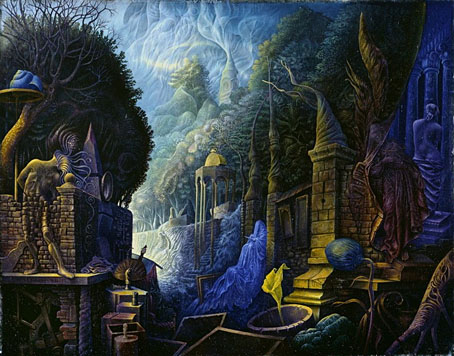
The Constant Drumbeat of Terrible News (no date) by Allison Sommers.

• Nadia Khomami on Gay UK: Love, Law and Liberty, an exhibition at the British Library. Related: Simon McCallum‘s potted history of LGB characters on British screens. Elsewhere: writer and philanthropist Chuck Forester on gay sex in the 1970s.

The Panic Fables: Mystic Teachings and Initiatory Tales by Alejandro Jodorowsky. Finally available in English, a collection of all the comic strips written and illustrated by Jodorowsky when he was living in Mexico in the 1960s.

• A trailer for the restored print of The Fabulous Baron Munchausen (1961) by Karel Zeman. Related: collage designs by Graphic Manipulator for a Japanese collection of Zeman’s films.

• “Whether divining ancient wisdoms or elevating the art of cold reading, Tarot is a form of therapy, much like psychoanalysis,” says James McConnachie.

James Reith on “the Icelandic publisher that only prints books during a full moon – then burns them”.

• Mixes of the week: Wire 400 Mix #6 by Emptyset, and Secret Thirteen Mix 223 by Constantine.

• Mud And Flame: Penda’s Fen re-examined by Matthew Harle and James Machin.

Tilda Swinton in a Leonora Carrington-inspired fashion shoot for i-D magazine.

• At Dennis Cooper’s: Spotlight on William Burroughs’ The Wild Boys.

Applied Ballardianism: A Theory of Nothing by Simon Sellars.

• At Dangerous Minds: The Dark Rift by Jim Jarmusch’s Sqürl.

French Underground Rock: 1967–1980; a Discogs list.

Suzanne Ciani‘s favourite albums.

Infinite artwork: Untitled, 2017

Rip, Rig And Panic (1965) by The Roland Kirk Quartet | Panic (1984) by Coil | Flash Of Panic (1994) by Axiom Ambient

Weekend links 361

f1x-2.jpg

The Future Vol.2 (2016) by f1x-2.

• One of the notable things about the reaction to the original series of Twin Peaks was the way in which Americans were astonished that something so outré could be allowed on television. Here in the UK the response was a little more subdued; we had, after all been spoiled for years by The Prisoner, Sapphire and Steel, and numerous odd and challenging dramas by Dennis Potter and others. Pre-dating all of these was The Strange World of Gurney Slade (1960), a six-part series starring Anthony Newley that was unprecedented in its Surrealism. Andy Murray looks back at the series, and at the rest of Newley’s career.

Andrew Dickson on Peter Ackroyd whose latest book, Queer City: Gay London from the Romans to the Present Day, is published later this month.

Alyona Sokolnikova on a Soviet vision of the future: the legacy and influence of Tekhikia – Molodezhi (Technology for the Youth) magazine.

You know who weren’t cops? All the radicals and queers and artists and dreamers that were there while I grew up, my mom and dad’s old friends from New York and the wider bohemian world, the actors and the drag queens and the dilettantes and the ex junkies and the current junkies, the kind of queer people who wouldn’t get caught dead getting married, the people who actually made the “old New York” of the myth into what it was. They were smart and they were funny and they were tougher than I can imagine and they were possessed of an existential commitment to the idea that life is complicated and so we shouldn’t be quick to judge. They were tolerant, in the true sense, even while they were tireless advocates for actual justice. […] Now we’re Rudy Giuliani, trying to get offensive art pulled off the walls. Now we’re the book burners. Now we’re the censors. Now we attack the ACLU for defending free speech. Now we screech about community morals. Now we’re the prison camp screws. That’s us. Me, I could never be one of the good ones. Never. I can never live up to that ideal. I know I’m not good enough. I know when the judgment day comes, I go down. And so I decline. You can decline, too.

Planet of Cops by Freddie deBoer, or how inflexible morality makes everyone a cop

• Mixes of the week: FACT Mix 601 by Dark Entries, Secret Thirteen Mix 221 by Eli Keszler, and XLR8R Podcast 490 by Ben Lukas Boysen.

• At Dangerous Minds: Punk, Patti Smith, William Burroughs & capitalism: A “conceptual conversation” with RE/Search’s Vale.

Emily Wells on the strange, irreverent worlds of Down Below and The Complete Stories of Leonora Carrington.

Rick Poynor on Mike Halliwell’s montages based on JG Ballard’s The Atrocity Exhibition.

• “Why are the British so scared of cannabis?” asks Professor David Nutt.

Witchcraft and the Gay Counterculture (1978) by Arthur Evans.

• At Dennis Cooper’s: Jacques Rivette Day.

Designing Penguin Modern Classics

Future Dub (1994) by Mouse On Mars | Future Proof (2003) by Massive Attack | Future (2004) by Alva Noto