Weekend links 395

godwin.jpg

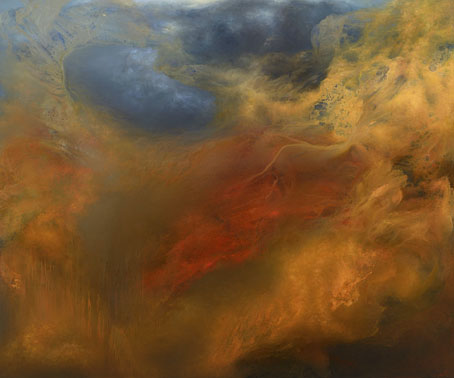
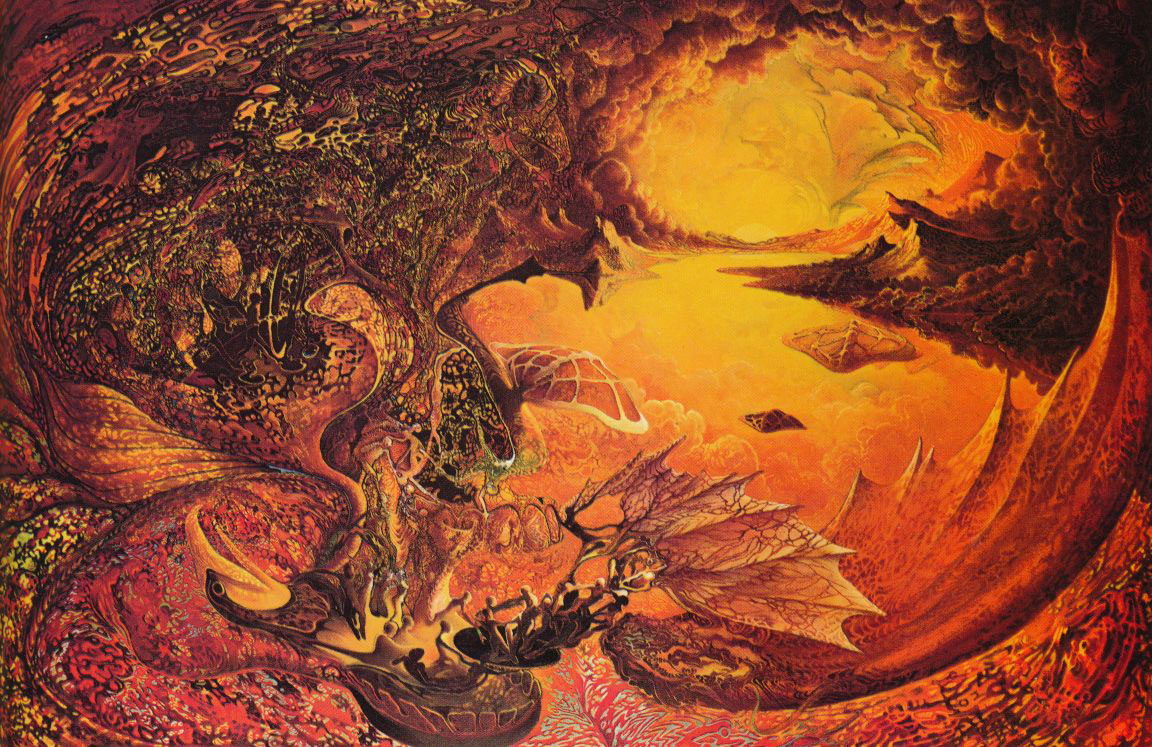
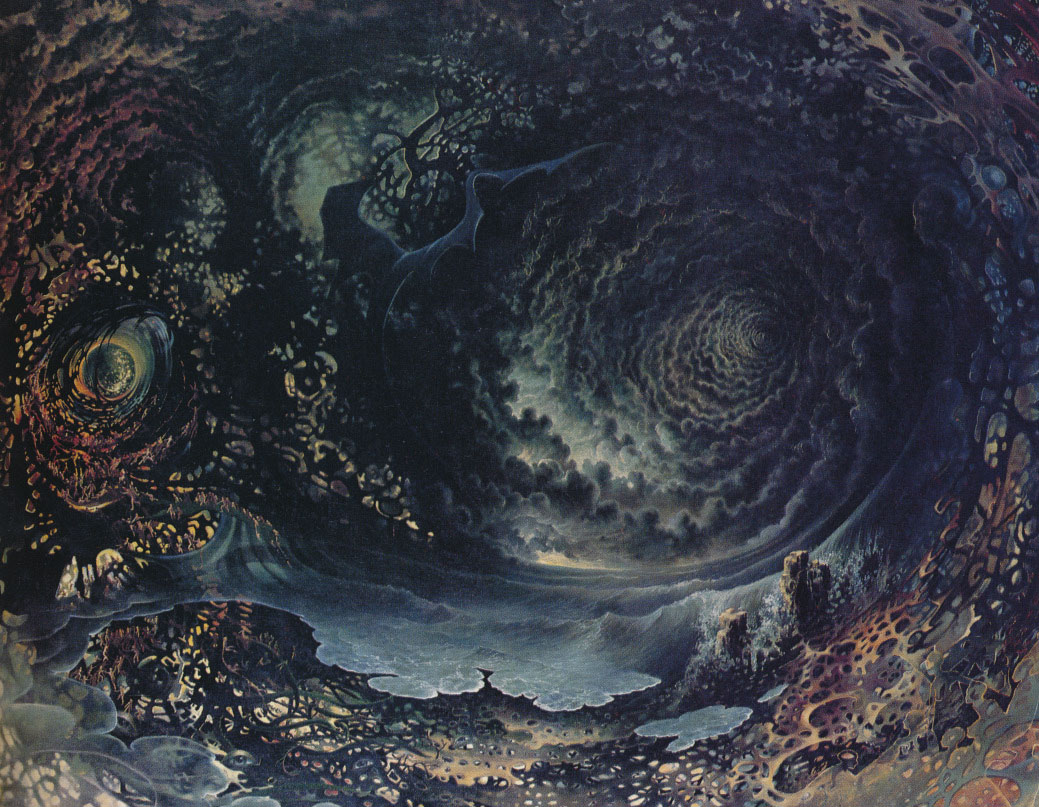
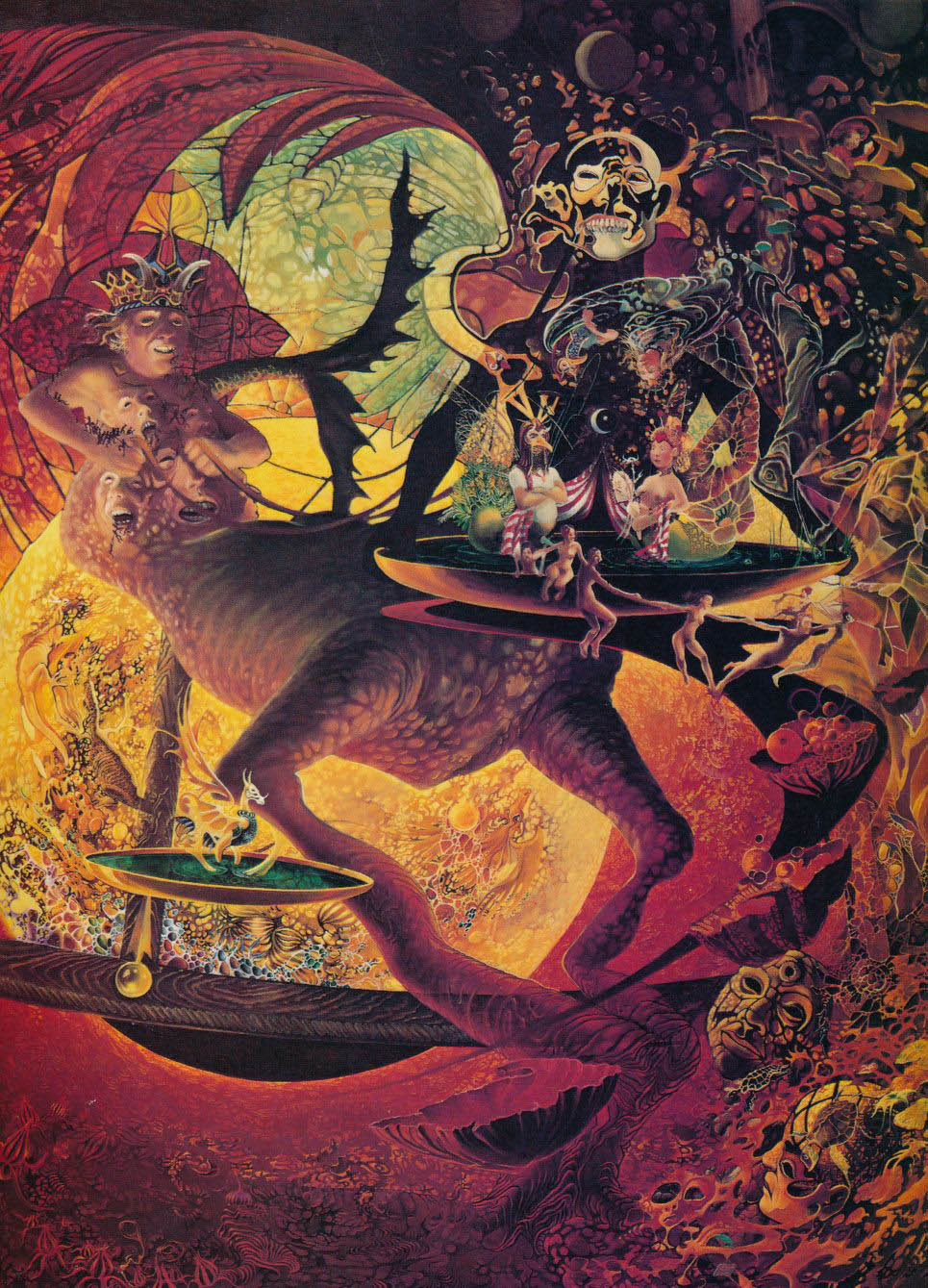
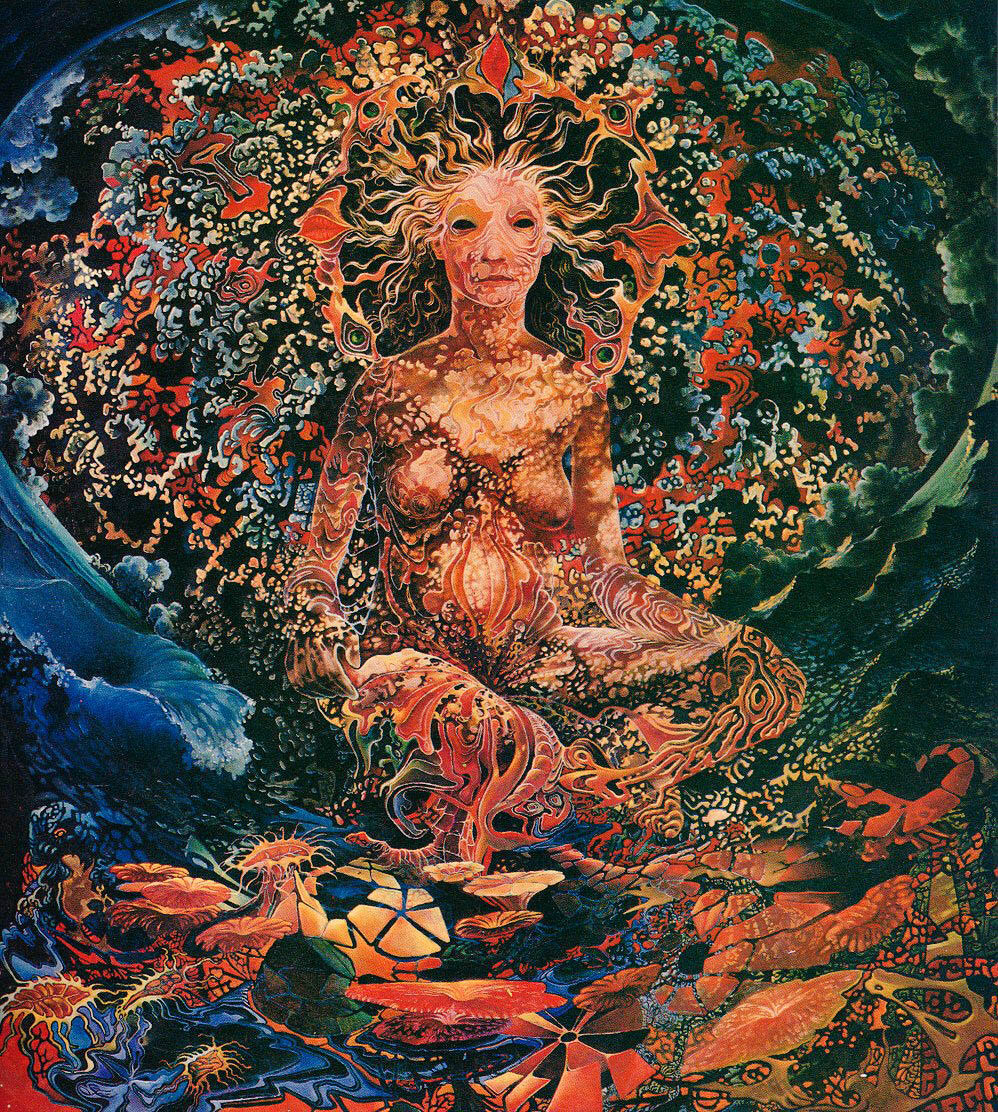
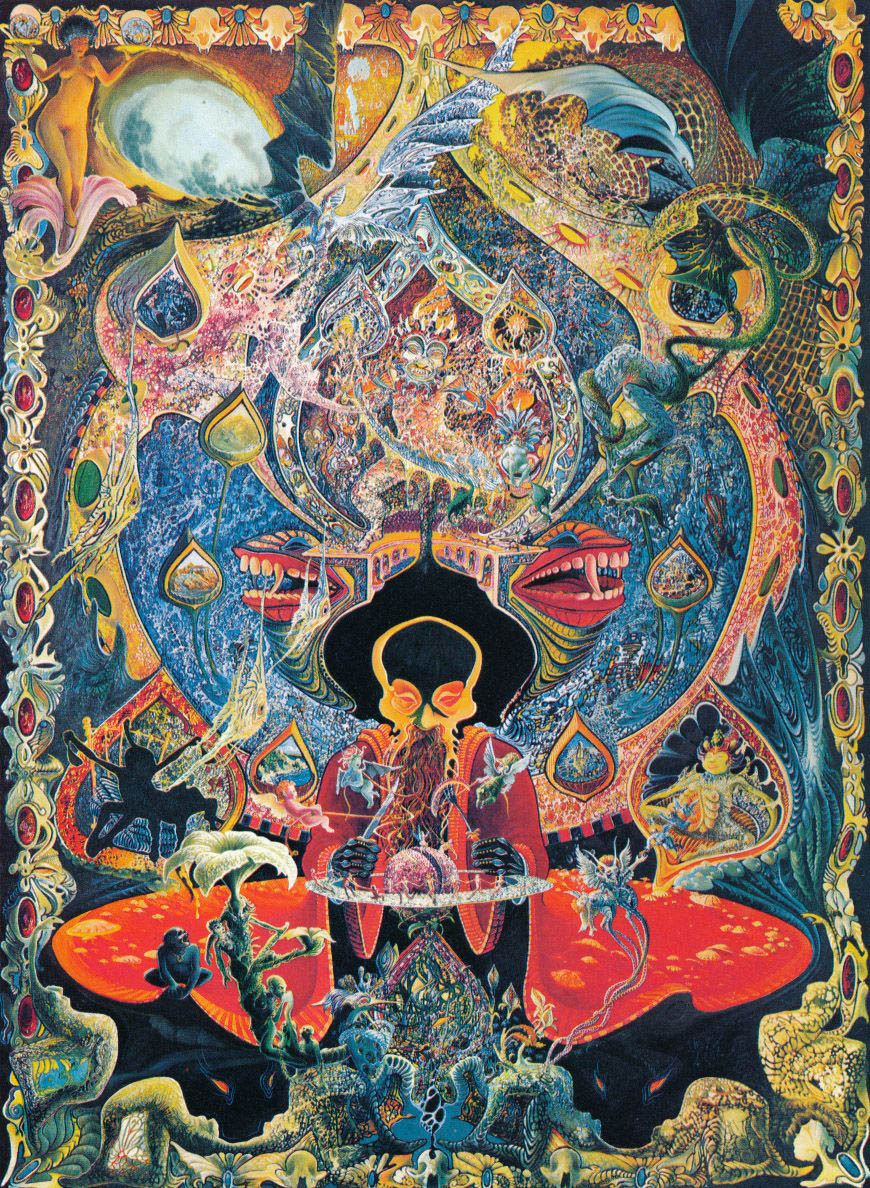
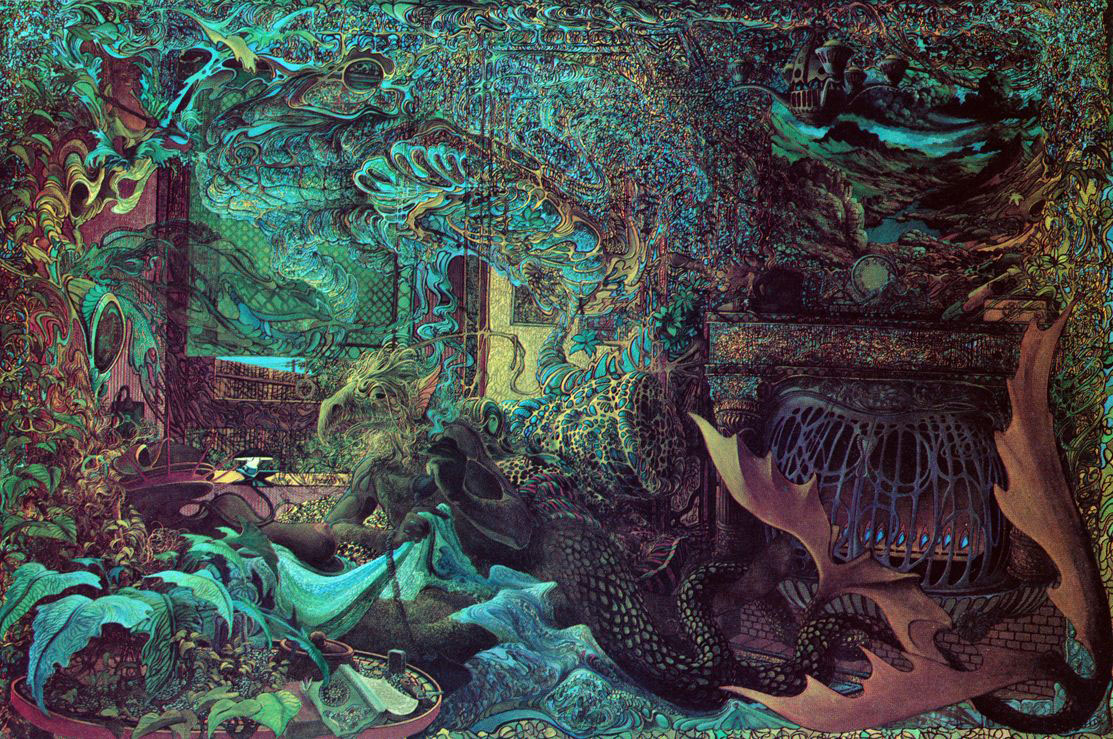
Love is a Martyrdom (1965) by Stephanie Godwin. See Joscelyn Godwin’s Flickr pages for more.

David Shire’s synthesizer score for Apocalypse Now was the first music recorded for the film but was abandoned when Shire was fired due to other commitments. 39 years later, his score has been released by La-La Land Records.

Moon Safari by “French band” Air was released in the UK on January 16th, 1998. Jeremy Allen looks back at an album that was more successful here than elsewhere.

• On the occasion of the US publication of Iain Sinclair’s The Last London, Geoff Nicholson presents an A to Z of the author and his works.

This is the story of how two artists fell in love with each other, with Kelmscott Manor, and with William Morris, the poet, craftsman, and socialist who had made it his home. As Kelmscott’s first tenants afer the Morris family, Edward and Stephani Scott-Snell rented the historic Oxfordshire house throughout the Second World War. There they created an aesthetic and erotic paradise based on a fantasy land called ‘Thessyros’, and produced a body of figurative painting unique for its time. Much of this was done under the influence of a legally-obtained drug they called ‘Starlight’, making many of their paintings  early examples of psychedelic art.

The Starlight Years is a book by Joscelyn Godwin about his artist-parents and their strange relationship

• Mixes of the week: FACT mix 634 by Minor Science, Secret Thirteen Mix 243 by Moa Pillar, and XLR8R Podcast 524 by Burnt Friedman.

• At The Smart Set: Marian Calabro pays a visit to the Brussels apartment where René and Georgette Magritte lived from 1930 to 1954.

Hormone Lemonade, a new album by Cavern Of Anti-Matter, will be released in March. The Quietus has a preview.

• At the Internet Archive: QZAP, the Queer Zine Archive Project; 551 downloadable publications from 1974 to 2015.

• At Dennis Cooper’s: Briefly recounting Tim Buckley‘s short, inconvenient stylistic trajectory.

• Musician and bookseller Richard Bishop recommends a handful of rare occult volumes.

• At Kickstarter: Arsgang, a short psychological horror film by Harry Edmundson-Cornell.

• “A Sloppy Machine, Like Me”: Michael Grasso on the history of video synthesizers.

• At Flashbak: 27 Snapshots of Manchester in the 1960s.

• At Strange Flowers: 18 books for 2018.

Love Is Strange (1956) by Mickey & Sylvia | Love Is Peace (1970) by Amon Düül | Love Is The Drug (1980) by Grace Jones

The weekend artists, 2017

images.jpg

Art by Twins of Evil for the forthcoming blu-ray from Arrow Academy.

The laziest post of the year is invariably a review of the artists/designers/photographers featured on the weekend posts, so here’s another end-of-year list for you. Scroll down to see what caught my attention over the past twelve months.

mueck.jpg

Mass by Ron Mueck at the National Gallery of Victoria Triennial. Photo by Tom Ross.

possession.jpg

French poster by Basha (Barbara Baranowska) for Andrzej Żuławski’s extraordinary Possession (1981).

adam.jpg

I Had Sweet Company Because I Sought Out None. Collage by Helen Adam.

nakayama.jpg

Still of an Alive Painting by Akiko Nakayama.

Continue reading “The weekend artists, 2017”

Weekend links 376

newton.jpg

The House by the Canal (1945) by Algernon Cecil Newton.

• RIP Tobe Hooper. Black Hole Reviews recounts the troubled history of The Texas Chain Saw Massacre in Britain, a film that was given a short-lived cinema release then banned for 20 years. Elsewhere: Who sampled from Tobe Hooper’s films? Tucktonia, a model village whose London buildings were destroyed for Hooper’s Lifeforce.

• Graphic language of the wall: Rick Poynor on Brassaï’s photographs of graffiti for Le Livre de Poche. More Poynor: National Theatre Posters: A Design History is available for pre-order from Unit Editions. There’s more from the latter here.

• “A question of queer as a kind of futurism: an attitude or tendency that connects mid-20th-century performers and photographers to contemporary digital art and fashion.” Brian Dillon reviewing Queer British Art at Tate Britain.

In evolutionary terms, the intelligence of octopuses is an anomaly. The last common ancestor between octopuses on the one hand, and humans and other intelligent animals (monkeys, dolphins, dogs, crows) on the other, was probably a primitive, blind worm-like creature that existed six hundred million years ago. Other creatures that are so evolutionarily distant from humans—lobsters, snails, slugs, clams—rate pretty low on the cognitive scale. But octopuses—and to some extent their cephalopod cousins, cuttlefish and squid—frustrate the neat evolutionary division between clever vertebrates and simple-minded invertebrates. They are sophisticated problem solvers; they learn, and can use tools; and they show a capacity for mimicry, deception and, some think, humour. Just how refined their abilities are is a matter of scientific debate: their very strangeness makes octopuses hard to study. Their intelligence is like ours, and utterly unlike ours. Octopuses are the closest we can come, on earth, to knowing what it might be like to encounter intelligent aliens.

Amia Srinivasan reviewing Other Minds: The Octopus and the Evolution of Intelligent Life by Peter Godfrey-Smith, and The Soul of an Octopus: A Surprising Exploration into the Wonder of Consciousness by Sy Montgomery

Royal Academy of Arts to reveal explicit side of Dalí and Duchamp.

• At Wormwoodiana: Mark Valentine on The Mystic Umbrellas.

Norton Critical Edition’s Periodic Table of Literary Villains.

• Mix of the week: FACT mix 616 by Lanark Artefax.

Virus Fonts has a new website.

Little Umbrellas (1969) by Frank Zappa | Umbrellas (1971) by Weather Report | Black Umbrellas (2003) by Broadcast

Richter’s “Anchor Blocks”

richters01.jpg

It’s safe to say that I wouldn’t have paid much attention to illustrations from a toy catalogue from 1880 if I hadn’t recognised the pictures from their fleeting appearance in Jan Švankmajer’s Jabberwocky (1971). One sequence in Švankmajer’s animated film has a battalion of toy soldiers emerging from the sleeves of a boy’s sailor suit. While the soldiers march around a table, a drawer opens and the wooden blocks within build themselves into a variety of architectural forms. Cut into this sequence are the pictures from Richter’s toy catalogues.

richters02.jpg

The latter have intrigued me ever since I spotted them in the film (the edits are typically brief) for their inadvertent Surrealism, a quality that may also have appealed to Švankmajer. Most catalogues devoted to toy blocks would display their potential constructions in a neutral space; Richter’s catalogue shows the block constructions as life-size architectural creations in otherwise realistic settings. The engraved renderings are rather fine as well, which adds to their strange atmosphere. There’s a definite Escher quality to some of the plates, in the shapes of the buildings—some of which resemble Escher’s famous fantasy constructions—and in the disparities of scale, a factor explored in this print.

richters03.jpg

The Internet Archive has two Richter catalogues here and here, both of which contain illustrations seen in Švankmajer’s film. Wikipedia has a short history of the blocks which notes that they also appear in Švankmajer’s Alice (1988).

Continue reading “Richter’s “Anchor Blocks””

Weekend links 375

kanemaki.jpg

Memento Mori (2012) by Yoshitoshi Kanemaki.

Greydogtales, home to “weird fiction, weird art and even weirder lurchers”, is two years old this month. An essential resource for interviews, reviews and art features.

Kim Morgan on the paranoia at the heart of John Carpenter’s The Thing. The film will receive a welcome Blu-ray reissue by Arrow Films (UK) in November.

• A third and final collection of Patrick Cowley’s soundtracks for gay porn films, Afternooners, will be released in October by Dark Entries.

Photos of the exceptional eldritch art on display until the end of the month at the Ars Necronomica show in Providence, RI.

• Barney Bubbles, Optics & Semantics: an exhibition at Rob Tufnell, London, from 31st August.

Dimitra Fimi and Adam Scovell on 50 years of The Owl Service by Alan Garner.

• The Duality of Yoshitoshi Kanemaki’s Wooden Sculptures.

• Tristan Bath on The Strange World of Keiji Haino.

• Mix of the week: XLR8R Podcast 504 by Curses.

Photos of René Magritte.

• RIP Brian Aldiss

Grey Promenade (1985) by Roger Eno | Grey Stripe (1994) by Aphex Twin | Greyscale (2008) by 2562